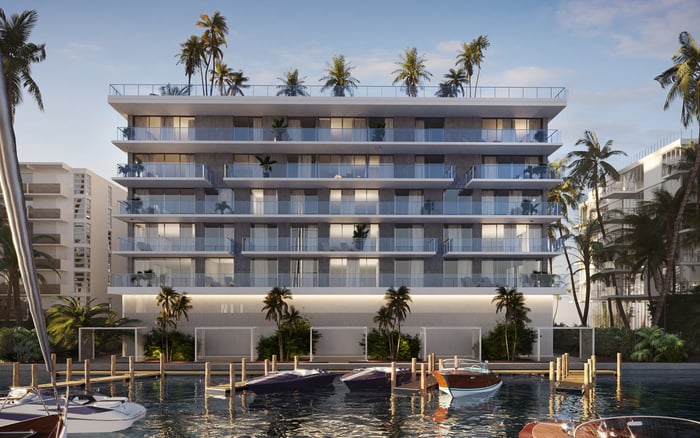
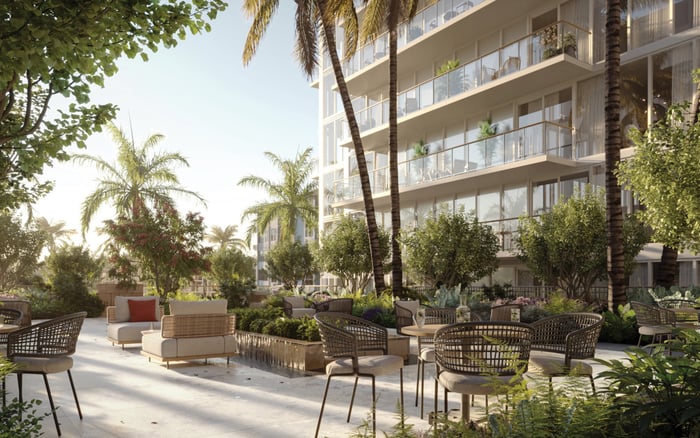
A buyer-focused guide to evaluating restaurant-noise exposure at Origin Bay Harbor Islands, with practical questions for terrace use, evening showings, glazing, orientation, and long-term resale confidence.
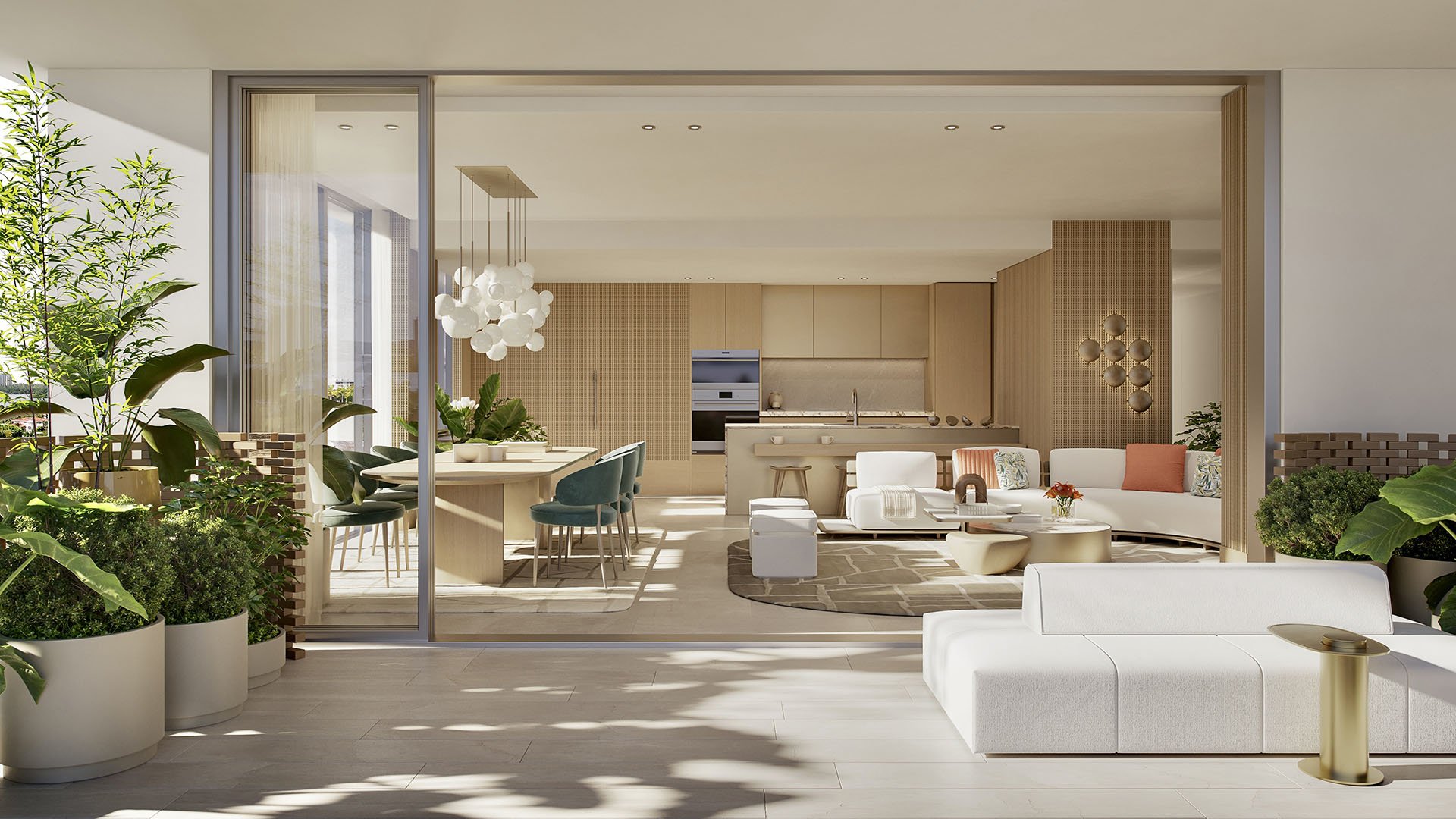
For buyers considering Origin Bay Harbor Islands, restaurant-noise exposure is not necessarily a red flag. It is a lifestyle variable that deserves disciplined review. In South Florida’s coveted waterfront and village settings, proximity to dining can be part of the appeal: walkable dinners, evening animation, and a recognizable neighborhood rhythm. The same proximity, however, can change how a residence feels after sunset, during weekend service, or when a terrace becomes an extension of the living room.
The best buyers do not ask a vague question such as, “Is it noisy?” They ask where sound may come from, when it is most noticeable, how the residence is designed to temper it, and whether the resulting atmosphere supports their intended use. For a second-home owner, a little evening energy may feel pleasant. For a primary resident who values early mornings, quiet bedrooms, and long terrace dinners at home, the analysis should be more exacting.
A noise review should begin with lifestyle, not architecture. A buyer who entertains indoors with closed glass and climate control may judge exposure very differently from one who expects the Balcony or Terrace to function as a private outdoor salon. A residence can feel serene inside while still carrying audible energy outdoors, especially during restaurant peak hours.
Before focusing on technical questions, buyers should define their own tolerance. Will the residence be used mostly on weekends? Will children or guests sleep in rooms closest to potential sound paths? Is the desired experience a quiet Waterview retreat, or an urbane Bay-harbor address with dining nearby? Those answers shape every subsequent question.
For internal comparison, keep the vocabulary simple: Bay-harbor context, Bars proximity, Balcony usability, Terrace privacy, and Waterview expectations. These are not abstract labels. They describe how a home will actually be lived in, particularly after dark.
Restaurant noise is rarely uniform. It can move through open courtyards, along streets, over water, between buildings, or toward exposed outdoor areas. Buyers should ask which portions of the building face active dining areas, service zones, valet activity, or pedestrian routes, if any. They should also ask whether bedrooms, living rooms, and terraces share the same exposure or experience different sound conditions.
Orientation matters because sound is experienced in layers. A primary suite set away from activity may support restful nights even if the main terrace captures some ambient energy. Conversely, a beautiful view corridor can also be a sound corridor. The goal is not to eliminate every trace of urban life, but to understand how sound behaves along the specific line of exposure that matters to the residence under consideration.
A thoughtful showing schedule is essential. Buyers should request access during the hours when restaurants are most active, not only during quiet daytime windows. A sunset visit, a later evening visit, and, if possible, a weekend observation can reveal more than a polished midday tour.
During a showing, buyers should spend time in silence. Stand on the terrace without conversation. Sit in the living area with the glass closed. Step into the primary bedroom, close the door, and listen. Then repeat the sequence with terrace doors open. This simple exercise often separates general neighborhood ambience from true intrusion.
Buyers should also pay attention to the character of sound. Music, low-frequency bass, voices, dish handling, deliveries, and vehicle movement are perceived differently. A soft background murmur may be acceptable, while intermittent service sounds may be more disruptive. The question is not only volume, but predictability and tone.
If a residence is being purchased pre-completion or without ideal access conditions, buyers should ask for the most specific available information about window systems, door assemblies, wall conditions, and mechanical design. The inquiry should remain practical: when everything is closed, what level of interior quiet is the home intended to support?
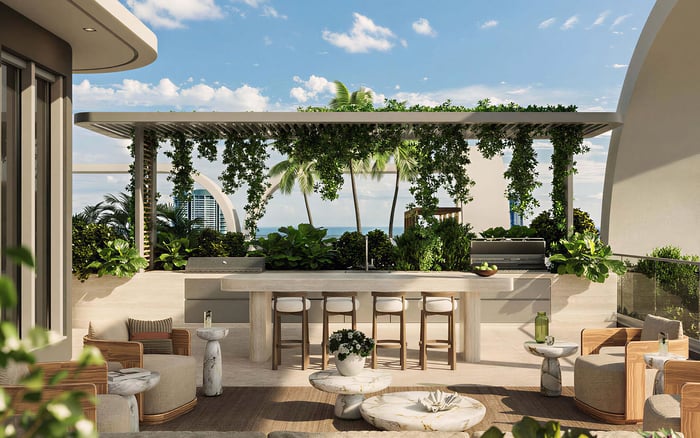
Luxury buyers often concentrate on interior acoustics, but outdoor enjoyment can be equally important. In South Florida, the terrace is not decorative space. It may be where coffee is taken, where guests gather before dinner, and where owners decompress at the end of the day.
A residence can offer strong interior comfort while its outdoor areas remain exposed to restaurant energy. That may be entirely acceptable if the buyer values convenience and atmosphere. It may be less ideal if the terrace is expected to deliver meditative quiet. Buyers should therefore ask two separate questions: how quiet is the interior, and how usable is the exterior during the hours I care about most?
Furniture placement, landscaping, parapet conditions, and neighboring building forms can influence the experience, but they should not be treated as substitutes for firsthand listening. The most refined decision comes from matching the acoustic profile to the buyer’s real habits.
Restaurant proximity can be a selling point when it is understood and well matched to the residence. It can also narrow the buyer pool if expectations are unclear. Future purchasers will likely ask the same questions: what is audible, when, from which rooms, and under what conditions?
The most resilient purchase is the one that can be explained plainly. If a unit has lively terrace ambience but quiet interiors, that distinction matters. If one exposure is calmer than another, that nuance matters. If the residence suits buyers who prize walkability and evening atmosphere, that positioning should be acknowledged rather than obscured.
For Origin Bay Harbor Islands, the disciplined buyer should treat restaurant-noise exposure as part of premium due diligence, alongside view, privacy, finish quality, parking convenience, and building services. In a sophisticated market, certainty is its own amenity.
Should restaurant proximity automatically concern buyers at Origin Bay Harbor Islands? No. It should prompt sharper questions about timing, exposure, terrace use, and interior quiet rather than an automatic rejection.
When should buyers visit to evaluate noise? Buyers should visit during the hours they expect restaurants to be most active, including evening and weekend periods when possible.
Is it enough to test the residence with the doors closed? No. Buyers should listen with doors closed and open, because indoor comfort and outdoor terrace enjoyment are separate experiences.
Which rooms matter most in a noise review? Primary bedrooms, guest rooms, living areas, and frequently used outdoor spaces should receive the closest attention.
Can a lively neighborhood still suit a luxury buyer? Yes. Many buyers value walkable dining and evening energy when the atmosphere aligns with their lifestyle.
What should buyers ask about construction? They should ask how glazing, doors, wall assemblies, and mechanical systems are intended to support interior comfort.
Does a Waterview guarantee quieter conditions? Not necessarily. Water and open corridors can affect how sound travels, so the specific exposure should be tested.
How should terrace expectations be framed? Buyers should decide whether the terrace is primarily for occasional use, entertaining, or a daily quiet retreat.
Could restaurant noise affect resale? It can influence resale if the exposure is misunderstood, but clear positioning may help match the home to the right buyer.
What is the most important buyer takeaway? Treat sound as a due-diligence category, not an afterthought, and evaluate it during the hours that matter to your life.
When you're ready to tour or underwrite the options, connect with MILLION.
If branded residences are on your mind — as a home or as an allocation — we would be glad to share what we are seeing, privately.
Begin a quiet conversation