A discreet, buyer-oriented guide to evaluating catering flow at Opus Coconut Grove, with emphasis on privacy, service circulation, terraces, valet logistics, Miami-Dade life safety, and the operational realities of sophisticated entertaining.
For a luxury buyer considering Opus Coconut Grove, catering flow should not be treated as a secondary amenity detail. It belongs in the first layer of due diligence, alongside architecture, privacy, building systems, and long-term lifestyle fit. The reason is straightforward: entertaining at this level is not confined to a formal dinner twice a year. It may include a private-chef dinner in the residence, a terrace gathering for 30 to 50 guests, an extended-family celebration, a charitable reception, or a corporate-style evening that draws on both indoor and outdoor amenity areas.
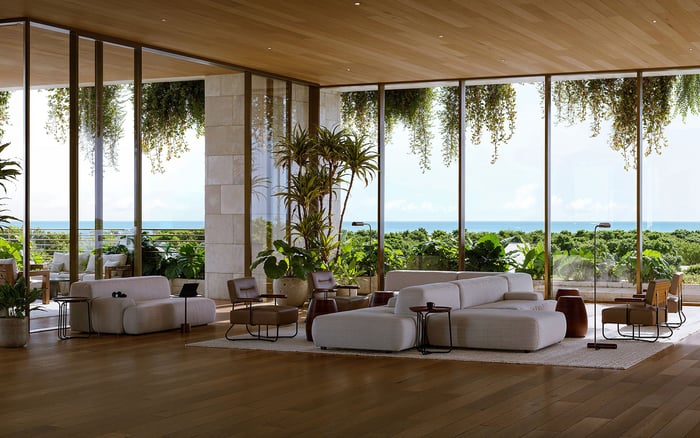
In Coconut Grove, the social pattern is especially nuanced. Waterfront living, boating, dining, cultural activity, and a walkable neighborhood setting all shape how owners use their homes. A residence may function as a private retreat on Monday and a small salon on Friday. The building must support both modes without forcing residents, guests, staff, equipment, tableware, linens, food, beverages, and waste into the same visible path.
For 2026 buyers, catering flow is best understood as a practical test of privacy, service circulation, terrace usability, and daily residential calm. It asks whether a building can support sophisticated hospitality without making the logistics feel visible.
The core checklist begins with movement. A buyer should ask how food, beverages, equipment, linens, floral elements, rented furniture, tableware, staff bags, trash, recycling, and post-event materials travel from arrival to staging, service, cleanup, and removal. Renderings rarely show those paths. Plans, building tours, operational rules, and direct questions are more revealing.
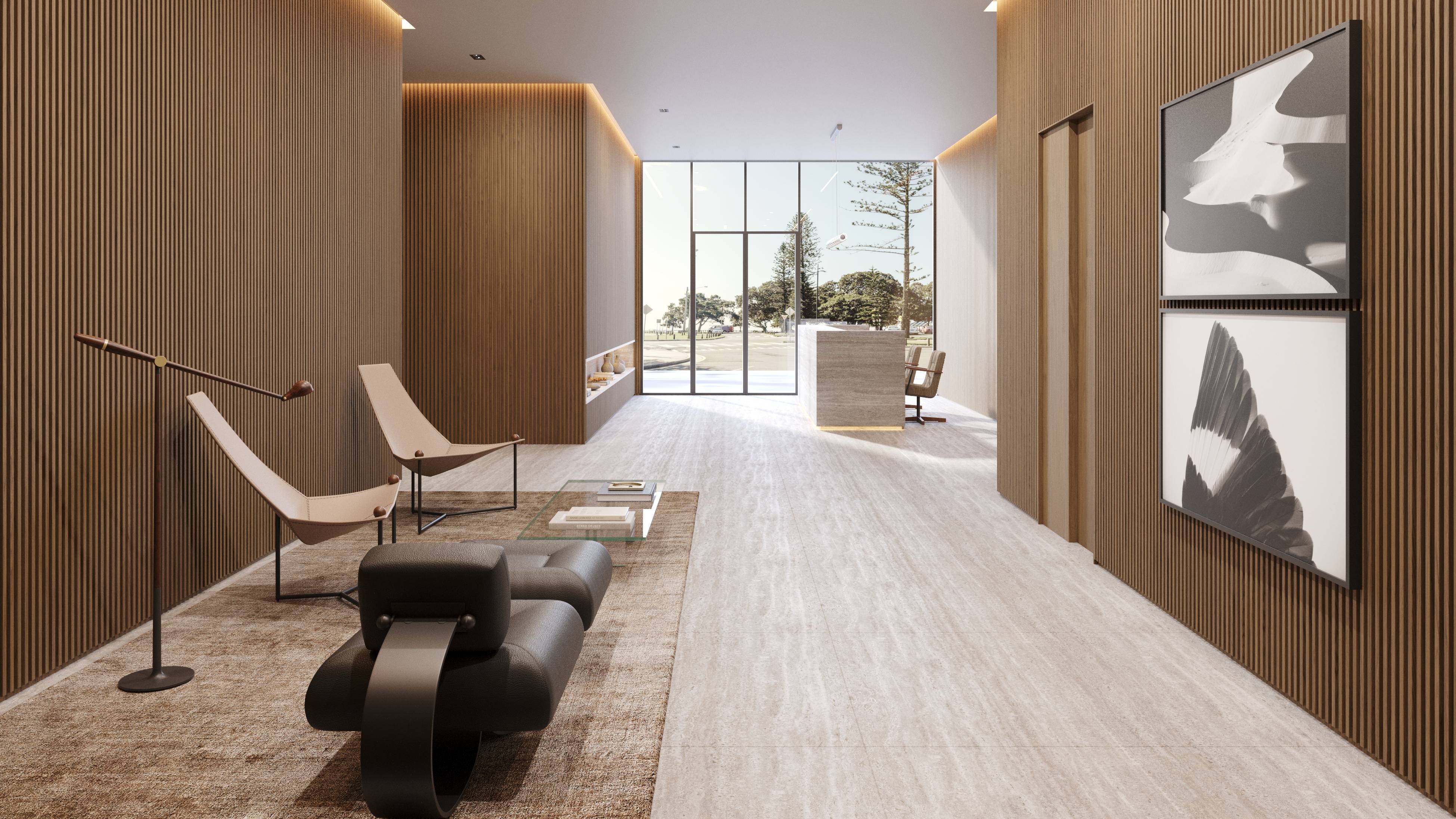
The most important bottlenecks are practical rather than glamorous: curb space, valet staging, loading-dock slots, service-elevator access, service corridors, back-of-house staging rooms, staff check-in points, and waste routes. In a high-rise residential setting, these must coexist with resident arrivals, guest circulation, vehicle movement, deliveries, and life-safety egress. A beautiful amenity level can feel compromised if every catered event creates friction at the elevator bank or lobby edge.
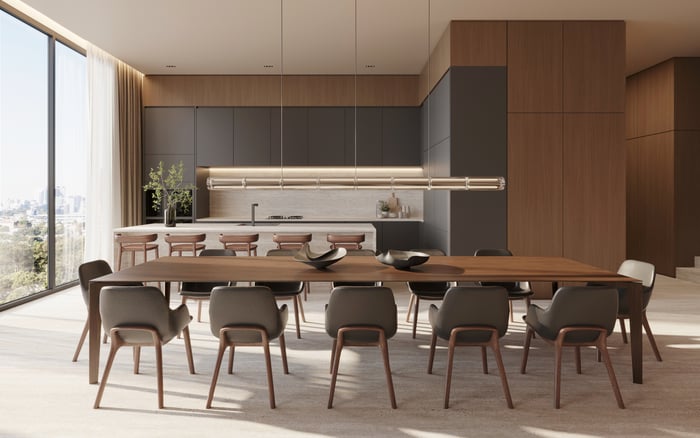
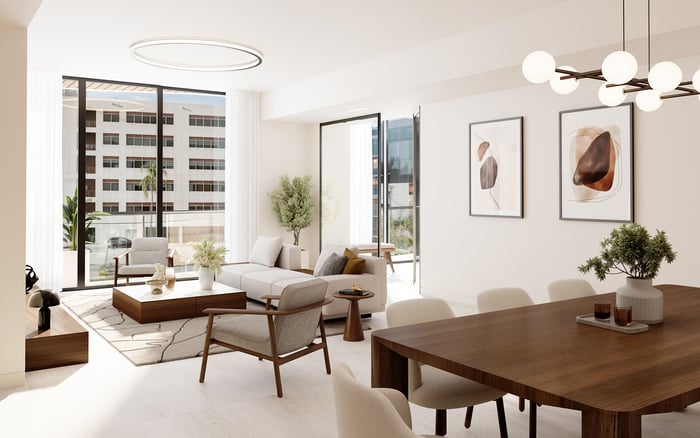
A serious review should distinguish between a residence-level dinner and a larger event. A private chef serving twelve people may need discreet access, temporary refrigeration, staging space, and predictable elevator timing. A seated event using indoor and outdoor amenity areas may require broader coordination among building management, valet, security, caterers, and association rules.
South Florida adds its own operational conditions. Miami-Dade life-safety requirements matter. Hurricane resiliency matters. Valet-heavy arrivals matter. The involvement of third-party caterers and private chefs matters. Outdoor entertaining is a major lifestyle advantage, but it also tests whether indoor kitchens, amenity preparation areas, terraces, pool decks, and outdoor service points are connected efficiently.
For buyers, the question is not simply whether catering is allowed. The better question is whether the building can absorb sophisticated entertaining several times per month without disrupting residents who are not hosting. Can staff move discreetly during peak arrival periods? Can preferred caterers operate within association requirements? Can a last-minute reception be handled without making the building feel improvised? Can waste be removed without crossing the primary guest experience?
These issues often become visible only after occupancy, when residents begin using both homes and amenities frequently. That is why pre-closing or pre-contract due diligence should push beyond lifestyle language. The test is operational performance.
A refined buyer or family office should ask direct, practical questions. What is the standard process for booking an amenity event? Are there blackout periods, preferred vendors, required staffing ratios, or insurance requirements? How are third-party caterers approved? Where do staff enter, stage, change, and take breaks? Which elevators are used, and how are conflicts handled when multiple residents host at once?
The review should also address the edge cases that define true luxury living. If a resident hosts a terrace dinner for 40 people, where do service items wait before guests arrive? If a yacht-related gathering transitions from the water to the residence or amenity level, how does the building manage timing, parking, and deliveries? If a charitable reception uses indoor and outdoor areas, how are music, catering, guest check-in, security, and cleanup coordinated?
A strong building does not need to feel like a hotel to perform with hospitality discipline. In fact, the best outcome is often the opposite: a calm residential experience supported by invisible logistics.
Plans are essential, but physical inspection is irreplaceable when available. Buyers should tour the likely arrival sequence for caterers, not only the lobby, residences, and amenity photography points. Walk the route from curb to loading, from loading to service elevator, from elevator to amenity area, and from amenity area to waste removal. If access is not yet physically available, ask for detailed diagrams and operating protocols.
Pay particular attention to the moments where catering overlaps with daily life. Can a resident return home while an event is being set up without feeling as if they are entering a service corridor? Can guests arrive through a polished sequence while staff operate behind the scenes? Are there areas where carts, trays, coolers, linens, or rentals might temporarily collect? Is there a place for staging that does not compromise aesthetics or safety?
For terrace-focused entertaining, connection matters. Outdoor service should not require long, awkward paths through public-facing areas. South Florida’s climate makes terraces and outdoor rooms central to the lifestyle, so the service logic should be as carefully considered as the view.
At this level, catering flow is a privacy asset. It allows the owner to host without broadcasting the mechanics of the evening. It helps protect the guest experience, reduces staff visibility, and limits disruption for neighbors. It also preserves optionality, one of the quiet luxuries of ownership.
Optionality means being able to call a preferred chef, work with a favorite caterer, host family during season, or accommodate a business-related evening without renegotiating the building every time. It also means the building can feel residential even while supporting a high degree of hospitality.
For investors, this is part of long-term owner satisfaction. Buildings with well-planned back-of-house areas and amenity support may age more gracefully in the eyes of residents who entertain often. The value is not only in having beautiful spaces. It is in having spaces that can be used with confidence.
Before committing, buyers should assemble a focused checklist. Review the architectural plans for circulation, service access, amenity adjacency, and outdoor connections. Ask for the operating rules that govern events, vendors, private chefs, valet coordination, deliveries, cleanup, and noise. Understand how the association expects to manage recurring private entertaining, not only rare special occasions.
Then test real scenarios. A dinner for twelve inside the residence. A terrace cocktail evening for 30 to 50 people. A larger seated event using amenity areas. A rainy-season shift from outdoor to indoor service. A peak-season evening with multiple hosts and heavy valet demand. A post-event cleanup that must occur discreetly and safely.
The best questions are concrete: Where does the caterer park? Which elevator is used? How are carts protected from guest view? Where is temporary staging permitted? What happens if two residents host at the same time? How does the building keep egress clear? Who has authority on the night of the event?
The answers will reveal whether catering flow is merely assumed or truly designed.
Why does catering flow matter at Opus Coconut Grove? It affects privacy, livability, guest experience, and how smoothly residents can entertain without disrupting the building.
What should buyers track during catering-flow due diligence? Track the movement of food, beverages, staff, equipment, linens, tableware, rentals, and waste from arrival through removal.
Is this only relevant for large parties? No. Private-chef dinners, terrace gatherings of 30 to 50 people, and family events can all expose operational strengths or weaknesses.
Which bottlenecks deserve the closest inspection? Elevators, loading areas, curb space, valet coordination, service corridors, staging rooms, and waste routes are key pressure points.
How does Coconut Grove influence entertaining patterns? The neighborhood’s waterfront lifestyle, dining culture, boating, and walkability can make informal and mid-scale gatherings more frequent.
Should buyers ask about third-party caterers? Yes. Approval rules, insurance requirements, access protocols, and preferred-vendor policies can shape how flexible ownership feels.
Why are terraces important in this review? Outdoor entertaining is central in South Florida, so indoor preparation and outdoor service points should connect efficiently.
What South Florida issues should be included? Miami-Dade life safety, hurricane resiliency, valet-heavy arrivals, and peak-season event demand should all be considered.
Can catering flow affect long-term satisfaction? Yes. Strong back-of-house planning can make frequent entertaining easier, more private, and less disruptive over time.
What is the main buyer takeaway? Treat catering flow as operational performance, not as a decorative amenity claim or a line item in marketing materials.
When you're ready to tour or underwrite the options, connect with MILLION.
If branded residences are on your mind — as a home or as an allocation — we would be glad to share what we are seeing, privately.
Begin a quiet conversation