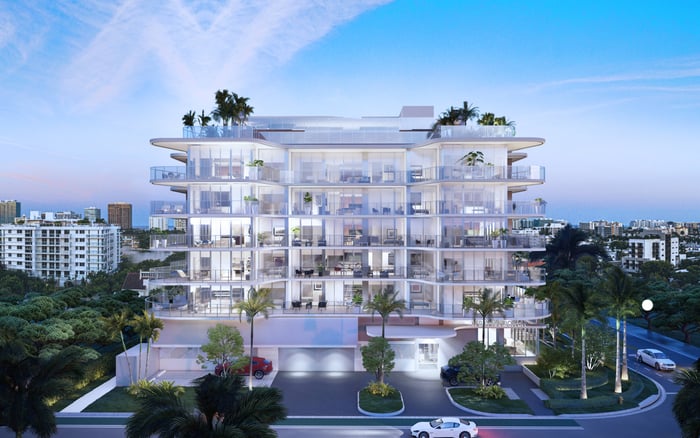
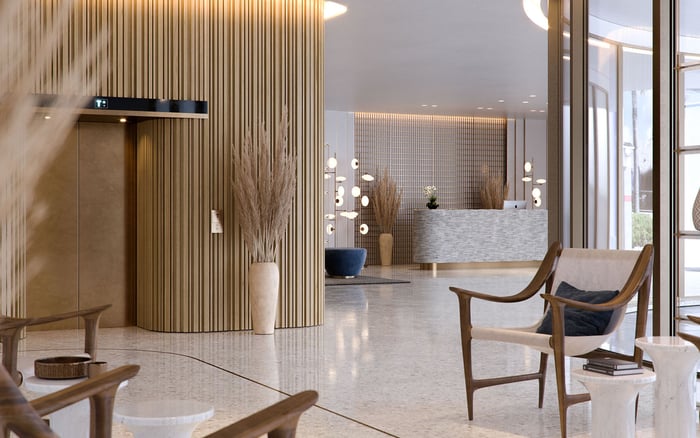
A discreet buyer-fit comparison of Opus Coconut Grove and Alana Bay Harbor Islands, focused on restaurant proximity, noise management, and the social rhythm each setting supports.
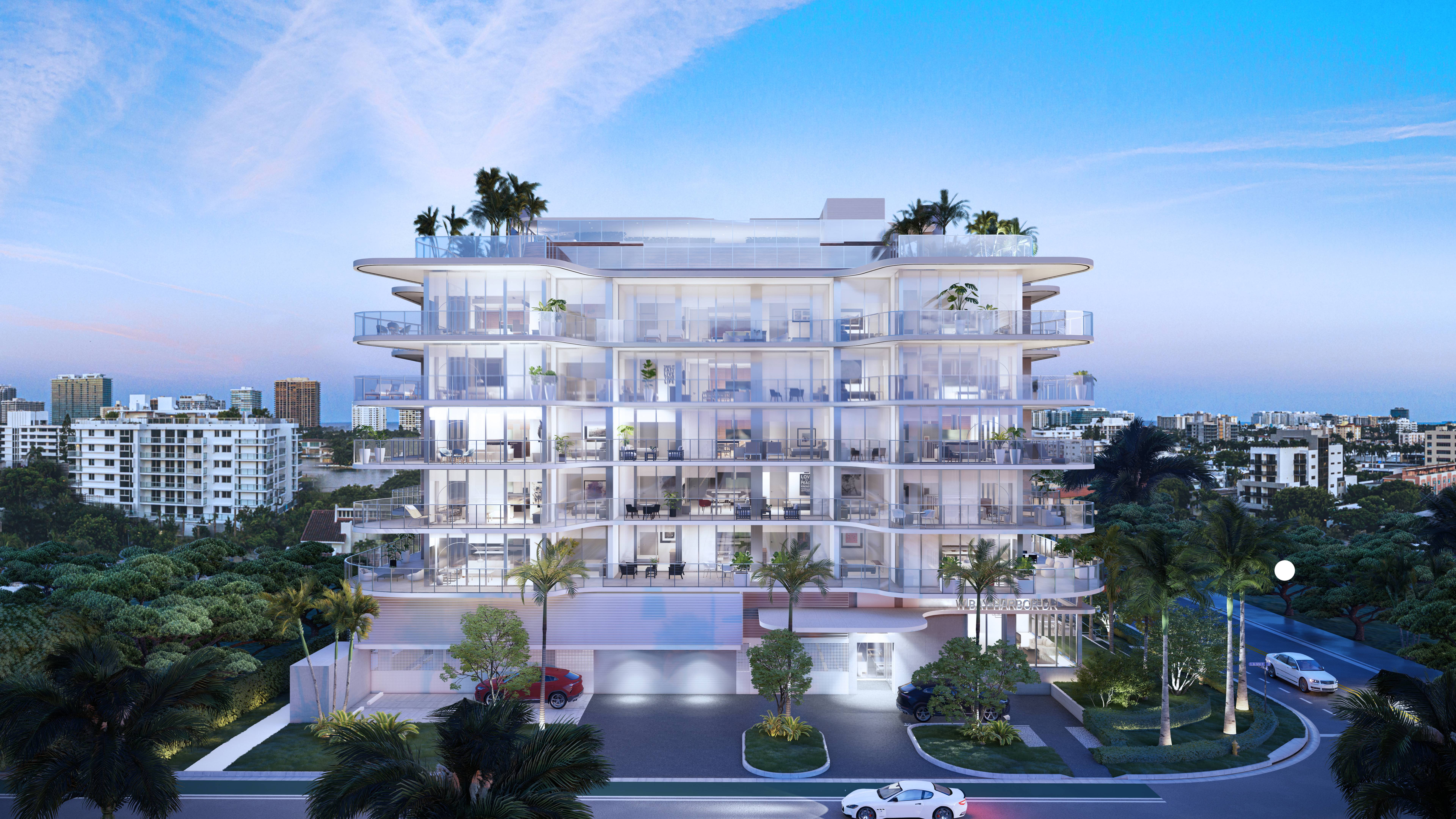
The question is not whether Opus Coconut Grove or Alana Bay Harbor Islands is the better building in some universal sense. For a serious South Florida buyer, the sharper question is which address will feel more natural on a Tuesday evening, a quiet Sunday morning, or over an extended winter stay.
Opus Coconut Grove sits within the established Miami neighborhood fabric of Coconut Grove, where walkability, restaurants, parks, marinas, and social texture shape daily life. Alana Bay Harbor Islands belongs to a calmer island-residential setting, with privacy and a more controlled rhythm at the center of its appeal.
For internal buyer shorthand, this is a Coconut Grove versus Bay Harbor decision. In practice, the lived distinction is more nuanced. It comes down to restaurant proximity, noise management, and social energy: three lifestyle signals that often matter more than a specification sheet.
Restaurant proximity is not merely about where dinner is located. It is a proxy for how connected a buyer wants to feel to the surrounding neighborhood. In Coconut Grove, the appeal is a restaurant-forward environment, where the day can expand outward without much planning. A buyer who likes spontaneous dining, casual coffee, marina-adjacent walks, and the ability to participate in the neighborhood at short notice will likely understand the pull of Opus quickly.
That does not make a quieter setting less luxurious. It simply defines luxury differently. Bay Harbor Islands offers a calmer residential base with access to nearby luxury retail and dining nodes, rather than placing the resident within a more active village-like fabric. For some buyers, that separation is the point: enjoy proximity when desired, then return to a more composed island setting.
The same buyer might also compare other Grove addresses such as Four Seasons Residences Coconut Grove or The Well Coconut Grove, not because they are interchangeable, but because the Grove lifestyle has a distinct gravitational pull for those who want neighborhood texture close at hand.
Noise management should be framed honestly. A more walkable, socially active neighborhood generally brings more movement, more evening life, and more ambient energy. For many buyers, that is not a negative. It is part of the reason they are choosing the location.
Opus will likely resonate with buyers who prefer an active Miami base and are comfortable with the sensory signature of a more animated neighborhood. The value is not silence. The value is immediacy: restaurants nearby, parks within the lifestyle orbit, and marinas and neighborhood activity contributing to a clear sense of place.
Alana, by contrast, is better suited to buyers who prioritize quiet, privacy, and a more measured day-to-day routine. The Bay Harbor Islands setting supports a lower-intensity lifestyle, especially for those who want to preserve separation between home life and the social currents of Miami.
Social energy is the combined feel of the building, residents, amenities, and neighborhood at different times of day. It is what a building feels like before dinner, during a weekend morning, or when friends are visiting from out of town. Boutique luxury matters here because both options are best understood as smaller-scale, curated living rather than mega-tower density.
Boutique does not mean quiet by default. In Coconut Grove, boutique can still feel connected, expressive, and socially fluid. Opus is likely the better fit for a buyer who wants the residence to act as a launch point into an active neighborhood. The building is part of a broader lifestyle ecosystem, not an isolated retreat.
In Bay Harbor Islands, boutique living reads differently. Alana’s appeal is composure, privacy, and a sense of residential restraint. A buyer looking in this direction may also consider nearby island-oriented options such as The Well Bay Harbor Islands, particularly if the priority is a quieter rhythm with refined access rather than constant street-level activity.
Opus Coconut Grove may make more sense as a primary Miami base for buyers who want to feel embedded in an established neighborhood. It suits the owner who intends to use the city actively, dine spontaneously, meet friends nearby, and treat the surrounding area as part of the residence.
Alana Bay Harbor Islands may be a stronger match for a second-home or lock-and-leave owner who values privacy, simplicity, and lower neighborhood intensity. The appeal is not distance from luxury. It is the ability to access it on one’s own terms, while keeping home life more protected and predictable.
This is where the comparison becomes personal. One buyer may see Grove energy as irreplaceable. Another may view Bay Harbor calm as the more sophisticated choice. Both can be correct, depending on the way the residence will actually be lived.
Choose Opus if your ideal South Florida day begins with neighborhood movement and ends with dinner chosen on impulse. Choose Alana if your ideal day begins in quiet, stays controlled, and engages the broader city only when you decide to do so.
The clearest takeaway is simple: Opus is for walkable social energy, while Alana is for quieter residential composure. The strongest decision will not come from forcing a winner. It will come from being precise about the rhythm you want to own.
Is Opus Coconut Grove better than Alana Bay Harbor Islands? Not universally. Opus is better for walkable social energy, while Alana is better for quieter residential composure.
Who is the best fit for Opus Coconut Grove? Opus fits buyers who want an active Coconut Grove setting with restaurants, parks, marinas, and social activity nearby.
Who is the best fit for Alana Bay Harbor Islands? Alana fits buyers who prioritize privacy, quiet, and a calmer island-residential rhythm.
Is restaurant proximity the main difference? It is one of the key differences because it signals how connected the buyer wants to feel to the neighborhood.
Does a more active neighborhood mean too much noise? Not necessarily. For some buyers, neighborhood energy is a feature, while others prefer more tranquility at home.
Is Bay Harbor Islands isolated from dining and retail? No. It offers a calmer residential base with access to nearby luxury retail and dining nodes.
Are both projects considered boutique in lifestyle positioning? Yes. The comparison is about curated, smaller-scale living rather than a mega-tower lifestyle.
Which option is stronger for a primary Miami residence? Opus may be stronger for buyers who want a primary base with daily neighborhood texture and spontaneous dining.
Which option is stronger for a second home? Alana may suit buyers seeking a lock-and-leave or second-home setting with lower neighborhood intensity.
Should price per square foot decide this comparison? Not as the primary lens here. The more relevant decision is daily lifestyle fit, especially energy versus tranquility.
When you're ready to tour or underwrite the options, connect with MILLION.
If branded residences are on your mind — as a home or as an allocation — we would be glad to share what we are seeing, privately.
Begin a quiet conversation