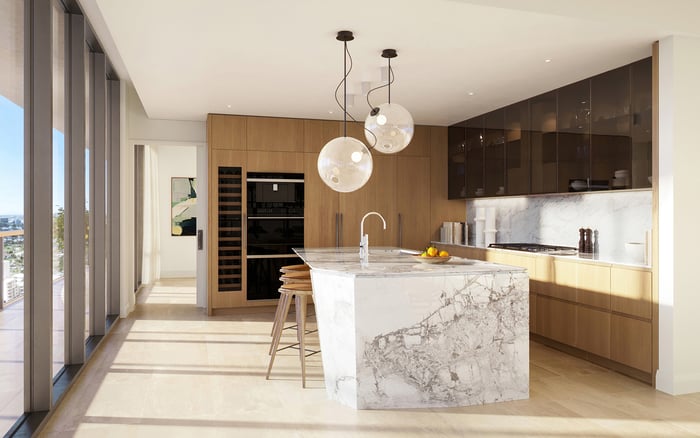
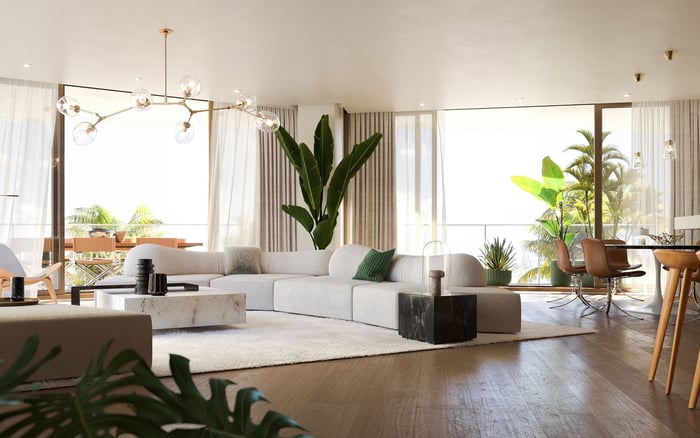
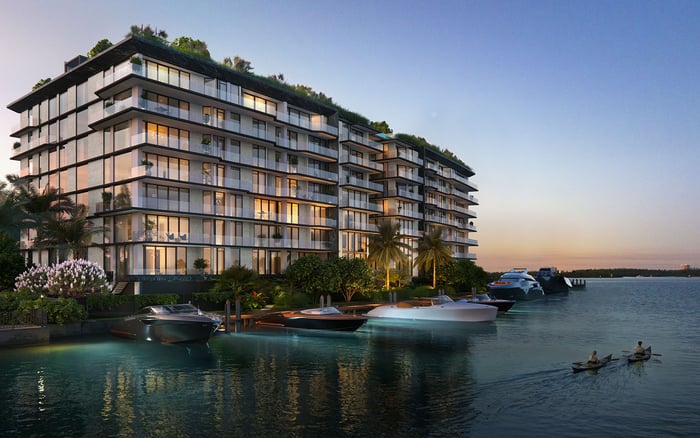
A buyer-focused comparison of how Onda Bay Harbor and Maison D'Or South Flagler frame private outdoor space through etiquette, expectations, and climate reality.
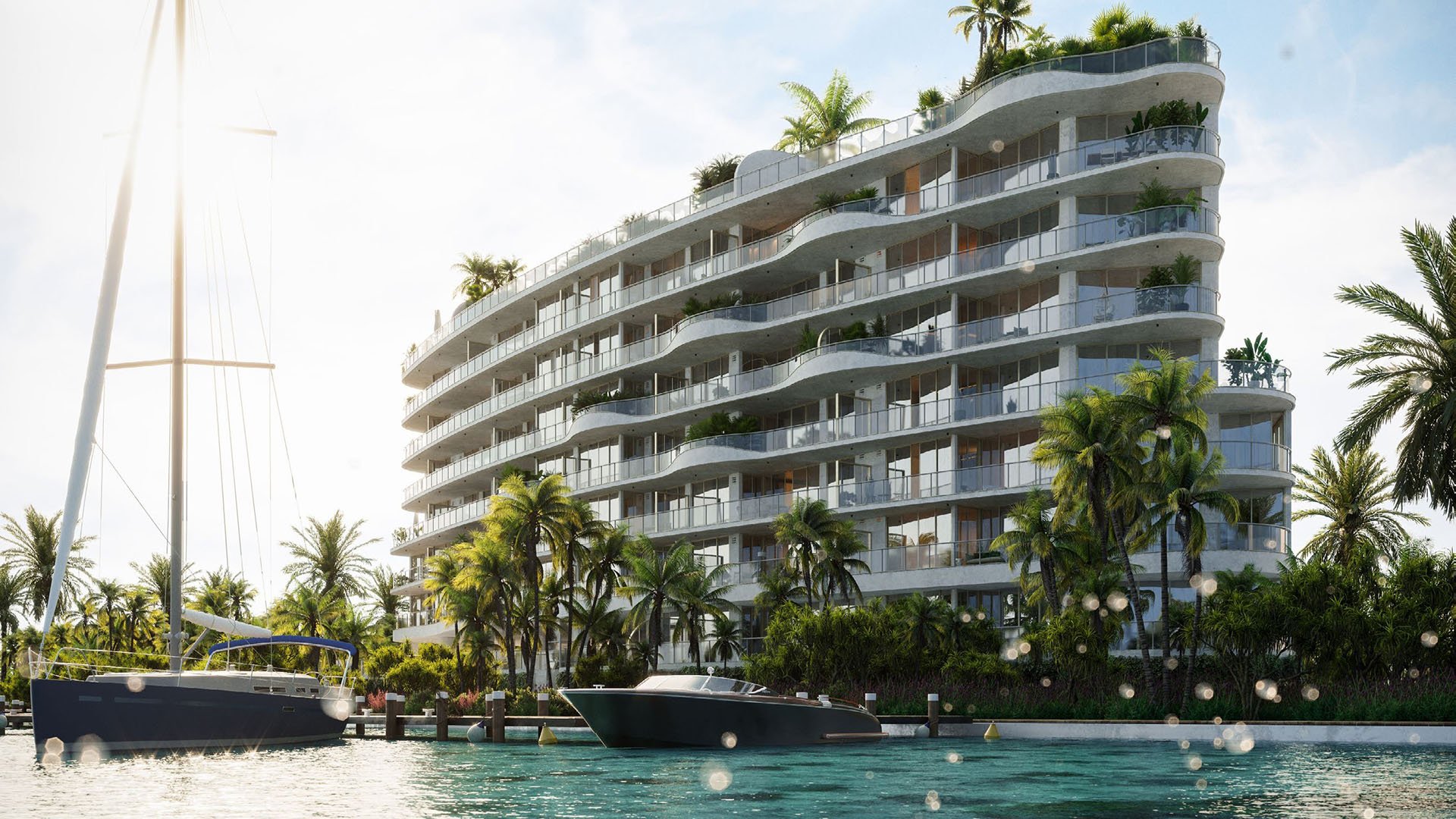
In South Florida, the private terrace is not an accessory. It is often the emotional center of a waterfront residence, where morning light, evening air, water views, and entertaining rituals become part of daily ownership. Yet how a balcony is actually used depends on more than square footage or a floor plan. It depends on building culture.
That is why Onda Bay Harbor and Maison D'Or South Flagler make a useful comparison. Onda Bay Harbor belongs to a boutique, design-led waterfront condominium context in Bay Harbor Islands. Maison D'Or South Flagler sits within the newer South Flagler ultra-luxury waterfront environment in West Palm Beach. Both speak to affluent buyers who care deeply about outdoor living, but expectations around that outdoor space can feel different.
The distinction is not simply Miami-Dade versus Palm Beach County, or code versus taste. The real question is how residents, designers, managers, and owners understand private outdoor space. Is the terrace a quiet architectural extension of the living room, or is it a fully activated entertaining platform? Is the balcony primarily visual, social, culinary, or climatic? Those answers shape the buyer experience long before a guest arrives for dinner.
Every serious buyer should separate balcony decision-making into three layers. The first is formal rules: governing documents, building policies, fire-safety requirements, insurance limitations, and association standards that may affect furniture, cooking, planters, lighting, storage, and noise. These are the items attorneys and advisors should review before contract deadlines, not after closing.
The second layer is resident culture. Some buildings may technically allow a broad range of terrace furniture and accessories, yet still expect a restrained visual language. Others may be more comfortable with highly furnished outdoor rooms, frequent entertaining, and service-oriented setup. The written rule may define the boundary, but culture defines what feels appropriate.
The third layer is weather practicality. Waterfront balconies experience heat, salt air, humidity, sudden rain, wind exposure, and seasonal storms. Terrace weather tolerance is not only a design question. It is also a resident-expectation question: how much maintenance owners will accept, how often cushions will be moved, and how formal or casual outdoor living should feel throughout the year.
Onda Bay Harbor is best understood through the lens of boutique waterfront living. In a smaller, design-conscious condominium setting, balcony behavior is usually read through proximity and aesthetics. Neighbors are closer in feeling, even when residences are private. Sightlines matter. The rhythm of the building matters. A terrace becomes part of the shared architectural composition, not merely a personal backyard in the sky.
That does not mean outdoor life is diminished. It means it is curated. A buyer considering Onda Bay Harbor should think carefully about furniture scale, materials, lighting, and how visible terrace objects may appear from neighboring residences or the waterfront. Balcony use in this context is likely to reward restraint: elegant seating, low-profile pieces, durable finishes, and a strong sense that the exterior space belongs to the architecture.
Outdoor kitchens, in particular, require careful review. The right question is not simply whether a cooking element is desired. It is whether the building culture, documents, safety standards, ventilation expectations, and terrace configuration support that kind of use. A boutique residence can make open-air dining feel deeply personal, but the etiquette around smoke, odors, service traffic, and sound becomes especially important.
For search-minded buyers, shorthand such as Bay Harbor points toward a real lifestyle distinction: a quieter waterfront enclave where design discipline and neighbor awareness can be as valuable as amenity volume.
Maison D'Or South Flagler belongs to a different luxury conversation. South Flagler in West Palm Beach has become associated with a newer ultra-luxury waterfront development environment, where buyers often expect substantial outdoor living, elevated service, and a more expansive entertaining posture. The balcony or terrace is not just a place to step outside. It can be imagined as an outdoor salon.
That expectation changes the buyer lens. At Maison D'Or South Flagler, the relevant questions may include how a terrace supports hosting, how furniture groupings relate to indoor living areas, and how service can move gracefully between kitchen, dining, and exterior zones. The culture around outdoor space may lean toward a larger idea of private resort living, even when the residence itself remains a condominium with rules and shared standards.
Still, ultra-luxury does not erase limits. Outdoor kitchen allowances, terrace modifications, heating elements, audio, umbrellas, planters, and lighting should all be reviewed through the building's actual documents and approval process. A premium address may create higher expectations for outdoor living, but it does not automatically answer technical or governance questions.
The West Palm Beach framing matters because buyers there may be comparing new waterfront condominium living with estate-style entertaining traditions. That can raise the bar for terraces. The most successful residences make outdoor life feel generous without making the building feel uncontrolled.
The word balcony can sound deceptively simple. Buyers often ask, “Can I put this here?” The better question is, “Will this feel aligned with the building?” A storage box, tall plant, grill component, or bright light fixture might create a different impression in a boutique waterfront building than in a larger ultra-luxury tower environment.
At Onda Bay Harbor, alignment may mean visual quiet, material quality, and an awareness that outdoor space contributes to the collective design identity. At Maison D'Or South Flagler, alignment may mean polished entertaining readiness, seamless indoor-outdoor service, and a terrace setting that feels worthy of a major waterfront residence.
In both cases, the most sophisticated owners do not treat rules as obstacles. They treat them as a design brief. The governing documents establish the framework; resident culture provides the tone.
Outdoor kitchens are one of the most emotionally charged terrace questions because they imply a lifestyle: dinners outside, family lunches by the water, cocktails before sunset, and a more relaxed transition between interior and exterior rooms. They also bring practical issues: heat, smoke, grease, cleaning, utilities, odors, weather exposure, and neighbor impact.
For Onda Bay Harbor, the conversation should begin with discretion. If outdoor cooking is contemplated, buyers should verify the rules and then consider whether the equipment, use pattern, and visual presence suit a boutique waterfront environment. A compact, refined terrace arrangement may be more consistent with the building culture than a heavily equipped outdoor kitchen.
For Maison D'Or South Flagler, the conversation may begin with ambition, but it should still end with verification. Expansive outdoor living and waterfront entertaining are central to the appeal of the South Flagler setting, yet each element must be supportable by the building's policies, physical design, and operating expectations.
The word terrace carries a promise in South Florida, but also a maintenance reality. Salt air can challenge finishes. Humidity tests fabrics. Sun exposure affects comfort and durability. Rain can arrive quickly. Wind can turn a casual furniture plan into a liability if pieces are not properly selected and managed.
This is where Onda Bay Harbor and Maison D'Or South Flagler share the same climate backdrop but may diverge in resident expectation. In a boutique Bay Harbor Islands setting, owners may prioritize pieces that look composed even when not in active use. In the South Flagler ultra-luxury context, buyers may expect a terrace that can transition into a more elaborate entertaining environment, with corresponding demands on materials, storage, service, and upkeep.
The most resilient outdoor spaces are not necessarily the most furnished. They are the most intentional. They anticipate rain, heat, cleaning, wind management, and the owner’s tolerance for maintenance. Weather tolerance is therefore both a specification and a temperament.
Before comparing views or furniture layouts, buyers should ask for the governing materials that address balcony use, terrace furnishings, cooking, alterations, and approvals. They should also ask how the building typically handles aesthetics, quiet enjoyment, service access, and weather preparation.
Then they should ask a more personal question: how do I actually want to live outside? A buyer who wants a serene, design-forward waterfront perch may read Onda Bay Harbor differently from a buyer who imagines larger-scale terrace entertaining along South Flagler. Neither model is universally better. Each rewards a different style of ownership.
The luxury is not only having outdoor space. It is owning outdoor space that behaves the way you expect, within a building culture that shares your instincts.
Is Onda Bay Harbor more boutique in character than a large resort-style tower? Yes. It is best framed as a boutique, design-led waterfront condominium context in Bay Harbor Islands.
Is Maison D'Or South Flagler positioned differently from Onda Bay Harbor? Yes. It belongs to the newer South Flagler ultra-luxury waterfront development environment in West Palm Beach.
Should buyers assume outdoor kitchens are permitted at either building? No. Buyers should review the governing documents and approval process before assuming any outdoor kitchen allowance.
Why do balcony rules vary so much between luxury buildings? Rules reflect safety, insurance, aesthetics, neighbor impact, and the resident culture a building wants to preserve.
Does building culture matter as much as formal rules? It can. Formal rules define what is permitted, while culture shapes what feels appropriate in daily use.
What should buyers study before furnishing a terrace? They should review rules on furniture, planters, lighting, cooking, storage, alterations, and storm preparation.
How does weather tolerance affect terrace design? South Florida heat, humidity, salt air, rain, and wind all influence materials, layouts, and maintenance expectations.
Which buyer might prefer Onda Bay Harbor? A buyer drawn to curated waterfront living, architectural restraint, and boutique-building etiquette may find it compelling.
Which buyer might prefer Maison D'Or South Flagler? A buyer focused on expansive outdoor living, service, and waterfront entertaining may respond to its South Flagler context.
What is the most important takeaway for private outdoor space? The best terrace is the one where the rules, resident culture, weather demands, and owner lifestyle all align.
To compare the best-fit options with clarity, connect with MILLION.
If branded residences are on your mind — as a home or as an allocation — we would be glad to share what we are seeing, privately.
Begin a quiet conversation