A discreet lifestyle guide for remote executives comparing Miami’s connected, high-energy residential culture with Palm Beach’s quieter privacy, routine, and coastal refinement.
For remote executives, the choice between Miami and Palm Beach is less about which destination is more desirable than which rhythm best protects performance. Both offer beauty, status, and access to South Florida’s most polished version of daily life. Yet they serve very different temperaments.
Miami fits executives who draw energy from proximity. It is denser, more social, more international in feel, and better suited to leaders whose workday often extends into dinners, investor meetings, cultural events, and spontaneous networking. Palm Beach is more private, more residential, and more ritualized. It suits executives who want the workday to dissolve into quiet streets, club routines, waterfront walks, and a sense of removal.
The right decision begins with calendar design. If your week depends on face time, restaurants, conferences, and a steady flow of visiting partners, Miami will likely feel more efficient. If your work is largely conducted through private calls, board materials, and controlled travel, Palm Beach may offer a clearer head and a more discreet base.
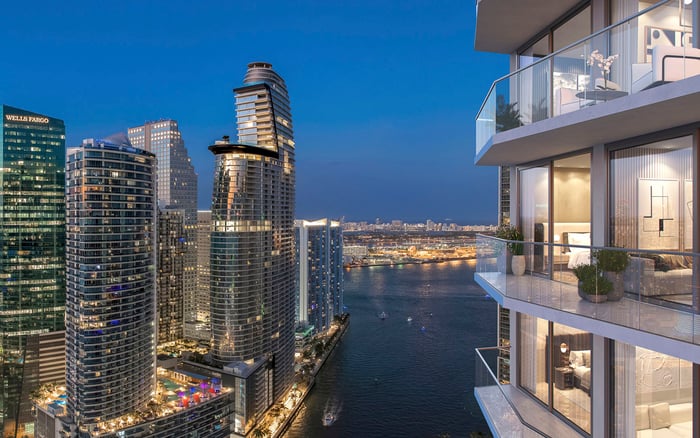
Miami’s strongest argument is access. The city offers multiple residential personalities within a relatively compact luxury map. Brickell provides the most urban version of the remote executive lifestyle, with a vertical rhythm that keeps business, dining, and private residences close together. For buyers who want a polished tower environment with immediate access to the city’s professional core, The Residences at 1428 Brickell reflects the appeal of living where work and social life can be compressed into a highly efficient routine.
Brickell is not necessarily quiet, and that is part of the point. It is for executives who like momentum. A morning call, a midday meeting, an evening dinner, and a late return home can feel integrated rather than fragmented. The tradeoff is that privacy must be selected carefully through building choice, floor plan, service culture, and the ability to retreat above the activity.
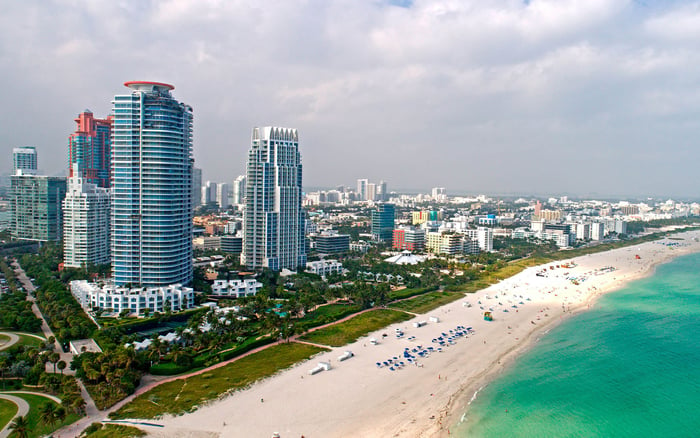
Miami Beach offers a different version of the same connected lifestyle. It is more resort-like, more design-conscious, and better suited to executives who want the day to move between calls, wellness, dining, and the ocean. A residence such as The Perigon Miami Beach fits the buyer who wants Miami’s cultural proximity without living in the city’s most corporate setting.
Palm Beach works best for executives who value separation. The attraction is not a lack of access, but a different kind of access: quieter, more curated, and more controlled. The daily experience feels less like participation in a fast-moving city and more like stewardship of a lifestyle. For remote leaders whose work is intense but self-contained, that distinction can be decisive.
Here, the home carries more of the day. Mornings can be quieter, calls can be taken without the ambient pressure of urban density, and evenings may center on private dinners, familiar circles, or a short drive to West Palm Beach for a more active dining and cultural scene. Palm Beach is especially compelling for executives who want their residence to feel like a true counterweight to work.
Buyers considering the island often compare it with nearby West Palm Beach, where newer residential offerings can provide a more contemporary, service-forward alternative while remaining close to the Palm Beach lifestyle. The Ritz-Carlton Residences® West Palm Beach speaks to those who want polished residential living with a calmer base than Miami, while still retaining access to restaurants, offices, private aviation routes, and the wider Palm Beach orbit.
Coconut Grove deserves separate consideration because it offers a middle path. It is Miami, but not Miami at full volume. The neighborhood appeals to executives who want access to the city while preserving a village-like, residential mood. It can be especially attractive to buyers who dislike the intensity of Brickell but still want to remain connected to Miami’s professional and cultural life.
For remote work, Coconut Grove can feel more balanced. It supports a calmer morning, a more residential evening, and a softer transition between family life and executive obligations. A project such as Four Seasons Residences Coconut Grove may appeal to buyers who want service, privacy, and a refined neighborhood setting without fully stepping away from Miami’s orbit.
This is where lifestyle becomes more than a preference. It becomes a productivity tool. Some executives perform best with the city close at hand. Others perform best when the city is available, but not constantly present. Coconut Grove can be the compromise for those who want Miami’s advantages without adopting its most accelerated pace.
Choose Miami if your executive life depends on movement. This includes frequent business dinners, visiting clients, cultural commitments, private events, and a desire to remain visibly connected to the market. Miami rewards the executive who wants to be in circulation.
It also suits those who prefer a more global social atmosphere. The luxury residential experience in Miami is broad, ranging from branded towers and waterfront condominiums to quieter enclaves and bayfront residences. For the remote executive who still wants an active public life, Miami allows the workday and personal life to overlap elegantly.
The caution is overstimulation. A buyer should be honest about noise tolerance, traffic tolerance, and the need for privacy. The most successful Miami choice is not simply the most prominent address. It is the address that creates a protected private environment while keeping the city’s advantages close.
Choose Palm Beach if your executive life depends on clarity. This is the better fit for leaders who need controlled days, fewer interruptions, and a more discreet social environment. It is also well suited to those who already travel frequently and want their South Florida residence to function as a retreat rather than another hub.
Palm Beach can feel more conservative in tempo, which many executives regard as a virtue. The social life is present, but less improvised. The sense of place is quieter. The day has more edges. For founders, investors, family office principals, and senior executives who spend much of their time in high-stakes calls, that calm can be materially valuable.
The caution is that Palm Beach may feel too quiet for buyers who want constant novelty. If restaurants, events, and a broader urban canvas are central to your weekly identity, Miami may be the more natural fit. If discretion, ritual, and residential grace matter more, Palm Beach has the advantage.
Begin by mapping a real week, not an ideal one. Count the in-person meetings you expect, the dinners you will actually attend, the flights you will take, and the hours you want fully private. Then consider whether your spouse, partner, children, or guests will use the residence differently than you do.
The best choice may not be binary. Some executives keep Miami as the connected base and Palm Beach as the quieter counterpoint. Others choose one primary residence and rely on hotels, clubs, and short stays to satisfy the other lifestyle. The key is to avoid buying for a fantasy version of your schedule.
Miami offers kinetic access. Palm Beach offers composure. Both can be exceptional. The more demanding your professional life, the more important it becomes to choose the environment that restores you when the screen closes.
Is Miami better than Palm Beach for remote executives? Miami is better for executives who need frequent access to meetings, restaurants, events, and a broader social network.
Is Palm Beach better for privacy? Palm Beach generally appeals to buyers who prioritize discretion, routine, and a quieter residential setting.
Where should a remote executive live in Miami? Brickell, Miami Beach, and Coconut Grove each offer different versions of executive living, from urban energy to calmer residential balance.
Is West Palm Beach a practical alternative to Palm Beach? West Palm Beach can offer a more contemporary residential base while keeping the Palm Beach lifestyle close.
Does Brickell make sense for working from home? Brickell works for executives who like efficiency, vertical living, and quick access to dining and professional activity.
Does Miami Beach feel too social for remote work? It depends on the building and routine; Miami Beach can be highly livable when privacy and service are chosen carefully.
Is Coconut Grove a good compromise? Yes, Coconut Grove can suit executives who want Miami access with a quieter, more residential daily rhythm.
Who should choose Palm Beach over Miami? Palm Beach is best for executives who value calm, familiar social patterns, and a residence that feels removed from daily intensity.
Can an executive split time between both markets? Yes, many buyers think in terms of complementary rhythms, using one location for access and the other for retreat.
What is the most important factor before deciding? Your real weekly calendar matters most, including meetings, travel, family needs, privacy expectations, and desired social pace.
To compare the best-fit options with clarity, connect with MILLION.
If branded residences are on your mind — as a home or as an allocation — we would be glad to share what we are seeing, privately.
Begin a quiet conversation