Oceanfront vs Skyline Views: Casa Cipriani Miami Beach and Miami Tropic Residences
Quick Summary
- Oceanfront frontage vs skyline altitude
- 23 residences vs 329 residences
- Terraces and glass define both towers
- Verify orientation, height, future projects
The new definition of “a view” in South Florida
Luxury buyers in South Florida rarely evaluate a residence by the floor plan alone. They shop for light, horizon, and how a home feels at 7 a.m. and again at 7 p.m. That is why two pre-launch conversations are gaining so much attention: Casa Cipriani Miami Beach in Mid-Beach and Miami Tropic Residences in Midtown.
Both concepts borrow from hospitality, both lean into expansive glazing and generous terraces, and both target buyers who want a deliberately curated address. But their view strategies are fundamentally different. One is a boutique, oceanfront proposition built around direct Atlantic exposure and privacy. The other is a high-rise statement that emphasizes elevation, scale, and a city-and-bay panorama.
Two view philosophies: ocean horizon vs city panorama
In Miami, “best view” is not a single standard. It is a hierarchy of preferences.
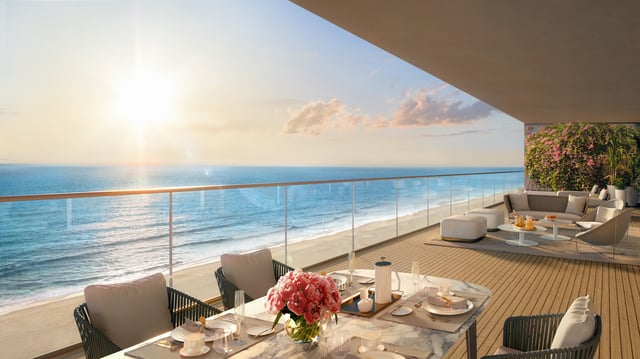
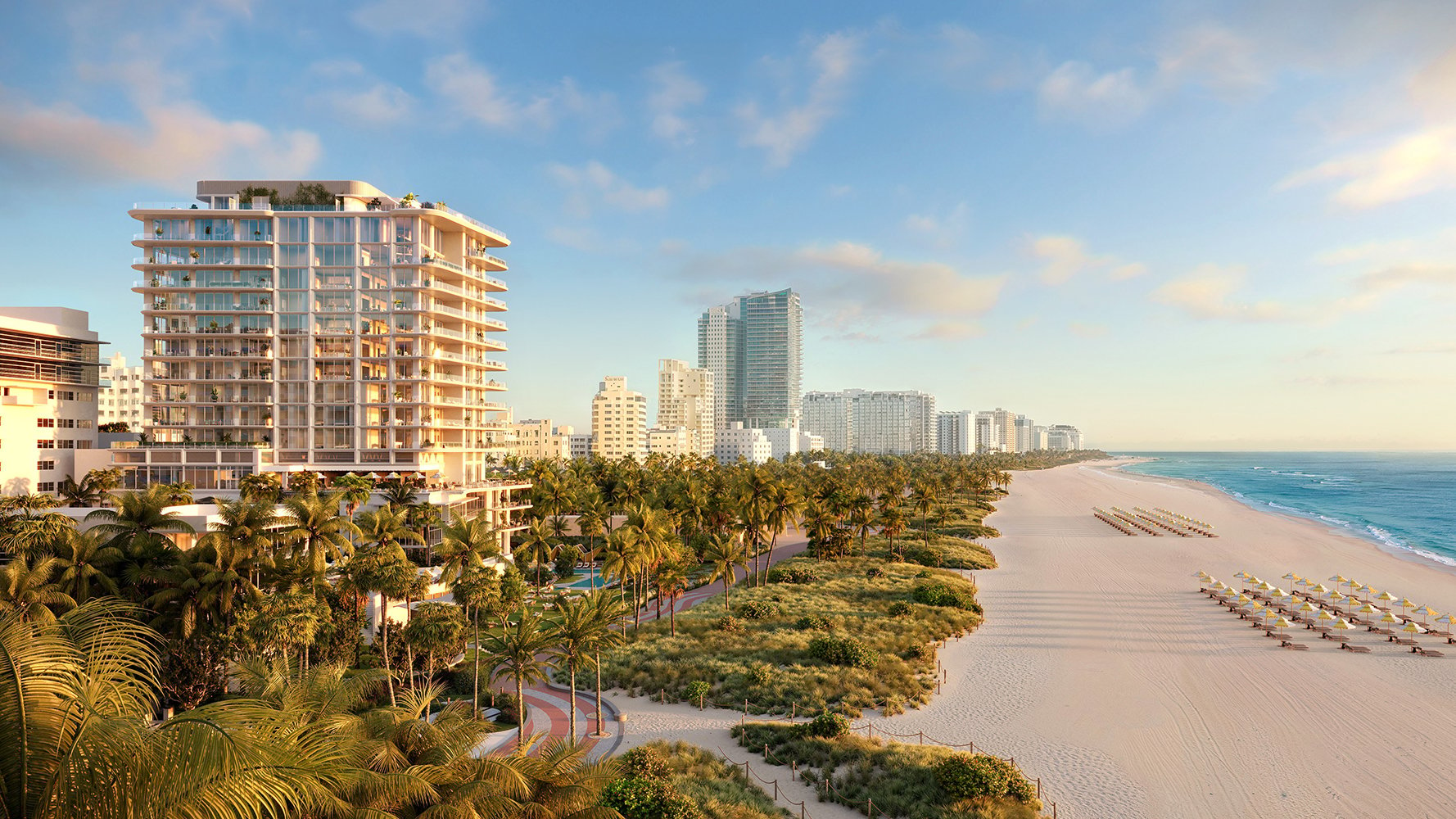
An oceanfront outlook prioritizes a clean horizon line, sunrise light, and the steady sensory cadence of the coast. The appeal is often less about variety and more about permanence. The ocean is the constant, and that consistency can make interiors feel calmer and more settled.
A skyline and bay panorama is more cinematic. It evolves with weather, time of day, and the city’s growth. Height becomes a tool for privacy and, for many buyers, a shorthand for contemporary Miami.
The practical takeaway is simple: view value is created by the combination of orientation, floor height, terrace geometry, and what can be built nearby. Even in widely marketed “panoramic” projects, not every residence delivers the same composition.
Casa Cipriani Miami Beach: Atlantic first, privacy engineered
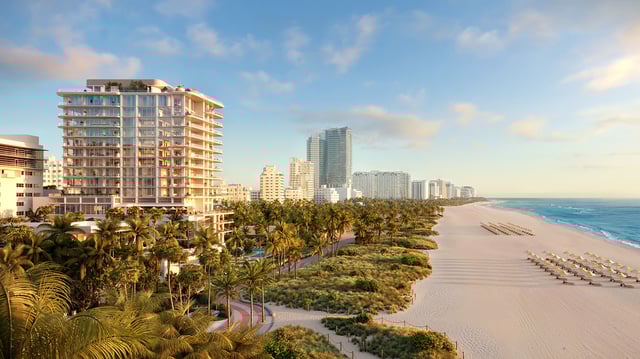
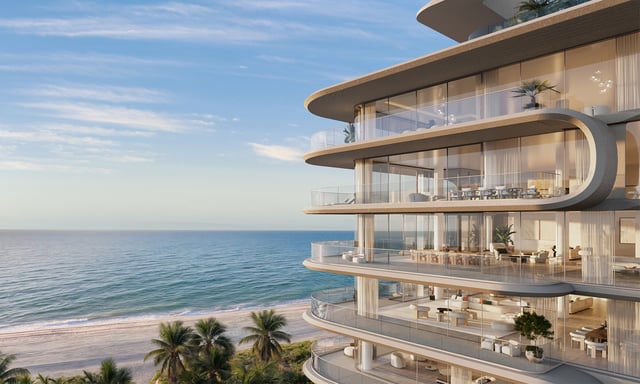
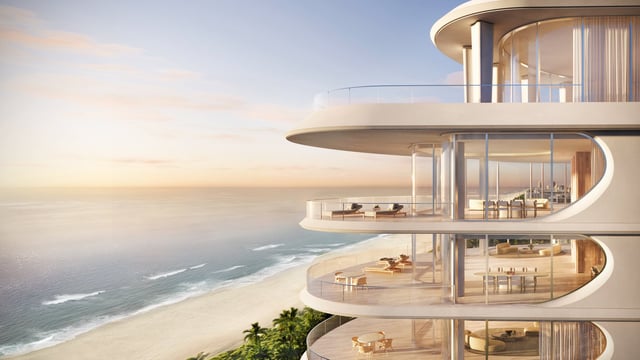
Casa Cipriani Miami is planned for 3611 Collins Avenue, Miami Beach, on a Mid-Beach oceanfront site. Publicly described as a 17-story branded project with 23 ultra-luxury residences, it also includes boutique hotel and private members’ club components. That small unit count is a meaningful part of the offer. Fewer residences typically mean fewer neighbors, lighter shared elevator traffic, and a more controlled arrival experience.
Here, the headline is view positioning. The project has been described as emphasizing direct Atlantic-facing exposure as a core selling point. In a market where premium buildings can still be set back from the sand, true beachfront adjacency is not only a lifestyle attribute. It is a durable differentiator.
The design language, as presented publicly, leans on large terraces paired with expansive glazing. This is not purely aesthetic. It is how an ocean view becomes lived-in. A terrace deep enough to use daily, combined with floor-to-ceiling glass, allows the horizon to feel integrated with the interior rather than displayed like artwork.
Pricing for Casa Cipriani Miami has been widely reported to start around $25 million. At that tier, many buyers prioritize what cannot be replicated: oceanfront frontage, brand discretion, and the assurance that ownership is limited to a very small group.
In market conversation, Casa Cipriani is also read as the Cipriani brand extending into Florida residential real estate, linking a recognizable hospitality name to a Collins Avenue address.
Miami Tropic Residences: Midtown altitude and an urban horizon line
Miami Tropic Residences is planned for 3501 NE 1st Avenue in Midtown, near the Design District and Wynwood. Where Casa Cipriani emphasizes boutique scale, Miami Tropic is publicly described as a 48-story tower with 329 residences. It is a different proposition, one built on verticality and a larger ownership community.
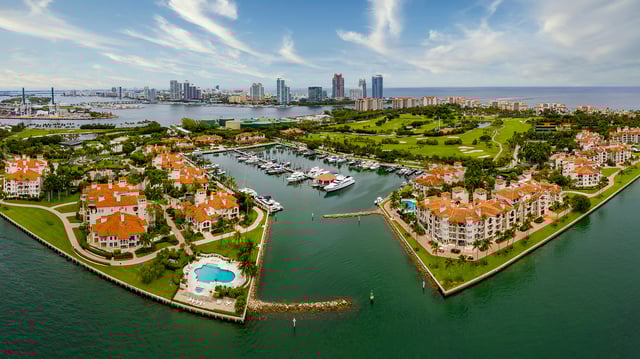
The view thesis is elevation. The tower markets panoramic, high-floor sightlines that can include Biscayne Bay and the Miami skyline, with corridors that vary by orientation and floor. That caveat is not a footnote. It is the shopping assignment. In a skyline-forward building, small shifts in angle and height can change the view from bay water to downtown lights to a more neighborhood-facing outlook.
The design roster frames the project as an architecture and interiors statement: Arquitectonica is credited for the tower design, and Yabu Pushelberg for interiors. Marketing emphasis on floor-to-ceiling glass and expansive terraces supports the goal of maximizing light and keeping the city visually present.
Branding also takes a distinct path. Jean-Georges’ involvement is positioned as a central differentiator, connecting the tower’s identity to chef-driven lifestyle and experiences. For certain buyers, that reads less as a dining feature and more as a signal of curation: a building with a social rhythm and service sensibility intended to feel intentional.
Miami Tropic Residences pricing has been marketed from roughly $1.1 million+, depending on plan, floor, and market phase. In practical terms, that places it in a different entry band than Casa Cipriani, with more flexibility for buyers who want a branded, design-forward home base without paying for direct beachfront scarcity.
Price positioning and what it implies for view value
When one project is widely reported to start around $25 million and the other is marketed from roughly $1.1 million+, the view conversation becomes more nuanced than “ocean vs skyline.” The price spread typically signals:
- Scarcity. A 23-residence oceanfront building is, by definition, limited.
- Use case. A boutique, club-adjacent residence often appeals to buyers who value discretion and a quieter social footprint.
- Optionality. A 329-residence tower can offer more variety in exposures and elevations, and more entry points into the building.
Neither approach is inherently “better.” The more useful question is which view aligns with your day-to-day habits: morning light over the water and beach adjacency, or altitude, energy, and Miami as a luminous cityscape.
What to verify before you commit in Pre-construction
In pre-construction buying, view promises are where sophistication matters most. Regardless of the brand, buyers should press for clarity on four points.
First, orientation and line-of-sight: what direction does the primary living space face, and what does it look over today? Second, floor height: in skyline projects, height can determine whether water reads as a broad expanse or a thin slice. Third, balcony geometry: a truly usable terrace can improve livability, while certain configurations can partially frame or obstruct sightlines. Fourth, future development risk: nearby parcels and zoning can change what “protected” means over time.
This is also where branding intersects with reality. Hospitality-linked residences often sell a sense of ease. The view contributes to that feeling, but so does the predictability of the experience: arrival, privacy, and how common spaces support the lifestyle you actually live.
Where these two towers sit in the broader Miami Beach to Midtown map
Buyers comparing Mid-Beach and Midtown are often choosing between two versions of Miami.
Mid-Beach is shoreline-first, with Collins Avenue as a recognizable coastal corridor and daily life that naturally orbits the ocean. If your non-negotiable is direct Atlantic exposure and a true relationship to the beach, Casa Cipriani’s positioning fits that logic.
Midtown is more city-facing, with proximity to Miami’s design and cultural ecosystem. A residence here can feel like a vantage point over the bay and skyline, with the city’s movement visible from above. Adjacency to Wynwood reinforces the neighborhood’s creative energy.
For buyers who want to keep options open within Miami Beach, other branded and ultra-luxury conversations can include Shore Club Private Collections Miami Beach and 57 Ocean Miami Beach, each aligned with a slightly different interpretation of beachfront living.
Ultimately, the decision functions like a self-portrait. An ocean view is a commitment to permanence and calm. A skyline view is a commitment to change, light, and the city as theater. Decide which one you want to return to, day after day.
FAQs
Where is Casa Cipriani Miami located?
It is planned for 3611 Collins Avenue in Mid-Beach, Miami Beach.
How many residences are planned at Casa Cipriani Miami?
The project has been described as having 23 ultra-luxury residences.
How tall is Casa Cipriani Miami?
It has been publicly described as a 17-story branded project.
Is Casa Cipriani considered Oceanfront?
Yes. It is planned on an oceanfront site and is positioned around direct Atlantic-facing views.
Where is Miami Tropic Residences planned?
It is planned for 3501 NE 1st Avenue in Midtown Miami, near the Design District and Wynwood.
How tall is Miami Tropic Residences and how many units are planned?
It has been described as a 48-story tower with 329 residences.
Who is credited for design at Miami Tropic Residences?
Arquitectonica is credited for architecture and Yabu Pushelberg for interiors.
Do all units in either building have the same “panoramic” view?
No. View quality typically depends on orientation, floor height, terrace design, and surrounding development.
What pricing has been publicly discussed for each project?
Casa Cipriani has been widely reported to start around $25 million, while Miami Tropic has been marketed from roughly $1.1 million+.
Which is better for me, Miami Beach ocean views or Midtown skyline views?
Choose Miami Beach if daily life is anchored to the Atlantic and beach adjacency; choose Midtown if you want altitude, skyline drama, and a city-forward horizon. Explore more South Florida residences with MILLION Luxury.

Million Luxury
Million Luxury
Welcome to MILLION, an exclusive luxury real estate boutique nestled in the heart of South Florida’s most desirable locations. Specializing in high-end properties, we provide a sanctuary for discerning clients including top Fortune 500 executives, affluent families, celebrities, and professional athletes from across the globe. At MILLION, we understand the unique demands of our elite clientele and offer a seamless blend of confidentiality and personalized attention. Our commitment to privacy is unwavering; we ensure that every transaction and interaction is handled with the utmost discretion and according to stringent confidentiality protocols. Our concierge service embodies the pinnacle of white-glove care, offering tailored assistance that transcends traditional real estate support.