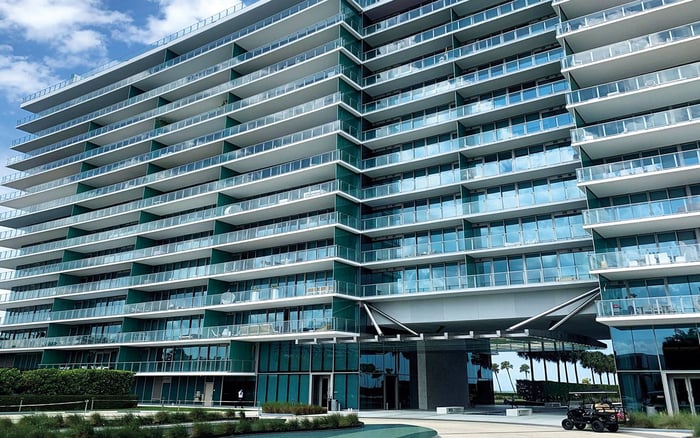
A discreet due diligence guide for Oceana Key Biscayne buyers focused on ownership structure, association governance, insurance, resilience, privacy, and long-term wealth preservation.

Oceana Key Biscayne belongs to a category of South Florida acquisition where beauty is not the full thesis. The setting, the scale of capital, and the condominium form all invite a more disciplined question: how should the asset be owned, insured, governed, maintained, and ultimately transferred?
For a luxury buyer, asset protection is often misunderstood as a narrow creditor shield. In practice, it is broader. It includes legal structure, tax posture, operational control, physical resilience, association solvency, privacy, succession planning, and the ability to preserve liquidity through market cycles. A residence can be visually compelling and still be structurally unsuitable for a particular family office, foreign buyer, relocating executive, or multigenerational estate plan.
That is why essential diligence at Oceana Key Biscayne begins before a contract is signed. The rendering may show light, water, and proportion. It does not answer whether the unit should be held personally, through an LLC, a trust, a family office vehicle, a foreign entity, or another structure designed around the buyer’s risk profile.
The first verification is not the view. It is the name on the purchase documents. A buyer should decide, with qualified counsel, whether direct personal ownership aligns with the broader balance sheet. For some buyers, simplicity is valuable. For others, liability separation, estate planning, privacy, or cross-border succession may require a different structure.
An LLC can offer organizational clarity, but it may create financing, tax, reporting, or association-approval considerations. A trust can support estate objectives, but the trust design must be coordinated with title, lender requirements, tax reporting, and the buyer’s domicile plan. A foreign entity may help with one objective and complicate another, particularly where U.S. estate tax, beneficial-ownership disclosure, FIRPTA, or succession rules are involved.
The safest posture is not to assume that one structure fits all affluent buyers. A domestic family relocating to Florida, an international owner seeking a seasonal residence, and a family office making a long-horizon investment decision may all arrive at different answers.
Because Oceana Key Biscayne is a condominium acquisition, the association is inseparable from the asset. Buyers should review the declaration, bylaws, rules and regulations, budgets, reserves, assessments, insurance framework, meeting history, and board governance before closing. These documents are not administrative background. They shape control, cost, use, and future liquidity.
Association finances deserve particular attention. A pristine residence can be weakened by underfunded reserves, rising insurance costs, deferred maintenance, unexpected repairs, or special assessments. Those items can affect equity, cash flow, and ease of resale. The question is not simply what the monthly carrying cost is today, but whether the association has the financial architecture to absorb future stress.
Governance review should also include whether there are pending disputes, construction-defect claims, collection issues, insurance disagreements, or board-level conflicts. A luxury address does not eliminate governance risk. It only raises the stakes when that risk is missed.
A rendering cannot show every condition that matters. Buyers should verify structural integrity, building-envelope maintenance, mechanical-system condition, seawall or coastal exposure where applicable, hurricane resilience, and post-storm habitability. In an oceanfront or near-water environment, asset protection includes the physical capacity of the property to endure heat, wind, water, salt, and time.
Key Biscayne’s island setting adds another layer. Emergency access, evacuation logistics, infrastructure resilience, and the ability to occupy or secure the residence after a storm are not merely lifestyle details. They are risk variables. A second home that cannot be accessed, insured efficiently, or stabilized quickly after a severe event may not perform as a protected asset.
For a buyer comparing Key Biscayne residences with other South Florida luxury markets, the island’s privacy and atmosphere are part of the appeal. The same characteristics that create discretion can also make resilience planning more important. The proper question is not whether the location is desirable. It is whether the ownership plan recognizes the location’s obligations.
Insurance diligence should go beyond asking whether coverage exists. Buyers should understand the association’s master policy, windstorm and flood exposure, deductibles, exclusions, claims history, and how losses could translate into assessments or reserve pressure. At the unit level, HO-6 coverage, contents coverage, loss-assessment coverage, and umbrella liability should be coordinated with the buyer’s broader insurance program.
High-net-worth owners often assume that private wealth solves insurance friction. It does not always solve availability, deductibles, exclusions, or post-loss timing. A residence can be financially strong only if the insurance architecture is aligned with the ownership structure and the association’s coverage.
This is also where lender requirements, title review, and entity structure intersect. If the unit is owned through a vehicle, the named insureds, additional insureds, mortgagee clauses, and liability protections must be consistent. Precision matters because small mismatches often appear only when a claim or dispute arises.
Privacy is a legitimate objective for many Oceana Key Biscayne buyers, but privacy planning must be realistic. Title, lender, tax, association, and beneficial-ownership rules may require disclosures. The goal is not invisibility at any cost. The goal is lawful discretion that does not undermine financing, compliance, estate planning, or future transferability.
A buyer should also verify occupancy and use restrictions. Limits on leasing, guests, pets, approvals, and minimum rental periods can affect liquidity, cash flow, estate flexibility, and family usage. For some buyers, restrictions protect the residential character of the building. For others, they may reduce optionality. Either way, they must be understood before acquisition.
For domestic buyers moving to Florida, lifestyle relocation is not the same as formal domicile planning. A buyer seeking Florida tax residency should document the transition carefully and understand continuing exposure to former states. The residence may support the plan, but the plan cannot rely on the residence alone.
International buyers face a different matrix. U.S. estate-tax exposure, FIRPTA, reporting obligations, beneficial-ownership rules, withholding, treaty considerations, and cross-border succession should be reviewed before selecting the ownership vehicle. The wrong structure may be difficult or expensive to unwind later.
In both cases, the asset-protection decision is multidisciplinary. Florida real-estate counsel, tax counsel, estate-planning counsel, insurance advisors, structural consultants, and cross-border advisors may all belong at the table. The most elegant acquisition process is the one that resolves friction before it becomes embedded in the closing file.
The most useful approach is to treat the purchase as a private balance-sheet exercise. Confirm the proposed owner. Review the governing documents. Examine reserves and assessment history. Understand master insurance and unit-level coverage. Verify structural and mechanical issues that do not appear in marketing materials. Review use restrictions. Ask about disputes. Coordinate domicile, estate, and tax consequences.
This is not a defensive way to buy. It is a sophisticated one. In the ultra-premium market, the best assets are not merely acquired. They are structured. Oceana Key Biscayne may appeal through architecture, location, and lifestyle, but the enduring value of the acquisition depends on whether the buyer’s legal, financial, and physical risk controls are built with equal care.
What should a buyer verify first at Oceana Key Biscayne? The first issue is usually the ownership structure, because it affects liability, tax, privacy, financing, and succession planning.
Is personal ownership always the simplest choice? It may be simple, but it is not always optimal. Buyers should compare personal ownership with entities, trusts, and other structures before signing.
Why do condominium documents matter so much? The declaration, bylaws, rules, budgets, reserves, and governance history affect cost, control, use, and future liquidity.
Can association finances affect a luxury unit’s value? Yes. Insurance increases, repairs, reserve shortfalls, and special assessments can erode equity and reduce flexibility.
What insurance issues should be reviewed? Buyers should examine master-policy coverage, windstorm and flood exposure, deductibles, exclusions, HO-6 coverage, and umbrella liability.
Does Key Biscayne’s island setting change the diligence? Yes. Emergency access, evacuation, infrastructure resilience, and post-storm habitability are part of the asset-protection analysis.
What should international buyers consider? They should review U.S. tax, estate-tax exposure, FIRPTA, reporting, beneficial-ownership, and cross-border succession consequences.
Is privacy guaranteed through an LLC or trust? No. Privacy must be balanced against lender, title, tax, association, and beneficial-ownership disclosure rules.
Can rental restrictions affect asset protection? Yes. Limits on leasing, guests, pets, approvals, or minimum rental periods can affect cash flow, liquidity, and estate flexibility.
What is the best way to shortlist comparable options for touring? Start with location fit, delivery status, and daily lifestyle priorities, then compare stacks and elevations to validate views and privacy.
When you're ready to tour or underwrite the options, connect with MILLION.
If branded residences are on your mind — as a home or as an allocation — we would be glad to share what we are seeing, privately.
Begin a quiet conversation