A buyer-focused guide to balancing pedestrian convenience with residential privacy across South Florida’s most compelling luxury districts.
In South Florida, walkability and discretion can seem to pull in opposite directions. The liveliest addresses place restaurants, wellness, culture, and daily conveniences close at hand, yet that same energy can bring traffic, noise, and visibility. The strongest luxury proposition is not simply a residence in a busy district, but a home that allows its owner to participate selectively, then retreat with ease.
This distinction matters in new-construction searches. Renderings can convey architecture and atmosphere, but they cannot fully reveal the experience between the front door and a regular table, morning coffee, fitness appointment, or evening engagement. Buyers should examine that journey at street level, block by block, rather than rely on a broad neighborhood label.
The central question is practical: Does an address make a refined daily routine possible on foot while preserving a composed sense of arrival?
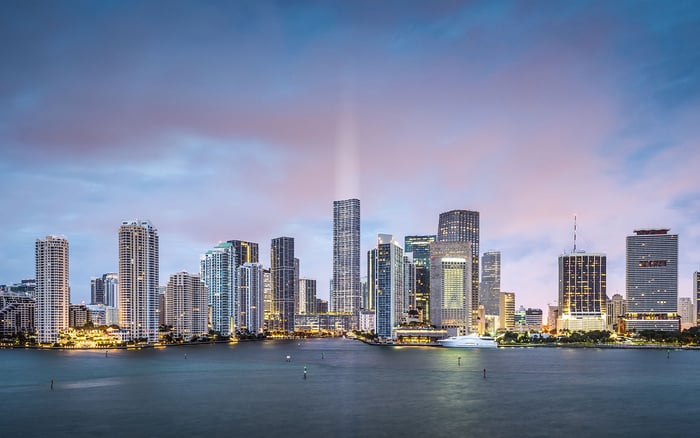
Brickell presents the clearest urban expression of the brief. Its appeal lies in the possibility of moving through much of the day without defaulting to a car. The tradeoff is exposure. A prestigious address can still feel hectic if its immediate frontage, vehicle approach, or pedestrian path is overly public.
A buyer considering 2200 Brickell should test the surrounding routes personally, distinguishing between theoretical proximity and a walk that feels natural. Observe crossings, shade, construction activity, evening noise, and the transition back into the residential setting. Discretion begins before the lobby, particularly when household members, guests, staff, and deliveries converge at peak hours.
Brickell works best for an owner who values immediacy and accepts a visibly urban context. The objective is not isolation, but control over when the city enters the residential experience.
Coconut Grove offers a different interpretation: connected living shaped by a village-scale routine rather than a conventional downtown cadence. The relevant luxury is spontaneity-the freedom to leave home for a meal or appointment without turning every outing into a driving decision.
Buyers considering The Well Coconut Grove should focus on the exact path to the places they expect to use weekly. A short route that feels calm, shaded, and intuitive may be more valuable than a greater number of destinations reached along uncomfortable streets.
Privacy should also be evaluated from the residence outward. Consider views into the home, neighboring development, terrace exposure, and how the entrance relates to passing foot traffic. In Coconut Grove, the ideal balance is sociability by choice, followed by a return home that feels visually and acoustically removed.
Coral Gables appeals to buyers seeking an established, polished setting with an urban routine that still feels measured. Here, walkability is less about constant intensity and more about placing selected daily needs within a coherent personal circuit.
For those evaluating Ponce Park Coral Gables, the most useful exercise is to build a realistic weekly map. Include dining, wellness, errands, social plans, and the point at which a car remains necessary. The resulting pattern will be more revealing than a generic walkability score.
Discretion in this context depends on subtle separations: residence from retail activity, private arrival from general foot traffic, and domestic calm from the energy of nearby streets. Buyers should assess these boundaries in person rather than assume that refinement at the district level guarantees privacy at the building level.
West Palm Beach belongs in the conversation for buyers seeking a compact lifestyle with an elegant sense of pace. The central consideration is whether a specific residence supports the owner's preferred routine-not whether the broader city can be described as walkable.
At Mr. C Residences West Palm Beach, as with any candidate, buyers should study the property's immediate edges. Look at pedestrian activity, vehicle queues, service access, neighboring uses, and the feel of the route after dark. These observations help determine whether convenience remains comfortable throughout the day.
A discreet address need not be remote. Instead, it should provide a graceful threshold between public and private life, allowing owners to enjoy nearby activity without feeling continuously on display.
Bay Harbor Islands can suit buyers whose definition of walkability prioritizes a quieter daily circuit over metropolitan intensity. The appeal is not the promise of having everything nearby, but the potential to reach the right essentials while retaining a more residential atmosphere.
When viewing The Well Bay Harbor Islands, test the routes that matter to each household member. Families, seasonal residents, and full-time owners may assign very different value to the same address. Consider weather exposure, crossing comfort, evening lighting, and whether the walk remains appealing while carrying packages or accompanying guests.
The most successful fit depends on expectations. Buyers seeking constant stimulation may prefer a denser center, while those who value a quieter base may find selective connectivity more luxurious.
Begin with the arrival sequence. Approach on foot and by car, then note sightlines, waiting areas, delivery activity, and the distance between public space and the residential threshold. Ask how residents, guests, staff, and services move through the property-and whether those paths feel appropriately separated.
Next, inspect the residence at different hours. Morning traffic may reveal school or service patterns, while evening visits can expose restaurant noise, lighting, and pedestrian volume. From inside, assess neighboring windows, terraces, future view corridors, and the degree to which curtains would be required for everyday privacy.
Finally, define walkability personally. One buyer may prioritize dining and culture; another may care more about wellness, groceries, waterfront paths, or pet routines. The best address reduces friction in the life actually being lived while making privacy feel effortless.
What does walkability mean for a luxury buyer? It means reaching personally important destinations on foot along routes that feel comfortable, attractive, and practical.
Can a highly walkable address still feel private? Yes. The key is a well-composed transition between active public streets and the residential arrival.
Is Brickell the default choice for walkable luxury? Brickell offers an urban option, but the right choice depends on a buyer's tolerance for density and visibility.
Why evaluate the micro-location rather than the neighborhood? Conditions can change from one block to the next, affecting comfort, noise, crossings, and exposure.
When should buyers test nearby walking routes? Test them in the morning, at midday, after dark, and during the hours most relevant to daily life.
Which privacy details deserve close attention? Study arrival paths, lobby visibility, service circulation, terrace exposure, neighboring windows, and street noise.
Does a quieter district automatically provide more discretion? No. Building orientation, adjacent uses, and circulation can matter as much as overall neighborhood intensity.
Should buyers rely on walking times alone? No. Crossing quality, shade, weather exposure, traffic, and the character of the route are equally important.
How should seasonal residents assess walkability? They should map the routines they expect during occupancy and consider how local conditions may vary by season.
What is the final test before making a decision? Walk the essential routes, experience the arrival repeatedly, and confirm that convenience never compromises personal comfort.
If you'd like a private walkthrough and a curated shortlist, connect with MILLION.
If branded residences are on your mind — as a home or as an allocation — we would be glad to share what we are seeing, privately.
Begin a quiet conversation