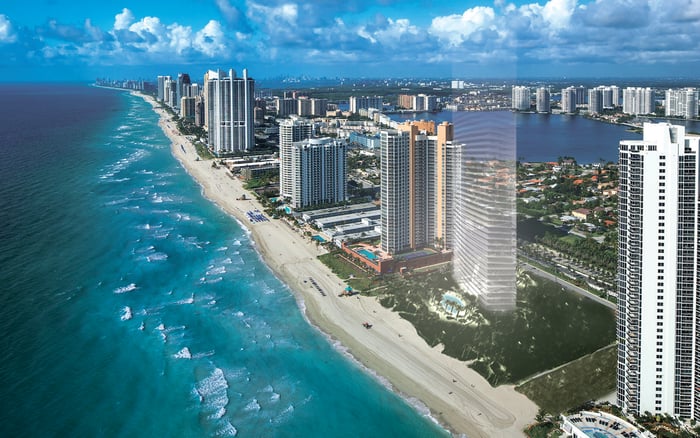
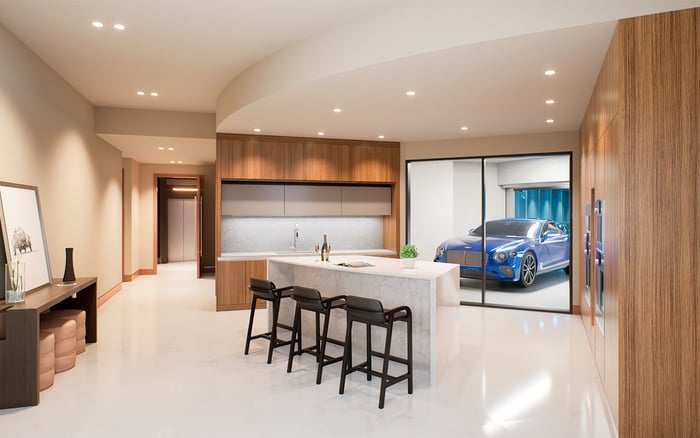
A discreet due diligence guide for Bentley Residences Sunny Isles buyers focused on permitted work hours, construction rhythm, closing expectations, and livability beyond the rendering.

Renderings are designed to express aspiration: the arrival sequence, the glass line, the private elevator moment, the water, the light. For a buyer evaluating Bentley Residences Sunny Isles, those images are part of the emotional architecture of the decision. Yet in a serious luxury purchase, especially in a pre-construction or new-construction setting, the more useful questions often sit outside the frame.
One of the most overlooked is also one of the simplest: when is work actually allowed to happen?
Permitted work hours can affect more than the pace of construction. They can shape noise expectations, delivery windows, contractor access, inspection timing, and the first months of ownership after closings begin. For a buyer accustomed to discretion, rhythm, and control, the issue is not merely regulatory. It is experiential.
That does not mean a buyer should approach Bentley Residences Sunny Isles with skepticism. It means the buyer should approach it with precision. The best residences are not purchased only by admiring the finished vision. They are purchased by understanding how that vision is delivered, occupied, and governed.
Permitted work hours are the periods during which construction or improvement work may be performed under applicable rules, permits, approvals, and building policies. The phrase can sound administrative, but it carries practical consequences.
For a tower under construction, work-hour rules may influence when exterior activity, material movement, heavy equipment, staging, or site operations can take place. For completed residences, related rules may govern owner renovations, decorator installations, punch-list work, appliance deliveries, millwork adjustments, and move-in coordination. The first category affects delivery. The second affects daily life.
This distinction matters because a luxury buyer is often focused on the date of completion, while the lived experience may be influenced by what happens after substantial completion. A building can feel complete in a sales presentation while still requiring carefully managed access for finishing work, owner customizations, inspections, and building stabilization.
For Sunny Isles purchasers, the practical question is not only, “When will the residence be ready?” It is also, “What kind of work can occur around me once I am in residence, and during what hours?”
The most refined due diligence begins with direct, ordinary questions. Ask for the current framework governing permitted work hours for the project site, including any distinctions between weekday work, weekend work, holidays, emergency activity, and interior finishing. If the answer is incomplete, ask who controls the final interpretation once the building is operational.
Buyers should also ask whether different categories of activity are treated differently. Quiet interior work may be managed differently from structural work, exterior work, deliveries, elevator reservations, or work that requires access to common areas. A decorator installing wall coverings is not the same as a contractor cutting stone, and the building rules should recognize that difference.
Another important question is whether the permitted hours for construction differ from the permitted hours for post-closing owner work. In many luxury buildings, the transition from developer construction to condominium governance is a major change in how access is handled. A buyer planning custom closets, lighting, art walls, or specialty finishes should understand the rules before scheduling vendors.
Finally, ask how notices are provided. A polished building culture is not defined only by restrictions. It is defined by communication: advance notice, predictable scheduling, protection of elevators and corridors, and the ability for residents to plan around activity.
At the ultra-premium level, buyers are not simply purchasing square footage. They are purchasing control over atmosphere. The value proposition includes privacy, acoustic comfort, arrival dignity, service discipline, and the ability to entertain or retreat without unnecessary friction.
Permitted work hours are connected to each of those elements. If work begins early, runs late, or clusters around weekends, the effect can be felt in residences, amenity areas, valet operations, loading zones, and elevators. Even when every activity is legitimate, poor coordination can make a building feel unfinished.
This is especially relevant for second-home owners who may use the residence intensely over short stays. A buyer who arrives for a long weekend does not want to discover that a neighboring build-out, delivery schedule, or common-area adjustment dominates the experience. The issue is not whether work is allowed. It is whether expectations have been properly set.
Investment buyers should view this through a separate lens. A building with clear rules, disciplined enforcement, and predictable communication may be easier to position for high-quality resale or long-term ownership. Luxury buyers remember not only the architecture, but the first impression of order.
Before relying on any verbal summary, review the governing documents available for the transaction stage. The relevant materials may include purchase documents, condominium documents, construction notices, architectural guidelines, alteration agreements, move-in procedures, contractor rules, elevator reservation policies, and any building management protocols issued before or after closing.
The most useful documents are the ones that explain responsibility. Who approves contractor access? Who controls work hours after turnover? What happens if an owner’s contractor violates building rules? Are deposits required? Are insurance certificates required? Is there a defined process for after-hours emergency work?
A careful buyer should also look for ambiguity. If the documents are silent on certain types of work, ask for clarification in writing. Silence can lead to differing interpretations between residents, management, contractors, and the association. In a high-design building, ambiguity is rarely elegant.
For Bentley Residences Sunny Isles, this review should be treated as part of the same diligence as floor-plan selection, view analysis, terrace usability, parking configuration, and closing economics. The topic may feel less glamorous, but it is often closer to daily reality.
A rendering communicates the intended lifestyle. Permitted work-hour diligence tests the operational path toward that lifestyle. The goal is not to challenge the vision, but to understand the mechanics behind it.
Ask whether construction and post-closing activities are expected to overlap with early occupancy. If so, ask how residents will be protected from disruption. The answer may involve designated service routes, elevator scheduling, loading-area controls, contractor identification, dust protection, acoustic measures, and limits on disruptive work.
For buyers with staff, children, pets, art collections, or frequent guests, these details are not minor. They determine how gracefully a residence can be occupied while a building completes its final transitions. The smoothest luxury environments tend to be those where rules are specific enough to guide behavior, yet flexible enough to handle genuine emergencies.
It is also wise to ask how disputes are handled. A resident may accept an occasional inconvenience if there is a clear point of contact and a credible enforcement process. What luxury buyers resist is uncertainty.
Before signing, removing contingencies, or closing, build a concise checklist. Confirm the permitted work-hour framework for active construction. Confirm the rules for owner improvements after closing. Confirm whether weekend and holiday work are treated differently. Confirm how noisy work is defined. Confirm whether elevator reservations or loading docks restrict timing even when the work itself is permitted.
Then move from rules to operations. Ask who communicates planned disruptions, how much notice is typical, and whether residents can access a central schedule. Ask whether contractors must be pre-approved and insured. Ask whether management can stop work that violates the rules. Ask whether fines, deposits, or access suspensions apply.
This is not excessive caution. It is the discipline of buying at the top of the market. In the best residences, beauty and governance support each other. Architecture creates the desire; operations preserve it.
The finest buyers learn to read renderings as invitations, not guarantees. A sunset image may show serenity, but serenity in a condominium is also produced by policy, staffing, enforcement, and timing. A private arrival may look effortless, but effortlessness depends on how deliveries, contractors, and residents are choreographed behind the scenes.
For Bentley Residences Sunny Isles, permitted work hours should be part of a larger conversation about execution. The question is not simply whether the building will be striking. The question is whether the ownership experience will feel as composed as the design language suggests.
That is where buyer representation becomes valuable. A seasoned advisor can help frame the right questions, request written clarification, and identify which operational details deserve attention before capital is committed. In luxury real estate, confidence is often built by resolving practical matters early.
Why should a buyer ask about permitted work hours? Work hours can influence noise, access, deliveries, and the early ownership experience. They are a practical part of luxury due diligence.
Are permitted work hours the same for construction and owner renovations? Not always. Buyers should confirm whether tower construction, punch-list work, and private owner improvements are governed differently.
Should I rely on a sales presentation for this issue? A presentation is useful, but written rules and transaction documents are more important. Ask for clarification before signing or closing.
Can work-hour rules affect resale value? Indirectly, yes. Buildings with clear operations and disciplined communication often create stronger owner confidence.
What if I plan to customize my residence after closing? Ask about alteration approvals, contractor access, insurance requirements, elevator reservations, and noisy-work limits before scheduling vendors.
Do weekend rules matter for second-home owners? Yes. Weekend and holiday restrictions can affect how peaceful the residence feels during the times many owners are most likely to visit.
Who typically enforces work-hour rules after closing? Enforcement may shift to building management or condominium governance. Buyers should confirm the responsible party in writing.
What is the biggest mistake buyers make on this topic? They focus only on completion timing and overlook the transition period after early occupancy begins.
Should permitted work hours be reviewed with counsel? Yes, especially when the language appears broad, silent, or subject to interpretation. Counsel can help identify practical risk.
Is this diligence specific to Bentley Residences Sunny Isles? No. It is relevant to many luxury condominium purchases, but it is especially important where design expectations are exceptionally high.
When you're ready to tour or underwrite the options, connect with MILLION.
If branded residences are on your mind — as a home or as an allocation — we would be glad to share what we are seeing, privately.
Begin a quiet conversation