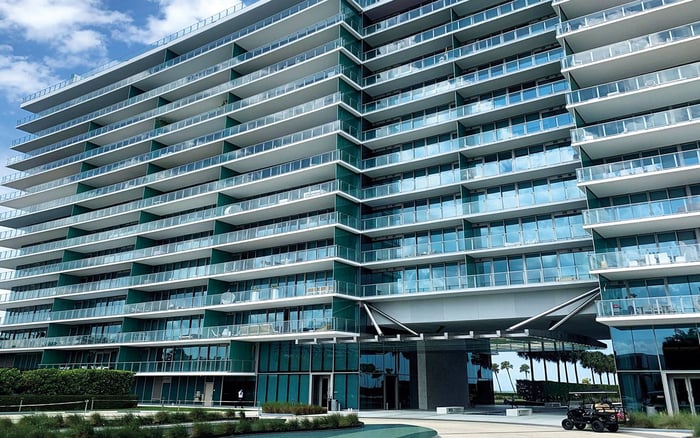
A discreet buyer-focused look at Oceana Key Biscayne and the practical meaning of lock-and-leave ownership, from staffing coordination to governance, vendor oversight, and hurricane-season readiness.

Oceana Key Biscayne is often considered by buyers who want a refined South Florida residence that can support periods of absence. The appeal is easy to understand: a Key Biscayne setting, a luxury condominium environment, and the promise of a lifestyle that may feel simpler than managing a stand-alone home while traveling.
The more serious question is not whether the building feels polished on arrival. For a high-net-worth or ultra-high-net-worth buyer, the lock-and-leave issue is whether the ownership experience remains controlled when the owner is away. That means understanding how departure preparation, key control, vendor access, communication, and emergency escalation actually work.
This distinction matters because a residential condominium is not automatically a hotel-residence service platform. A building may offer front-desk support, staffed common areas, and a service-oriented culture, but buyers should still confirm what is included, what is limited, and what must be privately arranged.
At the luxury end of the South Florida market, concierge depth is best understood as an operating system rather than a single amenity. A buyer should look at how front desk, security, valet, engineering, management, and approved vendors coordinate in practice. The value is not only the presence of people, but the consistency of procedures.
A lock-and-leave owner may need packages managed, vendor appointments coordinated, access instructions documented, a vehicle handled, or an unexpected condition escalated. These tasks are not as visible as views or finishes, but they are central to the way an absent owner experiences confidence.
The most sophisticated buyers separate building-provided services from privately arranged support. Housekeeping, preventive in-residence checks, plant care, maintenance visits, and pre-arrival preparation may require outside vendors or a private manager. The building’s role may be to facilitate access and communication, but buyers should not assume that every private in-unit task is performed by association staff.
A proper lock-and-leave review begins before purchase. Buyers should ask how the residence is expected to be left before an extended absence, who receives instructions, how vendors are approved, and how communications are handled if the owner is traveling.
Key control deserves special attention. Owners should understand who may access the residence, how access is logged, whether vendors are escorted or documented, and how emergency entry is handled. The objective is not suspicion; it is clarity.
In-unit oversight is another separate question. Some owners may be comfortable relying on common-area operations while arranging private inspections for the residence itself. Others may want a more integrated plan. Either approach can work if expectations are defined before closing.
Emergency response should also be reviewed carefully. A buyer should ask what happens after hours, during severe weather, when engineering attention is needed, or when a vendor appointment fails. In South Florida, lock-and-leave ownership is not only about convenience; it is also about procedures that reduce uncertainty while the owner is away.
In condominium ownership, governance and budget discipline shape the service experience. Staffing, maintenance, reserves, vendor standards, communication practices, and long-term upkeep all depend on how the association operates.
For Oceana Key Biscayne, buyers should evaluate concierge depth through that lens. The right questions include how service expectations are maintained, how management communicates with seasonal owners, and how operational priorities are balanced against cost control.
This is especially important for buyers who are comparing residential condominiums with branded or hotel-style residences elsewhere in South Florida. A residential model can offer privacy and a stronger feeling of home, but it can also require more owner-directed planning. The goal is not to blur the distinction, but to understand it before purchase.
Key Biscayne gives the lock-and-leave discussion a quieter tone than many denser urban luxury markets. Buyers are often drawn to the island character, the sense of retreat, and the ability to remain connected to Miami while living in a more composed setting.
That same quality makes operational reliability more important. When an owner is away, they are relying on people, procedures, and communication they cannot casually inspect. A beautiful residence may feel effortless during a stay, but absence is the real test of the service model.
For that reason, the most valuable due diligence is practical. Ask how the building handles vendors. Ask how staff communicate with owners who are not present. Ask what the association will do, what it will not do, and where a private management layer may be prudent.
Oceana Key Biscayne should be evaluated as a serious lock-and-leave candidate only after operational due diligence. The setting and residential positioning may appeal to buyers seeking a South Florida base for seasonal or intermittent use, but the conclusion should not be based on amenities alone.
Lock-and-leave ownership is a performance standard. It is created by staffing, governance, access discipline, vendor coordination, owner planning, and communication. For the right buyer with the right expectations, the model may be compelling, but it should be confirmed through documents, interviews, and a clear private support plan.
Is Oceana Key Biscayne automatically a lock-and-leave residence? Not automatically. Buyers should evaluate procedures, staffing, governance, vendor access, and communication before relying on the property for extended absences.
Is Oceana Key Biscayne a hotel residence? It should be evaluated as a residential condominium, not assumed to provide hotel-residence service intensity unless specific services are confirmed.
What should absent owners confirm first? They should clarify departure preparation, key control, vendor coordination, in-unit oversight, and emergency response.
Does concierge presence guarantee full lock-and-leave support? No. Concierge depth depends on how building teams coordinate and what services are formally available to owners.
Should buyers plan to use private vendors? Many owners should expect to arrange private vendors or a private manager for in-residence tasks that fall outside association responsibilities.
Why does governance matter? Governance affects staffing priorities, maintenance standards, communication practices, and the consistency of the owner experience.
What makes Key Biscayne relevant to this topic? The island setting can suit a quieter second-home rhythm, but it also makes clear operational procedures especially important for absent owners.
How should buyers evaluate emergency response? They should ask what happens after hours, during severe weather, when access is needed, or when an unexpected in-unit condition is reported.
What documents should buyers review? Buyers should review association materials, service rules, access procedures, budget information, and any available management policies with qualified advisors.
What is the main takeaway for a prospective buyer? The residence should be judged not only by lifestyle appeal, but by the reliability of the systems supporting ownership while the owner is away.
When you're ready to tour or underwrite the options, connect with MILLION.
If branded residences are on your mind — as a home or as an allocation — we would be glad to share what we are seeing, privately.
Begin a quiet conversation