A buyer-focused guide to how past water intrusion can affect the true cost, negotiating posture, insurance outlook and long-term ownership of a marina-adjacent South Florida home.
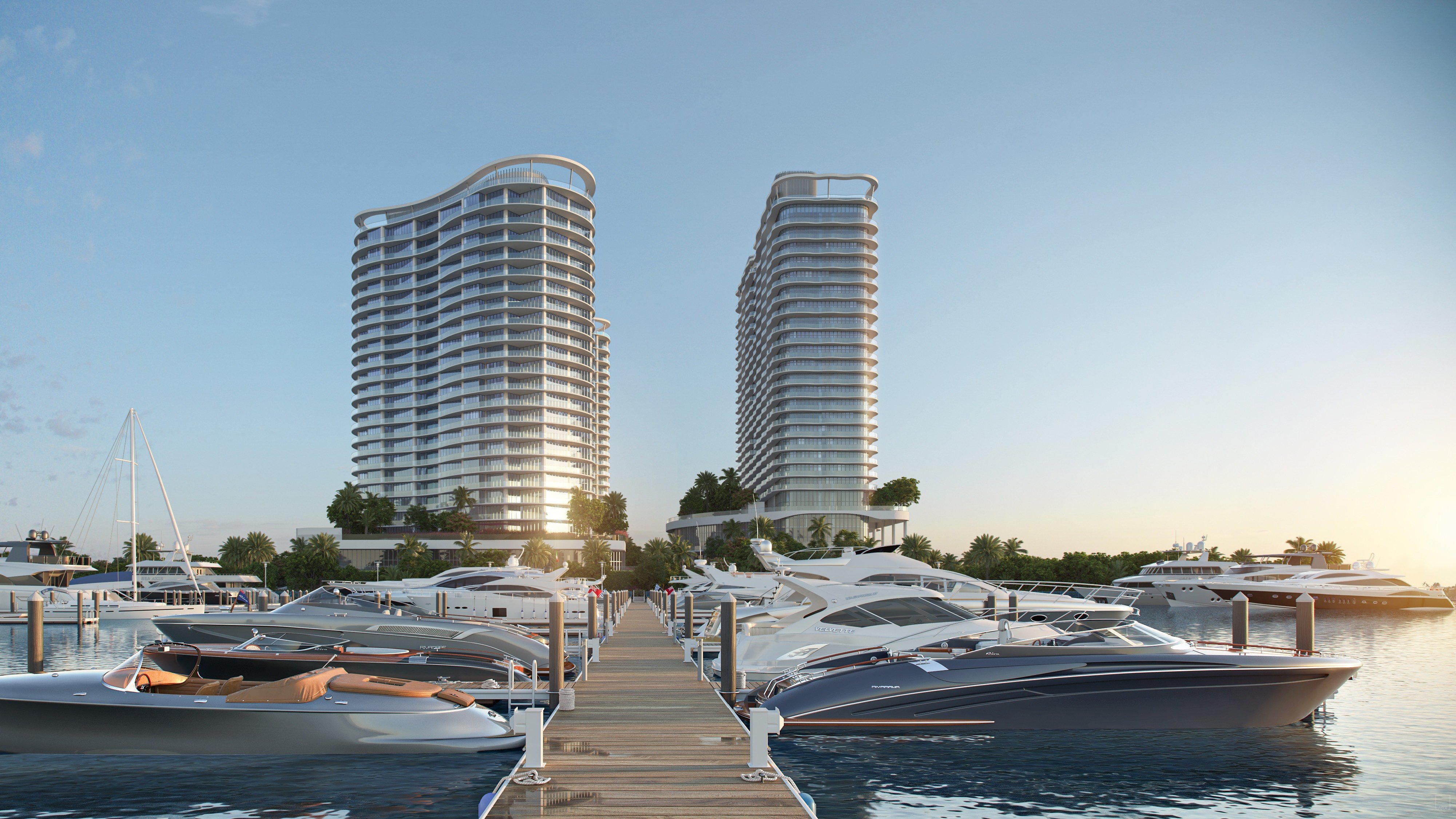
A marina-adjacent home in South Florida sells a precise dream: morning light across the basin, the quiet choreography of vessels returning at dusk, and an effortless connection between private life and open water. For sophisticated buyers, however, the romance of a nearby slip or shimmering view should never obscure the technical question that matters most: has water ever entered where it should not?
Water intrusion history can reshape the real cost of ownership in ways that may not be visible during a polished showing. A home may present beautifully after repairs, yet its prior exposure to storm surge, wind-driven rain, roof leaks, balcony drainage, window systems, plumbing failures, or ground-level seepage can influence insurance availability, maintenance reserves, financing comfort, future buyer confidence and the cadence of capital improvements.
The issue is not simply whether a property is near water. In South Florida, many of the most desirable addresses are. The issue is whether the home has a documented, well-remediated history or an ambiguous one. For a luxury buyer, that distinction can be worth far more than a decorative allowance or a modest price concession.
A marina location demands a different inspection mindset. Salt air, humidity, tidal conditions, storm exposure and proximity to seawalls or docks can create a complex environment for any residence. Even when living areas are elevated or the property appears impeccably maintained, water may have affected exterior assemblies, mechanical systems, storage rooms, garages, elevators, landscape drainage or below-grade components.
This is why the first tour can be aesthetic, but the second should be forensic. A buyer should ask where water has historically moved, how the property manages it, and whether prior repairs addressed the cause rather than simply restoring the finishes. Fresh paint, new flooring and immaculate millwork are not substitutes for understanding the building envelope.
In Fort Lauderdale, where the luxury lifestyle is often interwoven with boating, the question becomes especially relevant. A buyer comparing a private residence near the waterways with a full-service environment such as St. Regis® Residences Bahia Mar Fort Lauderdale may not be comparing only location and amenities. They may also be comparing the depth of building systems, maintenance protocols and the predictability of shared infrastructure.
The visible repair bill is only one line item. A prior water event can lead to additional inspections, selective demolition, mold assessment, building-envelope review, drainage correction, equipment replacement, design revisions and ongoing monitoring. If the event was significant or poorly documented, buyers may also build in a larger contingency for future discoveries.
Insurance is another central consideration. A property with a history of water intrusion may prompt more detailed underwriting questions, closer scrutiny of prior claims, or a need for additional documentation showing that remedial work was completed properly. Even when coverage is available, the buyer should understand deductibles, exclusions, required improvements and renewal risk.
Then comes resale. Luxury buyers often pay a premium for certainty. If a future purchaser sees a history of water intrusion without clear documentation, the property can feel less like a trophy and more like a negotiation. The market does not punish every prior event equally. It tends to discount uncertainty.
The most valuable document is not always a receipt. It is a coherent story, supported by professional evaluations, permits where applicable, invoices, photographs, product specifications, warranty information and evidence that the underlying condition was resolved.
A clean paper trail can separate a well-corrected incident from a lingering concern. Buyers should look for consistency among seller disclosures, inspection findings, contractor records and the current physical condition of the home. If a roof leak was repaired, what was repaired? If windows were replaced, were surrounding assemblies evaluated? If water entered a garage, were electrical, mechanical and storage areas assessed? If landscaping was altered, did it improve drainage or redirect it?
For waterfront property, due diligence should also extend beyond the walls. Site grading, seawall condition, dock interfaces, exterior drains, balcony scuppers, roof drainage and waterproofing details all matter. A beautiful waterview may command attention, but water management should command equal respect.
In a luxury condominium, the buyer’s exposure may be different, but it is not absent. The association may maintain certain exterior or common elements, while the owner remains responsible for interior finishes, appliances, built-ins and portions of the unit. Prior water intrusion in a building can also affect association reserves, insurance conversations, future assessments and buyer perception.
This is one reason newly developed or comprehensively managed waterfront residences attract buyers who want a more institutional approach to maintenance. Properties such as Riva Residenze Fort Lauderdale, Onda Bay Harbor and The Perigon Miami Beach speak to a buyer who values architecture, service and coastal living, while also wanting to understand how the building is designed, operated and maintained over time.
Still, newness alone is not a substitute for diligence. Buyers should review available building documents, ask how water-related maintenance is handled, understand responsibility boundaries and evaluate whether the unit’s exposure, floor height, terrace design and window systems align with their risk tolerance.
A boat-slip can be a coveted amenity, but it should also trigger additional inquiry. The presence of marine infrastructure means the buyer should understand access, maintenance responsibilities, electrical service, lifts, dock condition, storm protocols and any separation between the residential improvements and boating elements.
For single-family buyers, this may include seawall review, cap condition, tiebacks, drainage through the wall, dock decking and the relationship between yard elevation and habitable areas. For condominium buyers, it may involve association rules, assignment rights, use limitations and how dock maintenance is funded.
The point is not to dampen enthusiasm. It is to protect it. A home that supports boating beautifully should also support ownership predictably.
A water intrusion history does not automatically make a property undesirable. In some cases, a well-documented repair can give a buyer more confidence than an older property with no records and no meaningful updates. The pricing question is not simply, “Did water ever enter?” It is, “What happened, why did it happen, what was done, who verified it, and what remains exposed?”
The most disciplined buyers treat the answer as a pricing model. They may adjust for immediate repairs, future capital reserves, insurance complexity, carrying-cost uncertainty and eventual resale optics. In Boca Raton, a buyer looking at a marina-adjacent estate may weigh those considerations differently than a buyer considering a full-service residence such as Glass House Boca Raton, where the ownership structure and building management profile may create a different due diligence path.
A premium price can still be justified when location, architecture, views, docking and documentation align. But when the water story is incomplete, the buyer should not pay as though it is pristine.
The finest South Florida acquisitions often reward the buyer who slows down at the right moment. Water intrusion history is rarely solved by instinct. It requires specialists, documents, targeted questions and a willingness to walk away from ambiguity.
In the ultra-premium segment, the goal is not merely to acquire a home near the water. It is to acquire a home whose beauty is matched by resilience, whose disclosures are coherent, and whose future costs are understood before closing. That is the difference between buying the view and buying the whole asset.
Does prior water intrusion always reduce a marina-adjacent home’s value? Not always. A clearly documented and properly remediated event may be less concerning than an unexplained condition with no records.
What should a buyer inspect first in a waterfront home? Start with the building envelope, roof, windows, doors, drainage, mechanical areas, garage spaces and any low-lying rooms or storage areas.
Should I order a mold assessment if water history is disclosed? It is often prudent, especially if the prior event involved interior finishes, concealed cavities, HVAC areas or extended moisture exposure.
Can insurance be affected by a past water event? Yes. Prior water issues may lead to more underwriting questions, documentation requests, coverage limitations or closer review of repairs.
Is a newer condo safer than an older marina-adjacent house? Newer construction may offer modern systems and management, but every property still deserves careful review of documents, exposure and maintenance.
How should buyers evaluate repairs already completed? Look for invoices, permits where applicable, photographs, warranties and professional confirmation that the source of water was addressed.
Does a waterview create the same concerns as direct waterfront ownership? Not necessarily. Exposure, elevation, building design and maintenance responsibilities determine risk more than the view alone.
What is the biggest red flag in a disclosure? Vague language, missing records or repairs that appear cosmetic can be more concerning than a well-explained prior event.
Should a buyer negotiate differently after learning of water history? Yes. Negotiations should account for repair verification, future reserves, insurance implications and possible resale perception.
What is the best way to shortlist comparable options for touring? Start with location fit, delivery status, and daily lifestyle priorities, then compare stacks and elevations to validate views and privacy.
For a discreet conversation and a curated building-by-building shortlist, connect with MILLION.
If branded residences are on your mind — as a home or as an allocation — we would be glad to share what we are seeing, privately.
Begin a quiet conversation