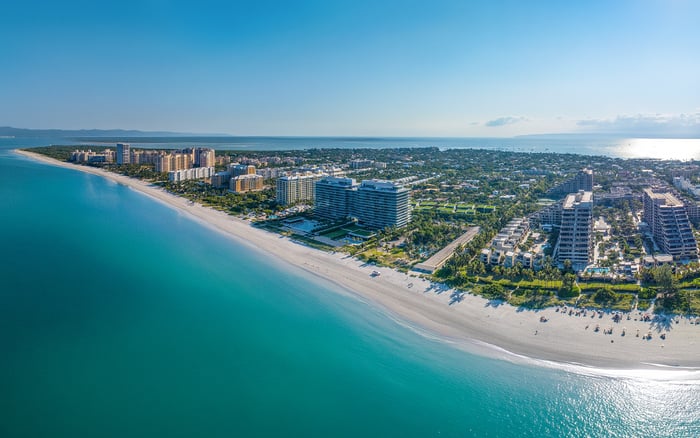
A practical, buyer-focused guide to evaluating Key Biscayne property ownership through the lens of post-storm access, re-entry planning, insurance discipline, and long-term coastal resilience.

For a Key Biscayne buyer in 2026, the question is no longer simply whether a residence delivers the right view, floor plan, dockage, terrace, or privacy profile. The more sophisticated question is how the property performs before, during, and after a major weather event-and how quickly normal use can resume once authorities, managers, vendors, and insurers begin the recovery sequence.
This is not a pessimistic lens. It is a luxury ownership lens. In a coastal market where discretion, timing, and continuity matter, post-storm re-entry belongs in the same due diligence conversation as architecture, association governance, reserves, title review, and long-term maintenance. A residence may be exquisite on a blue-sky afternoon, but the more revealing test is how its systems, management culture, access planning, and documentation perform when conditions are less forgiving.
For search discipline, the relevant buyer file may include Key Biscayne, oceanfront, resale, second-home, gated-community, and single-family considerations. Those labels are not merely marketing categories. They define different obligations, from private maintenance to association protocols and from vendor readiness to family communication.
Many buyers think of re-entry as the moment they can physically return to a home. In practice, it is better understood as a sequence of permissions, inspections, assessments, service restoration, and practical readiness. A property may be reachable before it is fully usable. A building may reopen common areas in phases. A single-family home may require separate review of the roof, glazing, drainage, landscaping, pool equipment, generator systems, security, and interior humidity.
Before signing a contract, ask how the residence is managed during a storm watch, who has authority to secure the property, how communications are distributed, and what happens if the owner is abroad. Luxury buyers often maintain multiple homes, so the strongest post-storm plan is designed for absence. It should assume the owner may not be present, may not have immediate access, and may need trusted representation to photograph conditions, meet vendors, and coordinate remedial work.
A capable re-entry plan has three layers. First, life safety and official access. Second, property condition and habitability. Third, lifestyle continuity, including staff, deliveries, vehicles, pets, technology, chilled wine storage, art care, and marine assets where relevant. The third layer is often where luxury ownership becomes most complicated.
For condominium purchasers, the residence itself is only one part of the storm-readiness equation. The association, management company, building engineer, security team, reserve posture, insurance coverage, and vendor relationships all shape post-storm recovery. A high-floor residence with remarkable water views may still depend on elevators, pumps, access control, garage drainage, cooling systems, fire-safety systems, and lobby operations.
The pre-contract review should include association rules for storm preparation, owner communication procedures, balcony and terrace protocols, generator capacity where applicable, emergency staffing practices, and any history of special assessments related to building systems or weather remediation. Buyers should not treat these as administrative details. They affect use, carrying costs, and the ability to occupy or lease the property after a disruption.
Ask how management communicates with nonresident owners. Ask whether the building maintains a preferred vendor roster. Ask how quickly common elements are assessed after an event. Ask what documentation an owner typically receives if damage is suspected. The answers reveal whether the property is run with institutional calm or improvised urgency.
For single-family purchasers, control is greater, but so is responsibility. A private home requires a tailored storm file that addresses shutters or impact systems, roof condition, exterior openings, drainage, landscape risk, pool equipment, generators, fuel, smart-home controls, security monitoring, and post-storm vendor access. A buyer should know who can enter the home, under what authority, and how conditions will be documented if the owner is away.
The most resilient ownership plan is assembled before closing. That may include identifying a property manager, confirming insurance requirements, organizing photographs and warranties, mapping critical systems, and deciding which vendors are authorized to act without delay. The aim is not to create drama around ownership. It is to preserve optionality when many households are trying to reach the same contractors at the same time.
For estate-scale properties, the conversation should also include art, wine, specialty finishes, elevators, lighting systems, and exterior amenities. Luxury homes often contain materials and systems that require specialized care, and delay can be more expensive than the initial storm impact.
Storm preparedness influences more than peace of mind. It can affect insurance placement, carrying-cost visibility, financing comfort, and eventual resale confidence. A buyer who can show organized maintenance records, clear upgrades, stable association governance, and a rational post-storm process is better positioned than one relying on aesthetics alone.
Documentation should begin at acquisition. Keep elevation-related materials if provided, permits where available, contractor records, warranties, appliance and systems information, pre-storm photographs, and a contact list for every essential vendor. For condominium buyers, retain association notices, insurance summaries made available during diligence, meeting materials, and relevant building communications. For single-family owners, maintain a digital file that can be accessed securely from outside the property.
In a future sale, the same file can help frame the home as well cared for and professionally managed. Buyers at the top of the market are not only buying beauty. They are buying confidence.
A focused re-entry review should happen before the inspection period expires. Begin with governance. Who makes decisions after a storm? How are owners notified? What is the expected communication cadence? Then move to systems. Which functions are essential to habitability? Which have redundancy? Which depend on outside vendors?
For condominiums, ask about elevators, garages, mechanical rooms, water intrusion procedures, security, staff coverage, and common-area inspections. For single-family homes, ask about roof age, opening protection, drainage behavior, generator readiness, landscaping, seawall or waterfront elements where relevant, and the practical steps required before a family can return.
Finally, ask how the home fits your personal use case. A year-round resident, a seasonal owner, and an investor have different tolerances. A second-home buyer may prioritize remote management and rapid condition reporting. A family relocating full time may prioritize school continuity, pet logistics, medical needs, and backup accommodations. A resale buyer should be especially attentive to what the prior owner can document.
The market often prices the visible: water, renovation, architecture, frontage, privacy, and prestige. In 2026, the most disciplined buyers will also price the invisible. That includes association competence, building systems, management culture, maintenance records, insurance posture, and the ability to recover gracefully.
This does not mean avoiding coastal property. It means buying with greater precision. A beautifully maintained residence with thoughtful storm protocols may deserve a stronger bid than a visually comparable home with vague answers and thin records. Conversely, an elegant property with unresolved exposure may require a more conservative structure, additional contingencies, or a post-closing capital plan.
The best luxury acquisitions feel serene because the hard questions were asked early. In Key Biscayne, that serenity is not accidental. It is engineered through due diligence, documentation, and a clear understanding of what happens after the weather passes.
Why should a Key Biscayne buyer ask about post-storm re-entry before closing? Because access, habitability, insurance, and recovery logistics can affect both personal use and future liquidity.
Is re-entry the same as being allowed back into the area? Not entirely. A property may be accessible before it is fully inspected, serviced, cleaned, cooled, or ready for occupancy.
What should condo buyers review first? Start with association procedures, management communication, building systems, insurance materials, reserves, and emergency staffing practices.
What should single-family buyers prioritize? Focus on roof condition, opening protection, drainage, generator readiness, vendor access, security, and documented maintenance.
Does a better storm plan influence resale value? It can support buyer confidence by showing that the property has been maintained and managed with discipline.
How should seasonal owners prepare differently? They should establish remote decision authority, secure digital records, and retain trusted local representation before storm season.
Should buyers ask about special assessments? Yes. Past or potential assessments can reveal how a building funds repairs, improvements, and storm-related obligations.
What documents are useful to keep after purchase? Maintain permits, warranties, insurance materials, contractor records, system manuals, photographs, and association communications.
Can a property be beautiful but operationally weak? Yes. Finishes and views do not replace strong management, resilient systems, and a realistic recovery plan.
What is the smartest mindset for 2026 buyers? Treat preparedness as part of luxury, not a concession from it.
If you'd like a private walkthrough and a curated shortlist, connect with MILLION.
If branded residences are on your mind — as a home or as an allocation — we would be glad to share what we are seeing, privately.
Begin a quiet conversation