A buyer-focused look at how to assess Oceana Bal Harbour’s brand premium through privacy, service consistency, carrying-cost discipline, and resale liquidity over a long ownership horizon.
Oceana Bal Harbour sits within one of South Florida’s most scrutinized luxury condominium conversations: how much of a building’s premium is emotional, and how much is durable. For affluent buyers, the important question is not only whether a residence feels prestigious today. It is whether that prestige can remain meaningful across a 5-, 10-, or 15-year ownership horizon.
That is the distinction between buying a beautiful residence and buying a durable brand premium. The former is immediate. The latter must withstand changing buyer tastes, new competing towers, insurance pressure, association decisions, maintenance cycles, and the eventual discipline of the resale market.
For Oceana Bal Harbour, the evaluation should be anchored in three practical dimensions: privacy, service, and resale. Each can enhance value during ownership, but each can also erode if the supporting conditions are not structural. The most defensible premium is not simply the one with strong name recognition. It is the one supported by daily lifestyle utility and credible exit liquidity.
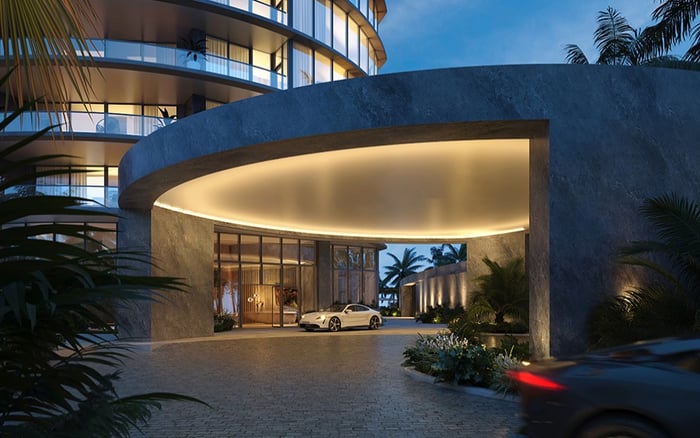
Privacy is one of Bal Harbour’s most valuable luxury signals. At Oceana Bal Harbour, a buyer should separate privacy that is structural from privacy that is merely decorative. A quiet lobby, refined furnishings, and polished finishes can shape first impressions, but the stronger test is whether the building’s planning, circulation, residence layouts, and outdoor spaces support a genuinely discreet daily experience.
A serious buyer should examine privacy at several levels. First is approach and arrival: how visible is the resident experience from surrounding streets, neighboring buildings, and shared areas? Second is vertical privacy: do floor plates and residence layouts reduce direct sightlines between homes? Third is outdoor usability: are terraces designed for actual living, or are they primarily visual extensions of the interiors?
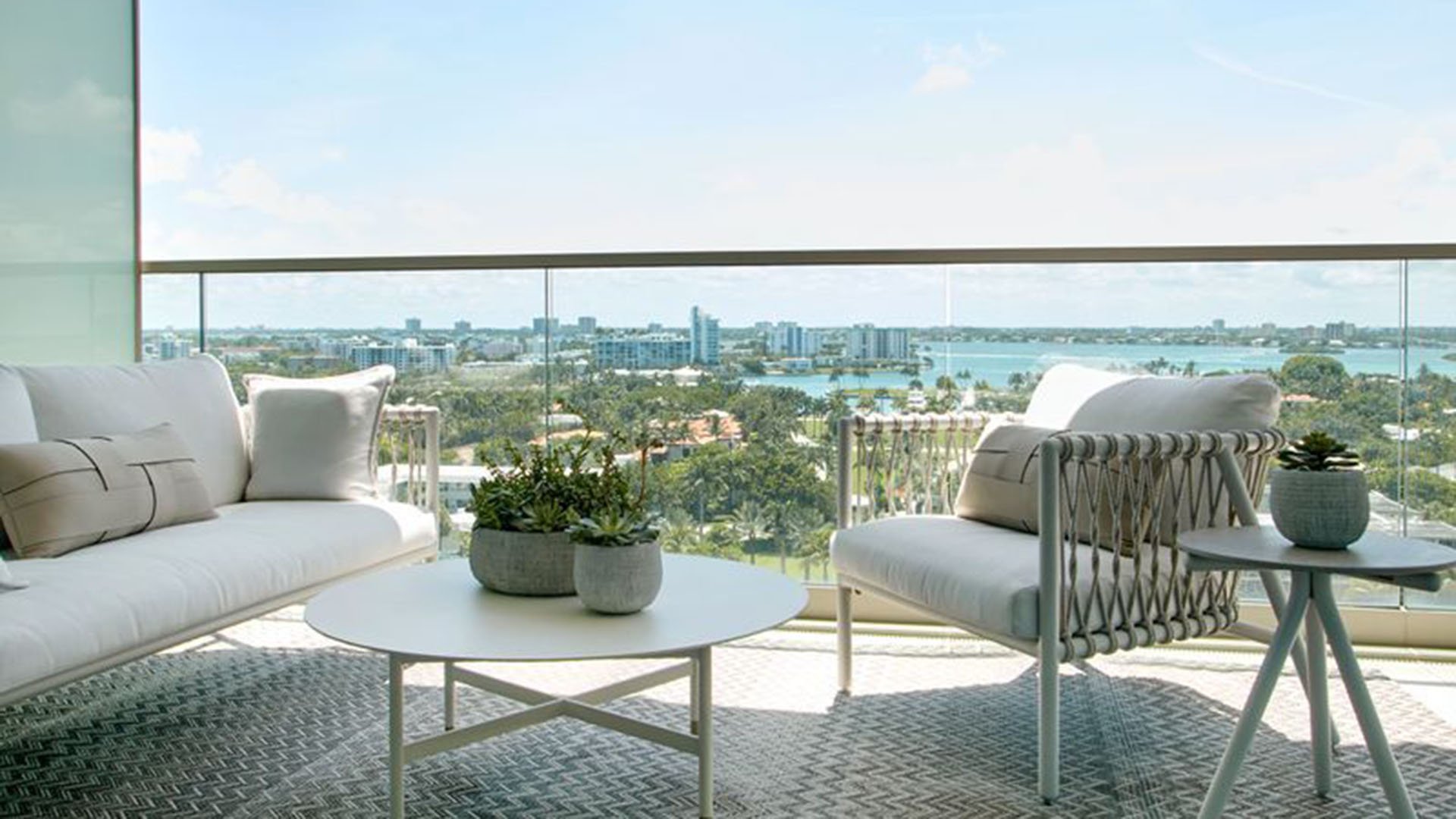
Balcony planning deserves particular attention. Views and outdoor space can be important parts of the ownership experience, but the durability question is more specific: can the outdoor area be used comfortably at different times of day without feeling exposed? For buyers who entertain quietly, work remotely, or split time between multiple homes, that distinction can be decisive.
In ultra-prime condominiums, service is often discussed as though it were a permanent feature. It is not. Service quality depends on staffing, training, security procedures, resident-request handling, preventive maintenance, and the condominium association’s willingness to fund excellence through multiple ownership cycles.
That makes the association part of the brand. A building can have a polished service culture, but long-term durability depends on operational consistency years later. Buyers should study how the building handles daily friction: package flow, guest authorization, vendor access, elevator coordination, amenity expectations, maintenance requests, and security protocols. These are not glamorous details, yet they shape the private experience of ownership more than marketing language ever can.
The service premium should also be assessed through cost discipline. High service requires staffing and maintenance, and those costs must be supported by monthly carrying charges, reserves, insurance coverage, and capital-expenditure planning. A buyer evaluating Oceana Bal Harbour as a long-term holding should not treat elevated carrying costs as automatically negative. The sharper question is whether those costs support a service standard that protects the building’s desirability over time.
Oceana’s brand premium is not only about the building. It is also linked to Bal Harbour’s discreet luxury profile and the surrounding residential ecosystem. The area’s appeal is quieter than more resort-driven South Florida settings, which can matter for buyers who value privacy, ease, and a lower-key daily rhythm.
Location prestige, however, should be tested rather than assumed. Buyers should consider how Oceana’s setting compares with current and future competition in Bal Harbour, Surfside, Sunny Isles Beach, Miami Beach, and the broader South Florida oceanfront market. Newer towers may compete through fresh amenity packages, hospitality partnerships, or dramatic architecture. Oceana’s defense must therefore rest on attributes that remain relevant when novelty fades: privacy, site quality, upkeep, resident culture, and liquidity.
The strongest location premium is not simply a name on a map. It is the way a neighborhood supports the owner’s lifestyle and the future buyer’s confidence. For a long-horizon purchase, that means asking whether the surrounding area reinforces the building’s identity or leaves the building to carry the entire luxury narrative on its own.
Resale durability is where brand premium becomes measurable. Asking prices can signal confidence, but closed transactions reveal liquidity. A buyer should examine achieved resale prices, days on market, bid-ask spreads, inventory depth, and performance against nearby ultra-prime competitors. The goal is not to prove that a prestigious building always outperforms. It is to understand whether the buyer pool is deep enough to absorb high-priced listings when owners eventually exit.
Scarcity helps, but scarcity alone is not enough. A strong resale profile usually requires recognizable identity, consistent upkeep, limited perceived substitution, and enough qualified buyers who specifically want the lifestyle the building offers. If a future buyer can obtain similar privacy, service, views, and location utility in a newer tower, the premium becomes more vulnerable. If Oceana’s advantages are structural and its operations remain polished, the premium has a stronger case.
Bid-ask spread is an especially revealing metric. In trophy buildings, sellers often anchor to prestige while buyers anchor to recent closed evidence. Wide spreads can signal emotional pricing, thin liquidity, or a mismatch between brand perception and market proof. Narrower spreads, when paired with completed sales, are more supportive of durable value.
The most elegant buildings still require disciplined financial stewardship. For long-term owners, monthly carrying costs, reserve funding, assessment risk, insurance pressure, and capital-expenditure planning are central to the decision. These factors do not diminish the luxury narrative. They determine whether that narrative can be maintained.
A buyer should review how the building plans for future repairs, common-area renewal, staffing needs, insurance volatility, and reserves. The objective is not to avoid costs at all costs. In ultra-luxury condominiums, underfunding can be more damaging than high carrying charges because deferred maintenance eventually becomes visible, operational, and reputational.
This is also where design identity should be evaluated carefully. Distinctive design can help differentiate a condominium from more interchangeable oceanfront alternatives, but its long-term contribution depends on maintenance, relevance, and integration into the resident experience. Design that feels authentic can deepen identity. Design that is not maintained can become a liability.
A disciplined evaluation of Oceana Bal Harbour begins with one question: which parts of the premium are hard to replicate? Privacy may support a structural case if it is embedded in planning, circulation, residence layout, and daily use. Service quality, by contrast, must be continuously earned. Resale liquidity must be proved through completed transactions and competitive context.
The strongest buyer case is not based on admiration alone. It is based on alignment between lifestyle and exit strategy. If a purchaser values privacy, quiet luxury, and a residential culture that feels more discreet than performative, Oceana may fit the brief. If the purchase thesis depends mainly on name recognition or the assumption that prestige always compounds, diligence should go deeper.
For South Florida’s ultra-premium audience, the better question is not whether Oceana is beautiful. It is whether the building’s privacy, service, and resale profile can remain compelling after the next cycle of new launches, rising ownership costs, and shifting buyer expectations. That is where a brand premium becomes durable, or where it begins to thin.
What makes Oceana Bal Harbour’s premium worth evaluating? Its premium rests on privacy, service, design identity, location, and resale potential, all of which should be tested over a long ownership horizon.
Is privacy the most important factor at Oceana Bal Harbour? Privacy is central because the most durable privacy comes from planning, circulation, layout, and daily usability rather than decorative luxury alone.
How should buyers judge service quality? Buyers should look at staffing consistency, security procedures, resident-request handling, maintenance standards, and the association’s ability to fund operations.
Why does the condominium association matter so much? The association influences reserves, staffing, maintenance, assessments, insurance planning, and the long-term feel of the building.
How should buyers think about Bal Harbour’s location premium? Buyers should ask whether the surrounding area reinforces a quiet luxury lifestyle and whether that setting remains competitive against other South Florida oceanfront options.
What should buyers review before relying on asking prices? Closed sales, days on market, bid-ask spreads, inventory depth, and performance versus nearby ultra-prime buildings are more useful than asking prices alone.
Can newer towers weaken Oceana’s brand premium? They can if they offer comparable privacy, service, views, and location utility, which is why structural advantages matter.
Are high carrying costs always a negative? Not necessarily. The issue is whether costs support service quality, reserves, maintenance, and long-term desirability.
Does design contribute to resale durability? It can, especially when design remains well maintained and helps the building feel distinct rather than interchangeable.
What is the best way to shortlist comparable options for touring? Start with location fit, delivery status, and daily lifestyle priorities, then compare stacks and elevations to validate views and privacy.
When you're ready to tour or underwrite the options, connect with MILLION.
If branded residences are on your mind — as a home or as an allocation — we would be glad to share what we are seeing, privately.
Begin a quiet conversation