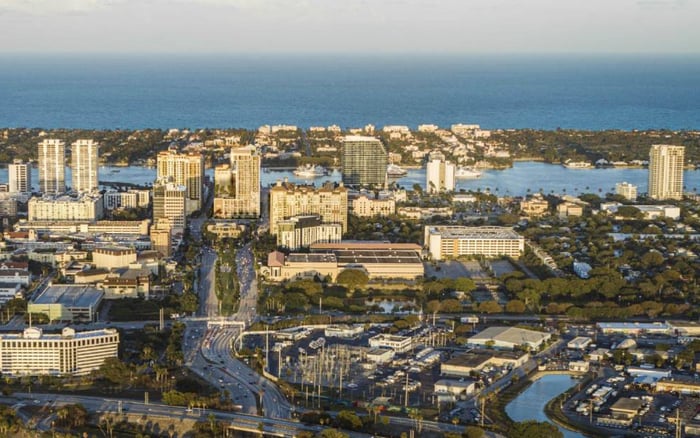
A buyer-focused framework for evaluating HOA fees, staffing intensity, privacy, and service expectations before choosing a Palm Beach residence.

In Palm Beach, an HOA fee is more than a recurring line item. It is a concise expression of how a building operates, what owners collectively support, and how much service is woven into daily life. Two residences with similar purchase prices can feel entirely different once staffing, shared spaces, reserves, insurance, maintenance, and owner-paid services are taken into account.
The disciplined approach is not to pursue the lowest fee. It is to determine whether the fee supports the experience you want, then assess the broader carrying-cost picture. A service-rich property may suit an owner who values effortless arrivals and attentive oversight. A leaner operation may appeal to someone who prefers fewer shared touchpoints and greater independence.
This distinction matters across Palm Beach and West Palm Beach, whether a buyer is reviewing Palm Beach Residences or comparing newer options along the regional waterfront.
Begin by requesting a clear account of what the HOA fee includes. Staffing, common-area upkeep, shared amenities, common-space utilities, management, security, insurance, and reserve contributions may be handled differently from one property to another. The fee alone does not reveal the full obligation.
Build an annual ownership worksheet that separates association charges from property taxes, unit insurance, utilities, interior maintenance, financing costs, club or amenity charges, parking, storage, and optional services. Also determine which costs are fixed, which vary with use, and which are billed separately.
A low headline fee can be less compelling when essential services fall outside it. Conversely, a higher fee may be coherent when it replaces expenses an owner would otherwise arrange privately. Buyers considering Forté on Flagler West Palm Beach can apply the same framework: examine the budget, inclusions, exclusions, and ownership pattern together rather than in isolation.
Service staffing can shape convenience as directly as design. The relevant question is not simply how many people work at a property, but which functions they cover, during what hours, and within what boundaries.
Ask who receives guests, handles deliveries, monitors access, coordinates vendors, supports arrivals, and responds after hours. Then consider your routine. A full-time resident may value continuity and familiar personnel. A seasonal owner may prioritize home-watch coordination and a seamless reopening of the residence. A frequent traveler may place greater weight on secure package handling and dependable vendor access.
The operating conversation should be equally specific at The Ritz-Carlton Residences® West Palm Beach or any other service-oriented address. Brand, architecture, and location do not replace a careful review of the association’s actual responsibilities.
Privacy is not always the product of fewer employees. Thoughtful staffing can protect discretion by controlling access, managing vendors, and reducing unplanned contact. Yet a highly serviced environment can also create more frequent interactions in lobbies, arrival areas, amenity spaces, and residence-access corridors.
Buyers should study the building’s choreography. How do residents, guests, staff, deliveries, and contractors move through it? Are service requests documented? Who may enter a residence, under what authorization, and how are keys or access credentials managed? Does the culture favor proactive attention or service upon request?
A private lifestyle depends on alignment between protocols and personal preference. Some owners want to be recognized immediately. Others prefer minimal engagement unless assistance is requested. Neither model is inherently superior.
The right fee structure depends on intended use. For a second-home buyer, dependable oversight may carry more value than daily amenity use. For an investment-minded purchaser, predictable obligations and clear leasing rules may take priority. For a lifestyle-led decision, service culture may be central to the appeal.
Waterfront ownership can introduce another layer of questions involving exterior exposure, shared infrastructure, and maintenance planning. Rather than assume these matters are covered, ask how responsibilities are divided between the association and the individual owner.
When considering Alba West Palm Beach, for example, the productive discussion is not whether the fee appears high or low in the abstract. It is whether the complete operating structure suits the way the residence will be used.
Request the current budget, recent financial statements, reserve information, governing documents, insurance summary, meeting minutes, pending assessment information, and schedules of owner charges. Have qualified legal, tax, insurance, and inspection professionals review the materials relevant to the transaction.
Look for consistency between the promised experience and the funded operation. Clarify whether staff members are employed directly or contracted, how compensation changes are handled, which services are optional, and whether owners customarily tip or pay providers separately. Ask about current vacancies or service limitations rather than presume that an impressive staffing plan is fully implemented.
Finally, test the residence against several scenarios: full-time occupancy, a lengthy absence, multiple guests, renovation work, a major delivery, and an after-hours issue. The best fit is the property whose procedures remain comfortable through all of them.
What does an HOA fee usually tell a Palm Beach buyer? It reflects the association’s recurring operating structure, but buyers should verify every inclusion, exclusion, and separately billed service.
Is a lower HOA fee always preferable? No. A lower fee may suit an independent owner, while a higher fee may support services another buyer values.
How should buyers compare fees between buildings? Normalize the comparison by residence size, included services, reserve contributions, insurance treatment, amenities, and separate owner charges.
Can more staffing improve privacy? Yes. Controlled access and coordinated vendors can support discretion, provided protocols and staff interactions align with the owner’s preferences.
What staffing questions matter most? Ask which roles are present, their coverage hours, after-hours procedures, access authority, and whether services are provided directly or through contractors.
Are HOA fees the same as total carrying costs? No. Taxes, unit insurance, utilities, maintenance, financing, optional services, and other owner expenses should be modeled separately.
Why do reserves matter to a buyer? Reserve information helps a buyer assess how the association plans to fund eligible long-term repair and replacement needs.
What should a seasonal owner prioritize? Focus on access control, vendor coordination, residence checks, delivery handling, emergency response, and procedures for reopening the home.
How can a buyer assess service culture? Visit at different times, observe resident and staff interactions, and ask how requests, guests, deliveries, and complaints are handled.
Who should review the association documents? Buyers should engage appropriately qualified legal, tax, insurance, inspection, and financial professionals for transaction-specific guidance.
When you're ready to tour or underwrite the options, connect with MILLION.
If branded residences are on your mind — as a home or as an allocation — we would be glad to share what we are seeing, privately.
Begin a quiet conversation