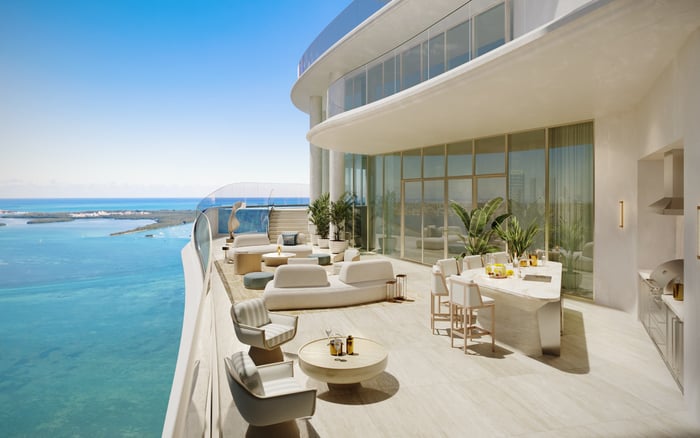
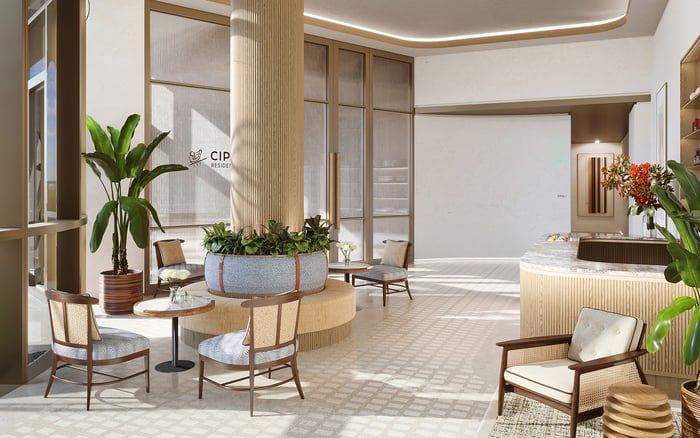
For luxury condo buyers, spa booking rules are becoming a subtle test of privacy, capacity, service culture, and day-to-day livability in South Florida residences.
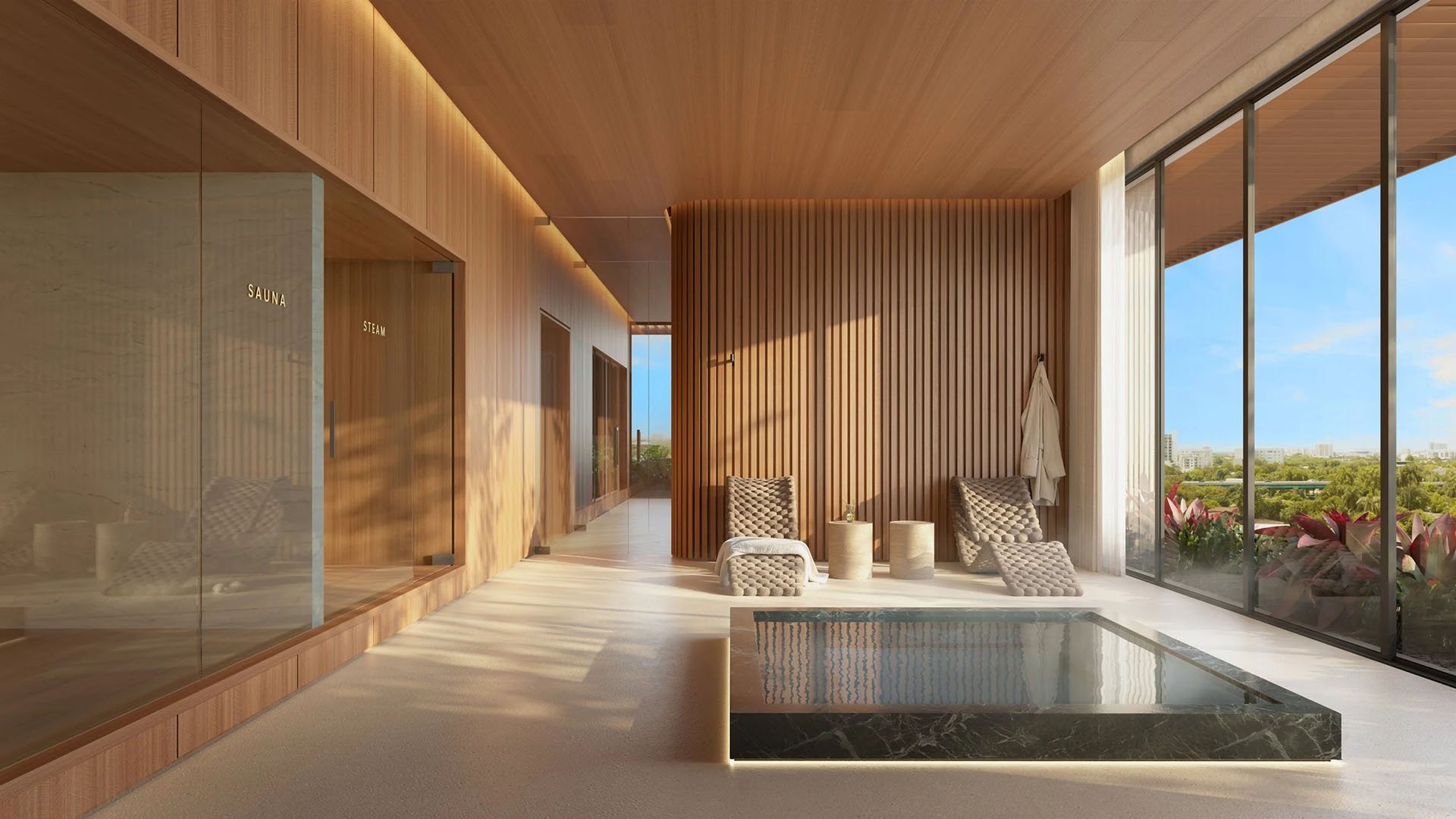
For the 2026 luxury buyer, the most revealing amenity question may not be whether a residence has a spa. It may be how the spa is booked. In South Florida’s ultra-premium condominium market, wellness spaces have become part of the daily architecture of privacy. A sauna, treatment room, cold plunge, hammam, or recovery suite is no longer simply a line item in an amenity brochure. It is a shared domestic environment, and the rules governing access can reveal how a building actually lives.
Buyers have become more fluent in the difference between visual luxury and operational luxury. Visual luxury photographs beautifully. Operational luxury is felt at 8:00 a.m., when a resident wants a quiet steam; at 5:00 p.m., when guests arrive; or during a high-season weekend, when every owner expects the same level of priority. Spa booking rules sit at the center of that tension. They translate design intent into daily experience.
The 2026 question is therefore precise: does the wellness program protect resident privacy while still offering genuine flexibility? The answer can influence how a buyer views a primary residence, a second home, or a long-term hold.
Luxury buyers often evaluate amenities through instinct first. A serene spa lounge, soft stone, filtered light, and a well-composed treatment corridor create an immediate impression. Yet the seasoned buyer eventually asks about governance. Who gets priority? How far in advance can appointments be reserved? Are guests permitted? Are there limits during weekends or holidays? Can a resident book repeated preferred time slots, or does the system rotate access?
These are not minor administrative details. They determine whether a spa feels private or crowded, effortless or transactional. A building may have an impressive wellness footprint, but if access is loosely managed, the experience can feel less exclusive than expected. Conversely, a more restrained spa program with thoughtful scheduling may deliver a calmer, more residential atmosphere.
This is especially relevant across buyer profiles. A full-time owner may care about predictable morning routines. A seasonal resident may care about peak-period availability. A second-home buyer may care about how visiting family can use the space. An investor-minded purchaser may want policies that support long-term desirability without turning private amenities into public-facing hospitality.
In that sense, spa booking rules are a proxy for the building’s broader culture. They reveal whether the residence is designed around residents first, guests second, and spectacle last.
Privacy in a luxury building is not created only by elevator access, guarded entries, or private foyers. It is also created by patterns of use. A spa is intimate by nature. Residents arrive in a different state of dress, mood, and expectation than they do at a lobby bar or club room. The best rules recognize that distinction.
A buyer should look for policies that prevent amenity drift. Amenity drift occurs when a residential space begins to function like a social venue, a guest attraction, or an informal club. In a wellness setting, that can erode the feeling of sanctuary. Clear limits on guest access, treatment room reservations, and peak-hour use help preserve the spa as a resident-centered environment.
There is also a difference between exclusivity and rigidity. A rigid system can frustrate owners who need spontaneity. An overly permissive system can frustrate owners who value quiet. The strongest buildings tend to strike a measured balance: residents retain priority, guests are welcome within defined boundaries, and the building avoids rules that feel arbitrary or opaque.
For buyers comparing Brickell convenience with Miami Beach retreat living, or evaluating Sunny Isles oceanfront preferences against Palm Beach seasonal discretion, these policies can become more meaningful than they first appear.
The elegance of a spa program depends on capacity: not just the size of the room, but the relationship between residents, service appointments, open-use areas, staff, and reservation windows. A buyer does not need to become an operations expert, but should understand whether the wellness space is proportionate to the building’s lifestyle promise.
A small treatment suite may be ideal in a boutique residence if use is carefully controlled. A larger spa may still feel strained if the building encourages frequent guest use or allows overlapping reservations without enough transition time. The issue is not size alone. It is how the building choreographs time.
Ask how long appointments are held, how cancellations are treated, and whether no-show rules exist. Ask whether wet areas require reservations or are available on a walk-in basis. Ask whether private sessions, trainers, therapists, or visiting practitioners are permitted. Each answer reveals how the residence defines ownership privileges.
The pool is a useful comparison. Many buyers already understand that poolside chair policies, cabana rules, and guest limits affect the day-to-day atmosphere of a building. Spa rules operate in a similar way, but with greater sensitivity because the setting is quieter and more personal.
South Florida buyers often appreciate hospitality-grade service, but they do not always want hospitality-style congestion at home. This is the subtle distinction that matters. A residence can deliver polished service without feeling like a hotel. The spa is one of the clearest tests of that boundary.
If a building positions wellness as a core lifestyle pillar, the access model should support that promise. Resident priority should be easy to understand. Guest policies should be clear before purchase. Fees, if any, should not feel surprising. Most importantly, the rules should be administered consistently, because inconsistency turns luxury into negotiation.
For new-construction buyers, spa policies may still be evolving during the sales and delivery process. That does not make them unimportant. It makes early questions more valuable. Buyers should ask not only what the wellness spaces will include, but how they will be governed once residents are living in the building.
The most sophisticated purchasers are not trying to micromanage a future board or management team. They are trying to understand the service philosophy. Is the building protecting the owner experience, or simply displaying amenities as a visual selling point?
A spa policy should be reviewed with the same seriousness as parking, pet rules, leasing restrictions, and guest access. The document may not be glamorous, but it can be revealing. Look for clarity around reservation windows, cancellation policies, guest limitations, private practitioner access, age restrictions, operating hours, and resident priority during peak periods.
Buyers should also listen for tone. A vague answer can indicate that policies are still informal. An overly complicated answer can indicate that demand has already created friction. A concise, resident-first answer usually signals a more mature amenity culture.
The question is not whether every owner will use the spa every week. Many will not. The question is whether the building’s most private shared spaces are managed in a way that supports the value of ownership. Even buyers who rarely book treatments may care about how the residence feels during peak season, how guests circulate, and whether wellness areas remain calm rather than performative.
In the ultra-premium market, scarcity is not only about waterfront land or penthouse volume. It is also about quiet. Spa booking rules are one of the mechanisms that protect it.
The strongest residences will not treat spa rules as an afterthought. They will understand that wellness has moved from amenity theater to daily ritual. Buyers, in turn, should read spa policies as part of the building’s operating DNA.
A well-written booking framework does three things. It protects owners from overuse, gives residents practical flexibility, and preserves the serenity the amenity was designed to provide. That combination is difficult to photograph, but easy to feel.
For 2026, the buyer question is no longer simply, “What wellness amenities are included?” It is, “Will I be able to enjoy them in the way this residence promises?” That is the distinction between a spa that sells and a spa that lives.
Why should buyers ask about spa booking rules before purchasing? Booking rules reveal how a building manages privacy, demand, guest access, and resident priority in one of its most personal amenity spaces.
Are spa policies as important as floor plans or views? They are not a substitute for location or architecture, but they can meaningfully affect day-to-day comfort in a luxury building.
What is the first spa policy question a buyer should ask? Ask how far in advance residents can book and whether resident priority changes during weekends, holidays, or peak season.
Should guest access be limited in a private residential spa? Thoughtful limits often help preserve privacy while still allowing owners to host family or close guests within clear boundaries.
Can strict spa rules be a negative? Yes, if they reduce practical flexibility for owners. The best policies are clear, resident-first, and not unnecessarily rigid.
What should second-home buyers focus on? They should review peak-season access, guest permissions, cancellation rules, and whether family use is handled comfortably.
Do spa rules affect resale appeal? They can support resale indirectly by preserving the building’s sense of order, privacy, and premium daily experience.
How do spa rules differ from pool rules? Pool policies manage visible social space, while spa policies govern a more intimate wellness environment where privacy expectations are higher.
What should buyers ask in new-construction projects? Ask how wellness amenities will be operated after opening, including reservation systems, guest limits, staffing, and resident priority.
What is the ideal spa booking philosophy? The ideal approach protects resident access, allows reasonable flexibility, and keeps the wellness environment calm and private.
To compare the best-fit options with clarity, connect with MILLION.
If branded residences are on your mind — as a home or as an allocation — we would be glad to share what we are seeing, privately.
Begin a quiet conversation