A practical luxury buyer’s guide to ocean-and-bay living in North Bay Village, with a focus on views, waterfront due diligence, privacy, building quality, ownership costs, and long-term livability.

Ocean and bay living in North Bay Village is best understood as a lifestyle proposition, not a single architectural promise. Buyers are not simply purchasing a view. They are buying light, water, access, privacy, air movement, balcony usability, building stewardship, and the feeling of arrival at the end of each day. For a luxury buyer, the question is not whether the setting is beautiful. The better question is whether the residence, building, and ownership structure translate that setting into enduring comfort.
The phrase “ocean and bay” can be seductive, but disciplined buyers separate atmosphere from fundamentals. A glittering waterline may shape the first impression, while long-term satisfaction often depends on quieter details: how the residence handles sun exposure, how private the terrace feels, how the building manages waterfront upkeep, and whether daily circulation feels graceful. In North Bay Village, the most successful searches begin with a practical hierarchy, then allow emotion to enter after the essential questions are answered.
A water view can mean many things. Some residences capture broad open water; others frame a more layered composition of sky, boats, skyline, and neighboring architecture. Neither is automatically superior. The right view depends on how the buyer lives. A sunrise-oriented owner may value morning brightness and a serene breakfast terrace. A frequent entertainer may prefer a view that becomes more theatrical after dusk. A collector or design-focused buyer may care deeply about glare, wall space, and how daylight affects art and finishes.
The best walk-throughs happen at different times of day whenever possible. Midday can reveal heat and reflection. Late afternoon can clarify privacy, shadow, and the character of the balcony. Evening can show how adjacent buildings, roadways, and marine activity affect the mood of the home. A luxury residence should not merely photograph well. It should feel composed during the hours when the owner will actually use it.
Waterfront living asks for a different standard of review. Buyers should understand the building’s approach to exterior maintenance, storm preparation, drainage, mechanical systems, window and door performance, and long-term capital planning. None of these topics diminishes the romance of bay living. They protect it.
In higher-end condominium acquisitions, the elegance of the lobby or amenity floor should be considered alongside the less visible infrastructure. A refined building culture is expressed in service, but also in planning. Ask how the association or development team thinks about maintenance cycles, insurance, reserves, access control, vendor management, and resident communication. For a waterfront buyer, those operational qualities are part of the architecture.
North Bay Village attracts buyers who often compare different versions of Miami waterfront life. Some want resort-style amenities. Others want boutique discretion, fewer neighbors, and a quieter arrival sequence. Some prioritize a marina-oriented lifestyle, while others care more about wellness spaces, dining rooms, work areas, or guest accommodations. The correct building is the one that makes ordinary days feel effortless.
This is where project context can help sharpen the conversation. A buyer studying Continuum Club & Residences North Bay Village may be thinking differently from one focused on Pagani North Bay Village. Another buyer may compare the ownership rhythm suggested by Shoma Bay North Bay Village with a more private residential brief elsewhere. The point is not to chase a name. It is to match services, scale, design language, and daily convenience to the way the owner expects to live.
In waterfront buildings, privacy is often more nuanced than simply being on a high floor. Sightlines from neighboring towers, pool decks, amenity terraces, boat traffic, and adjacent balconies all matter. A residence can feel private because of height, setback, orientation, landscaping, glass treatment, or the way outdoor space is carved into the plan.
Buyers should stand in the primary suite, kitchen, living area, and terrace and ask a simple question: where do my eyes naturally go, and who can see me there? This is especially important for buyers who entertain, work from home, or travel frequently and want the residence to feel secure when occupied and calm when vacant. Privacy should be evaluated both inside and outside the home.
A dramatic water outlook cannot compensate for a poorly resolved plan. Luxury buyers should study arrival, kitchen placement, ceiling rhythm, bedroom separation, storage, laundry, staff or service access where relevant, and the relationship between interior living areas and terraces. Large glass lines are compelling, but the best residences also give owners walls for furniture, lighting, art, and acoustic control.
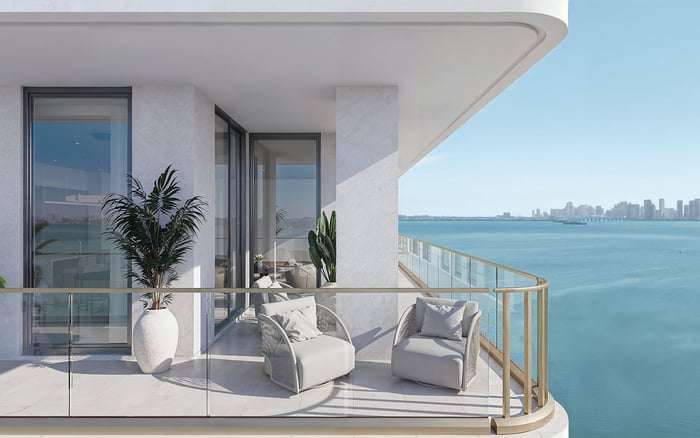
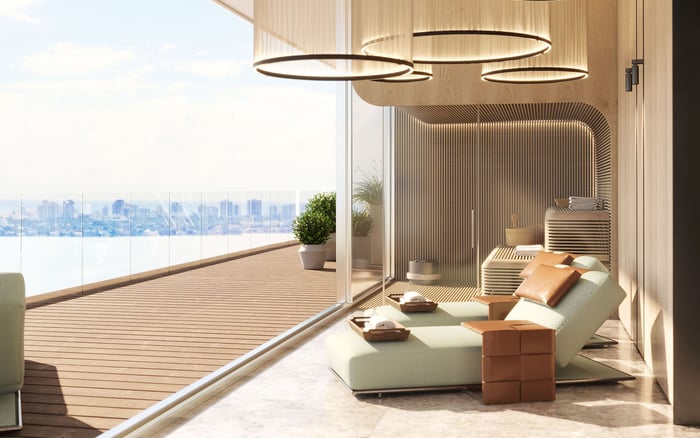
Pay special attention to the terrace. Is it deep enough to furnish properly, or is it primarily visual? Does it connect naturally to the living room, primary suite, or both? Is there enough covered area for comfort? In South Florida, outdoor space is not decoration. It is part of the living program.
New construction can offer contemporary layouts, updated systems, fresh amenity concepts, and design continuity. It also requires careful review of delivery expectations, finish specifications, association structure, closing costs, and how the building will operate once residents move in. Brand language and renderings can be useful, but contracts, budgets, rules, and specifications deserve equal attention.
Projects such as The Ritz-Carlton Residences® North Bay Village and Tula Residences North Bay Village illustrate why buyers should compare more than architecture. Consider service philosophy, residence scale, outdoor space, parking, guest flow, amenity programming, and the building’s position within the buyer’s broader South Florida life.
In luxury waterfront real estate, the purchase price is only one part of the decision. Monthly charges, insurance exposure, maintenance obligations, assessments, reserves, parking, storage, marina-related costs if applicable, and future capital needs all shape the true ownership experience. A sophisticated buyer does not treat these as unpleasant footnotes. They are the operating system of the residence.
The most useful question is not simply “What does it cost?” It is “What does this cost support?” A well-run building with thoughtful staffing, maintained common areas, clear governance, and prudent planning may justify a different expense profile than a building where costs feel disconnected from service quality. Luxury is not about avoiding costs. It is about understanding what they buy.
The beauty of bay living should not be undermined by friction. Buyers should consider arrival routes, valet or self-parking preferences, guest parking, package handling, service elevators, rideshare access, dog walking routines, school or club commutes where relevant, and the ease of hosting visitors. These practical details influence whether a second home feels restorative or whether a primary residence functions smoothly.
For seasonal owners, management and lock-and-leave confidence become especially important. For full-time residents, the cadence of weekday life matters more. A building can be visually impressive and still miss the mark if the daily choreography is inconvenient.
Many buyers considering North Bay Village also evaluate Miami Beach, Surfside, Bal Harbour, Edgewater, Coconut Grove, Sunny Isles, or the barrier islands. Each market carries a different lifestyle emphasis. Rather than ranking them abstractly, buyers should begin with personal non-negotiables: direct water feeling, beach proximity, boating needs, school routines, nightlife tolerance, restaurant habits, privacy expectations, and tolerance for density.
North Bay Village can be most compelling for buyers who want water to remain central to the experience while still evaluating value through a practical lens. The right purchase is not the loudest opportunity. It is the one where view, plan, building culture, costs, and future use all point in the same direction.
What should luxury buyers prioritize first in North Bay Village? Begin with view quality, building condition, privacy, floor plan, and ownership costs. These fundamentals determine whether the waterfront setting will remain enjoyable over time.
Is a higher floor always better for bay living? Not always. Height can improve privacy and perspective, but orientation, terrace depth, wind, glare, and neighboring sightlines can be just as important.
How should I evaluate a water view residence? Visit at different times when possible and study light, reflection, privacy, and nighttime ambience. A view should support daily living, not only marketing photography.
What does North Bay Village mean in a luxury search? It is a useful area lens for buyers focused on bay-oriented living, water views, and residential convenience. The best fit depends on the specific building and residence.
Is new construction automatically preferable? No. New residences can be appealing, but buyers should still review specifications, governance, budgets, service model, and closing obligations carefully.
How important is the terrace? Very important. In South Florida, a terrace should be evaluated as usable living space, with attention to depth, shade, privacy, and furniture placement.
What questions should I ask about waterfront maintenance? Ask about exterior systems, storm preparation, reserves, insurance, drainage, and long-term capital planning. Operational discipline is part of waterfront luxury.
Should second-home buyers evaluate buildings differently? Yes. Seasonal owners should emphasize security, management, service consistency, package handling, and lock-and-leave confidence.
How do project brands affect value? Branding may influence service expectations and design identity, but it should be weighed against the residence plan, view, costs, and building execution.
When should I involve an advisor? Early in the process. A specialist can help compare buildings, interpret ownership costs, and structure due diligence before emotion drives the decision.
If you'd like a private walkthrough and a curated shortlist, connect with MILLION.
If branded residences are on your mind — as a home or as an allocation — we would be glad to share what we are seeing, privately.
Begin a quiet conversation