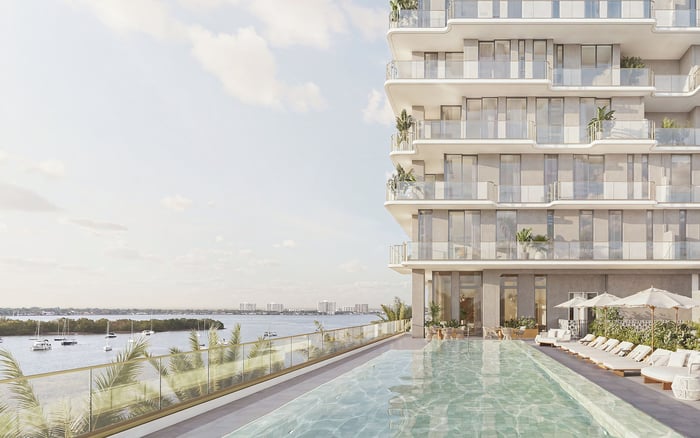
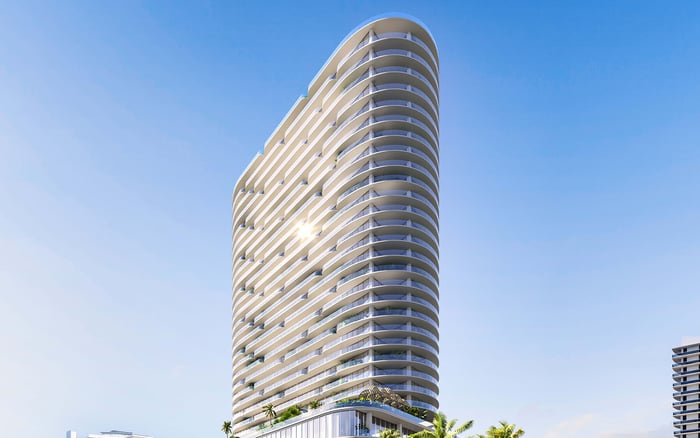
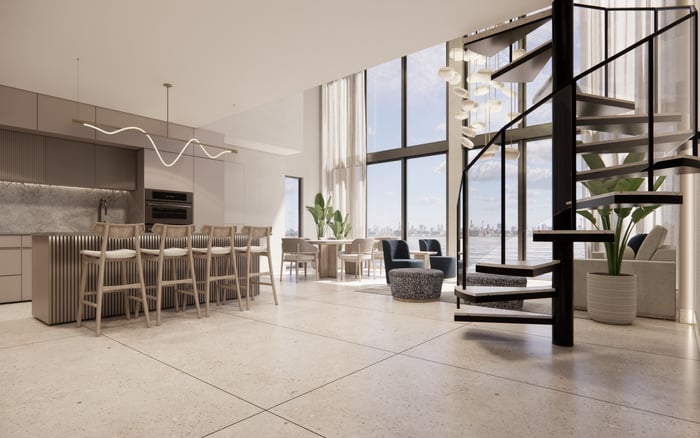
For full-time buyers in North Bay Village, the decisive question is not simply newness or prestige. It is whether daily life should feel sheltered and residential, or activated by on-site retail, dining, and social energy. Tula Residences and Shoma Bay sit on opposite sides of that choice, offering two distinct interpretations of waterfront ownership in a municipality increasingly shaped by both private residential calm and live-work-play redevelopment.
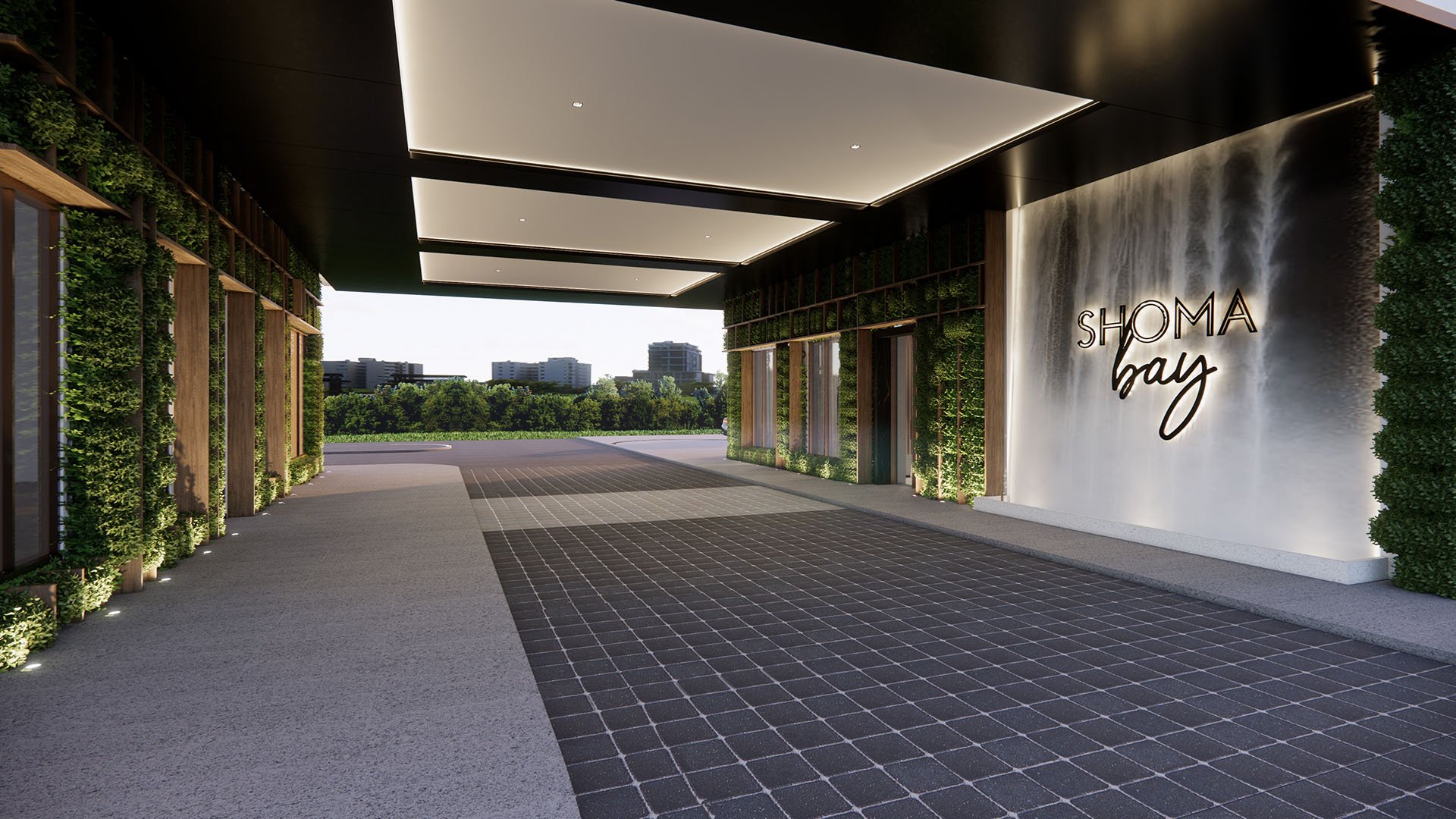
North Bay Village holds a singular position in Biscayne Bay, spanning Harbor Island, North Bay Island, and Treasure Island. For luxury buyers, that geography creates an unusual residential proposition: a small island municipality where the waterfront can feel intimate, even as the planning direction increasingly embraces a live-work-play model with mixed-use growth and broader public access.
That backdrop makes the comparison between Tula Residences North Bay Village and Shoma Bay North Bay Village especially relevant for full-time owners. This is not simply a matter of style or branding. It is a question of the daily rhythm you want your home to create.
In practical terms, Tula sits on the residential-privacy side of the equation. Shoma Bay sits on the mixed-use convenience side. For a buyer planning to live in the residence year-round, that distinction matters more than marketing language, because it shapes noise levels, circulation, social energy, and the degree of separation between home life and public activity.
North Bay Village already supports more than one residential identity. The market includes both condominium inventory and waterfront single-family homes, reinforcing an important truth for discerning buyers: this is not a one-note destination. Some owners want a more urban, connected experience. Others want retreat, discretion, and a quieter expression of waterfront living.
That duality is also visible across the broader new-development landscape. Buyers comparing North Bay Village product may also find themselves looking at Continuum Club & Residences North Bay Village and Pagani North Bay Village, both of which help illustrate how varied the luxury conversation in North Bay Village has become. Some projects lean into design prestige and waterfront exclusivity. Others align more closely with an activated neighborhood model.
For full-time ownership, the point is not to chase the broadest amenity list. It is to determine whether your residence should function primarily as sanctuary or as a highly convenient extension of daily city life.
Tula is best understood as a boutique, lower-density residential concept aimed at buyers who place a premium on privacy and separation from commercial activity. In editorial terms, it belongs to the tradition of homes that preserve a psychological boundary between one’s front door and the public realm.
That distinction matters. Full-time owners experience a building very differently from seasonal residents. They notice patterns of traffic, visitor flow, the mood of the lobby, and how often common areas feel purely residential rather than semi-public. Tula’s appeal is strongest for buyers who want a quieter waterfront lifestyle, less visitor activity, and a more settled year-round atmosphere.
Its orientation favors private-entry residential living over an integrated retail-and-dining environment. The amenity emphasis is framed around resident-exclusive features such as private waterfront access rather than public-facing programming. That makes Tula especially compelling for buyers who want their home to feel self-contained, calm, and removed from the more performative aspects of luxury living.
This is often the right answer for owners who work from home, value a measured pace, or simply prefer a building where the social tone remains understated. It also tends to resonate with buyers who have already lived in more activated districts and now want a more composed daily experience without leaving the bayfront lifestyle behind.
Shoma Bay is the more integrated proposition. It is described as a mixed-use development concept that combines residences with retail, dining, and hospitality-oriented conveniences. For some buyers, that is not a compromise. It is the draw.
The appeal is clear for owners who want services and social amenities accessible without leaving the property. Morning coffee, casual meetings, spontaneous dining, and an active ground plane can make a residence feel more connected to the tempo of contemporary urban living. For buyers who define luxury through efficiency and ease, this model can be highly persuasive.
Still, mixed-use convenience changes the residential experience. Public-facing ground-level activity supports vibrancy, but it can reduce the sense of seclusion compared with a purely residential building. The lobby sequence, surrounding circulation, and the general feeling of coming home may be livelier and less insulated.
For many full-time owners, that is entirely acceptable, even desirable. Those who enjoy visible energy, prefer a socially active daily environment, or like the idea of a more self-sufficient address may find the Shoma Bay model better aligned with how they actually live.
Because fully uniform head-to-head public data is not consistently available for Tula and Shoma Bay, buyers should resist overconfidence in direct comparisons involving fees, exact inventory, or current price per square foot. The better framework here is experiential rather than numerical.
First, consider sound and movement. A lower-density residential environment typically offers a calmer cadence. A mixed-use project may provide greater convenience, but it also tends to introduce more public circulation.
Second, think about routine. If you want your home to feel like an enclave, Tula’s positioning is intuitively stronger. If your ideal day includes staying on property for services, casual dining, and a more social mood, Shoma Bay has the clearer advantage.
Third, assess long-term livability. Full-time ownership is about repetition. The feature that delights on a weekend visit may feel very different after a year of daily use. Privacy is cumulative. So is convenience.
Finally, remember that pricing in North Bay Village spans multiple product types, from condos to higher-priced waterfront homes. That means buyer fit often matters more than headline pricing alone. The most successful acquisition is rarely the one with the broadest generalized appeal. It is the one whose living pattern best matches the owner.
For a full-time owner, this is a clean philosophical split.
Choose Tula if your priority is lower density, minimal noise, resident privacy, and a waterfront setting that feels more residential than performative. It is the stronger fit for buyers who want the home itself to remain the center of gravity.
Choose Shoma Bay if your priority is on-site dining, services, walkable convenience, and a more socially active environment integrated into the property. It is the stronger fit for buyers who want daily life to unfold with less friction and more activation.
Neither approach is universally better. In North Bay Village, both make sense because the municipality itself is evolving in two directions at once: preserving the desirability of bayfront residential life while also encouraging a more connected live-work-play future.
The most elegant decision is the one that recognizes your habits honestly. If luxury means retreat, Tula is the clearer answer. If luxury means effortless access and everyday stimulation, Shoma Bay is the sharper choice.
Is Tula Residences better for privacy? Yes. Tula is positioned as the more private, lower-density residential option for full-time owners.
Is Shoma Bay more convenient for daily living? Yes. Shoma Bay is framed around mixed-use convenience, with retail, dining, and service-oriented accessibility.
Which project feels quieter for year-round residents? Tula is the more likely fit for buyers who prioritize minimal noise and less public activity around the property.
Which project has the more social atmosphere? Shoma Bay. Its public-facing ground-level activity supports a livelier, more connected daily environment.
Is North Bay Village mainly residential or mixed-use? It is both. The municipality supports a waterfront residential identity while also encouraging live-work-play redevelopment.
Are exact price comparisons between Tula and Shoma Bay easy to verify publicly? No. Direct, fully consistent public comparisons on fees, inventory, and price metrics should be approached with caution.
What kind of buyer is best suited to Tula? A full-time owner who values separation from commercial activity, a calmer atmosphere, and resident-focused living.
What kind of buyer is best suited to Shoma Bay? A buyer who prefers on-site conveniences, easier daily access to services, and a more active social setting.
Does North Bay Village offer more than one luxury lifestyle? Yes. The area spans condo living and waterfront single-family homes, which supports very different ownership preferences.
What is the simplest takeaway for this comparison? Tula aligns with residential privacy, while Shoma Bay aligns with mixed-use convenience.
To compare the best-fit options with clarity, connect with MILLION.
If branded residences are on your mind — as a home or as an allocation — we would be glad to share what we are seeing, privately.
Begin a quiet conversation