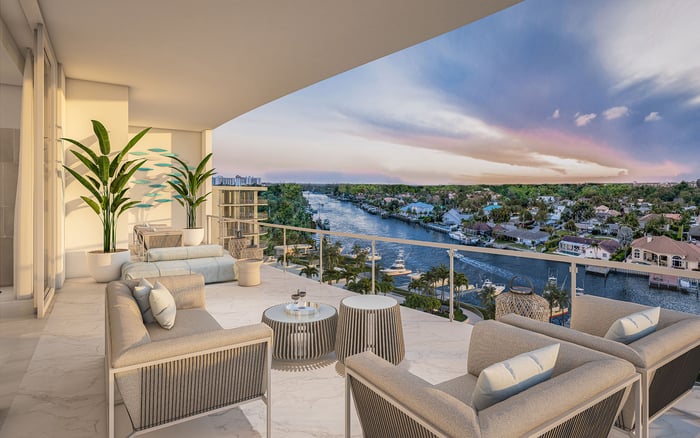
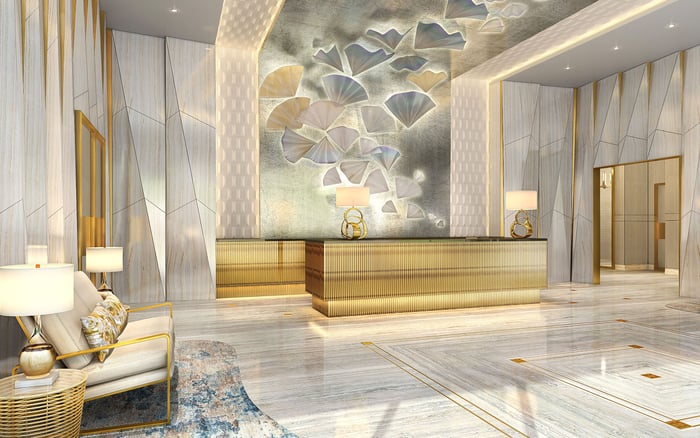
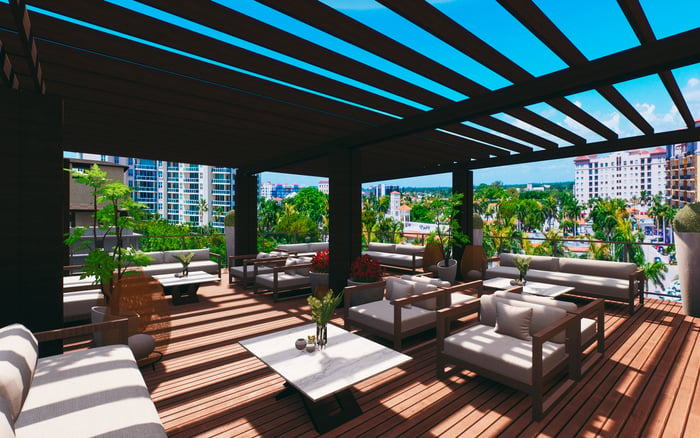
Two of Downtown Boca Raton’s most discussed new-construction addresses speak to different definitions of “walkable luxury.” One leans into hotel-caliber service and social energy; the other prioritizes privacy, scale, and an edited daily rhythm. For buyers calibrating car-light living, this is less about a single amenity and more about how each building stitches into the city’s streets, dining, wellness, and cultural routines.
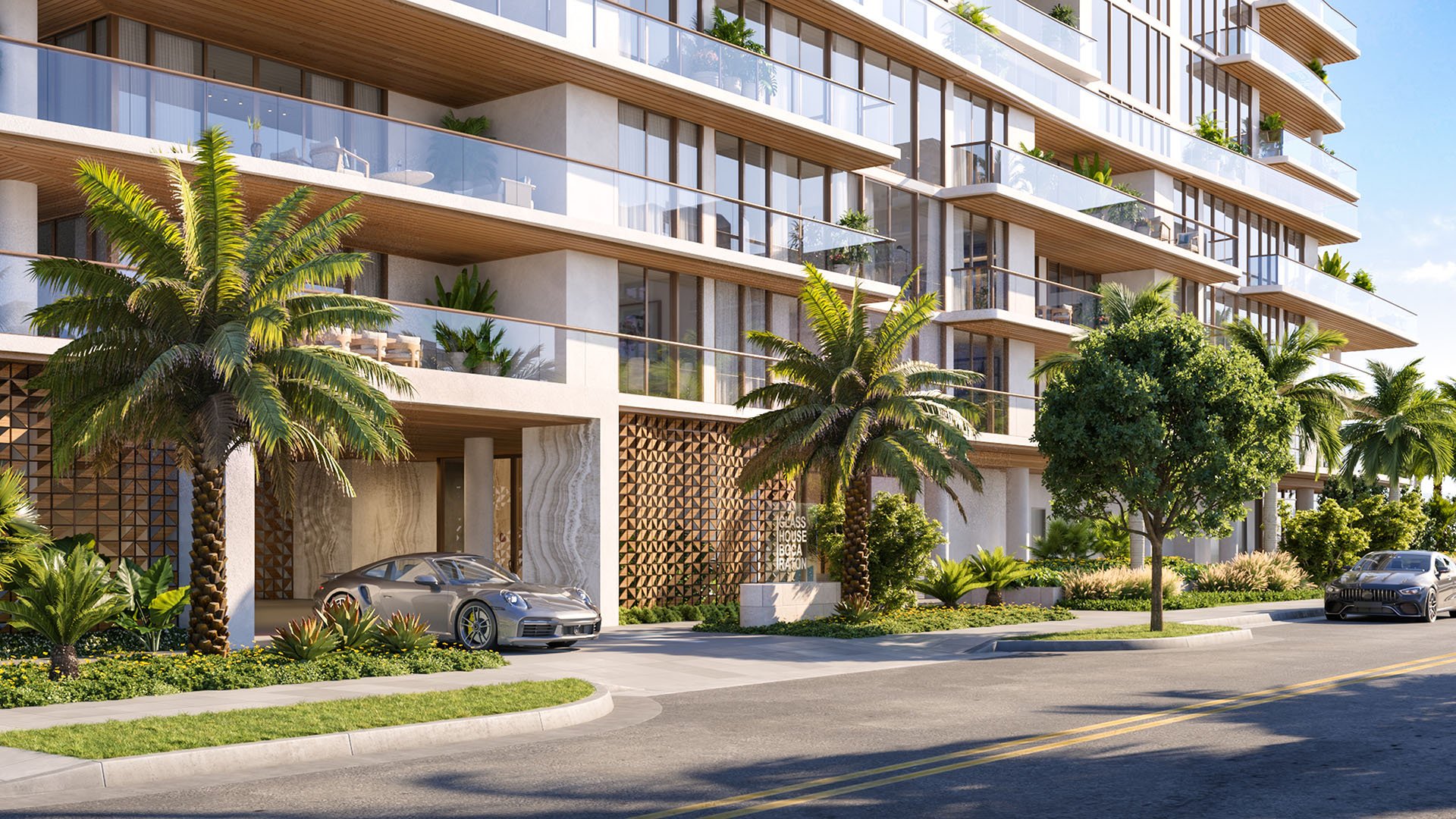
Downtown Boca-ratón has evolved into a place where a refined lifestyle can be built around short, repeatable trips: morning coffee, a midday wellness appointment, an early dinner, a late gallery stop. The real test of walkability isn’t whether a map shows nearby pins-it’s whether the routes feel comfortable and consistent, day after day. Shade, sidewalk continuity, street crossings, and the ability to flow from one stop to the next matter more than any single proximity claim.
Against that backdrop, Mr. C Residences Boca Raton and Glass House Boca Raton stand out as two compelling interpretations of Downtown living. Both aim to put residents within reach of the city’s most desirable rituals, but they frame the day differently: one is tuned like a luxury hotel with a residential core, and the other reads as a quieter, more controlled residential environment.
This comparison is for buyers who already know they want Downtown. The decision becomes: what kind of Downtown life are you optimizing for?
For an ultra-premium audience, “walkable” rarely means walking everywhere. More often, it means choosing when to walk, when to valet, and when to leave the car parked for days at a time.
A practical definition of luxury walkability includes:
A reliable set of short, safe routes you will actually use-in real clothing, in real weather.
Daily conveniences that feel effortless, not like errands.
Social options that don’t require planning, especially for last-minute dining.
A building entry sequence that supports walking: quick in-and-out, secure package handling, and staff who can bridge the moments.
In other words, Downtown is the stage, but the building is the director. Your lifestyle integration depends on how the property removes friction from the routines you repeat most.
Mr. C’s sensibility is fundamentally hospitality-forward: the building is designed to operate as a living environment with a practiced, attentive cadence. For buyers who entertain frequently, travel often, or simply prefer an elevated layer of daily assistance, this approach can make Downtown feel more integrated-because the building itself functions as an extension of the neighborhood.
In practice, it’s less about any single amenity and more about how service edits your day. Coordinating arrivals, managing deliveries with discretion, and supporting last-minute changes becomes the quiet advantage of a true service culture. In Downtown, where spontaneity is part of the appeal, that matters.
Mr. C also tends to suit a more social definition of walkability. If your ideal routine is a quick lobby departure to meet friends, a short stroll to a reservation, and an equally effortless return, a building that’s comfortable with movement, guests, and momentum can feel like the right fit.
A helpful way to self-select: if you like the energy of being out several times per week, Mr. C’s lifestyle integration can make the neighborhood feel closer-because the building is built to keep you in motion.
Glass House’s appeal is the opposite kind of integration: it can make Downtown feel calmer by delivering a more residential, controlled atmosphere that buffers the city’s activity. For certain buyers, that’s the most luxurious version of walkability. You want access, but you don’t want the day to feel like a hotel lobby.
A quieter building experience changes how you use the neighborhood. You may still walk to dining, wellness, and shopping, but you return to a home environment that feels intentionally separated from public life. For owners who prioritize privacy, predictable common areas, and an edited social surface area, that restraint can be a defining advantage.
This orientation often aligns with:
Buyers who entertain at home more than they dine out.
Owners who keep irregular hours and want a calmer arrival experience.
Second-home residents who prefer a “lock-and-leave” feeling without the sense of being in a busy scene.
In Downtown terms, Glass House reads as a choice to engage the city on your terms. You can step into the neighborhood when you want-and step out just as quickly.
The most revealing comparison is to map a real day, then ask which building makes it feel more effortless.
Morning: If your day starts with coffee and a walk, both buildings can support that rhythm. The difference is the entry sequence. A service-forward building can compress decision-making: grab-and-go, quick coordination, and a lobby experience that feels ready at all hours. A quieter building can make mornings feel more private-more like leaving a well-managed residence than a social hub.
Midday: Downtown is at its best when errands stack naturally: wellness, a quick lunch, an appointment, then home. Here, lifestyle integration comes down to how your building handles the things you don’t want to think about-deliveries, maintenance access, and the small logistics that accumulate. If you value “someone has it handled,” Mr. C tends to speak your language. If you value “nothing interrupts,” Glass House may feel more aligned.
Evening: Dining and cultural plans are where Downtown walkability becomes emotional. If you love last-minute plans, meeting friends without overthinking parking, and returning to a building that feels alive, Mr. C’s tempo can be the draw. If you want the city outside but a quieter home atmosphere inside, Glass House can offer the stronger contrast.
Even when the decision is between two Downtown towers, many buyers triangulate value and lifestyle by looking at other premium addresses in the Boca-ratón conversation.
For example, Alina Residences Boca Raton is often considered by buyers who want Downtown adjacency with a distinctly residential feel. It can serve as a reference point for how much privacy, scale, and amenity tone you want relative to your walkability goals.
Others widen the aperture to the next wave of branded or service-rich living. The Residences at Mandarin Oriental Boca Raton, for instance, reflects a hospitality-anchored lifestyle where daily support is part of the value proposition. Even if you remain focused on Downtown, thinking through that spectrum helps clarify whether your “integration” is more about staff and service-or more about a calm, residential baseline.
Finally, some Downtown buyers weigh a single-family counterpoint for total control, especially if they want walkability without shared corridors. A property like 749 Bamboo Dr Boca Raton can become the mental yardstick: how much do you value private grounds and autonomy versus the convenience of a managed tower lifestyle?
Because the Fact Table for this assignment does not include verified unit counts, pricing, or a definitive amenity roster, the most responsible approach is to choose based on lifestyle mechanics you can validate during a tour and through contract review. The questions below tend to produce clarity quickly.
If you want the building to be part of your social ecosystem, a service-forward environment can feel naturally integrated. If you want your social life to happen outside the building, a quieter residence may suit.
Frequent at-home entertaining elevates the importance of privacy, elevator behavior, and a calmer common-area experience. Frequent entertaining out in Downtown elevates the importance of easy departures, staff coordination, and an arrival sequence that feels polished at peak hours.
Spontaneity favors frictionless logistics. Predictability favors controlled environments.
Some buyers imagine walking more than they realistically will. A useful test is to pick three habits you already have: coffee, fitness, dinner. If you’ll do those on foot multiple times per week, prioritize the building that makes those exits and returns feel effortless.
Privacy can mean discretion from neighbors, discretion from the street, or discretion from staff and guests. Define which version matters most, then evaluate accordingly.
In Downtown Boca-ratón, the premium is no longer simply being near the action. The premium is choosing your relationship to the action.
Mr. C Residences Boca Raton is a compelling choice for buyers who want a service-led lifestyle with a confident tempo, where the building functions like an extension of the neighborhood’s dining and social ecosystem. Glass House Boca Raton is compelling for buyers who want Downtown access with a more restrained, residential atmosphere, where privacy and control define the day.
Both can deliver walkability. The better question is which one delivers the specific kind of walkability you will actually use.
Which is better for a truly walkable Downtown lifestyle, Mr. C or Glass House? Both can work; the better fit depends on whether you prefer a service-forward tempo or a quieter residential rhythm.
Is Downtown Boca-ratón walkable year-round? It can be, but comfort depends on heat, shade, and your willingness to walk for short, repeated trips.
Which building feels more social day to day? Mr. C generally reads more hospitality-led, which tends to support a more social cadence.
Which building is more private in feel? Glass House generally appeals to buyers seeking a calmer, more residential environment.
Do I still need a car if I live Downtown? Most residents still keep a vehicle, but many trips can become optional rather than required.
What should I verify on a tour to assess lifestyle integration? Focus on entry and elevator flow, security posture, package handling, and how staff or management supports daily logistics.
How important is the lobby experience for walkability? Very; a lobby that makes coming and going effortless increases the odds you will actually walk more.
Are these choices better for a primary residence or a second home? Both can suit either; service-forward living often favors frequent travel, while quieter living favors a calmer routine.
Should I compare these to other Boca addresses before deciding? Yes; looking at nearby options like Alina can clarify whether you want more energy or more residential restraint.
What is the simplest way to decide between them? Write down your top three weekly rituals and choose the building that removes the most friction from those moments.
If you'd like a private walkthrough and a curated shortlist, connect with MILLION Luxury.
If branded residences are on your mind — as a home or as an allocation — we would be glad to share what we are seeing, privately.
Begin a quiet conversation