A buyer-focused look at how North Miami luxury residences distinguish themselves through layered access, discretion, privacy culture and digital governance beyond visible amenities.
In North Miami, the language of luxury is changing. Pools, lounges, fitness rooms and views still matter, but the most discerning buyers are asking a quieter question: how does the building protect the life lived inside it?
Security and privacy are not the same thing, yet at the top of the market they are inseparable. Security is the system of prevention, verification and response. Privacy is the experience of moving through a residence without unnecessary exposure, interruption or trace. The best buildings understand both. They make residents feel known without making them feel observed.
That distinction is central to the next generation of luxury residences around North Miami and its neighboring enclaves. A project such as One Park Tower by Turnberry North Miami sits within a market where buyers are not merely comparing finishes. They are comparing arrival sequences, access control, staff culture, parking privacy, guest protocols and the degree to which technology supports discretion rather than spectacle.
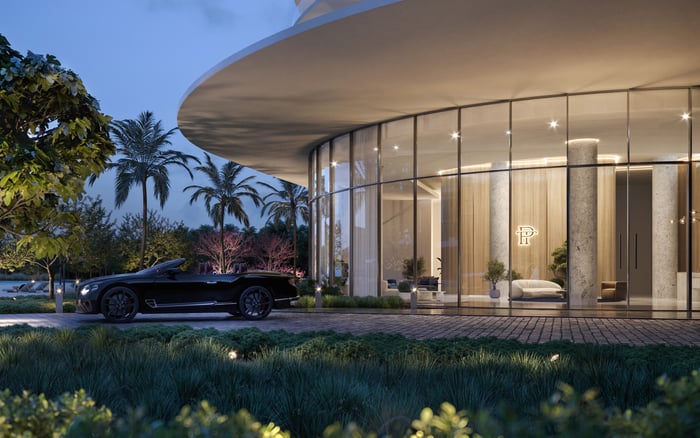
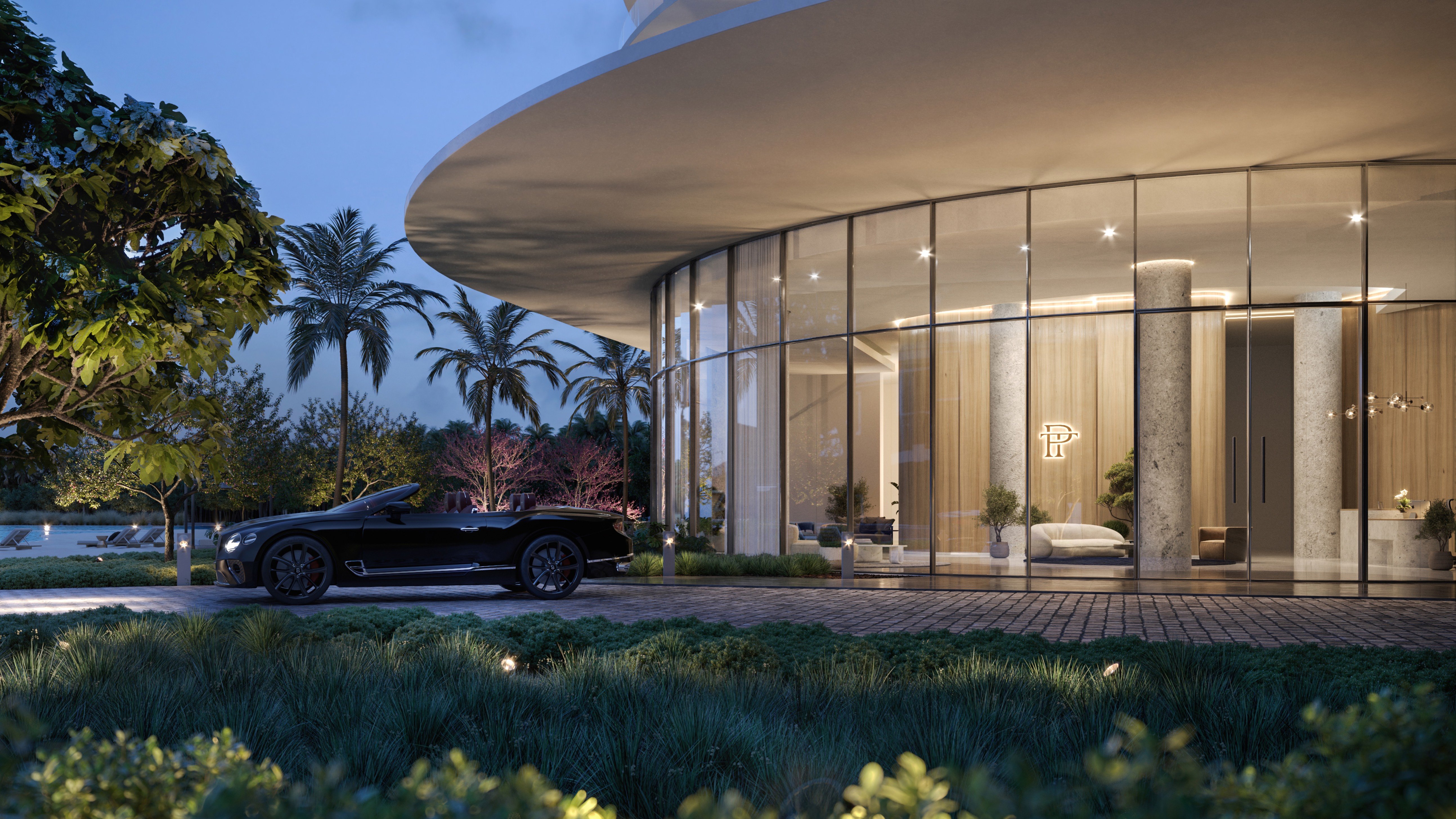
The first meaningful security feature is not always a camera or a guard desk. It is the way a resident arrives. In a strong luxury building, the transition from street to private space feels composed, legible and controlled. There is a clear hierarchy: public edge, controlled entry, resident-only circulation and, finally, the residence itself.
This is where buildings begin to diverge. Some rely on visible security cues. Others favor a softer hospitality model, where verification happens quietly in the background. For ultra-premium buyers, the latter approach is often more desirable. It avoids the atmosphere of a checkpoint while preserving control.
Parking is also central to the privacy equation. A private garage sequence can reduce exposure for residents who value discretion, whether they are public figures, executives, collectors or families who simply prefer a low-profile lifestyle. The question is not only whether the garage is secure, but how directly it connects to elevators, residences and service areas.
Luxury security is strongest when it is layered. A single impressive feature, whether biometric entry or a striking lobby desk, does not define a secure building. The better question is how many moments of verification exist between the street and the private residence, and whether those moments are intelligent rather than intrusive.
A layered approach may include controlled vehicular entry, managed pedestrian access, resident credentialing, guest authorization, elevator controls and clear service protocols. Each layer should reduce uncertainty without creating friction for legitimate users. In the best buildings, residents experience convenience while the building maintains discipline.
This is why buyers should be careful about evaluating security through amenity language alone. A brochure can promise exclusivity, but daily operations determine whether exclusivity is actually felt. The difference appears when a dinner guest arrives, when a delivery is made, when a vendor needs access or when a resident returns late at night. Operational consistency is the real luxury.
Technology can verify, record and restrict. It cannot replace judgment. In a private residential building, staff culture is one of the most important forms of protection. The tone at the entrance, the discretion of concierge interactions, the handling of resident names and the discipline around guest information all shape the privacy environment.
A refined building does not make residents repeat themselves unnecessarily. It does not broadcast who is home, who is visiting or where someone is going. It keeps service warm but contained. This is especially important in branded or highly amenitized buildings, where hospitality expectations are high. The challenge is to deliver polish without turning residential life into a public-facing hotel experience.
Buyers comparing North Miami with Aventura, Bay Harbor Islands and Sunny Isles should pay close attention to how a building balances personality with protocol. At Avenia Aventura, for example, buyers evaluating the broader Aventura market may think not only about convenience and design, but also about the daily choreography of arrival, reception and residential flow.
Modern buildings are increasingly connected. Access systems, smart-home platforms, package notifications, visitor management tools and resident apps can make daily life easier. They also introduce a separate category of concern: data governance.
For sophisticated buyers, it is no longer enough to ask whether a building has smart technology. The sharper questions are practical. Who controls the resident data? How is access permission changed when staff turns over? What happens when a phone is lost? Can guest credentials expire automatically? Are building systems separated from private in-residence networks?
The answers may not be visible during a model residence tour, but they matter. A secure building should treat digital access as carefully as physical keys. Privacy-by-design means collecting only what is needed, limiting who can see it and maintaining procedures for updates, resets and emergencies. This is where the invisible architecture of a building becomes as important as the visible one.
There is no single best model for privacy. Boutique buildings can offer a quieter residential atmosphere, fewer shared encounters and a more intimate staff-resident relationship. Larger full-service buildings can offer deeper staffing, more formalized systems and broader amenity control. Each model has advantages.
The buyer's task is to match the building to the household's rhythm. A resident who entertains frequently may value refined guest management and elegant drop-off sequencing. A frequent traveler may prioritize lock-and-leave confidence, controlled access and reliable staff communication. A family may focus on garage security, elevator controls and the separation of resident and service circulation.
In Bay Harbor, the appeal is often tied to a calmer residential cadence and proximity to waterfront and village-like settings. A project such as La Maré Bay Harbor Islands illustrates why buyers often compare boutique privacy with broader service expectations across the islands and the mainland. In Sunny Isles, by contrast, towers may place greater emphasis on vertical privacy, controlled elevators and resort-style service at scale, as buyers may consider residences such as Bentley Residences Sunny Isles.
The most useful privacy questions are direct, not dramatic. Ask how guests are approved, how vendors are logged, how deliveries are handled, how staff communicates with residents and how elevator access is managed. Ask whether the building has written protocols for after-hours arrivals, lost credentials and temporary access.
Also ask how privacy works during normal life, not only during emergencies. Where does a rideshare stop? Can a guest reach a residence floor without authorization? How visible is the mail or package area? Are service providers routed through the same spaces as residents? Can household staff have limited, revocable access?
These details often separate buildings that simply advertise luxury from buildings that operate at a luxury level. In South Florida search language, this conversation reaches beyond North Miami into North Miami Beach, Aventura, Bay Harbor Islands and Sunny Isles. The location may change, but the premium buyer's standard remains consistent: discretion should be designed, trained and maintained.
The future of luxury residential value in North Miami will not be defined only by what residents can use, but by what they never have to worry about. A private building reduces unnecessary exposure. A secure building reduces uncertainty. A truly sophisticated building does both without making either feel theatrical.
For buyers, the practical takeaway is simple: tour the amenity deck, but study the thresholds. Notice the street edge, the garage, the lobby sightlines, the elevator logic, the staff rhythm and the digital access experience. These are the places where privacy either becomes part of daily life or remains a marketing promise.
What is the difference between security and privacy in a luxury building? Security controls access and response, while privacy protects discretion, movement and personal information.
Why does arrival design matter so much? The arrival sequence determines how exposed residents feel between the street, parking, lobby and private elevator areas.
Are biometric systems always better? Not necessarily. They can be useful, but only when supported by strong data policies, staff procedures and backup access plans.
What should buyers ask about guest access? Ask how guests are approved, how long credentials remain active and whether access can be limited to specific areas.
Do boutique buildings offer more privacy than large towers? They can, but larger towers may offer deeper staffing and more formalized systems. The best choice depends on lifestyle.
How important is parking security? Very important, because garages often shape the most private and frequent resident arrival experience.
Should smart-home systems be reviewed during due diligence? Yes. Buyers should understand who controls permissions, how systems are updated and how access is revoked.
Can staff training affect privacy? Absolutely. Discreet staffing can be as important as physical security because daily judgment protects resident information.
What is privacy-by-design? It means privacy is built into circulation, technology, staffing and policies rather than added after the building opens.
What is the best way to compare buildings? Compare daily operations, access layers and staff protocols alongside amenities, views and finishes.
For a confidential assessment and a building-by-building shortlist, connect with MILLION.
If branded residences are on your mind — as a home or as an allocation — we would be glad to share what we are seeing, privately.
Begin a quiet conversation