For buyers who treat race weekend as a standing calendar event, proximity to the Miami International Autodrome is less about straight-line mileage and more about predictable access. From Northern Miami-Dade, the most functional routes typically hinge on expressway adjacency, neighborhood egress, and your tolerance for event-day traffic controls. This MILLION Luxury guide frames proximity as a lifestyle variable: how quickly you can leave a waterfront address, where bottlenecks form, and which neighborhoods tend to offer the cleanest “arrive and depart” experience. We keep the lens buyer-oriented, prioritizing realism over optimism and offering a way to think about the commute year-round, not only during headline weekends.
The Miami International Autodrome sits within the Hard Rock Stadium campus, and that distinction matters. Unlike a street circuit embedded in a dense grid, this venue concentrates arrivals into controlled entry points, security perimeters, and managed parking fields. For residents of Northern Miami-Dade, “close” can still translate to slow when you’re funneled into the same approach roads as thousands of visitors.
In practice, the most valuable kind of proximity is repeatable access. The neighborhoods that best support an autodrome-centric lifestyle are not always the geographically nearest; they are the ones that get you to expressways quickly, minimize complicated local turns, and make it easier to leave without being boxed in by post-event traffic patterns.
That is why two homes with similar map distances can perform very differently in real time. A residence that sits elegantly on the water may require a longer, more delicate exit route. Another that is a few miles farther may connect to a major corridor within minutes and win on predictability.
For an ultra-premium buyer, the commute is rarely a daily grind; it’s a high-sensitivity trip taken at peak moments. Three variables typically determine whether proximity feels effortless or exhausting.
First is neighborhood egress. How many turns does it take to reach a high-capacity road, and are there choke points such as drawbridges, school zones, or narrow causeways that you can’t realistically avoid?
Second is expressway adjacency. Being near the on-ramp isn’t glamorous, but it is consequential. When traffic is heavy and routes are rerouted, you want options and redundancy.
Third is your arrival style. Some owners prefer to drive and park because it preserves control and timing. Others prefer a car service, which can reduce friction but introduces dependence on pickup logistics. For hosted experiences, a short, flexible trip matters less than having reliable staging for the return.
The goal isn’t to “beat traffic” every time. It’s to make the time cost legible and acceptable, so race weekend remains a pleasure rather than a penalty.
Northern Miami-Dade offers a rare mix of waterfront living, gated enclaves, and midtown-level convenience. Even so, each area expresses proximity in its own way.
Aventura often appeals to buyers who want a polished, amenity-rich everyday life with relatively direct access to major arteries. If your calendar includes frequent arena nights, airport runs, and autodrome weekends, the value is consistency: you can plan around known peak periods without feeling geographically cut off.
Sunny Isles Beach is a different proposition. The lifestyle is vertical, oceanfront, and service-oriented, with residences that suit lock-and-leave usage. A home at Bentley Residences Sunny Isles or St. Regis® Residences Sunny Isles can be ideal for owners who prioritize view, privacy, and turnkey operation. The tradeoff is barrier-island geometry: when the region is busy, the “last mile” to and from the mainland is where time tends to expand.
Bay Harbor Islands and Bal Harbour offer a more discreet, boutique sensibility and are often favored by buyers who value calm streets, design-forward residences, and close proximity to top-tier retail and dining. Their proximity profile is nuanced: they’re not far, but bridges and local traffic can shape the experience. For an ownership lens that blends wellness, walkability, and an elevated but quieter rhythm, The Well Bay Harbor Islands reflects the neighborhood’s contemporary direction while remaining within Northern Miami-Dade’s practical access web.
North Bay Village is the wildcard. Its position between Miami and the beaches can feel central, yet event-day traffic can also concentrate around key connectors. For buyers who want new construction and a more urban-meets-water feel without going fully downtown, Continuum Club & Residences North Bay Village speaks to the area’s next chapter.
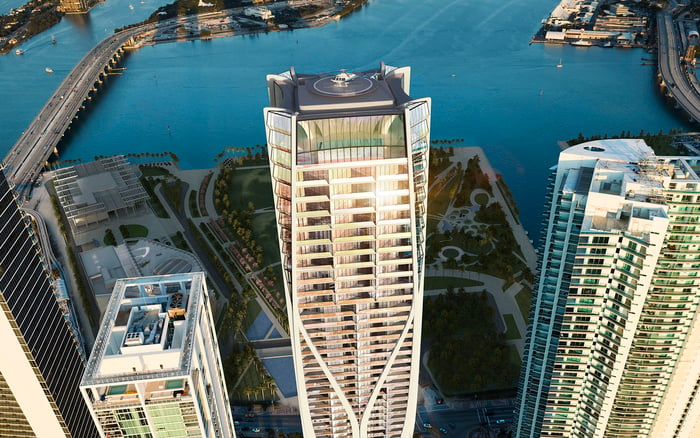
North Miami and North Miami Beach can deliver strong functional access for autodrome purposes, often with a more straightforward relationship to major roads. For a buyer whose priority is “in and out” rather than beachfront optics, these neighborhoods can be compelling-especially when paired with a newer, full-service residential concept such as One Park Tower by Turnberry North Miami.
Owners approach race weekend differently than out-of-town attendees. The most effective strategy is to build your schedule around predictable pressure points.
Arrivals tend to compress into a few pre-event windows, and departures often compress even more. If you value control, consider arriving earlier than feels necessary and spending the buffer inside hospitality rather than on the road. If you prefer a later arrival, assume the final approach will be slow and simplify what comes next: a pre-arranged pickup location, a fixed meeting point for your party, and a clear “leave at” time.
Northern Miami-Dade residents have an advantage: you can test-drive your plan in advance. On a normal weekend, run the route at a similar time of day, note where it slows, and identify a second option that avoids the same chokepoints. The objective is optionality.
Also consider what you’re optimizing for. The fastest route to the venue may not be the fastest route home. A route that feels longer on the way in can be smoother on the way out if it bypasses the most congested exits.
For some buyers, oceanfront living is the point, and the commute is simply the cost of admission. For others, the venue is part of a broader mobility portfolio that includes private aviation, business meetings, and family logistics.
Sunny Isles and Surfside deliver the image and the sensory reward: sunrise over the Atlantic, full-service towers, and the kind of security infrastructure that supports second-home usage. The question is whether you want race weekend to feel like a short excursion or a managed expedition.
Mainland neighborhoods, by contrast, can feel less cinematic day-to-day, yet more efficient when the region is in motion. If you attend the event once a year, you may accept a longer drive in exchange for water views every morning. If you attend multiple days, entertain guests, or prefer spontaneity, operational ease becomes a quality-of-life feature.
High-net-worth buyers tend to value discretion as much as speed. The autodrome environment is high-visibility, and your plan should reflect that.
If you are driving yourself, prioritize clarity: where you park, how long the walk is, and how you’ll locate your car again after a long day. If you are using a driver, establish a pickup protocol that accounts for delayed access and shifting traffic controls. If you are meeting friends, set a rendezvous point that isn’t dependent on cell service being perfect.
From Northern Miami-Dade, a short trip can still become complicated if you leave without a plan for the last 10 minutes. The goal is not only to arrive on time, but to preserve the calm, controlled feeling that defines luxury.
When comparing homes with autodrome proximity in mind, use a framework that balances lifestyle and logistics.
Start with frequency. If you go once, you can tolerate more friction. If you go multiple days, prioritize egress and route flexibility.
Next, decide what you will not compromise on: oceanfront, gated-community privacy, a new-construction amenity set, or proximity to dining and retail. Proximity to the venue is rarely the primary driver of a purchase; it’s typically a supporting attribute that should reinforce-not distort-the rest of the decision.
Finally, test the home’s “mobility posture.” Can you leave quickly at peak times? Are there multiple ways to reach the same corridor? Does the neighborhood feel calm on normal days, or is it perpetually busy?
In Northern Miami-Dade, the best outcome is a residence that elevates everyday life and makes race weekend feel effortless.
Which Northern Miami-Dade neighborhoods tend to feel closest in practice? Neighborhoods with fast egress to major corridors often feel closer than waterfront areas with bridge-dependent exits.
Is straight-line distance a reliable way to judge commute time to the autodrome? Not really; traffic controls and bottlenecks can dominate the final approach regardless of mileage.
Does living on a barrier island change the race-weekend experience? It can, since bridges and limited connectors may add unpredictability during peak arrival and departure windows.
Is Aventura a practical base for attending the event? Yes for many buyers, especially if you value consistent access patterns and a full-service daily lifestyle.
Are Bay Harbor Islands and Bal Harbour convenient for autodrome weekends? They can be, but bridge crossings and local congestion may influence timing more than you expect.
Should I plan to drive myself or use a car service? Driving offers control; a car service can reduce stress but requires a clear pickup plan for departure.
How early should I leave from Northern Miami-Dade on event days? Build a buffer and assume the last portion of the trip will be slower than normal at peak hours.
What matters most for a fast exit after the event? A pre-set departure time and a route that avoids the most congested venue-adjacent exits usually help.
Does choosing new construction change proximity advantages? New construction can improve daily living and security, but the commute still depends on neighborhood access.
Can I make proximity part of my purchase decision without over-optimizing for one weekend? Yes; treat it as a mobility feature that should complement your broader lifestyle priorities.
If you'd like a private walkthrough and a curated shortlist, connect with MILLION Luxury.
If branded residences are on your mind — as a home or as an allocation — we would be glad to share what we are seeing, privately.
Begin a quiet conversation