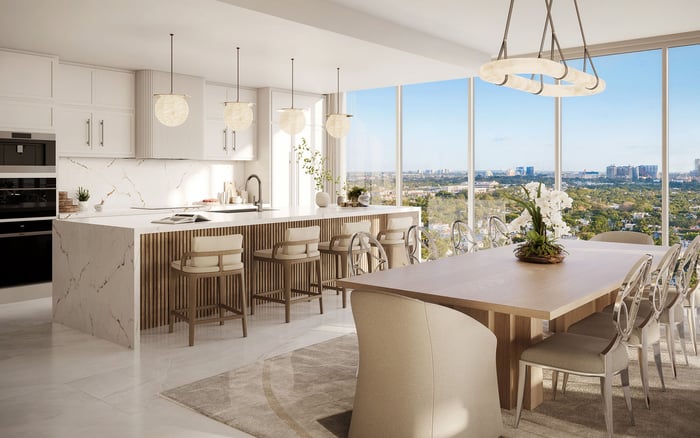
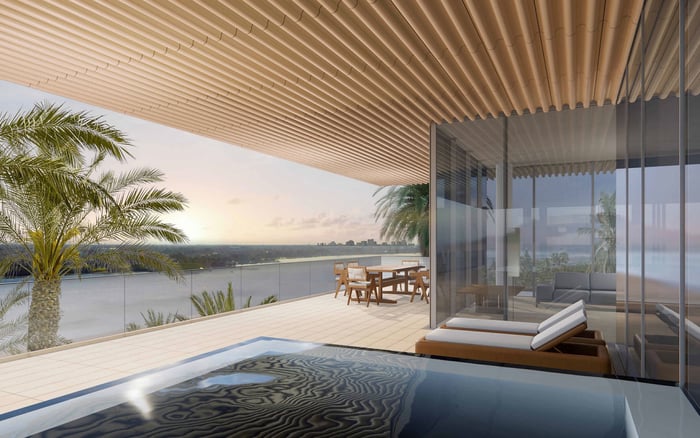
A discreet buyer checklist for assessing whether a Nora House West Palm Beach residence can support a refined in-unit massage-room concept in 2026.

For a luxury buyer evaluating Nora House West Palm Beach in 2026, an in-unit massage room is not merely a lifestyle flourish. It is a spatial, technical, and governance question that should be tested before a contract becomes emotionally inevitable. A residence may feel generous at first walk-through, yet still fall short once a treatment table, therapist circulation, linen storage, sound control, lighting scenes, and privacy expectations enter the plan.
The most successful private wellness rooms are quiet in every sense. They do not interrupt the home’s architecture. They do not create awkward service paths. They do not rely on fragile workarounds with furniture, candles, or portable equipment. They feel intentional, as if the apartment always anticipated a more restorative rhythm.
This checklist is designed for buyers who want that level of discretion. It does not assume that every floor plan can or should absorb a massage-room program. Instead, it offers a disciplined way to decide whether the fit is elegant, merely possible, or not worth forcing.
The first test is physical clearance. A massage table must be usable from both sides, not wedged into a room like occasional furniture. The therapist needs space to move, adjust posture, place tools, and work without repeatedly touching walls, doors, or side tables. If the only viable location requires the table to sit diagonally or blocks a closet, balcony door, or bathroom route, the plan is already compromised.
Buyers should evaluate the likely massage-room candidate in its least forgiving configuration. Imagine the table open, linens placed, a stool or small trolley nearby, soft lighting engaged, and a guest moving from entry to table with privacy. If the room works only after essential furniture is removed or corridor space is borrowed, the residence may support occasional treatment, but not a refined wellness suite.
A guest bedroom, den, media room, or oversized dressing area can each be considered. The best choice is usually the one that preserves the calm of the primary suite while allowing a therapist to enter and leave without crossing the most intimate portions of the home.
The second test is documentary. Before assuming that a wellness conversion is permissible, buyers should review the condominium documents, alteration procedures, insurance requirements, and any rules governing contractors, outside service providers, deliveries, noise, floor protection, and work hours. Even a seemingly simple transformation can become complicated if it involves electrical changes, plumbing ambitions, wall treatments, acoustic upgrades, flooring modifications, or built-in cabinetry.
The prudent approach is to separate soft installation from hard alteration. A freestanding table, portable warmer, loose storage, and decorative lighting may raise fewer questions than new plumbing, recessed fixtures, sound-isolation assemblies, or custom millwork attached to building elements. That distinction matters because the most desirable wellness room is often the one that feels permanent while remaining reversible.
Buyers considering new-construction or pre-construction opportunities should ask early how customization requests are handled, when selections close, and whether any post-closing work would require association review. For boutique residences, the conversation can feel more personal, but the need for written clarity does not disappear.
An in-unit massage room succeeds when the arrival sequence feels calm. The therapist should be able to reach the room without passing through a dining setup, children’s rooms, or a primary closet. If the intended treatment space sits too deep inside the private zone, the owner may use it less often than expected.
Consider the full appointment choreography. Where does a therapist park or arrive? How are they announced? Is there a comfortable waiting point if the owner is not ready? Where are shoes, supplies, and linens placed? Is there a nearby powder room or bath that does not expose the family’s private routines? These questions are not theatrical. They determine whether wellness feels like hospitality or intrusion.
For a West Palm Beach and Palm Beach buyer, the distinction is especially relevant because many residences are evaluated not only as primary homes, but also as seasonal retreats, guest-forward residences, or lock-and-leave sanctuaries. A treatment room must work for the way the home is actually occupied.
Massage-room due diligence should treat the senses as technical criteria. Sound comes first. If the room shares a wall with a lively living area, elevator-adjacent corridor, laundry room, or mechanical closet, the experience may never feel fully serene. Buyers should listen during different moments of the visit and resist judging acoustics only when the residence is empty and staged.
Light is equally important. Daylight can be desirable; glare is not. A terrace connection may make a room feel expansive, yet it can also introduce heat, visual exposure, or distracting movement outside the glass. Window treatments, dimming, and layered lighting should be considered part of the plan, not accessories to be solved later.
Air quality and temperature control deserve particular attention. A small room that becomes warm during a treatment will feel less luxurious than a larger room with balanced circulation. Scent, oils, laundry, and cleaning products also require restraint. The goal is not a spa cliché, but a quietly controlled environment with materials that clean well, age well, and do not trap fragrance indefinitely.
A massage room without storage quickly becomes a spare room with a table. Linens, bolsters, oils, towels, protective covers, laundry bags, robes, slippers, device chargers, and cleaning supplies all need a home. If the plan depends on carrying everything from a distant closet before each appointment, usage will become less graceful over time.
The best storage is discreet and shallow enough to avoid overwhelming the room. Built-ins can be elegant, but they should be reviewed through the same permissions lens as any other alteration. Freestanding cabinetry may offer a softer path, especially for buyers who want flexibility or who may eventually return the room to a den or bedroom.
A proper checklist should also include laundry logic. Where do used linens go immediately after treatment? Can they be contained without traveling through entertaining spaces? Does the residence have enough utility capacity for the owner’s expected rhythm? The luxury is not only in receiving the treatment. It is in the absence of visible aftermath.
Private wellness is now part of how many luxury buyers imagine daily life, but resale still rewards flexibility. A room that can be read as a den, guest room, study, or wellness suite will usually feel more durable than a highly specialized build-out that narrows the next buyer’s imagination.
For Nora House West Palm Beach, the strongest strategy is to design for wellness without making the room dependent on one use. That means elegant lighting rather than theatrical lighting, refined storage rather than clinical cabinetry, soft acoustics rather than obvious padding, and furniture that can support multiple lifestyles. A massage-room fit should enhance the residence’s composure, not announce itself as a niche improvement.
The final due-diligence question is simple: would the room still make sense on a day with no appointment scheduled? If the answer is yes, the concept is likely aligned with luxury living. If the room feels dormant without a therapist present, the plan may be too narrow.
Before committing to an in-unit massage-room concept, confirm five categories. First, spatial fit: table clearance, circulation, storage, and door swing. Second, governance: alteration rules, service-provider procedures, contractor access, and insurance. Third, sensory performance: sound, light, air, temperature, and privacy. Fourth, operational ease: linen movement, supply storage, cleaning, and therapist arrival. Fifth, resale intelligence: reversibility, multiuse value, and design restraint.
A buyer should walk the residence twice with this checklist in mind. The first pass should be emotional, allowing the home to reveal whether it feels restorative. The second should be forensic, measuring the difference between atmosphere and actual function. The most compelling homes satisfy both.
Can any spare room become an in-unit massage room? Not always. The room needs enough clearance, privacy, storage, and comfort to support treatment without disrupting daily living.
Should buyers confirm association rules before planning the room? Yes. Any alteration, service access, or contractor work should be reviewed before money is committed to design or installation.
Is plumbing required for a private massage room? Usually, a refined room can be planned without new plumbing, though each buyer’s intended service level should be assessed carefully.
What is the most overlooked issue? Storage is often underestimated. Linens, oils, bolsters, and cleaning supplies need a discreet and convenient place to live.
Does a terrace improve the wellness-room concept? It can, if light and privacy are controlled. Without proper shading, a terrace-adjacent room may feel exposed or too bright.
Is a den better than a guest bedroom? It depends on circulation and privacy. The better choice is the room that allows treatment without compromising the home’s private zones.
Should the room be permanently customized? Reversible design is often wiser. It preserves resale flexibility while still allowing the space to feel intentional and polished.
How important is acoustic control? Very important. A massage room should feel insulated from household activity, corridor noise, and mechanical interruptions.
What should buyers ask before closing? Ask how alterations, outside service providers, deliveries, and contractor access are handled, then confirm the answers in writing.
What is the main test of a successful massage-room fit? The room should feel useful even without an appointment scheduled, functioning as a calm and flexible part of the residence.
For a confidential assessment and a building-by-building shortlist, connect with MILLION.
If branded residences are on your mind — as a home or as an allocation — we would be glad to share what we are seeing, privately.
Begin a quiet conversation