Combining two adjacent condominiums can create a rare, custom-scale residence, but the path is administrative before it is architectural. At Waldorf Astoria Residences Pompano Beach, the smartest approach is to treat a combination as a governance, engineering, and value-preservation project, with design decisions following only after you confirm what the building and jurisdiction will allow. This MILLION Luxury guide outlines the sequence sophisticated buyers use to reduce risk: validate whether the association and declarations permit a combination, map the structural and MEP constraints early, understand how ownership and common charges are handled, and align your design team with a clear approval strategy. The goal is a seamless home that reads as one residence while remaining fully compliant and future-resale ready.

A combination residence is often less about raw square footage and more about lifestyle geometry. Two adjacent homes can deliver true great-room frontage, a separate primary wing, a dedicated office or library, and guest privacy that a single condo line rarely achieves. For second-home buyers, the appeal is also operational: one side can stay quiet and restorative while the other hosts, without forcing the entire home into “entertaining mode.”
At a property like Waldorf Astoria Residences Pompano Beach, the instinct is to start with finishes, view corridors, and furniture plans. The more effective starting point is governance: your combination can only be as seamless as the approvals and technical constraints allow.
Before an architect measures a wall, have counsel and your representative review the condominium declaration, bylaws, rules and regulations, and any design or alteration guidelines. In luxury towers, the combination question typically breaks into three distinct layers:
Some communities allow it in principle but restrict where and how walls, entries, and wet areas may be adjusted.
Physical combinations create one lived-in home while retaining two legal units. Legal combinations generally require amending records so the property becomes a single unit.
Expect a formal alteration agreement, insurance requirements, deposits, use of approved contractors, and restrictions on working hours, elevator reservations, and protection of common elements.
This early legal diligence is not paperwork for its own sake. It determines whether the end result can be presented as one residence at resale, whether you will carry two sets of assessments indefinitely, and whether your planned entry sequence is even allowed.
Sophisticated buyers decide early whether the priority is “one home in practice” or “one home on paper.”
A physical combination typically means keeping two legal units and creating select connections-often through a shared wall-or reworking entry doors and interior circulation. It can be faster and, in some cases, easier to unwind later, but it may preserve two sets of monthly fees, two tax bills, and separate resale paths.
A legal combination can bring clarity for estate planning and future transfer, but it often requires deeper administrative steps and may not be available in every condominium regime. Even when permitted, it can affect insurance, financing, and how the association calculates voting interests and common expenses.
Treat the choice as a long-term asset decision. The design must serve daily living and the next buyer’s comprehension. In certain markets, two adjacent units that can be separated again is a selling feature; in others, the premium attaches to a singular, grand-scale plan that feels original.
The most expensive mistake in a condo combination is designing around a wall that cannot move-or assuming slab penetrations are negotiable. Early on, your team should confirm the distinction between:
Structural elements (columns, shear walls, post-tension slabs) that are typically non-negotiable.
Demising walls that may be alterable only with specific detailing, sound attenuation standards, and engineering sign-off.
Facade and window systems that are generally untouchable.
Even with adjacent units, the building may impose fire separation requirements, acoustic performance standards, and smoke-control expectations that influence the size and type of opening you can create. A “wide, gallery-like portal” between residences can trigger different fire-rating, door, and alarm considerations than a discreet connecting door.
A practical tactic: request as-built drawings, then commission a focused engineering memo that answers only the critical feasibility questions. It may be less glamorous than renderings, but it supports a realistic budget and timeline.
MEP-mechanical, electrical, and plumbing-is where most combination plans either become exceptional or become compromised.
Plumbing stacks often dictate where kitchens and baths can stay-or whether they can move at all. If your plan relies on relocating a wet area, confirm whether horizontal runs are allowed and how they must be insulated and firestopped.
HVAC zoning matters when two condos become one. You may end up with two systems, two thermostatic logics, and two sets of condensate lines. A strong designer can make this feel intentional, but it has to be planned.
Electrical capacity and panel locations shape lighting, specialty appliances, and any added AV, wellness, or backup-power concepts.
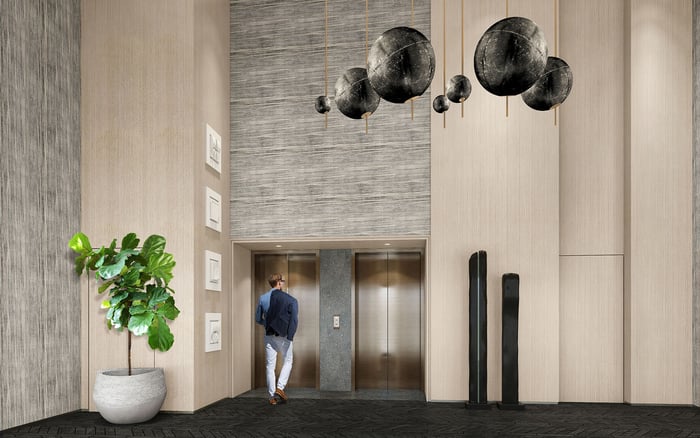
The luxury standard is not simply “it works,” but “it reads as one residence.” That requires aligned ceiling heights, grille patterns, lighting control, and acoustic isolation so the combined home feels authored-not stitched together.
If you are also evaluating other oceanfront options in Broward, it can be useful to compare how different buildings approach systems and layouts. For example, Armani Casa Residences Pompano Beach and Ocean 580 Pompano Beach attract similar lifestyle buyers, yet each tower’s planning DNA can influence how naturally a combination reads.
In premium condominiums, approval is rarely a single yes/no moment. More often, it is a sequence: concept submission, a formal plan set, engineer letters, contractor vetting, insurance compliance, deposits, and final sign-offs.
A disciplined way to approach approvals is to treat the board and management as partners in risk reduction. You are requesting modifications to demising walls, potentially affecting life-safety separations, and introducing construction impacts for neighbors. A complete submission that anticipates questions typically moves faster than a beautiful set that omits key details.
Expect heightened scrutiny on:
Life safety: fire-rated assemblies, alarm devices, egress, and any change to entry conditions.
Noise and vibration: demolition methods, coring restrictions, and working-hour constraints.
Water risk: waterproofing, leak-detection practices, and shutoff procedures.
Where the building is branded and service-forward, residents also expect discretion. That means staging deliveries, protecting common areas meticulously, and maintaining a quiet, predictable site presence.
One of the most nuanced decisions is how the combined home is entered. Buyers typically want one “front door moment,” yet the building may require existing entry doors to remain for fire separation or legal reasons.
Designers often solve this with a layered strategy:
Maintain compliance at each original entry.
Create an interior gallery that reorients guests toward a single, ceremonial arrival.
Use millwork, lighting, and material continuity to visually erase the seam.
Combinations that still “feel like two condos” typically fail here-not in the living room. The goal is an arrival that feels inevitable, as though the home was always meant to be one.
Luxury buyers are rarely surprised by the cost of stone, custom cabinetry, or lighting. They are surprised by the cost of constraints.
Budget contingencies should account for:
Engineering requirements and specialty trades.
Extended approval durations.
Temporary protections and common-area logistics.
Discovery during demolition, including unexpected routing of systems.
Model the timeline around governance. A practical workflow is: document review, feasibility engineering, concept design aligned to constraints, board submission, permit drawings, contractor procurement, then construction.
A combination residence must read clearly at resale. If it remains two legal units, future buyers must understand they are purchasing a paired asset with two sets of charges. If it becomes one legal unit, the next buyer will want confidence that the change is properly recorded and recognized.
Also consider the buyer profile you are designing for. In some corridors, a “grand combined residence” is the point. In others, flexibility is prized. If you want a benchmark for how scarcity is packaged in an established oceanfront market, look at buildings where floor plans and buyer expectations already support signature-scale living, such as 2000 Ocean Hallandale Beach.
Insurance and risk management are equally practical. If two units remain separate, ensure policies and liability align with the association’s alteration agreement. If the home functions as one, make sure coverage does too.
The strongest condo combinations are led by professionals who understand that luxury is compliance-delivered quietly.
At minimum, you want:
A real estate attorney who routinely handles condominium governance and can interpret alteration agreements and declarations.
An architect and interior designer experienced with high-rise constraints and association submissions.
A structural engineer who can confirm what is feasible without optimistic assumptions.
A contractor with a track record of occupied-building protocols and strict cleanliness, scheduling, and neighbor management.
Finally, assign clear responsibility for a single integrated scope. Combination projects break down when “Unit A” and “Unit B” are treated as parallel renovations. The home must be designed as one narrative-even if the paperwork remains dual.
Use this as a pre-offer or early post-contract filter:
Confirm the combination is permitted and understand whether legal unification is possible.
Verify structural limitations and the type and size of any allowable openings.
Map plumbing stacks, HVAC zones, and electrical panels before finalizing the layout.
Clarify how common charges, assessments, and voting interests will be handled.
Align the entry strategy with life-safety rules and resale clarity.
Build an approval calendar and include realistic contingency.
In Pompano-beach and broader Broward, the most compelling combined residences are the ones that look effortless. That effortlessness is engineered.
Can I combine two adjacent condos at Waldorf Astoria Residences Pompano Beach? It depends on the condominium documents and the association’s alteration rules; confirm permissions before designing.
Is a physical combination the same as making one legal unit? No. A physical connection can create one living space while the property remains two legal units.
Will I pay two HOA fees after combining? Often yes if the units remain legally separate, though the exact calculation depends on the governing documents.
Can I remove the wall between two units? Only if it is not structural and the association and engineer approve the opening and required fire and sound details.
Can I move the kitchen or add a new bathroom in the combined plan? Sometimes, but plumbing stacks, slope requirements, and building rules typically limit wet-area relocation.
Do I need permits for a condo combination? Most combinations require permits and licensed professionals, especially when mechanical, electrical, or plumbing is involved.
How long does board approval usually take? Timelines vary, but you should plan for multiple review rounds rather than a single decision.
Will a combination hurt resale value? Not necessarily; resale strength improves when the result is compliant, well-documented, and easy to understand.
Should I keep both front doors? Many buildings require existing entry conditions to remain for compliance; designers can still create a single arrival experience inside.
What is the biggest risk in combining two condos? Assuming feasibility without confirming structure, MEP constraints, and association rules, which can force costly redesigns.
For a tailored shortlist and next-step guidance, connect with MILLION Luxury.
If branded residences are on your mind — as a home or as an allocation — we would be glad to share what we are seeing, privately.
Begin a quiet conversation