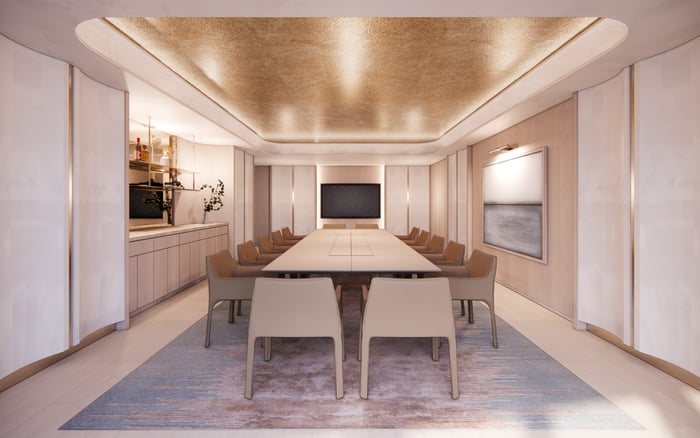
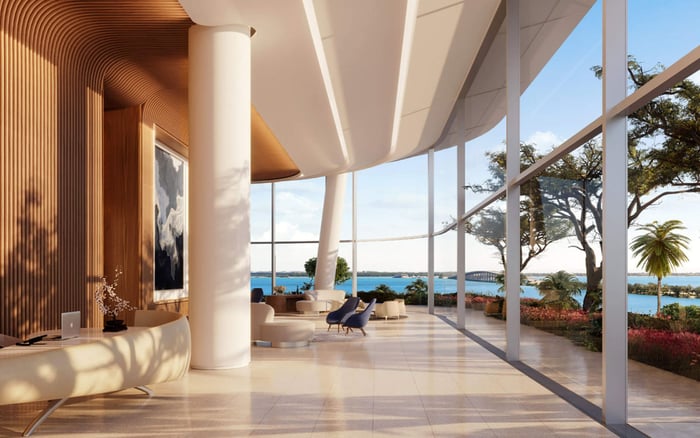
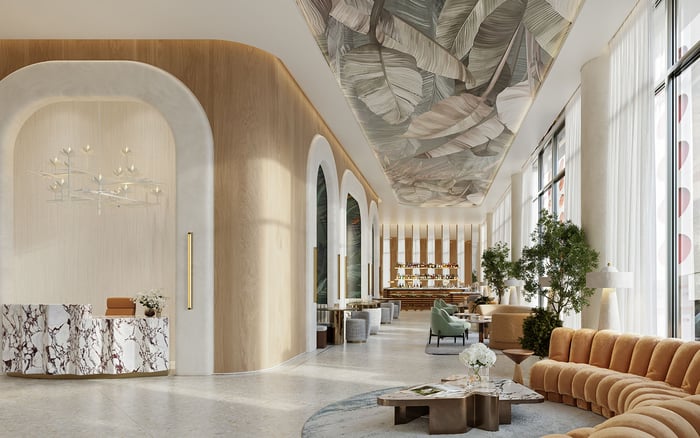
In the most privacy-conscious tier of Brickell living, a dedicated chauffeur waiting lounge is less a novelty than a piece of operational infrastructure. It formalizes a resident’s relationship with arrival, departure, and discretion, turning the lobby from a shared crossroads into a controlled threshold. This editorial examines when that feature translates into true value at St. Regis Residences Brickell and when it is simply an amenity that photographs well.
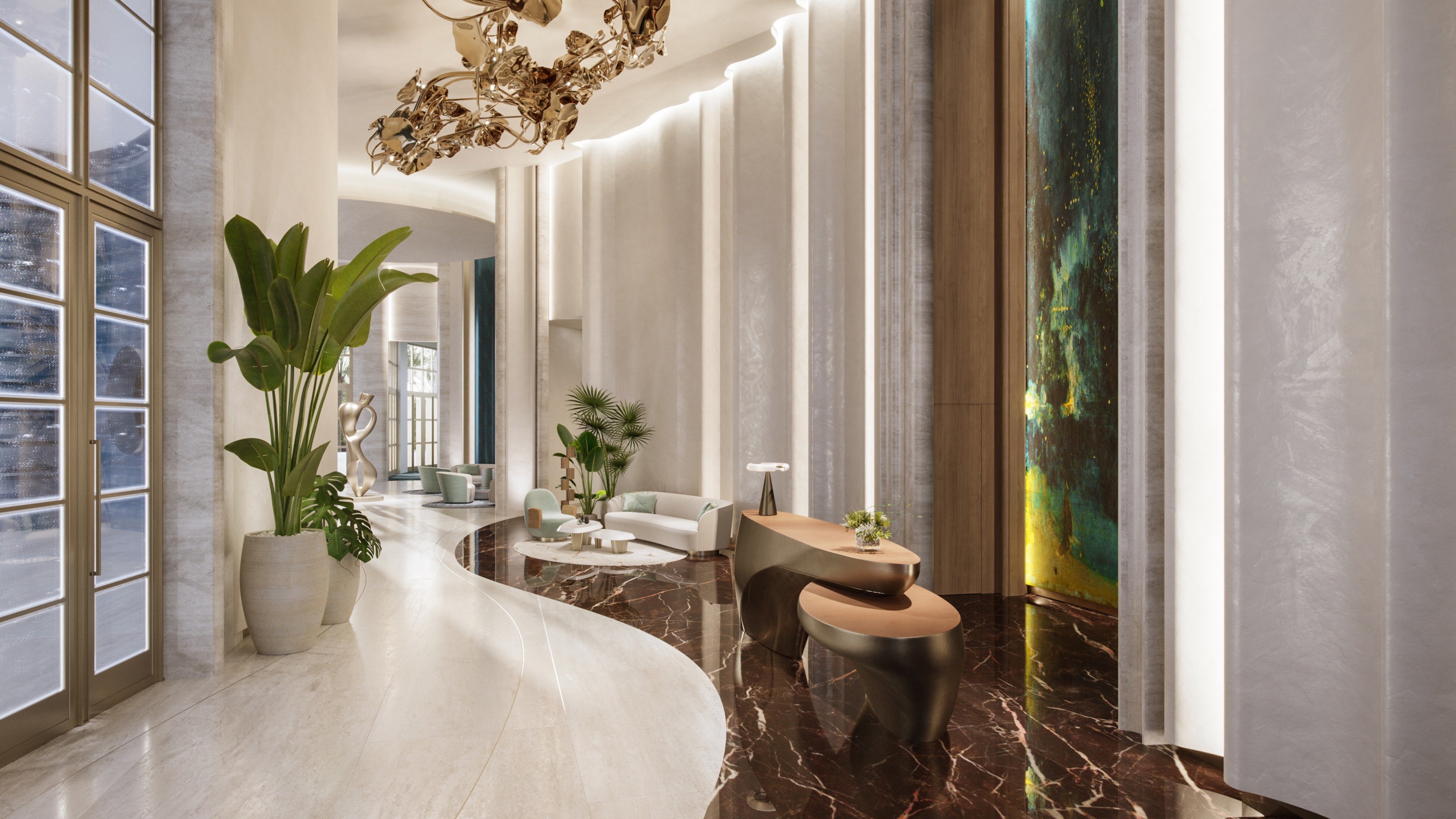
Brickell runs on momentum: residents moving between offices, private clubs, airports, marinas, and weekend homes with little patience for delay. In that environment, a dedicated chauffeur waiting lounge is not a decorative perk-it’s a deliberate operational choice. It reflects a basic truth of the ultra-prime market: many owners are not personally managing the first and last five minutes of a trip.
A true chauffeur lounge separates the driver’s experience from the resident’s experience. Instead of clustering near the front desk, taking over lobby seating, or idling curbside, drivers have a defined place to stage. That single decision helps keep the lobby calm and resident-forward, while reducing the unscripted interactions that can erode privacy.
At St. Regis® Residences Brickell, the concept lands because many households operate on overlapping schedules: assistants coordinating recurring vendors, principals moving with a security detail, and owners who treat car service as a baseline convenience. In a market where front-of-house choreography shapes daily quality of life, a dedicated lounge can materially change how arrival feels.
Luxury amenities matter when they remove a recurring irritation or reduce a recurring risk. A chauffeur lounge often does both.
Privacy.
Its primary value is separation. When drivers have a controlled place to wait, the lobby is less likely to become a venue where names, unit numbers, and travel plans carry farther than they should. It also reduces the visibility of patterns-who leaves when, how long they’re out, and when they return.
Pacing.
Brickell curbside conditions are not always predictable. A lounge helps align timing so residents aren’t pushed to linger outside, in the driveway, or in a busy vestibule. You descend when you’re ready-not when a driver’s patience runs thin.
Control.
When properly managed, the lounge supports a clear hierarchy of access. Residents keep resident space resident-only, while staff and service providers remain close without merging into the social fabric of the lobby. That separation matters even more in mixed-use districts where traffic flow, rideshare volume, and pedestrian density are part of the daily backdrop.
If your lifestyle depends on frequent pickups, citywide meetings, or precisely timed airport runs, the value becomes tangible-in minutes saved and discomfort avoided, not marketing language.
Not every “chauffeur lounge” performs the same way. Treat the label as an invitation to ask better questions-not a guaranteed standard.
1) Physical separation from the resident lobby.
The most effective lounges are placed so drivers don’t need to pass through resident seating or concierge queuing. If the only route runs through the primary lobby, the benefit is diminished.
2) Clear operational rules.
A lounge only works if it’s actually used-and enforced. If drivers still default to the porte-cochère or the main lobby because it’s easier, the amenity is largely theoretical.
3) Scale relative to the building’s cadence.
A small lounge in a high-demand building can become a crowded holding pen that recreates the very problem it’s meant to solve. It should feel composed at peak movement times.
4) Integration with security and service.
In the ultra-luxury tier, a driver is often one piece of a broader service ecosystem. The lounge should support discreet check-in, smooth coordination with concierge, and predictable handoffs.
A useful comparison is to look at Brickell towers where the lobby is forced to do every job at once. In those buildings, even a beautiful lobby can turn into a waiting zone for drivers, deliveries, and casual guests-blurring boundaries. Purpose-built separation tends to keep the resident experience quieter, cleaner, and more consistent.
In South Florida’s luxury market, resale premiums rarely attach to a single amenity in isolation. They attach to a broader impression of competence: the building runs smoothly, protects privacy, and anticipates high-touch living. A chauffeur lounge can serve as a visible cue that the development was designed for that standard.
For resale, it can be especially compelling to buyers coming from markets where staff oversight and car service are routine. It reads as a “small big thing”-a detail that hints the entire front-of-house program is disciplined.
For rentals, the impact is more situational. Some tenants won’t use it, particularly if they drive themselves. But for executive leases and corporate users, a dedicated waiting area can quietly reduce friction around curbside congestion and awkward lobby dynamics.
For daily livability, it can shift the emotional tone of coming home. Owners who prioritize a serene arrival notice immediately when a lobby functions as a transportation hub. If you want the ground floor to feel like a private residence rather than a hotel check-in line, this amenity supports that goal.
A chauffeur waiting lounge tends to deliver the most value for three buyer profiles.
The principal with staff.
If an assistant coordinates pickups, errands, and recurring vendors, the lounge creates a buffer-keeping logistics out of resident-facing space.
The privacy-forward household.
If you prefer fewer casual interactions and less exposure of comings and goings, any design choice that reduces curbside loitering and lobby congregation works in your favor.
The high-frequency traveler.
If you move constantly between Brickell, Miami Beach, and airports, the ability to transition quickly and discreetly is not a minor convenience.
On the other hand, if you’re an owner-occupant who drives yourself most days, uses valet occasionally, and enjoys a social, hotel-like lobby atmosphere, the lounge may be less consequential. In that case, other considerations can carry more weight: wellness programming, views, unit layout, elevator privacy, and overall building staffing.
Brickell has no shortage of premium addresses. Increasingly, the true differentiators live in operational details. In a district defined by constant movement, buildings compete on how well they manage threshold moments: driveway, lobby, elevator, and private corridor.
That is why it’s helpful to view a chauffeur lounge in context with the wider set of Brickell lifestyle offerings. A new-build with a strong brand identity like 888 Brickell by Dolce & Gabbana may appeal to buyers who prioritize statement design and a tightly curated experience. A more residential-leaning option such as 2200 Brickell may suit those who want Brickell proximity with a quieter, neighborhood cadence.
A chauffeur lounge is most valuable when the front-of-house is designed as a system-arrival, concierge, security, and resident circulation operating in sync. If the project’s overall posture is discreet and high-touch, the lounge reinforces it. If the building’s energy is more social and high-traffic, the lounge can help, but it won’t fully neutralize a busy ground-floor experience.
It’s also worth noting that Brickell buyers often cross-shop beyond the neighborhood when lifestyle-not commute-is the priority. Some compare Brickell to the calmer, more resort-like oceanfront environment of 57 Ocean Miami Beach, where street conditions and arrival patterns are fundamentally different. That comparison clarifies whether you’re paying for discretion within density, or selecting a location where density is less central to daily life.
Treat the chauffeur lounge as a live operational test-not a brochure line.
Stand in the lobby for five minutes and watch who uses seating and who queues. If drivers are already informally occupying the lobby, ask why.
Ask how pickups are coordinated. Does concierge signal the driver? Is there a standard protocol?
Observe the driveway and curb management. If the curb runs chaotic, the lounge’s function becomes more important.
Listen for noise transfer. A lounge placed too close to resident seating can create a constant hum of calls, notifications, and coordination.
Clarify access boundaries. Who is allowed in the lounge-chauffeurs only, rideshare drivers, delivery personnel, contractors? The answer determines whether the space increases discretion or becomes another public waiting room.
The most refined versions of this amenity are almost invisible. You notice them because the lobby stays calm-not because the lounge performs for attention.
A dedicated chauffeur waiting lounge is a form of luxury that doesn’t need to announce itself. At its best, nothing feels difficult: arrivals are unhurried, departures are controlled, and the lobby remains resident space rather than a staging zone.
At St. Regis Residences Brickell, that promise aligns with what many ultra-premium buyers are actually purchasing in Brickell: not only views and finishes, but a managed environment that respects privacy and time. If your life depends on reliable handoffs between home and city, this can be one of the most practical, value-protecting details in the building.
Is a chauffeur waiting lounge the same as a lobby seating area? No. A dedicated lounge is intended to separate drivers from resident social space.
Does this amenity matter if I drive myself most of the time? It may matter less day to day, but it can still support privacy and curb order.
Will a chauffeur lounge reduce curbside congestion? It can help indirectly by discouraging drivers from idling at the front entrance.
Should rideshare drivers use the chauffeur lounge too? Policies vary; the best outcomes come from clear rules and consistent enforcement.
Can this feature improve building security? It can, by reducing unsupervised waiting in resident-facing areas and tightening access.
Is a chauffeur lounge mainly a luxury marketing term? It can be, but when properly designed and managed it delivers real operational value.
What is the biggest red flag when touring a building with one? If drivers still congregate in the main lobby, the separation benefit is undermined.
Does it increase resale value on its own? Usually it supports value as part of a broader high-touch arrival and service program.
How can I tell if it will feel private in practice? Spend time in the lobby during peak hours and observe how people circulate and wait.
What other features should I evaluate alongside it? Focus on driveway management, concierge operations, elevator privacy, and staffing depth.
When you're ready to tour or underwrite the options, connect with MILLION Luxury.
If branded residences are on your mind — as a home or as an allocation — we would be glad to share what we are seeing, privately.
Begin a quiet conversation