A buyer-focused MILLION Luxury editorial on evaluating construction schedules, delivery risk, warranty structure, and document review when considering South Flagler House.

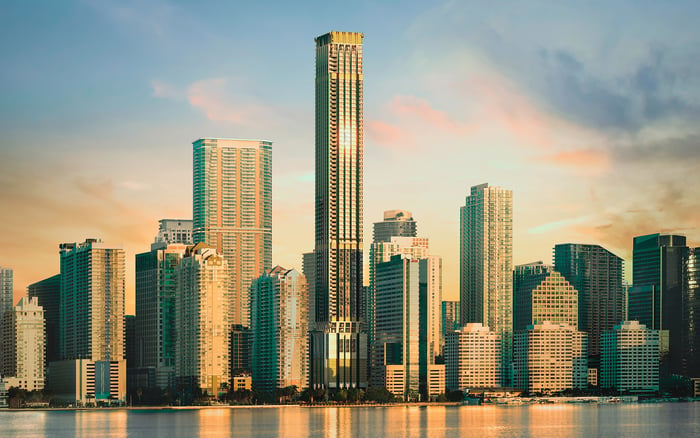
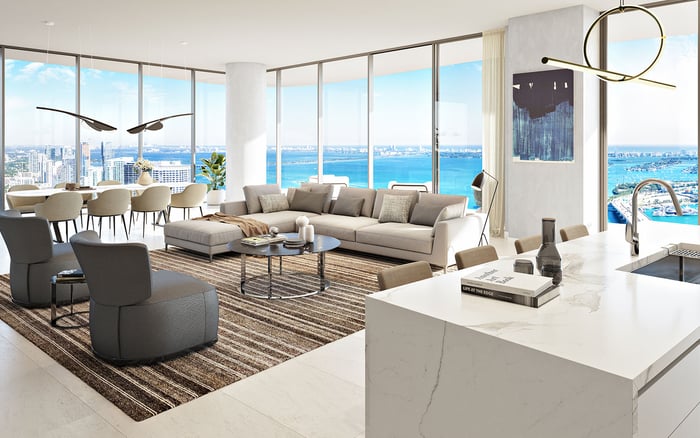
South Flagler House enters the conversation as a mixed-use luxury residential and commercial tower development associated with Related Companies, a developer with a substantial luxury residential portfolio. In market positioning, it has been presented as an ultra-premium condominium concept with floor-to-ceiling windows and waterfront views, the kind of offering that attracts buyers who are as focused on execution as they are on design.
That is precisely why construction timing deserves as much scrutiny as architecture. In a South Florida pre-construction purchase, the headline delivery expectation is rarely the only date that matters. Buyers should ask for a schedule that distinguishes projected occupancy, legal closing, and final project completion. Those milestones can diverge meaningfully in a sophisticated tower, especially when structural complexity, bespoke interiors, and high-finish common spaces are part of the proposition.
For purchasers comparing opportunities across the region, this is not unique to one address. The same discipline applies when reviewing other luxury developments such as The Residences at 1428 Brickell, Villa Miami, or Forté on Flagler West Palm Beach, where design ambition and execution standards can create a more nuanced delivery path than a simple estimated completion date suggests.
A refined purchase decision begins with paper, not renderings. South Flagler House has been marketed within a pre-construction sales framework, which is common in luxury condominiums and allows buyers to commit before completion. That structure can be attractive, but it also places extraordinary weight on the purchase agreement, condominium documents, budgets, and developer disclosures.
At a practical level, buyers should request a detailed timeline narrative rather than a single promised handover date. Ask what events trigger notices, which milestones are estimated, and how temporary certificates, phased readiness, or final completion are treated in the documents. The goal is not skepticism for its own sake. It is precision.
This is also where Florida condominium law becomes central. Chapter 718 frames many disclosure, turnover, and developer-obligation issues that matter in new condominium purchases. For a luxury buyer, that means the legal architecture surrounding the residence can be as important as the physical architecture itself.
Experienced purchasers in Downtown and Palm Beach often compare this process with the diligence expected at **Waldorf Astoria Residences Downtown Miami The Ritz-Carlton Residences® West Palm Beach, where the value proposition rests not only on finishes and views, but also on clarity around structure, obligations, and post-closing governance.
In high-end New-construction, delays are not always a sign of distress. They can reflect the realities of building a large, design-intensive tower in South Florida. Structural coordination, specialized materials, weather exposure, and supply-chain volatility can all affect completion timing. Contracts for major developments often address these scenarios through delay and force majeure provisions, which means the buyer's true risk profile is embedded in language many purchasers skim too quickly.
A prudent buyer should read those provisions closely with counsel. Focus on how delay events are defined, whether extensions are automatic, what notice obligations apply, and whether the purchaser has any remedy if the timeline extends materially. In a luxury transaction, certainty has value. So does understanding where certainty ends.
This issue is familiar across the region's upper tier. Whether a purchaser is studying St. Regis® Residences Brickell or evaluating another major Pre-construction offering, the refined question is never simply, When will it be done? It is, Which contractual date matters most to me, and what happens if that date moves?
Developer warranties are often misunderstood because buyers assume there is one neat warranty package covering everything. In condominium ownership, responsibilities are commonly divided. The unit owner may bear responsibility for certain interior conditions, while the condominium association addresses common elements and shared systems. The exact allocation matters, and it is determined by the governing documents and the purchase paperwork.
At South Flagler House, buyers should review the developer warranty and defect-resolution materials before signing, not after a concern emerges. The important questions are practical. What is considered a covered defect? What process governs reporting? Who decides whether an item falls within unit responsibility or association responsibility? Is there a required claim procedure? Are there deadlines for notice?
Luxury buyers should also pay attention to the difference between a visible punch-list issue and a more technical defect claim. A door adjustment, finish inconsistency, or appliance concern may move through one process, while a common-area water intrusion or building-system issue may involve another. Elegant branding does not eliminate the need for disciplined warranty interpretation.
Just before closing, a buyer's leverage is often at its highest. Independent pre-closing inspections can help document visible defects and punch-list items before title transfers. Even in a highly curated residence, this step remains essential. The point is not to challenge the building's quality narrative. It is to memorialize condition while obligations are still clearly tied to delivery.
A strong inspection should be paired with a written record of observations, requested corrections, and any developer response timeline. Buyers should also ensure that occupancy status, substantial completion status, and closing readiness are not being treated as interchangeable if the documents distinguish among them.
After closing, the lens widens. Requesting estoppel and reserve-related information can help a purchaser understand post-closing exposure, particularly where future common-element obligations may affect budgets or assessments. For many buyers, this is where a glamorous residence becomes a real ownership structure with recurring financial consequences.
For a sophisticated purchaser, the ideal review framework is simple and disciplined:
Confirm the latest construction schedule directly with the developer and ask that occupancy, closing, and final completion dates be stated separately.
Read the purchase agreement with particular attention to delay provisions, force majeure language, and any buyer remedies if delivery is extended.
Review condominium documents, budgets, and disclosures in full, with special attention to repair allocations between the unit and common elements.
Study the developer warranty and defect-resolution procedure before execution, including notice requirements and claim channels.
Schedule an independent pre-closing inspection so visible items are documented before transfer of title.
Use public property records as a starting point to verify parcel and property-related information connected to the project.
In practice, this is what sophisticated investment thinking looks like in the luxury sector. It is not cynical. It is simply precise, and it is increasingly standard among buyers who approach South Florida's best residences with private-office rigor.
MILLION Luxury views South Flagler House as the kind of residence that asks buyers to pair aesthetic discernment with contractual discipline. The project's appeal lies in its premium positioning, waterfront orientation, and high-design promise. Yet the most accomplished buyers understand that the elegance of a purchase is protected by the quality of the diligence behind it.
For those active in Brickell, Downtown, and West Palm Beach, the lesson is consistent. The more ambitious the tower, the more carefully one should separate marketing narrative from delivery mechanics. That does not diminish the aspiration. It preserves it.
What should buyers confirm first about South Flagler House? Ask for the latest schedule showing estimated occupancy, closing, and final project completion as separate milestones.
Why can construction timelines change in luxury towers? Structural complexity, premium finishes, weather, and supply-chain conditions can all affect delivery sequencing.
Is a pre-construction timeline the same as a guaranteed closing date? Not necessarily. In many contracts, projected dates are estimates and subject to defined delay provisions.
What does Chapter 718 matter for here? It governs many condominium disclosure, turnover, and developer-obligation issues relevant to new condo purchases.
Are developer warranties usually simple and uniform? No. Warranty and repair obligations are often divided between the unit owner and the condominium association.
Should buyers review warranty documents before signing? Yes. Rights and remedies in condominium purchases are heavily shaped by the transaction documents.
Is an independent pre-closing inspection worthwhile in a new tower? Absolutely. It can document punch-list items and visible defects before title transfers.
What financial documents should buyers request near closing? Estoppel and reserve-related information can help clarify potential post-closing financial exposure.
How should buyers assess delay clauses? Focus on force majeure definitions, extension mechanics, notice obligations, and any purchaser remedies.
What public verification step can still be useful? Public property records can provide a starting point for checking parcel and property-related information.
For a discreet conversation and a curated building-by-building shortlist, connect with MILLION Luxury.
If branded residences are on your mind — as a home or as an allocation — we would be glad to share what we are seeing, privately.
Begin a quiet conversation