Ground-floor retail adds walkability and energy at Cora Merrick Park, but it also reshapes privacy, acoustics, circulation, and security for residences above. For buyers in Coral Gables, the real question is not whether mixed-use living works, but which unit positions and design separations preserve a discreet residential experience.
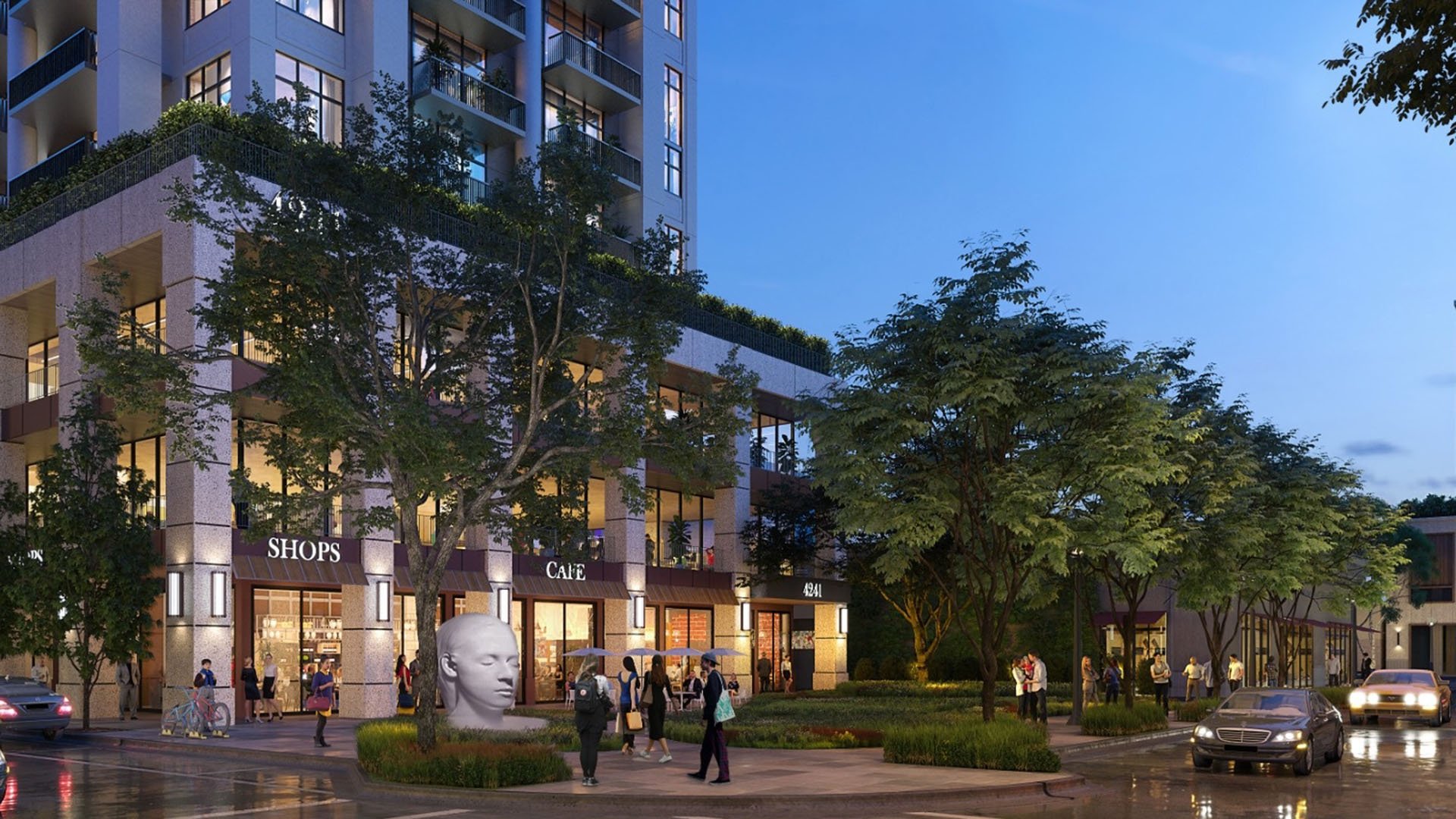
At Cora Merrick Park, the appeal is easy to understand. This mixed-use residential address in Coral Gables offers walkability, convenience, and a more animated urban rhythm than a purely private enclave. The plan places residences above street-facing retail, a configuration intended to energize the sidewalk and reinforce the pedestrian environment.
For many buyers, that is a compelling proposition. For others, particularly those accustomed to a more insulated arrival and a quieter perimeter, the more important question is what that street activation means for day-to-day privacy. In luxury real estate, privacy is rarely defined by a single feature. It is the cumulative effect of smaller details: how visible windows feel at night, whether the lobby reads as private or public-adjacent, how much sound rises from the street, and whether service functions remain discreetly out of view.
That is the proper lens through which to evaluate Cora Merrick Park. The mixed-use concept is not inherently a drawback. It is simply a trade-off, and one whose effects are often highly unit-specific.
In projects that combine residential living with ground-floor commercial activity, lower floors typically absorb the greatest privacy pressure. Street-facing storefront glazing, pedestrian traffic, rideshare activity, and evening lighting can create direct sightlines into homes positioned near the retail edge. A residence on a higher floor or with a more inward orientation may experience the building very differently from a unit overlooking the most active frontage.
That is why lower floors warrant especially careful scrutiny. The issue is not merely whether someone can theoretically see into a home. It is whether the residence feels exposed in ordinary daily life: drapery open during the day, interior lighting at dusk, a balcony door left ajar in the evening, or a resident arriving home while the retail frontage is still active.
In Coral Gables, where buyers often expect a refined and somewhat sheltered residential atmosphere, that psychological dimension matters. A home can be beautifully finished and still feel less private if its orientation keeps it visually connected to a busy public realm.
Buyers comparing mixed-use living with more self-contained residential environments may find a different privacy profile at addresses such as **Ponce Park Coral Gables The Village at Coral Gables, where the conversation tends to focus more on residential exclusivity than on the relationship between homes and storefronts.
The most immediate privacy concern in a mixed-use building is often sound. Retail activity does not always end with daytime shopping. Depending on tenancy and operating hours, the pattern of customer arrivals, conversations, vehicle drop-offs, deliveries, and service activity can continue after residents expect the building to settle.
Food, beverage, and service uses tend to intensify this effect. Even when tenant interiors are well designed, the exterior impact can remain noticeable: brighter street-level lighting, more active curbside movement, doors opening and closing, and a lingering sense that the public face of the building remains switched on longer than the residences above.
For some owners, that feels urban and convenient. For others, it can subtly erode the discretion associated with luxury living. The distinction is especially important for buyers who work from home, keep early hours, or place a premium on evenings that feel acoustically calm.
Mechanical systems matter just as much as human activity. In mixed-use buildings, retail HVAC, exhaust, and related equipment can introduce vibration, odor, and low-frequency sound. These are not always dramatic issues, but they often shape lived comfort more than marketing language does. A refined residence can still feel compromised if background mechanical noise or restaurant-adjacent exhaust reaches the wrong line of units.
Privacy in a luxury building begins before the front door of the residence. It begins at arrival. One of the more delicate challenges in mixed-use design is separating public retail circulation from private residential movement. If customers, couriers, and service personnel pass too close to the residential lobby or service core, the building can feel less controlled than its price point suggests.
That does not necessarily mean a building is poorly planned. It means buyers should pay close attention to how circulation is organized. Is the residential entrance visually distinct from the retail frontage? Do service areas feel removed from resident pathways? Does the elevator experience feel private, or does it sit too close to active public uses?
These are the same questions sophisticated buyers ask when comparing urban projects in other active neighborhoods. In Brickell, for example, mixed-use living often invites closer scrutiny of separation and entry sequence at developments such as 2200 Brickell or ORA by Casa Tua Brickell, where convenience is part of the appeal but privacy still shapes long-term satisfaction.
The reassuring side of this conversation is that mixed-use living is not governed by concept alone. Execution matters enormously. Sound attenuation between commercial and residential uses, separated entries, sealed mechanical systems, and well-considered glazing can all improve the lived experience.
In practical terms, that means two superficially similar mixed-use buildings may perform very differently. One may feel composed and quiet, while another may transmit more sound, odor, and vibration than buyers expected. At Cora Merrick Park, that makes construction quality, unit placement, and building management more important than the simple fact that retail sits below.
Luxury buyers should therefore approach the property less as a yes-or-no question and more as a filtering exercise. Which stack sits above the least active retail zone? Which exposure minimizes direct sightlines? Which floors create enough distance between the residence and the sidewalk? Which lobby route feels unmistakably private?
That is also why higher floors often command a different privacy value than lower levels in mixed-use settings. Vertical separation can reduce both visual exposure and street-level noise, even when the building’s public face remains lively below.
A final layer of privacy is operational rather than architectural. In mixed-use buildings, residential owners do not always control the retail environment as directly as they might assume. Commercial tenants may operate under leasing structures and use rights that limit how much influence residential governance can exert over hours, deliveries, or certain aspects of activity.
That does not mean problems cannot be managed. It means a buyer should not assume every friction point can be resolved later through simple building policy. In a mixed-use property, the original planning of service routes, loading locations, acoustic separation, and access control often matters more than after-the-fact preference.
For readers focused on South Florida luxury real estate, the most useful conclusion is a disciplined one: Cora Merrick Park may suit buyers who value walkability and street energy in Coral Gables, but it will likely reward selectivity. The best residences in this setting are not merely beautiful. They are buffered.
Before committing, a privacy-focused buyer should evaluate the residence at several times of day, including evening hours. Street activity that feels charming at noon may register very differently after dark, when interior lights are on and the contrast between public and private space becomes more pronounced.
Ask practical questions. Is the unit directly above retail, above service functions, or removed from both? How is loading handled? Where are the building’s mechanical systems located? Does the residential entrance feel clearly separated from storefront activity? Is the sightline from the street into the home easy to control?
It is also worth comparing the experience to more secluded luxury typologies in South Florida. Primarily residential projects such as 57 Ocean Miami Beach offer a very different relationship to privacy, with fewer public interfaces at ground level and a stronger emphasis on controlled arrival, setback, and acoustic calm.
At Cora Merrick Park, the core issue is not whether retail belongs in a luxury environment. In the right configuration, it can enrich daily life. The issue is whether the specific residence preserves the sense of retreat affluent buyers still expect once the front door closes.
Does ground-floor retail automatically reduce privacy at Cora Merrick Park? No. The impact depends heavily on floor level, orientation, and how effectively residential circulation is separated from public activity.
Which units are usually most exposed? Lower floors and street-facing residences typically experience the greatest visual and acoustic exposure.
Why does retail affect privacy more at night? Evening lighting, active storefronts, and brighter interior residential spaces can increase visibility and the sense of exposure.
Is noise mainly a problem from shoppers? Not always. Deliveries, loading, service activity, and mechanical systems can be just as important.
Can better construction reduce these concerns? Yes. Sound-rated windows, strong acoustic separation, and sealed mechanical systems can materially improve comfort.
Does a separate residential lobby really matter? Absolutely. A clearly distinct entrance helps preserve security, discretion, and a more private arrival experience.
Are higher floors usually better for privacy? In many mixed-use buildings, higher floors gain more distance from sidewalk activity and direct sightlines.
Can owners easily change retail operations later? Not always. Commercial agreements can limit how much influence residential governance has over day-to-day retail activity.
What should buyers verify during a visit? They should pay attention to lobby separation, street lighting, noise levels, service activity, and how exposed the unit feels at different times of day.
Is Cora Merrick Park best for every luxury buyer? No. It may appeal most to buyers who value walkability and convenience but still want to choose a unit with stronger buffering from public activity.
For a tailored shortlist and next-step guidance, connect with MILLION Luxury.
If branded residences are on your mind — as a home or as an allocation — we would be glad to share what we are seeing, privately.
Begin a quiet conversation