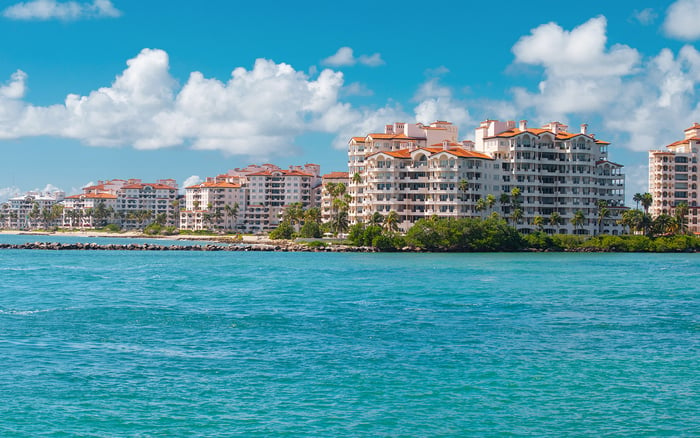
Miami’s luxury market gets labeled a bubble, yet its structure looks materially different from the leverage-led cycle many buyers remember. Today, cash-heavy closings, deeper ultra-luxury demand, and migration-driven fundamentals have become stabilizers. At the same time, ownership costs are shifting, especially for condos navigating milestone inspections, special assessments, and insurance complexity. For sophisticated buyers, the question is less “Is it a bubble?” and more “Where is risk hiding, and how do you price it?”
Miami has been labeled the world’s highest bubble-risk housing market-a headline that moves fast in boardrooms and family offices. Yet the same macro view that raises the flag also points to a critical counterweight: a sharp correction has looked unlikely given the region’s demand drivers.
For South Florida’s ultra-premium audience, “bubble” is rarely about whether values can dip. They can. The more useful question is whether the market is structurally fragile. In a leverage-driven cycle, fragility shows up as forced selling when financing tightens, appraisals miss, or variable payments reset. In today’s Miami, the most consequential difference is that a meaningful share of buyers doesn’t need a lender at all.
That does not mean prices cannot reprice. It means the mechanism is different. Rather than distressed inventory flooding the market, the more typical pattern is a slower recalibration: aspirational sellers test a number, buyers stay patient, and transactions happen when the home is singular-or the pricing is persuasive.
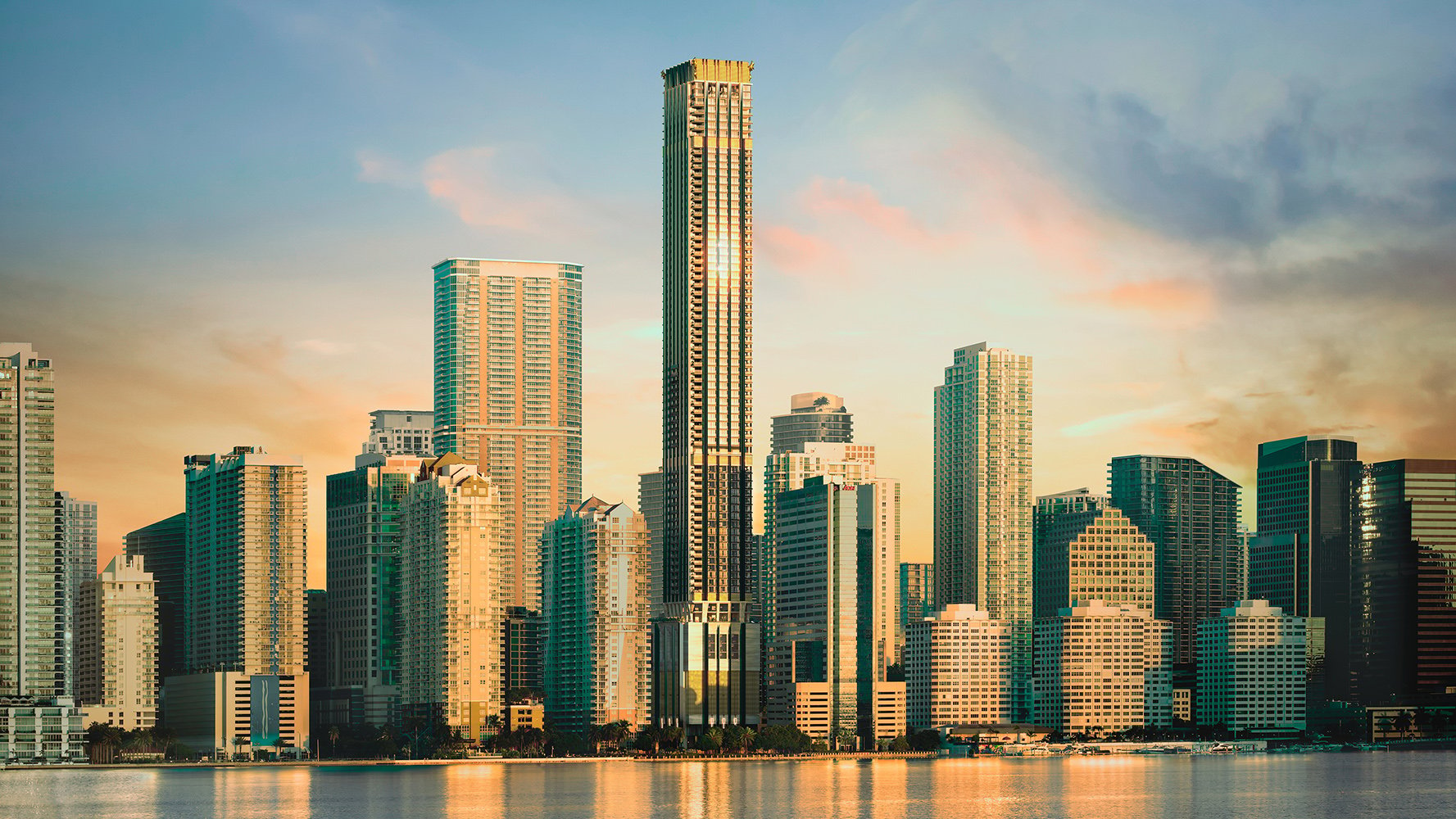
In places like Brickell, where new towers compete for attention, liquidity becomes as much a style choice as a financial one. Some buyers still finance for flexibility, but they are not forced to. That posture helps explain why branded and design-forward new construction can project confidence even in a noisy macro backdrop, particularly in buildings that speak to a global taste profile such as 888 Brickell by Dolce & Gabbana.
A second stabilizer is depth: South Florida recorded 361 sales of $10 million-plus homes in 2025, the second-highest year on record behind 2021. That is a meaningful signal for anyone underwriting liquidity at the top. A market with recurring eight-figure velocity can absorb price discovery without turning illiquid overnight.
The buyers behind that velocity often arrive with a long horizon. Florida’s lack of a state income tax remains a core draw for high earners, and corporate expansion across finance and tech has reinforced demand for high-end housing near key districts. Add strong job growth in Miami-Dade among large U.S. counties, and the demand story reads less like short-term speculation and more like a reshaped base.
For a simple litmus test, watch which neighborhoods retain urgency when rates move. Residential choices close to employment centers and lifestyle anchors tend to hold attention longer because the buyer is solving for time, access, and identity-not only for a cap rate.
The financing conversation in luxury has matured. Jumbo loans are, by definition, mortgages above the conforming loan limit, and they are underwritten differently than conforming products. However, the popular belief that jumbo financing always requires 20% down is not a universal rule. Depending on borrower strength, lenders may offer programs with lower down payments.
The practical takeaway is to treat financing as a tool, not an assumption. Even if you expect to pay cash, it can be valuable to understand your optionality. Optionality matters most when you are writing a competitive offer, negotiating repairs, or deciding whether to allocate capital to a second home versus a portfolio repositioning.
Luxury valuations can be conservative for a reason: true comparable sales are often scarce. In markets where each trophy property carries a distinct plan, view corridor, privacy profile, or amenity mix, the appraisal process can feel more subjective than buyers anticipate.
This is one of the most misunderstood “bubble” dynamics. A market can be healthy and still see deals fail because an appraisal cannot justify the premium paid for uniqueness. The result is not necessarily a crash. It is friction-especially when financing is involved.
Buyers who want to control this risk tend to do three things: they widen the comparable set beyond the most obvious sales, they negotiate appraisal contingencies with intention, and they treat irreplaceable attributes as the premium they are paying for. In Miami Beach, for example, beachfront scarcity is not theoretical, and boutique inventory can price differently than larger towers. For buyers drawn to a quieter, highly curated footprint, 57 Ocean Miami Beach illustrates why “comps” can be an imperfect language for coastal rarity.
If the market has a fault line today, it is less about price and more about ownership-cost uncertainty-especially in older condominium stock.
Florida law requires milestone inspections for condominium buildings that are three stories or more once they reach 30 years of age, or 25 years if within three miles of the coastline. The framework includes an initial visual and structural review, with additional evaluation when substantial structural deterioration is indicated.
The move for buyers is not to fear inspections. It is to price the implications. A building can be beautifully managed and still face capital projects that are large, disruptive, or both. When reserves are insufficient or projects are unplanned, special assessments are a common funding mechanism-and they can produce meaningful surprises.
Reserve planning is where sophisticated buyers separate emotional appeal from operational quality. Many condo approval standards and best practices commonly reference reserve allocations, often cited as at least 10% of the annual budget, but adequacy ultimately depends on the building’s actual components and capital plan. In practical terms, a higher monthly fee can signal disciplined planning, while a “low fee” can be an invitation to future volatility.
In newer or more comprehensively planned communities, buyers may perceive less near-term assessment risk-though due diligence still matters. In Surfside, for instance, the value proposition often leans into newer construction and stringent stewardship. Buyers evaluating wellness-forward coastal living may look at The Surf Club Four Seasons Surfside as a benchmark for how service, governance, and long-term planning can influence perceived stability.
Insurance has become a central line item in Florida ownership. Premiums have increased materially, and insurers increasingly require detailed inspections and mitigation documentation-particularly in higher-risk areas.
For coastal and low-lying properties, the second layer is flood. Flood damage is typically excluded from standard homeowners insurance, so flood insurance is a separate coverage decision and cost line item. Buyers should treat this as part of the underwriting, not as an afterthought.
At the luxury end, insurance diligence is also a negotiation tool. Clear documentation, recent mitigation work, and proactive building maintenance can translate into smoother underwriting and fewer closing surprises.
In high-end transactions, privacy risk is real. Discretion is not only about avoiding publicity; it is about controlling access, limiting unnecessary exposure, and reducing information leakage across showings, vendors, and digital marketing.
For buyers, this can influence where you purchase and how you transact. Boutique buildings, controlled access, and thoughtful listing practices can protect your time and your security. It can also affect future resale, because sophisticated buyers increasingly ask how the building and the sales process handle privacy.
On islands and enclaves where privacy is part of the brand, the property itself becomes a form of quiet infrastructure. In Grove Isle, for example, the separation from the mainland can feel like a design choice. Buyers looking for that kind of layered discretion in Coconut Grove’s orbit often gravitate to Vita at Grove Isle for its island setting and gated sensibility.
A practical framework for the next 12 to 36 months is to treat bubble talk as a prompt to underwrite risk categories, rather than a signal to exit.
How deep is the buyer pool for your specific product type and price band? The eight-figure market has shown meaningful velocity, but niche subcategories can still be thin.
How dependent is your buyer pool on financing? In segments where cash is dominant, pricing may be more resilient to rate volatility.
What is the building’s inspection status, reserve posture, and track record for planning? Assessments are not rare; surprise assessments are the problem.
Insurance, flood, and maintenance can change faster than the mortgage rate.
Appraisals, timelines, and privacy management can make or break a deal even when buyer and seller agree on value.
If you are buying in a core urban corridor, also consider how new inventory will compete for attention. In Edgewater, for instance, the buyer is often balancing waterfront lifestyle with proximity to Downtown and the Design District. Newer inventory such as Aria Reserve Miami can provide a cleaner operational profile for buyers who prioritize modern systems and amenity depth.
Is Miami in a housing bubble? Miami has been flagged for high bubble risk, but current demand drivers and cash-heavy buying reduce the odds of a sudden, forced-sale correction.
Why do all-cash buyers matter so much in South Florida? A large cash share reduces leverage-driven distress, which can dampen the kind of rapid downward spiral seen in highly financed markets.
How common are cash deals in Miami today? Cash has been about 40% of Miami closings in late 2025, and it is far higher in the $10M-plus tier.
What is the biggest risk for condo buyers right now? Ownership-cost uncertainty, including milestone inspections and the possibility of special assessments when major repairs are required.
What are Florida milestone inspections in simple terms? They are required structural and visual inspections for certain older condo buildings, with follow-up evaluation if deterioration is found.
Do jumbo loans always require 20% down? Not always; down payment requirements can vary based on borrower strength and lender program structure.
Why can luxury appraisals be challenging? Truly comparable sales can be scarce, so valuation often involves more judgment and can be conservative.
How should buyers think about reserves in a condominium? Look beyond the headline percentage and focus on whether reserves align with the building’s actual capital plan and upcoming needs.
Does homeowners insurance cover flood damage in Florida? Typically no; flood coverage is generally separate, making it an important cost decision for coastal properties.
What is one discreet way to protect privacy in a high-end purchase? Limit exposure through controlled access and tight disclosure practices, and prioritize buildings with a culture of discretion.
For a confidential assessment and a building-by-building shortlist, connect with MILLION Luxury.
If branded residences are on your mind — as a home or as an allocation — we would be glad to share what we are seeing, privately.
Begin a quiet conversation