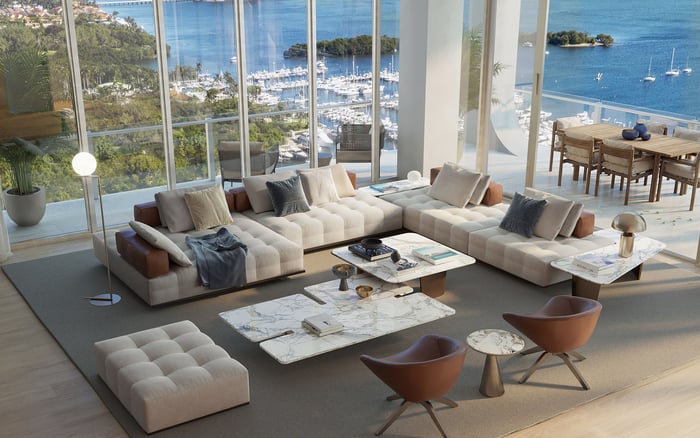
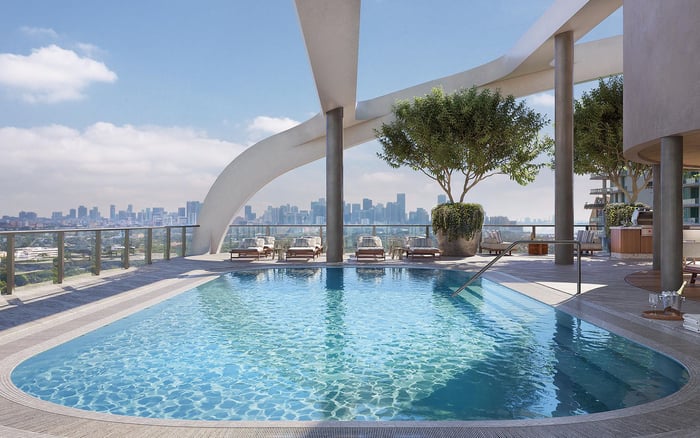
A discreet buyer’s guide to evaluating safe-room ventilation at Mr. C Tigertail Coconut Grove, with emphasis on air source, filtration, humidity, backup power, and engineering review.
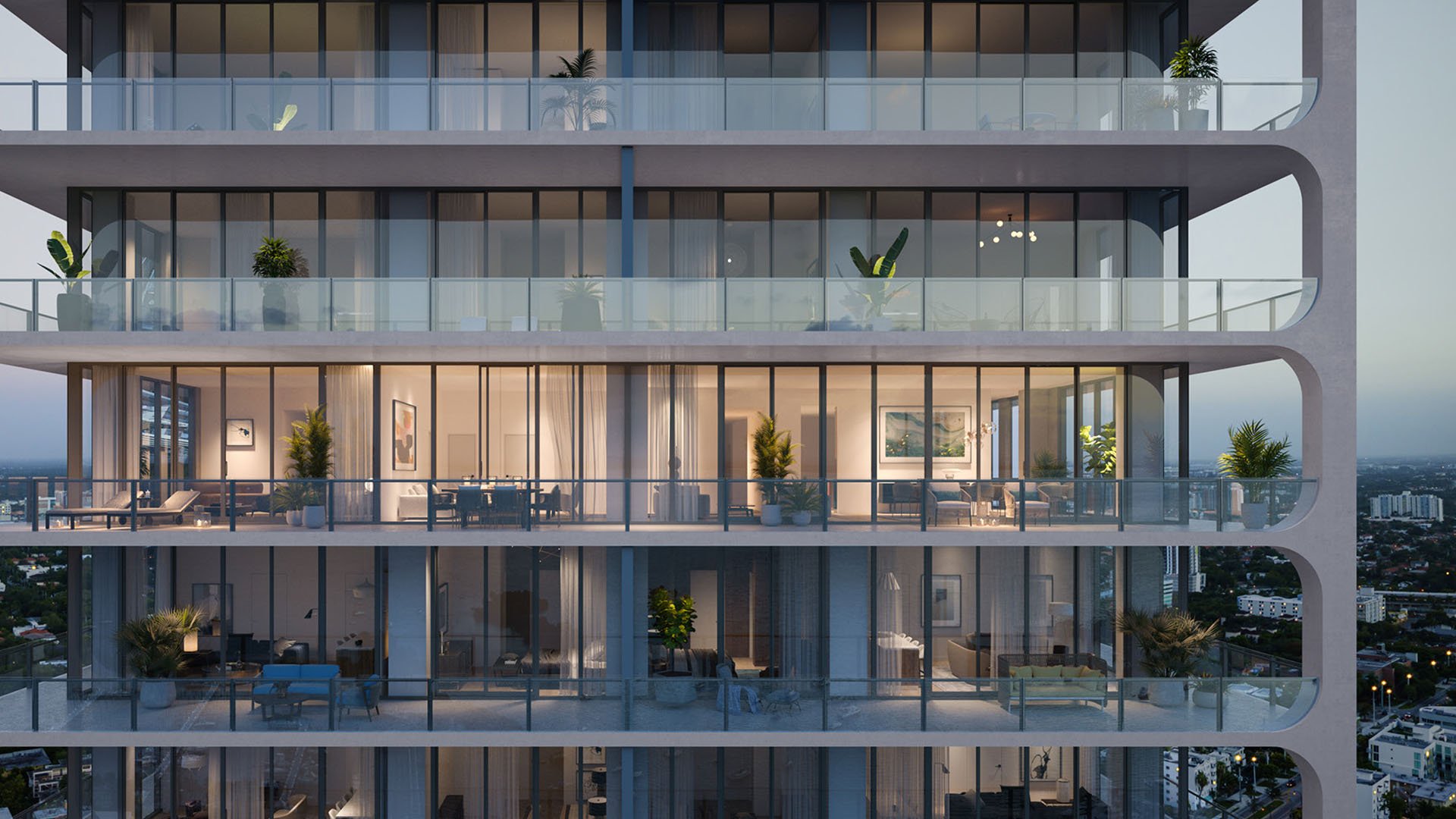
At Mr. C Tigertail Coconut Grove, the public-facing conversation naturally centers on design, hospitality, views, amenity culture, and the polished ease of a branded residence. That is what renderings are built to convey. They show atmosphere, proportion, finish, and lifestyle. They do not show the route of an emergency air intake, the location of dampers, the resilience of a fan, or whether a hardened interior room can remain habitable if normal building systems are interrupted.
For a buyer considering a panic room, hardened suite, or shelter-in-place room, ventilation belongs in the same category as enclosure strength. A reinforced door is only one part of the equation. The room must also deliver breathable, conditioned air for the intended occupants, with an operating plan that is clear before the residence is delivered or modified.
That distinction is especially important in Miami, where heat and humidity can quickly turn a sealed or semi-sealed space into an uncomfortable environment. In a luxury residence, the question is not whether a safe room can be beautifully concealed. The sharper question is whether its mechanical logic can be independently verified.
The most basic ventilation question is also the one most easily skipped during a design presentation: where does the air originate? A proposed safe-room location may rely on the residence’s normal HVAC system, or it may have a more dedicated outside-air strategy. Those are not equivalent conditions.
A buyer should ask whether the planned refuge room has a dedicated outside-air supply, whether it borrows from the building’s standard mechanical network, and what happens if that network is unavailable. In a South Florida tower, the ventilation path should be reviewed as part of the safe-room system, not as an afterthought attached to interiors.
The due-diligence file should identify the air intake location, duct routing, dampers, controls, filters, access panels, and emergency operating procedures. If the answer is vague, the room is not yet fully understood. In this context, Mr. C Tigertail Coconut Grove is less a design question than a verification exercise.
It is also why the vocabulary around a purchase can feel deceptively complete: Mr. C Tigertail Coconut Grove, Coconut-grove, New-construction, Pre-construction, Waterview, and Terrace may frame the search, but none of those labels confirms how a refuge room breathes.
Buyers often ask whether a safe room has filtered air. The more precise question is what the filtration is intended to address. Particulate filtration, smoke concerns, chemical or odor events, and general air quality each reflect different assumptions. A system designed for one risk profile may not satisfy another.
The buyer’s team should request a written description of the filtration approach. What does it protect against? How are filters accessed? Can they be changed without compromising the room’s protective intent? Are there bypass paths, uncontrolled leakage points, or dependencies on shared mechanical spaces?
This is not about turning a residence into an industrial facility. It is about aligning the level of protection with the buyer’s actual expectations. If the room is intended only as a short-duration security refuge, the ventilation strategy may differ from a room expected to support longer shelter-in-place use. The design should state that assumption plainly.
A safe-room ventilation plan should include documented capacity. Buyers should ask for air changes per hour or a fresh-air delivery rate that corresponds to the expected occupant load. A room designed for two people does not automatically perform the same way for a family, household staff, or guests.
Duration is equally important. How long can the system operate if normal power is interrupted? Are fans, controls, filtration, and conditioning connected to emergency power or to an independent power source? If the answer is that the room remains strong but not ventilated, the safety case is incomplete.
The most refined residences often make infrastructure disappear. That is part of the pleasure of ownership. But for a safe room, invisibility is not proof of readiness. The buyer should see the mechanical drawings, specifications, and commissioning documentation that show how the system is expected to perform.
In South Florida, humidity control is not merely a comfort upgrade. A sealed or semi-sealed room can become difficult to occupy if heat and moisture accumulate during a prolonged interruption. Ventilation, filtration, and conditioning should therefore be considered together.
A buyer should ask whether the safe room can maintain a tolerable environment during an outage, and whether the conditioning strategy depends on equipment outside the protected system. The room may have filtered air, but if that air is not conditioned, a longer event can become problematic. Conversely, cooling without reliable fresh air is also incomplete.
This is where the luxury buyer’s instinct for finish should expand into mechanical discipline. The most elegant refuge is not necessarily the one with the richest millwork. It is the one whose air, power, controls, and envelope operate as a coordinated whole.
A safe room should be assessed as a system combining enclosure strength, air quality, power continuity, and mechanical independence. The buyer should understand whether the ventilation path remains protected if other parts of the tower’s mechanical system, façade, or common areas are compromised.
That means asking how ducts are routed, whether dampers close when needed, whether controls are accessible from inside the room, and whether there is a clear emergency mode. It also means confirming whether maintenance access is realistic. A filter that cannot be reached, or a control panel that cannot be operated under stress, weakens the practical value of the design.
For residences at this level, the right review is not adversarial. It is prudent. The buyer is not questioning the beauty of the project. The buyer is confirming that a concealed life-safety function has been designed, documented, and tested with the same seriousness as the architecture.
Before accepting a safe-room narrative, buyers should request the relevant mechanical drawings, equipment schedules, control descriptions, filtration specifications, backup-power notes, and commissioning records. The goal is to understand how the room performs, not simply where it appears on a plan.
Third-party engineering review is especially valuable. A qualified reviewer can confirm whether the proposed ventilation capacity, filtration approach, power integration, and operating procedures match the buyer’s intended use. Commissioning should verify that the system performs as designed, including under emergency operating assumptions.
For Mr. C Tigertail Coconut Grove buyers, the practical distinction is clear: luxury branding and renderings can establish confidence in lifestyle, service, and design language, but they do not replace technical review of a safe-room ventilation system. The room may be discreet. The diligence should not be.
Is safe-room ventilation visible in a luxury rendering? Usually not. Renderings tend to show finishes, views, and atmosphere rather than mechanical infrastructure.
Should ventilation be treated as a design upgrade? No. For a panic room or shelter-in-place room, ventilation should be evaluated as a core safety system.
What is the first ventilation question to ask? Ask where the emergency air comes from and whether it is dedicated or dependent on the normal HVAC system.
Why does filtration need detailed review? Different filters address different concerns, including particulates, smoke, odors, or other risk assumptions.
What capacity should be documented? The file should identify air changes per hour or fresh-air delivery for the expected number of occupants.
Why is backup power so important? Fans, controls, filtration, and conditioning may fail if they are not connected to emergency or independent power.
Does humidity matter inside a safe room? Yes. In Miami, heat and humidity can make a sealed or semi-sealed room difficult to occupy during longer interruptions.
What drawings should a buyer request? Request mechanical drawings, duct routing, equipment schedules, control descriptions, and filtration access details.
Should a third-party engineer review the room? Yes. Independent commissioning or engineering review helps confirm that the system performs as designed.
Does a reinforced door make the room complete? No. The enclosure, air quality, power continuity, and mechanical independence should be evaluated together.
For a tailored shortlist and next-step guidance, connect with MILLION.
If branded residences are on your mind — as a home or as an allocation — we would be glad to share what we are seeing, privately.
Begin a quiet conversation