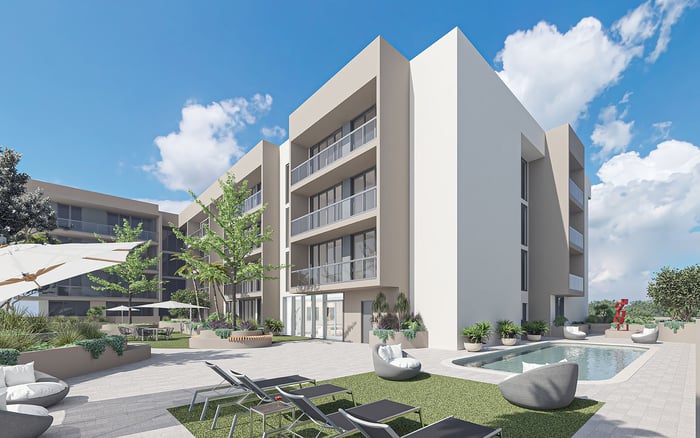
A buyer-focused guide to flood-disclosure review at Mr. C Tigertail Coconut Grove, with practical questions on elevation, insurance, reserves, systems, and long-term ownership risk.

Mr. C Tigertail Coconut Grove sits within the branded-residence category, where hospitality language, design identity and neighborhood cachet all shape the buyer conversation. In that setting, flood-disclosure review can feel less compelling than finishes, views or service culture. For a sophisticated purchaser, however, it belongs near the center of diligence.
The reason is direct: flood exposure in a condominium is not confined to the private residence. A high-floor buyer may feel physically removed from water, yet the building’s daily performance depends on access points, garage entries, lobbies, elevators, utility rooms, storage areas and mechanical systems that may sit at lower elevations. A residence can remain untouched while the building around it absorbs disruption, expense or operating limitations.
Search labels such as Coconut-grove, New-construction, Pre-construction, High-floors and Waterview may describe the buyer lens, but they should never substitute for document review. The stronger approach is calm, specific and disciplined: ask what is known, what is documented and what still requires review by counsel or technical specialists.
Flood review should begin with the physical relationship between the building and applicable flood-elevation benchmarks. Buyers should ask how finished floors, garage openings, lobby areas and critical systems sit relative to those benchmarks. The answer should be concrete, not generic, and tied to plans, certificates, engineering materials or other documentation made available through the transaction process.
The most useful question is not, “Is the residence safe?” It is, “Which parts of the building are below, at or above the relevant flood-design elevation?” That framing separates the private home from the collective infrastructure. It also helps buyers identify whether risk is concentrated in parking, service corridors, equipment rooms or circulation areas.
If the materials do not clearly explain flood-zone status, elevation information, drainage design and site resilience features, the buyer should treat the gap as a diligence item. A refined purchase process is not about assuming the worst. It is about refusing to let uncertainty become an unpriced ownership variable.
Buyers should ask whether the building, association or developer has records of prior flood intrusion, storm-surge effects, water damage or major drainage problems. The question is direct, but it should be asked with precision. A general assurance is less useful than records that identify where water entered, what was damaged, what repairs were made and whether the condition has been mitigated.
For a branded luxury building, reputation can soften the tone of inquiry. It should not soften the substance. The buyer is not merely purchasing interiors. The buyer is joining a shared asset, with common areas and systems that may require collective funding if flood-related damage occurs.
Lower-level parking deserves particular attention. So do storage rooms, loading or service areas and equipment spaces. Buyers should ask whether these areas are flood-prone, whether they are protected by mitigation systems and whether those systems require ongoing maintenance, testing or reserve funding.
Insurance review is not an afterthought. It is one of the most important ways flood risk becomes a financial issue for condominium owners. Buyers should review association coverage, flood-insurance limits, exclusions, deductibles and the allocation method for uninsured losses.
A large deductible can be manageable if the association has planned for it and owners understand their potential exposure. It becomes more concerning when the documents do not clearly explain how losses would be shared, how special assessments could be imposed or whether reserves would be available for immediate response.
Buyers should also consider lender requirements and future insurability. Flood risk can influence carrying costs over time, particularly if premiums, deductibles or coverage availability change. The most elegant residence can become less compelling if ownership costs are difficult to forecast.
A strong flood-disclosure review looks beyond the event itself and focuses on recovery. Buyers should ask whether the condominium association has reserves or contingency plans for flood-related repairs, pump failures, elevator outages and post-storm operations.
Elevator function is especially important in a high-rise context. A high-floor residence may offer privacy, views and separation from street level, but that advantage depends on vertical transportation. If elevator systems, electrical components or controls are vulnerable to lower-level water impacts, the buyer should understand what protections and response plans exist.
The same logic applies to access. If garage entries or lobby approaches are affected by water, owners may face temporary disruption even when their private residence remains dry. Flood review is therefore not only about damage. It is about continuity, convenience and the building’s ability to return to normal after a storm event.
Flood disclosure is a legal, financial and technical subject. Buyers should ask counsel to review seller, developer and association disclosures for flood-related representations, omissions or limitations. The objective is not to turn a luxury acquisition into an adversarial process. It is to ensure the contract record aligns with the buyer’s expectations.
When ordinary inspection materials do not answer site-specific questions, technical experts may be appropriate. A flood-elevation consultant, stormwater specialist, insurance adviser or engineer can help interpret documents that are too complex for a purely cosmetic review. Their work may clarify whether the building’s design, drainage and equipment placement align with the buyer’s risk tolerance.
A buyer should also ask how future costs could be allocated. Special assessments, reserve contributions and insurance deductibles are not abstract concerns. They are the mechanisms through which building-level risk can become household-level expense.
The strongest questions are specific enough to produce useful answers. What systems are below the flood-design elevation? Has the building ever had water intrusion? How would flood deductibles or uninsured losses be assessed? Are lower-level areas protected by mitigation systems? What documentation supports the stated flood-zone and elevation position?
Buyers should also ask what is not known. If certain documents are unavailable, incomplete or outside the seller’s knowledge, that may not end the conversation. It simply identifies where independent review may be needed.
Mr. C Tigertail Coconut Grove may appeal through brand, design and Coconut Grove’s enduring residential character. Flood-disclosure review does not diminish that appeal. It protects it by translating elegance into informed ownership.
Is flood-disclosure review important for Mr. C Tigertail Coconut Grove? Yes. Buyers should treat it as a core diligence issue because building systems and common areas can shape both risk and cost.
Does a high-floor residence avoid flood-related risk? Not entirely. Garages, lobbies, elevators, utilities and mechanical systems may be located at lower levels.
What elevation questions should buyers ask? Ask how finished floors, garage entries, lobby areas and critical systems compare with applicable flood-elevation benchmarks.
What documents should a buyer request? Request available materials on flood-zone status, elevation certificates, drainage design and site resilience features.
Should buyers ask about past water intrusion? Yes. Ask whether there are records of flood intrusion, storm-surge effects, water damage or major drainage problems.
Why do parking and storage areas matter? Lower-level parking, storage rooms and service areas can be more exposed and may affect usability after a storm.
How does insurance affect the decision? Coverage limits, exclusions, deductibles and uninsured-loss allocations can materially affect ownership costs.
Should reserves be reviewed? Yes. Buyers should ask whether reserves or contingency plans address flood repairs, pump failures and elevator outages.
Can flood risk affect resale value? It can. Long-term carrying costs, lender requirements, insurability and assessments may influence future buyer demand.
Who should review flood-related disclosures? Counsel should review legal disclosures, and technical experts may be useful when elevation, drainage or insurance questions remain unresolved.
For a confidential assessment and a building-by-building shortlist, connect with MILLION.
If branded residences are on your mind — as a home or as an allocation — we would be glad to share what we are seeing, privately.
Begin a quiet conversation