A buyer-focused comparison of Mr. C Tigertail Coconut Grove and W Pompano Beach Hotel & Residences, examining how two branded luxury addresses can diverge in ownership structure, daily use, association expectations, and long-term livability.

Mr. C Tigertail Coconut Grove and W Pompano Beach Hotel & Residences sit in the same rarefied category of branded South Florida real estate. Both speak to buyers who expect architecture, service, design identity, and a name with international recognition. Yet the sharper comparison is not brand versus brand. It is residential condominium living versus hotel-integrated resort ownership.
That distinction matters because a buyer is not simply purchasing finishes, views, amenities, or a celebrated name. A buyer is accepting an ownership environment. That environment shapes how the residence is used, how neighbors behave, how the building feels in season and out of season, and how association rules may affect everything from guest access to rental expectations.
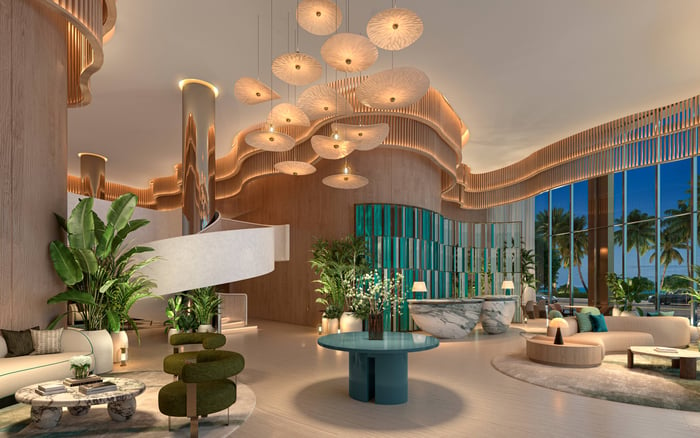
Mr. C Tigertail Coconut Grove reads as a branded luxury residential condominium with a boutique sensibility. W Pompano Beach Hotel & Residences, by contrast, reads as a W-branded hospitality product with a resort-driven orientation. Both can be prestigious. They simply answer different questions.
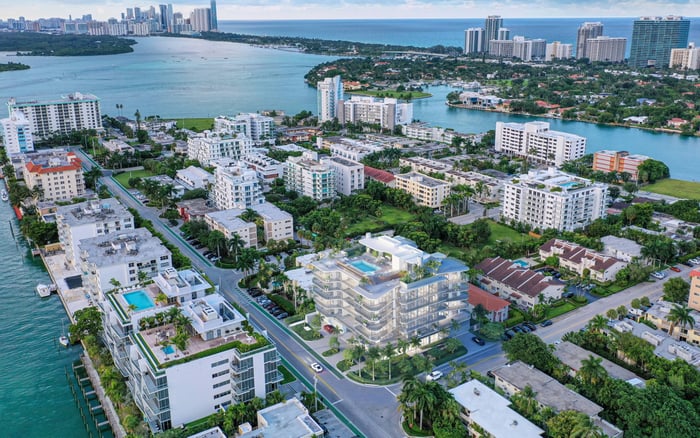
Mr. C Tigertail Coconut Grove is best understood through the lens of long-term residential livability. Its identity is tied to Coconut Grove, a long-established Miami neighborhood with a residential texture that differs from a hotel-forward resort setting. The project’s appeal is not only the branded experience, but the way that experience sits within a neighborhood context.
For many buyers, that distinction becomes more important over five, ten, or twenty years. A Coconut Grove residence can support a daily rhythm built around routine, privacy, local dining, errands, and a sense of rootedness. In buyer shorthand, the Grove often means neighborhood integration first and resort spectacle second.
This does not make Mr. C Tigertail conservative. The branding is significant, and the residential experience is elevated. But the center of gravity remains condominium ownership in a residentially oriented building. That generally attracts buyers who want predictability, privacy, and a more traditional sense of home.
Boutique does not mean casual. In the ultra-premium market, boutique often signals discretion, fewer points of friction, and a more curated residential culture. Buyers considering Mr. C Tigertail Coconut Grove are usually asking whether the building can support actual life, not just an impressive arrival.
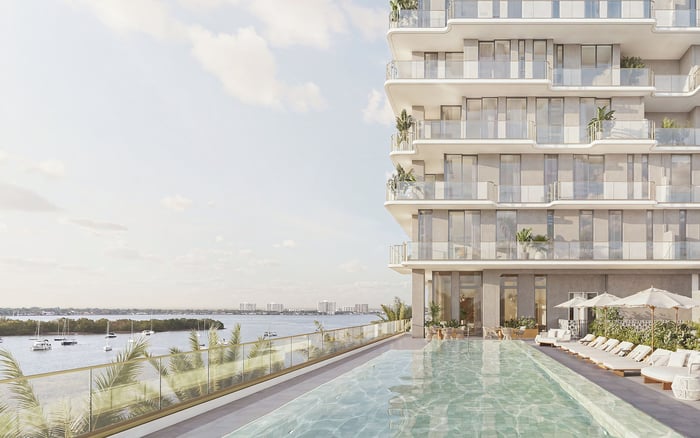
W Pompano Beach Hotel & Residences presents a different proposition. Its appeal is tied to the W hospitality platform, hotel-style services, and resort-oriented amenities. The experience is less about settling quietly into a residential neighborhood and more about accessing the energy, service, and programming of a W-flagged coastal environment.
That distinction can be extremely attractive for the right buyer. A residence connected to a hotel platform may suit an owner who wants the atmosphere of arrival, the convenience of service, and the sense that the property remains active even when the owner is away. Pompano Beach, in this context, is part of a resort lifestyle proposition.
The W identity also carries a different emotional register. Buyers are not only purchasing a private residence. They are buying into a hospitality ecosystem. For some, that is the point. For others, it is precisely the factor that requires careful review.
The key is to separate glamour from structure. A hotel-integrated residence may feel effortless on a holiday weekend, but long-term satisfaction depends on how the governing documents define use, access, rental participation, owner privileges, and the relationship between residential and hotel operations.
Ownership flexibility is often used as a single phrase, but in practice it has several meanings. It can refer to the ability to occupy the residence when desired. It can refer to rental options. It can refer to guest policies, pet policies, use of amenities, management requirements, and how the association regulates daily life.
Mr. C Tigertail Coconut Grove appears oriented toward a more traditional residential condominium framework. That may appeal to buyers who want control, continuity, and a building culture shaped primarily by residents. W Pompano Beach Hotel & Residences appears oriented toward a resort-driven hotel-and-residences structure, which may appeal to buyers who prioritize hospitality programming, coastal access, and hotel-style convenience.
Neither structure is inherently superior. The better choice depends on the owner’s intended use. A primary resident will evaluate the buildings differently than a seasonal owner. A second-home buyer will ask different questions than someone seeking a branded Miami base for regular family use. An investor-minded buyer will want to understand rental mechanics, but should avoid assumptions until the actual governing documents and sales materials have been reviewed.
In luxury condominium ownership, association rules are not background paperwork. They are the operating system of the building. They determine how private the property feels, how consistent the residential experience remains, and how conflicts between owners, guests, renters, and hotel users are handled.
A primarily residential branded condominium such as Mr. C Tigertail Coconut Grove is likely to be evaluated through questions of quiet enjoyment, residential governance, and long-term maintenance of building culture. A hotel-integrated product such as W Pompano Beach Hotel & Residences invites a different set of questions: how hotel operations interact with residences, how amenities are shared or separated, and how owner access is prioritized during peak demand.
The prudent buyer should not rely on branding alone. Brand prestige can open the door, but the declaration, association documents, and rules govern the lived experience. This is where a polished sales narrative must be translated into practical ownership terms.
The most meaningful contrast may be time horizon. Mr. C Tigertail Coconut Grove is compelling for buyers who imagine a residence becoming part of a longer personal chapter. Its Coconut Grove setting and residential orientation support a slower, more embedded form of luxury.
W Pompano Beach Hotel & Residences is compelling for buyers who see value in a hospitality environment. Its W-branded hotel integration gives it a different kind of utility: social energy, resort amenities, and the convenience of service layered into ownership.
For the buyer who plans to live in the residence extensively, the question is whether daily life feels calm, private, and sustainable. For the buyer who wants a resort base, the question is whether the hotel platform provides the experience they will actually use. Both are legitimate luxury positions, but they should not be treated as interchangeable.
The right decision is less about which name is more impressive and more about which structure is better aligned with your life. Mr. C Tigertail Coconut Grove is the stronger conceptual fit for buyers seeking residential continuity in a mature Miami neighborhood. W Pompano Beach Hotel & Residences is the clearer fit for buyers drawn to hospitality and a resort-oriented ownership experience.
Prestige may place them in the same conversation. Ownership flexibility, association rules, and long-term livability place them on different paths.
Is Mr. C Tigertail Coconut Grove a resort-style condo-hotel? It is positioned as a branded luxury residential condominium rather than a resort-style condo-hotel product.
Is W Pompano Beach Hotel & Residences primarily residential? It is characterized as a resort-driven, hotel-integrated residence connected to the W hospitality platform.
Which project is better for long-term living? Mr. C Tigertail Coconut Grove is the more residentially oriented comparison for buyers focused on five-, ten-, or twenty-year livability.
Which project is better for resort-style use? W Pompano Beach Hotel & Residences is more directly tied to hospitality, hotel-style services, and resort amenities.
Do association rules matter in this comparison? Yes. Rules can shape rentals, guest use, amenity access, privacy, and the daily feel of ownership.
Can buyers assume rental flexibility at either project? No. Rental terms should be verified through governing documents and official sales materials before purchase.
Why does Coconut Grove change the Mr. C Tigertail profile? Coconut Grove gives the project a neighborhood-based residential character rather than a pure resort identity.
Why does the W brand matter at Pompano Beach? The W platform is central to the project’s hospitality identity, service expectations, and resort atmosphere.
Are both projects considered luxury branded residences? Yes, but their ownership structures and intended lifestyles differ in important ways.
What should a buyer review before choosing? Buyers should review declarations, association rules, rental provisions, and hotel-operation documents where applicable.
For a discreet conversation and a curated building-by-building shortlist, connect with MILLION.
If branded residences are on your mind — as a home or as an allocation — we would be glad to share what we are seeing, privately.
Begin a quiet conversation