A discreet buyer’s guide to evaluating Fisher Island through the lens of state-income-tax savings, domicile planning, lifestyle fit and long-term ownership discipline.
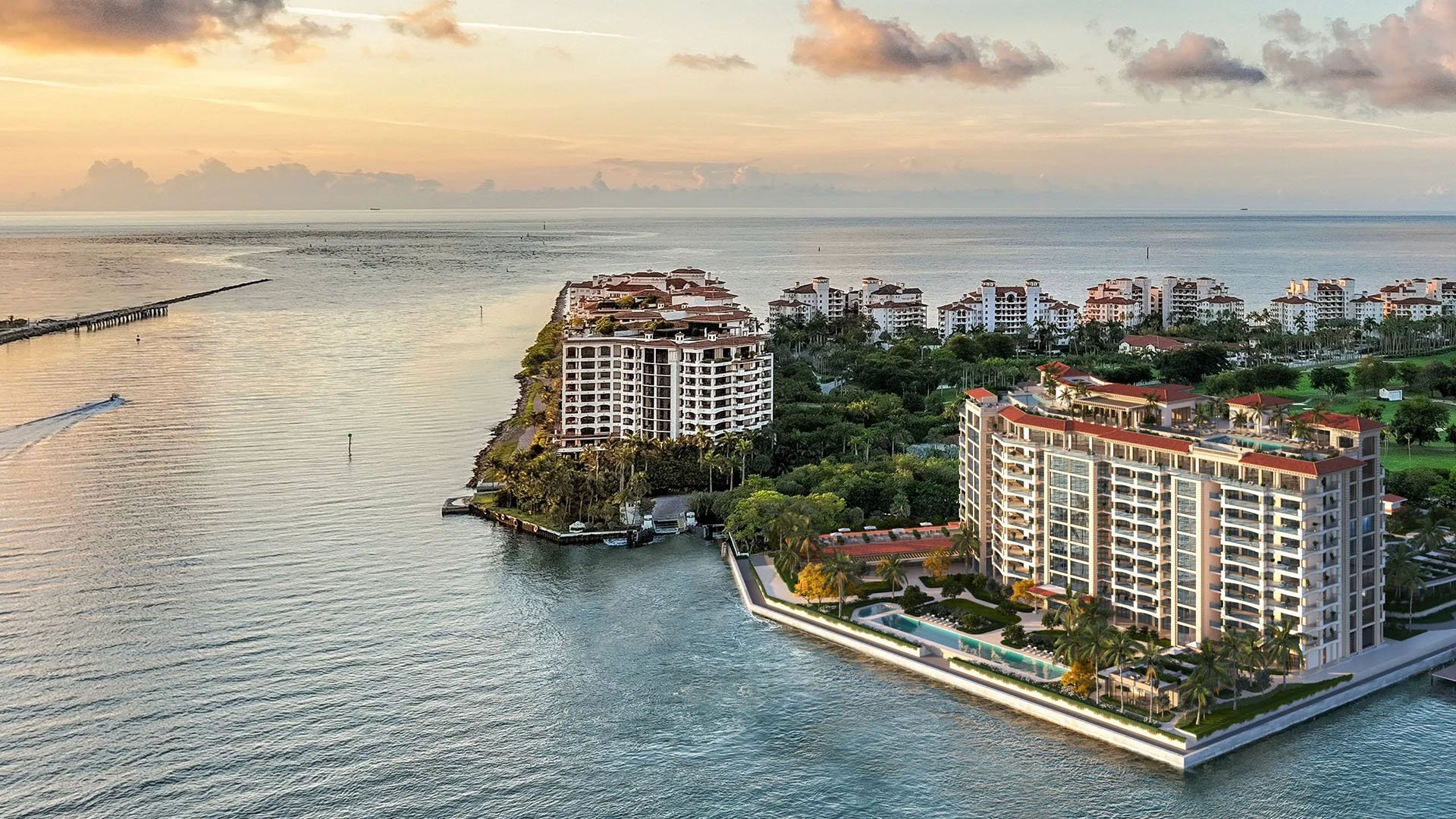
For many New York buyers, Fisher Island is not simply a warmer address. It is part of a larger conversation about residence, liquidity, family governance and how much of one’s financial life should remain tied to New York. State-income-tax savings can be a powerful motivator, but the real opportunity is rarely captured by a headline number. It comes from careful planning and a credible transition.
The first distinction is essential: buying in Florida is not the same as becoming a Florida domiciliary. A buyer may acquire a residence on Fisher Island and still retain enough New York connections to invite scrutiny. The more substantial the income profile, the more deliberate the plan should be. Advisors typically look beyond the deed and focus on the full pattern of life: where a household spends time, where business decisions are made, where personal records are kept, where family and social connections are centered, and whether the Florida home functions as a true base rather than a seasonal convenience.
That is why the best property search begins with a personal balance sheet and a residency map. The residence should support the intended tax posture, but the tax posture should not be forced to fit a property purchased on impulse.
Fisher Island offers something distinct from the more visible luxury corridors of Miami Beach, Brickell and the oceanfront mainland: separation. For buyers coming from Manhattan, Westchester, Greenwich-adjacent circles or the Hamptons, the appeal is often less about display and more about controlled access, service, privacy and the ability to gather family away from the pace of a larger urban district.
That privacy is especially relevant when the purchase is part of a broader relocation narrative. If the Florida residence is intended to become the center of personal life, it must be comfortable enough to use consistently. A trophy condominium that sits empty will not carry the same practical weight as a residence where the owner actually lives, receives guests, manages routines and builds Florida-based habits.
On Fisher Island, buyers may consider newer or highly serviced residential options such as The Residences at Six Fisher Island, where the appeal aligns with privacy, scale and a more permanent style of island ownership. Estate-minded buyers may also study The Links Estates at Fisher Island when the priority is a single-family environment rather than a traditional condominium format.
The most common mistake is treating residency planning as a checklist. Licenses, registrations and formal declarations may matter, but they do not replace behavior. For affluent New Yorkers, the question is not only whether Florida documents were signed. It is whether the household’s life has genuinely moved.
That means a Fisher Island home should be selected for daily living. Is there enough space for family visits? Is the layout appropriate for longer stays? Can the owner work privately, entertain comfortably and maintain wellness routines without feeling like a guest in a resort? Does the residence support the calendar that the owner’s advisors are helping design?
Buyers comparing Fisher Island with Miami Beach or Brickell should be candid about use. A more urban residence may better suit a buyer who wants restaurants, offices and cultural activity at the doorstep. A more private island residence may better suit a buyer whose goal is to create a primary refuge. The tax conversation becomes stronger when the real estate decision mirrors actual life patterns.
The move away from New York should be approached with discipline. A buyer who keeps a substantial New York residence, continues to spend extensive time there, maintains business operations there and leaves most personal infrastructure unchanged may have a more complicated profile than expected. This does not mean every New York connection must disappear. It does mean the overall picture should be coherent.
Before closing, buyers should coordinate tax counsel, estate counsel, family office leadership and real estate representation. The acquisition timeline should sit inside a larger transition plan. That plan may address where records are stored, how calendars are tracked, which home receives important mail, how vehicles and memberships are organized, and how family patterns change over time.
Palazzo del Sol can be attractive because it feels aligned with longer-stay living rather than a purely occasional pied-à-terre. Similarly, Palazzo della Luna speaks to buyers seeking privacy and service in a setting that can support a more durable Florida presence. The point is not merely prestige. The point is whether the residence can credibly become the place where life is centered.
Tax savings can improve the overall ownership equation, but they should not be used to justify weak real estate discipline. The luxury buyer should still evaluate basis, carrying costs, association obligations, renovation exposure, resale depth and liquidity. A state-income-tax strategy may make the move financially compelling, yet the property itself must stand on its own merits.
This is where investment thinking becomes more nuanced. Fisher Island is a highly specific market, and specificity can be both strength and constraint. The buyer pool may be exceptionally well-capitalized, but it is also selective. Residences with superior layouts, privacy, outdoor space, service quality and long-term relevance tend to be easier to defend over time than properties purchased only for address value.
Waterfront positioning can add emotional and practical appeal, but buyers should look beyond view language and study light, exposure, terrace usability, privacy from neighboring residences and the way the home functions throughout the day. Waterfront value is strongest when paired with livability.
The ideal New York-to-Fisher-Island buyer is not simply chasing savings. The strongest profile is someone who already wants a Florida life and sees tax efficiency as part of the rationale rather than the entire rationale. That buyer is prepared to spend meaningful time in Florida, build new routines, shift personal administration and select a residence that will be used as intended.
For some, Fisher Island will be the answer. For others, a residence in Miami Beach, Coconut Grove, Palm Beach or Brickell may better fit business and family realities. A buyer who needs a denser urban rhythm might compare Fisher Island with a vertical residence such as The Residences at 1428 Brickell. The correct choice is the one that makes the ownership story believable, comfortable and sustainable.
The final test is simple: if the tax benefit disappeared, would the buyer still want to live there? If the answer is yes, the purchase is more likely to be resilient. If the answer is no, the buyer may be shopping for a tax idea rather than a home.
Does buying on Fisher Island automatically create Florida residency? No. A purchase can support a residency plan, but domicile depends on the broader pattern of life and should be guided by qualified advisors.
Why do New York buyers focus on state-income-tax savings? The potential savings can be meaningful for high-income households, but the details depend on income, timing, domicile and continuing New York ties.
Should tax planning happen before or after the closing? Before. The strongest plans align the acquisition, calendar, documentation and lifestyle transition from the outset.
Is Fisher Island better for primary living or seasonal use? It can serve either purpose, but tax-motivated buyers should be especially focused on whether the home can credibly support primary living.
Can a buyer keep a New York home after moving to Florida? Possibly, but retaining major New York ties can complicate the analysis and should be reviewed carefully with tax counsel.
What property features matter most for a domicile-driven purchase? Space, privacy, work areas, family comfort and daily livability often matter more than purely decorative trophy features.
How should buyers evaluate Fisher Island versus Brickell? Fisher Island emphasizes privacy and separation, while Brickell offers a denser urban rhythm. The better fit depends on daily life.
Are carrying costs important if tax savings are substantial? Yes. Association costs, maintenance, insurance, staffing and future resale should remain central to the purchase decision.
Is this article tax advice? No. Buyers should consult qualified tax and legal advisors before making residency, domicile or ownership decisions.
What is the best first step for a New York buyer? Build a coordinated plan with advisors, then select a Fisher Island residence that supports the intended lifestyle and residency posture.
When you're ready to tour or underwrite the options, connect with MILLION.
If branded residences are on your mind — as a home or as an allocation — we would be glad to share what we are seeing, privately.
Begin a quiet conversation
.jpg&width=700&height=438&fit=cover)