A discreet buyer’s guide to using portfolio leverage when acquiring ultra-luxury property between Monaco and Surfside, with emphasis on liquidity, currency exposure, private-bank structure, insurance, condominium assessments, and prudent stress testing.

For a global buyer moving capital between Monaco and Surfside, portfolio leverage is rarely just a borrowing question. It is a question of lifestyle architecture: how much liquidity should remain available, which assets should stay invested, and how a residence can be financed without allowing the home to dominate the family balance sheet.
The strongest structures begin with a simple premise. Luxury real estate should enhance optionality, not consume it. A buyer may be fully capable of paying cash, yet still prefer to preserve invested assets, maintain operating liquidity, or coordinate the acquisition with a broader estate, tax, or succession plan. In that context, leverage is not a shortcut. It is a tool to be measured against market volatility, currency movement, carrying costs, and the realities of owning a high-service condominium in coastal South Florida.
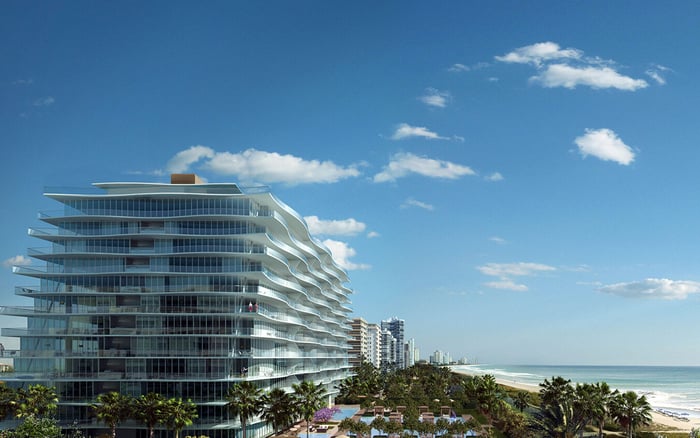
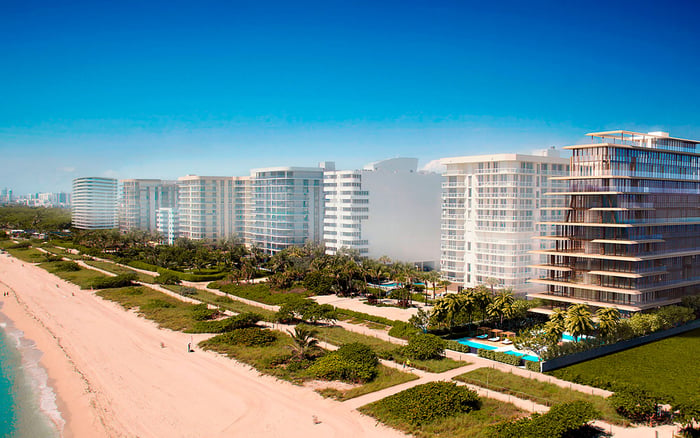
Surfside makes this conversation especially relevant because the product is intimate, scarce, and often oceanfront. Properties such as The Delmore Surfside sit in a market where discretion, architecture, privacy, and long-term ownership horizons tend to matter as much as headline price. The financing should be equally refined.
Portfolio leverage generally refers to borrowing against financial assets rather than relying only on a conventional property mortgage. For qualified buyers, private-bank financing may be secured by marketable securities, cash balances, or a broader advisory relationship. Its appeal is flexibility: a buyer can acquire a residence while avoiding an immediate sale of investments that may be strategic, tax-sensitive, or temporarily illiquid.
That flexibility has limits. The collateral supporting the loan can fluctuate in value. If markets move sharply, the lender may require additional collateral, partial repayment, or a restructuring of the facility. A strong buyer therefore evaluates leverage at two levels: the property level and the portfolio level. The question is not simply whether the purchase can close. It is whether the structure remains comfortable if asset values decline, interest costs rise, or currency assumptions change.
For the investment-minded purchaser, the most elegant leverage is the kind that can be ignored during a difficult month because the family has already modeled the pressure points. It leaves room for calls on capital, philanthropy, business liquidity, travel, art, aircraft, yachts, and the private obligations that rarely appear in a property brochure.
A Monaco-based or Monaco-adjacent buyer considering Surfside is often moving between currencies, banking systems, and legal frameworks. Even when the purchase is denominated in dollars, the buyer’s wealth may be generated, reported, or psychologically measured in another currency. That creates an exposure that can feel modest during calm periods and meaningful when exchange rates move.
The practical approach is to separate the decision into three questions. First, which currency will fund the equity contribution. Second, which currency will support debt service. Third, which currency will be used if the property is eventually sold or refinanced. A buyer who answers only the first question may find that the real risk lives in the second and third.
This is why private-bank conversations should happen before the property search becomes emotionally specific. A residence such as The Surf Club Four Seasons Surfside may appeal because of its heritage and service culture, but the acquisition plan still needs to withstand a scenario in which currency timing is unfavorable. The property can be timeless while the financing remains tactical.
In ultra-luxury condominium ownership, the purchase price is only the opening line. Buyers should underwrite ongoing common charges, reserves, potential assessments, insurance dynamics, property taxes, maintenance expectations, and the cost of keeping a residence ready even when it is used seasonally. A second home can be effortless in daily experience and still require careful treasury planning behind the scenes.
This matters because leverage magnifies carrying costs. A cash buyer may view assessments or insurance changes as an inconvenience. A highly leveraged buyer may view the same changes as part of a broader cash-flow test. Neither perspective is inherently right or wrong, but the second requires more discipline.
In Surfside, boutique scale and high-touch operations are part of the appeal. Fendi Château Residences Surfside is the type of address where privacy and design language attract buyers who understand that service has a balance-sheet expression. The right question is not whether carrying costs are high or low. The right question is whether they have been planned with enough margin.
A conventional mortgage ties the loan primarily to the property. Portfolio leverage may tie the loan to the buyer’s investable assets. Some buyers use one, some use the other, and some combine both. The preference depends on rates, collateral requirements, tax advice, estate planning, liquidity goals, and tolerance for margin-style risk.
Property-level debt can feel clean because the real estate is the central collateral. Portfolio leverage can feel elegant because it may avoid disturbing an investment strategy. Yet elegance should not be confused with immunity. If the collateral pool includes securities, the buyer must understand drawdown triggers, concentration limits, advance rates, notice provisions, and what happens during a market disruption.
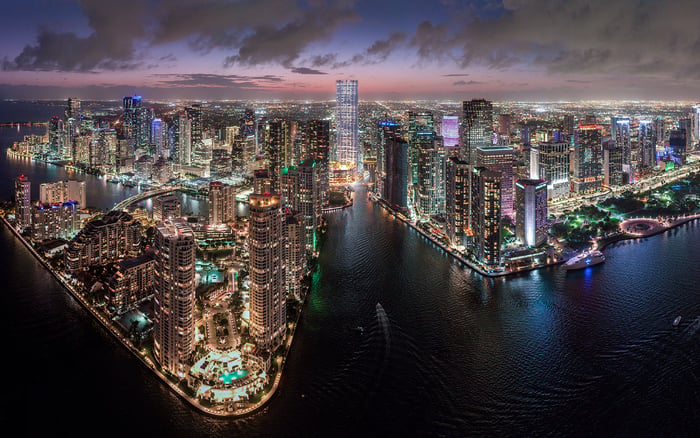
For buyers also considering a Miami financial-center lifestyle, Brickell may serve as a useful contrast to Surfside. A tower such as The Residences at 1428 Brickell speaks to a different rhythm: urban, vertical, business-adjacent, and connected to the city’s capital-markets culture. The financing conversation may be similar, but the ownership use case can be very different.
The most sophisticated buyers stress test before they negotiate. They ask what happens if rates remain elevated, if securities decline, if insurance costs change, if a special assessment arrives, if currency shifts against them, or if they decide to hold the residence longer than planned. These scenarios do not need to be dramatic to be useful. A modest change in several variables at once can reveal whether the structure is resilient.
A prudent stress test includes a liquidity reserve that is separate from the down payment and separate from the investment collateral. It also includes a timeline for refinancing or repayment, particularly when the leverage is intended as a bridge rather than a permanent feature. The best buyers know their exit before they enter.
There is also an emotional component. A residence should not become a source of forced decision-making. If a market decline would require selling assets at an unattractive time, reducing lifestyle commitments, or negotiating with a lender under pressure, the leverage is too tight. Luxury should feel measured, even when markets are not.
The cleanest acquisition plan usually has four qualities: sufficient liquidity, conservative collateral assumptions, realistic carrying-cost reserves, and a written plan for debt service in more than one scenario. It also integrates the buyer’s family office, legal counsel, tax advisers, insurance professionals, and lending team before contract deadlines become urgent.
For Monaco to Surfside buyers, the real advantage is not merely access to credit. It is coordination. When currency, collateral, insurance, condominium obligations, and lifestyle goals are evaluated together, leverage becomes a tool of control rather than a source of fragility.
Is portfolio leverage the same as a mortgage? No. A mortgage is typically secured by the property, while portfolio leverage may be secured by financial assets or a broader banking relationship.
Why would a cash-capable buyer use leverage? Some buyers prefer to preserve liquidity, avoid selling strategic assets, or coordinate the purchase with estate, tax, or investment planning.
What is the main risk of borrowing against a portfolio? The collateral can fluctuate in value, which may create pressure to add collateral, repay debt, or restructure during market volatility.
Should currency exposure be reviewed before buying in Surfside? Yes. Buyers whose wealth is held or generated outside dollars should evaluate funding, debt service, and future exit currency assumptions.
Are condominium assessments important for leveraged buyers? Yes. Assessments can affect cash flow, and leveraged buyers should reserve for them before committing to a purchase.
How much liquidity should remain after closing? The right amount depends on the buyer’s broader obligations, but it should be enough to absorb carrying costs and market stress without forced sales.
Is Surfside better suited to long-term ownership? Many buyers approach Surfside with a long horizon because the market emphasizes privacy, coastal setting, and limited ultra-luxury inventory.
Can portfolio leverage be combined with property debt? In some cases, yes. The suitability depends on collateral, pricing, lender terms, tax advice, and the buyer’s risk tolerance.
What should be stress tested before making an offer? Buyers should model interest costs, collateral declines, currency movement, insurance changes, assessments, and a longer-than-planned hold period.
Who should coordinate the leverage strategy? A buyer’s advisers should work together, including lending, legal, tax, insurance, and family-office professionals where applicable.
For a discreet conversation and a curated building-by-building shortlist, connect with MILLION.
If branded residences are on your mind — as a home or as an allocation — we would be glad to share what we are seeing, privately.
Begin a quiet conversation