A discreet planning guide for Monaco-connected buyers considering Boca Raton, with focus on Florida domicile, U.S. tax residency, charitable travel, and luxury-home decision-making.

For a Monaco resident considering Boca Raton, the appeal is clear: privacy, water, clubs, philanthropy, family infrastructure, and Florida’s absence of personal income tax. Yet the move is not simply a change of scenery. It is a residency decision at the intersection of three distinct concepts: Monaco residency, Florida domicile, and U.S. federal tax residency.
Monaco generally does not levy personal income tax on individuals, with special rules for French nationals under France and Monaco arrangements. Florida also does not impose a personal income tax. That similarity can make Boca Raton feel familiar from a tax and lifestyle perspective, especially for buyers comparing South Florida with high-tax U.S. states. But a Florida address is not a shield against U.S. federal residency rules. A Monaco resident can become a U.S. tax resident even if Florida itself has no income tax.
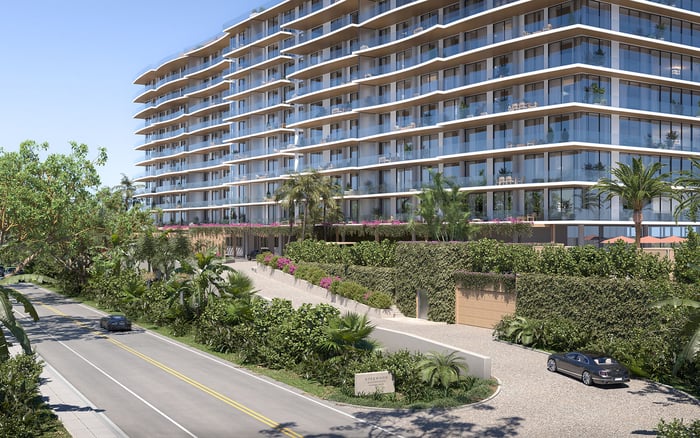
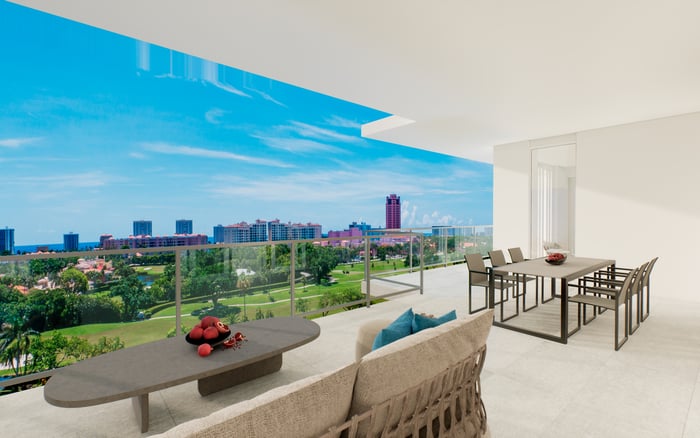
That distinction is the starting point for any serious purchase conversation, whether the buyer is considering a new condominium such as Alina Residences Boca Raton, a boutique Boca address such as Glass House Boca Raton, or a service-rich residence tied to hospitality culture such as The Residences at Mandarin Oriental Boca Raton.
Florida domicile is about intent and facts: where a person treats as a permanent home, where daily life is organized, and how consistently documents align. Florida law allows a person to file a sworn declaration of domicile stating that Florida is their permanent home. That declaration can help evidence intent, but it should be part of a broader fact pattern rather than a lone form in a file.
Practical markers matter. New Florida residents who drive must obtain a Florida driver license within 30 days of becoming employed, registering to vote, placing children in public school, or establishing residency. Florida voter registration can also be a domicile marker, but only U.S. citizens who are Florida residents may register. For international families, these details are not mere administration. They create a documentary trail.
U.S. federal tax residency is different. It can arise through the green card test for lawful permanent residents, or through day-count rules under the substantial presence test. The substantial presence framework generally counts days physically present in the United States and uses a 183-day weighted formula over the current year and the prior two years. A foreign individual who meets the test may still qualify for a closer-connection exception if present in the United States for fewer than 183 days in the current year and able to maintain a closer connection to a foreign country.
For Monaco-connected buyers, philanthropy is often international, highly social, and calendar-driven. A Boca Raton home may become the winter base for foundation dinners, museum events, hospital boards, education initiatives, and donor travel throughout the United States. The planning issue is direct: charitable purpose does not generally erase physical presence.
A gala in New York, a board meeting in Palm Beach, a donor dinner in Miami, and a weekend at a Boca Raton residence may each add U.S. presence days for a nonresident buyer unless a narrow exception applies. This is where lifestyle and tax planning can diverge. A calendar built around generosity can still produce a day-count profile that changes the federal residency analysis.
Buyers leaving New York should be especially disciplined. If a person maintains a permanent place of abode there and spends more than 183 days in the state, New York may treat that person as a resident. Charitable board meetings, benefit dinners, and fundraising trips back to Manhattan should be tracked with the same rigor as business travel.
The strongest Boca Raton purchase is not evaluated only by architecture, amenities, or proximity to the ocean. It is evaluated by how the home supports the buyer’s intended residency profile. Lifestyle becomes infrastructure: where the family actually sleeps, where staff logistics are centered, where charitable entertaining occurs, and where recurring obligations are scheduled.
This is why a Monaco-to-Boca buyer should pair property selection with calendar architecture. If the goal is to make Florida the permanent home, the residence should function as a true center of life, not merely a seasonal convenience. Boca Raton is particularly suited to that role for buyers who value private clubs, controlled routines, wellness, security, and access to Palm Beach County cultural and philanthropic circles.
For some families, a Boca Raton base may be complemented by selective time in Palm Beach or Miami. A buyer comparing Boca with Palm Beach Residences should evaluate not only the address, but also how each location affects travel patterns, donor obligations, school considerations, and time spent outside Florida.
Florida’s homestead framework is one reason permanent-residence planning matters. The homestead exemption can reduce the taxable value of a permanent residence, subject to eligibility and application rules. Florida law also establishes a standard homestead exemption for real property owned and used as a permanent residence.
Separate from the exemption, Florida’s constitution provides homestead protection from forced sale, subject to stated exceptions such as taxes, purchase-money obligations, and certain improvements or repairs. For ultra-high-net-worth buyers, that protection is often discussed alongside estate planning, creditor considerations, marital planning, and entity structure. It should be reviewed before title is taken, not after closing.
None of this should be confused with federal tax residency. A buyer can have a Florida homestead analysis, a Monaco connection, and a U.S. federal residency analysis occurring at the same time. The art is aligning them before the calendar creates facts that cannot be undone.
Once a person is a U.S. tax resident, foreign financial account reporting can become relevant, including FBAR reporting when aggregate foreign account values exceed the applicable threshold. For globally mobile families, this can be a major shift from a private European banking profile to a more disclosure-oriented U.S. framework.
Estate and gift tax exposure can also differ sharply among U.S. citizens, U.S. domiciliaries, and nonresident noncitizens. A Boca Raton purchase may be emotionally straightforward, but the structure of ownership may affect future transfers, succession planning, and liquidity planning. Immigration status is equally central. A lawful permanent resident generally meets the green card test for U.S. federal tax residency, so visa strategy and tax strategy should be coordinated rather than handled in separate conversations.
The prudent approach is to map the buyer’s intended presence in Florida, planned charitable commitments, non-U.S. assets, family citizenship profile, and estate objectives before a contract becomes urgent.
Before choosing between condominium living, a private estate, or a managed hospitality environment, Monaco-connected buyers should build a residency file. Track projected days in the United States by state and purpose. Identify all charitable board meetings, galas, donor trips, and recurring committee obligations. Decide whether Florida domicile is the goal; if so, align driver licensing, voter eligibility where applicable, homestead planning, family records, and daily life.
The most elegant purchase is the one that supports the intended facts. Boca Raton can be a compelling platform for a Monaco resident seeking Florida permanence, but only if the home, the calendar, and the advisory team are designed together.
Does Florida have personal income tax? No. Florida does not impose a personal income tax, which is one reason Boca Raton appeals to relocating buyers.
Does Monaco have personal income tax? Monaco generally does not levy personal income tax on individuals, although French nationals are subject to special rules.
Can a Monaco resident become a U.S. tax resident? Yes. U.S. federal tax residency is separate from Florida residency and can arise through immigration status or day-count rules.
Do charity galas count as U.S. presence days? Generally, physical presence is the key issue, and charitable travel does not create a broad automatic exclusion.
What is the substantial presence test? It generally uses a 183-day weighted formula based on days in the United States during the current and prior two years.
Can a closer-connection exception apply? It may apply if the person is in the United States for fewer than 183 days in the current year and maintains a closer connection abroad.
Why does New York still matter after moving to Florida? New York can treat a person as a resident if they keep a permanent place of abode and spend more than 183 days there.
What does a Florida declaration of domicile do? It is a sworn statement that Florida is the person’s permanent home and can help document residency intent.
Is Florida homestead automatic after buying in Boca Raton? No. Homestead benefits depend on eligibility, permanent-residence use, and application requirements.
Why should estate planning happen before closing? Estate and gift tax exposure can vary by citizenship, domicile, and residency status, so ownership structure matters.
If you'd like a private walkthrough and a curated shortlist, connect with MILLION.
If branded residences are on your mind — as a home or as an allocation — we would be glad to share what we are seeing, privately.
Begin a quiet conversation