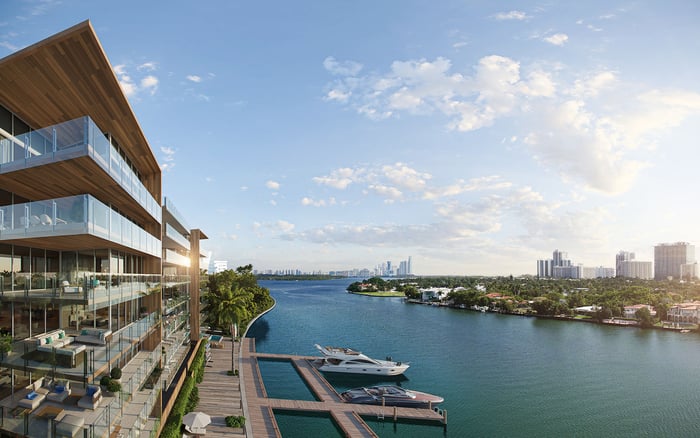
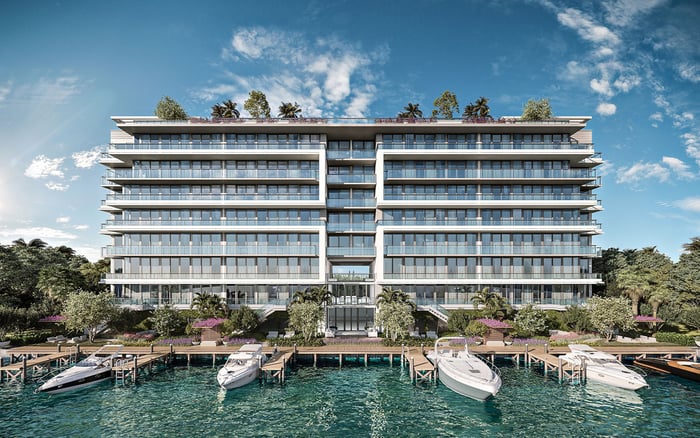
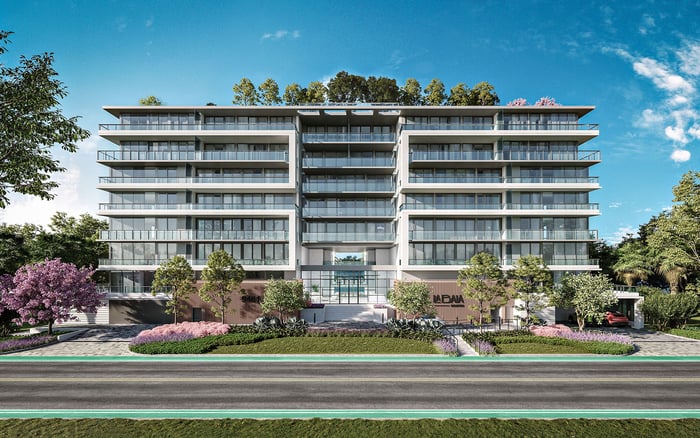
A buyer-oriented comparison of La Baia and La Maré in Bay Harbor Islands, focused on what matters most at this latitude: water orientation, sun and wind exposure, sightlines, and long-term outlook.
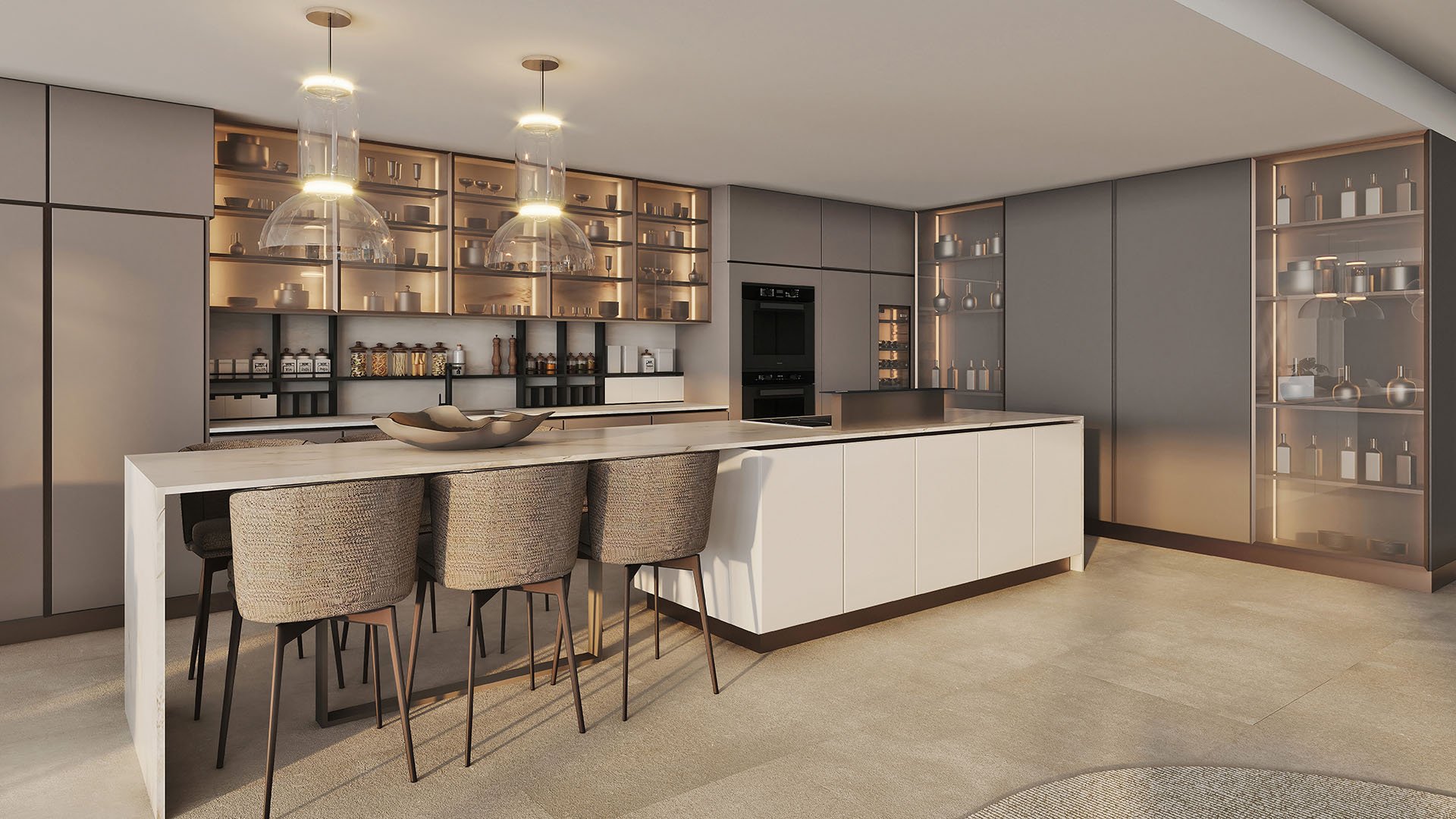
In Bay Harbor Islands, “waterfront” can describe two entirely different experiences. One is the cinematic, open-sky panorama-where the horizon feels distant and the water reads as a broad, uninterrupted plane. The other is a more intimate, channel-forward perspective, where boats, seawalls, and the cadence of neighborhood life sit closer to the glass.
When clients ask MILLION Luxury to compare La Baia North Bay Harbor Islands and La Maré Bay Harbor Islands, the most useful framework isn’t “which is better,” but “which outlook will hold up for your lifestyle.” That durability comes down to three factors: view corridor (what you can see), exposure (how sun and wind meet your terrace), and outlook (what may change around you over time).
Because view quality is unit-specific, this editorial focuses on the buyer decisions that repeat across floors and lines: orientation, adjacent conditions, and the day-to-day comfort that makes a view feel expensive long after move-in.
A Bay Harbor Islands view can feel like a private resort-or a front-row seat to a working waterway. Neither is inherently superior. The difference is the scale of the scene and how much “foreground” you’re willing to live with.
Open-water bias.
When a residence faces a broader stretch of bay, the view typically reads cleaner: more sky, more distance, and fewer visual interruptions. At dusk, the water turns reflective, and the scene can feel composed even on overcast days. This is the profile many buyers picture when they say they want “Biscayne Bay views.”
Channel bias.
Channel-facing outlooks tend to be more animated, with consistent movement-neighbors coming and going, boats passing at close range, and a stronger sense of place. The trade-off is that sightlines often intersect more built elements, from seawalls to neighboring docks. The upside is immediacy: the water can feel closer and more “yours,” especially at lower heights where the terrace becomes a true viewing platform.
The practical takeaway: if your priority is a gallery-like, minimalist vista, favor the widest view corridor available in your preferred line. If you want the romance of waterfront life and don’t mind a layered foreground, channel exposure can be deeply satisfying.
South Florida luxury is increasingly about comfort, not just finishes. Exposure determines whether your home feels serene at 4 p.m. in August-and whether your terrace is genuinely usable in winter.
Morning vs afternoon light.
East-facing exposure typically brings gentler morning sun and earlier shade, which many buyers find more forgiving for daily living. West-facing exposure can deliver dramatic sunsets, but it can also increase afternoon heat load, especially on glass-heavy facades. If you entertain later in the day, you’ll feel the difference.
Breeze patterns over water.
Water-facing terraces can be the best natural cooling you will ever own-and the windiest. A higher floor may bring more consistent airflow; a lower floor may feel calmer but more humid. If outdoor dining is part of your routine, prioritize a line where wind feels like an asset, not a constant negotiation with table settings.
Terrace usability.
A terrace that is perpetually sun-blasted or perpetually windy becomes a decorative appendage. When you tour, take five minutes and simply stand still with the door open. Listen. Feel the air. Imagine a linen tablecloth. Exposure is lifestyle.
For those considering other boutique waterfront product in the neighborhood, touring Onda Bay Harbor alongside La Baia and La Maré can help calibrate your preferences around terrace conditions and sightlines without leaving Bay Harbor.
“Outlook” is the part of the view you don’t control. It’s the long game: what you see now, what you might see later, and what could subtly reshape privacy and openness.
Nearby parcels and future massing.
Even in established enclaves, the most meaningful risk to a view isn’t the weather-it’s what happens next door. A corridor that feels generous can tighten if an adjacent property builds upward or reconfigures rooflines and equipment. The closer your view sits to the built edge, the more sensitive it becomes.
Boating traffic and wake dynamics.
In channel-forward settings, activity can be a feature, but the tempo matters. Some buyers love motion; others realize later they were looking for stillness. Also consider that some stretches of water feel distinctly “residential,” while others read more like a thoroughfare.
Nightscape and light texture.
A frequently overlooked component of outlook is what happens after dark. A wide-bay view may feel more atmospheric and subtle; a channel view may bring more point lights and reflections. If you work late or value quiet evenings, tour at night when possible.
As a reference point for how outlook can shift as new development reshapes an area’s visual texture, a drive through nearby North Bay Village and a look at Continuum Club & Residences North Bay Village can be instructive. It’s a different submarket, but it highlights how massing and waterfront activation can change daily perception of the water.
In a luxury waterfront home, privacy is part of the view premium. Two residences can share the same water exposure and still feel completely different depending on sightlines.
Diagonal views matter.
Buyers tend to focus straight ahead, but privacy is often decided by diagonal angles from neighboring terraces and windows. If your primary seating area is visible from a nearby building’s corner units, the view may be beautiful-but socially exposed.
Height can help, but it is not a guarantee.
Higher floors can lift you above certain sightlines, yet the wrong angle can still create the feeling of being observed. Lower floors can feel sheltered if landscaping, setbacks, and water distance work in your favor.
Interior planning changes the experience.
If the primary suite aligns with the most public exposure, the home can feel less restful. Conversely, when living spaces take the bold view and sleeping areas sit on calmer exposures, the home tends to feel more composed.
If you are comparing Bay Harbor Islands to more overtly resort-activated coastal living, touring 57 Ocean Miami Beach can help clarify whether you prefer the intimacy of Bay Harbor or the open-ocean posture and energy of Miami Beach.
Without over-weighting any single feature, sophisticated buyers typically land in one of three profiles.
Profile 1: The “clean horizon” buyer.
You want a wide, calming tableau, minimal foreground, and the sense that water is the main event. Prioritize the broadest view corridor available, and favor exposure that keeps the living room comfortable in late afternoon.
Profile 2: The “waterfront life” buyer.
You want boats, docks, and neighborhood texture. You will actually use the terrace and enjoy watching the day unfold. Prioritize a line with an engaging water scene, and test wind and noise at different times.
Profile 3: The “privacy first” buyer.
You love water views, but you won’t compromise on being unseen. Prioritize diagonal privacy, study where terraces align, and consider whether your most-used outdoor area faces open water or another building.
In every profile, the right answer is less about a building name and more about a specific stack, floor, and interior plan. The building is the envelope. The line is the lifestyle.
A luxury decision shouldn’t hinge on a single midday showing. During tours, do the following:
Look back at the interior and note glare, reflections, and whether the room still feels calm.
Step to the corners. Note what neighboring terraces can see.
Water carries sound differently. A quiet interior with doors closed is not the same as a livable indoor-outdoor flow.
Even if you tour in the morning, mentally map the sun path and where shade will fall.
Coffee, yoga, dining, reading. If you can’t picture it, your “view” may be more aesthetic than functional.
For buyers who want to benchmark Bay Harbor’s boutique feel against a more urban waterfront skyline context, 2200 Brickell offers a useful contrast in how orientation and exposure behave in a higher-density, high-rise environment.
Between La Baia and La Maré, the most expensive mistake is buying the “prettiest” view in a 15-minute showing instead of the most livable outlook across seasons.
If you prize a wide, simplified composition, pursue the clearest corridor and protect it with exposure that keeps the home comfortable through late afternoon. If you value the intimacy of a working waterway, choose the line where motion feels charming rather than intrusive-and where the terrace stays usable more days than not. If privacy is your luxury, treat diagonal sightlines as non-negotiable, even if it costs you a few degrees of panorama.
In Bay Harbor Islands, the premium is earned when view, exposure, and outlook align into a daily rhythm that feels effortless.
Is one building always better for views, La Baia or La Maré? No. Views are driven by line, floor, and orientation more than the building name.
What exposure is most comfortable for year-round terrace use? Generally, gentler morning light and managed afternoon sun tend to feel most livable.
Do higher floors always mean better water views? Not always. Height can widen the corridor, but diagonal privacy can still be compromised.
Are channel views considered less valuable than open-bay views? Not necessarily. Many buyers pay for channel animation and a closer-to-water feel.
What is the biggest risk to a “forever view” in Bay Harbor Islands? Changes to nearby massing and sightlines can matter more than anything else.
How can I evaluate wind on a terrace during a short tour? Open the doors, stand outside for several minutes, and note how gusts affect comfort.
Is sunset exposure always a plus? It can be, but it may also bring higher heat load in late afternoon and evening.
What should I look for at night when assessing a view? Check privacy, light spill from neighbors, and whether the water scene feels calm.
Should I prioritize privacy or panorama if I can’t get both? Choose the factor that changes your daily behavior most; privacy often wins long-term.
What’s the simplest way to compare two units with similar views? Compare terrace usability and diagonal sightlines; those differences tend to persist.
For a confidential assessment and a building-by-building shortlist, connect with MILLION Luxury.
If branded residences are on your mind — as a home or as an allocation — we would be glad to share what we are seeing, privately.
Begin a quiet conversation