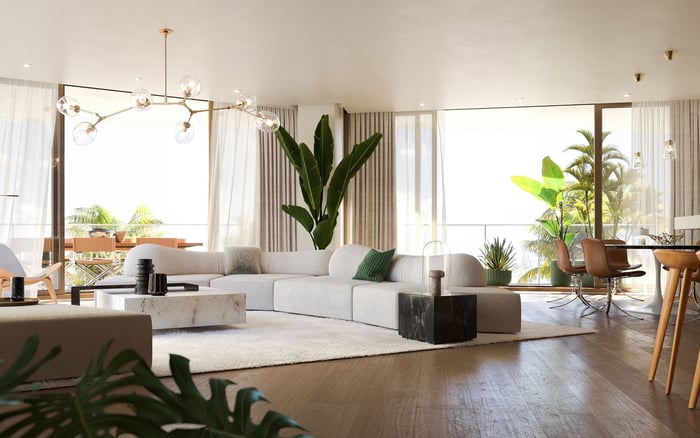
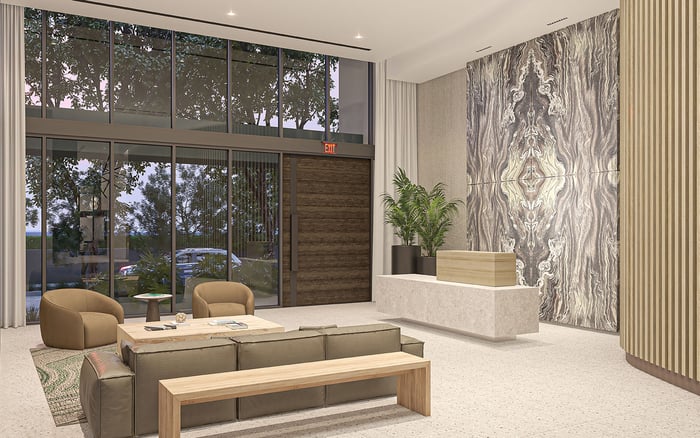
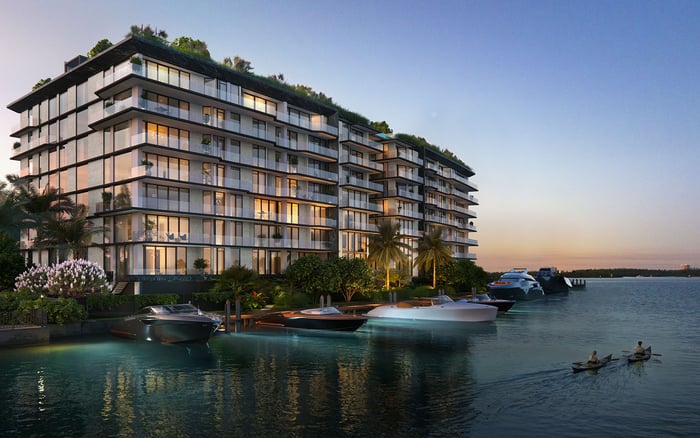
In Bay Harbor Islands, rooftop amenity decks often function as a daily ritual: a place to swim, lounge, work, and gather above the street line, with open-water horizons that feel closer than their maps suggest. For buyers comparing Onda and Origin, the question is less “which is better” and more “which rooftop matches the way you live at golden hour.” Because the provided details around specific rooftop programs are limited here, this MILLION Luxury editorial focuses on the decision framework that most consistently predicts satisfaction: orientation to the sun’s arc, wind and shade planning, privacy design, service choreography, and how a roof connects to the rest of the building’s lifestyle stack. The outcome is a more precise way to evaluate sunset views in Bay-harbor, and a clearer understanding of what you are actually purchasing when a rooftop is positioned as a signature amenity.
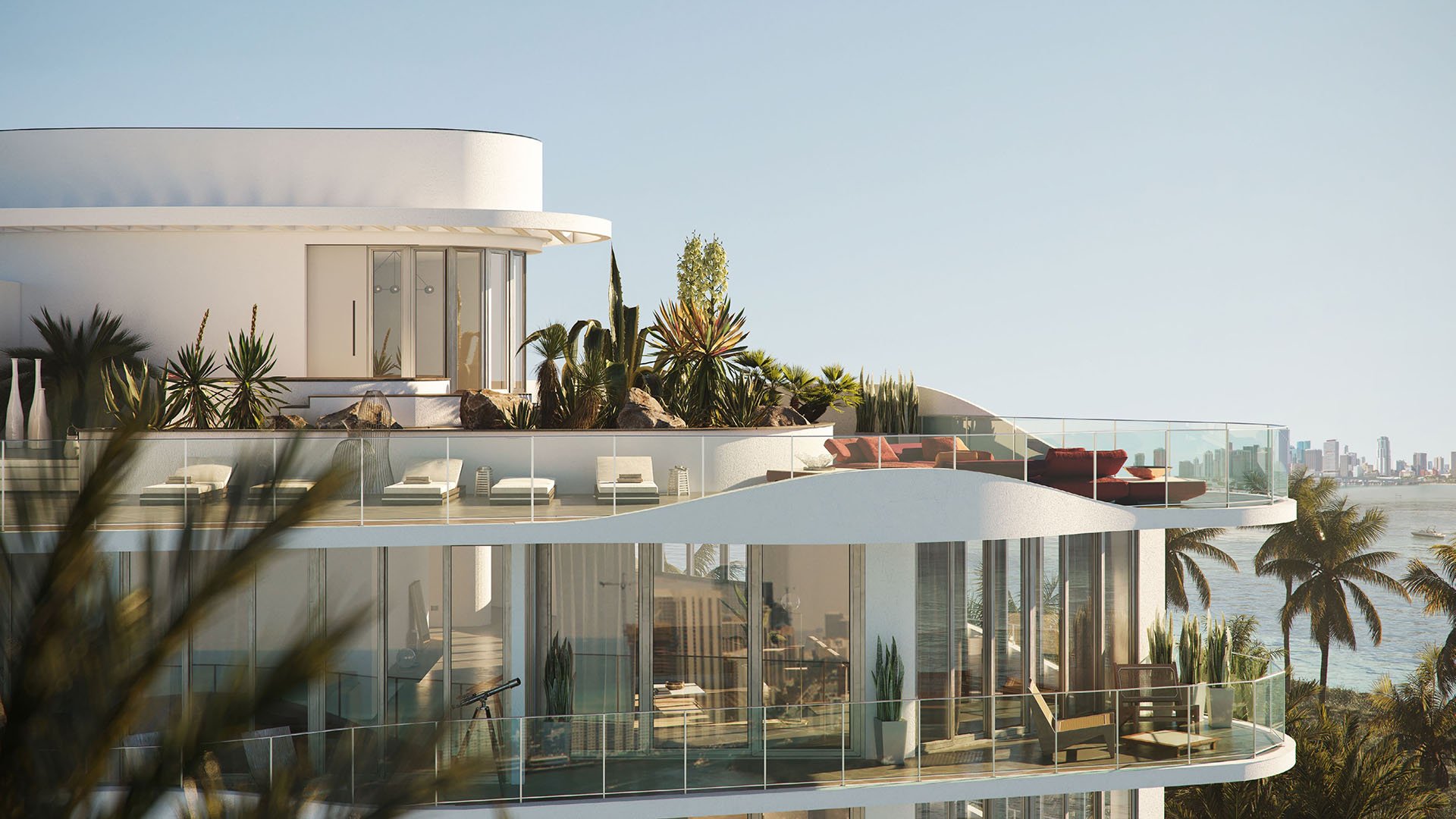
A rooftop amenity deck is one of the few shared spaces that can genuinely feel like private real estate. In Bay Harbor Islands, that feeling is amplified: you are not looking toward an inland horizon-you are looking over water, low-rise streetscapes, and long sightlines that make the sky feel larger.
When buyers compare Onda Bay Harbor and Origin Bay Harbor Islands, it is easy to anchor the decision on a single word like “sunset.” In practice, the better question is: what kind of sunset experience do you want to own? A social roof designed for hosting, or a quieter terrace that reads more like an extension of your residence. You see the difference in circulation, furniture density, pool placement, and how access is managed.
For those also cross-shopping other boutique product in Bay-harbor, it helps to note how varied the neighborhood’s new inventory is-from wellness-driven concepts like The Well Bay Harbor Islands to smaller, design-led offerings such as Alana Bay Harbor Islands. The takeaway: “roof deck” is a category, not a promise.
Sunset views feel emotional, but the drivers are measurable. To assess a rooftop deck’s sunset performance, focus on five variables.
First: orientation. True sunset drama generally favors western and southwestern exposure, but water reflection can make even an off-angle view feel luminous. The best roofs create multiple “sunset seats,” not a single photo spot.
Second: height relative to the immediate context. In a low-rise neighborhood, a rooftop can feel elevated and expansive without extreme elevation. What matters is whether nearby buildings interrupt the horizon line.
Third: the edge condition. A parapet that sits too high can cut the sky at seated height. A glass guardrail can preserve horizon continuity-if it is detailed to minimize glare and night reflections.
Fourth: microclimate. Rooftops in South Florida must contend with wind, salt, and sudden weather shifts. A deck that looks perfect at noon can feel uncomfortable at 6:30 p.m. if wind funnels through furniture groupings. Comfort is not only cushions; it is wind baffles, planting mass, and shaded transition zones.
Fifth: lighting. The most expensive-looking sunset can be undermined by cheap uplighting, harsh pathway fixtures, or unshielded LEDs that flatten the scene. A refined roof keeps the sky as the brightest plane and relies on low, warm, precisely aimed light.
A rooftop can be beautiful and still underdeliver if the program doesn’t match how residents actually use it. The highest-utilization decks typically balance three modes: active (swim, train, move), restorative (quiet lounge, shade, reading), and social (small groups that can expand).
Pool placement is decisive. A pool centered as a visual anchor can create a resort feel, but it may compress quiet perimeter seating. A pool pushed to one edge can protect lounge “real estate” while giving swimmers a stronger view line. Either can be right; the real question is whether you want the roof to feel like a club or a retreat.
Shade planning is just as revealing. If the only shade sits at the bar or under a single pergola, the deck becomes a limited-time amenity. The most livable rooftops deliver layered shade: cabanas, slatted structures, and planting that casts dappled shadow. If you are evaluating Onda Bay Harbor vs Origin Bay Harbor Islands, ask for the rooftop plan and identify where you would realistically sit at 5:30 p.m. in August.
In Bay-harbor, many buyers also care how rooftop time integrates with the rest of the amenity stack. A roof that functions as the primary amenity shouldn’t force you to choose between a quiet corner and a workable fitness or wellness routine. If your lifestyle skews health-forward, you may also compare the rooftop experience to buildings where wellness is a central narrative, like The Well Bay Harbor Islands.
Luxury rooftops work when they feel effortless and discreet-even on busy weekends. Privacy is not only who can access the space; it is how the deck is composed.
Start with arrival. If the elevator opens directly into the primary lounge, the roof becomes a stage. If arrival is buffered by a vestibule, a garden moment, or a short corridor, the experience reads calmer and more residential.
Next, evaluate sightlines. The most comfortable seating is not always the closest to the edge. It is the seating that captures the horizon without making you feel observed. Look for angled lounges, planters that create visual separation, and layouts that avoid face-to-face exposure between strangers.
Sound control is another separator. Hard surfaces amplify conversation. Softer materials, planting, and deliberate zoning allow multiple groups to coexist without feeling crowded. If the deck includes any event-ready component, ask how sound is handled and what rules govern private gatherings.
Finally, confirm whether the building’s policy culture matches your preferences. Some owners want energy and social overlap; others want a roof that behaves like a private terrace. Neither is inherently better-but clarity here prevents you from buying the wrong kind of “amenity.”
The best rooftop is the one you use without thinking. That comes down to friction.
Ask practical questions: Is there a dedicated resident elevator schedule? Are there time windows when access is restricted for maintenance? Does the roof require reservations for certain seating or cabanas? Are food and beverage rules designed for hospitality-or designed to discourage lingering?
Also weigh the indoor-to-outdoor transition. A roof with an interior lounge, shaded loggia, or covered bar area lets you stay put through brief weather shifts. In South Florida, that matters. A rooftop that clears out at the first sign of wind is not a daily amenity; it is an occasional one.
This is also where comparing other ultra-premium rooftops around Miami can sharpen your eye. Consider how skyline-forward districts like Brickell approach outdoor living at elevation, where a building such as 2200 Brickell may treat terraces and shared outdoor space as an extension of the workday as much as the weekend. The lesson translates: the most valuable decks serve multiple hours-not just sunset.
Bay Harbor Islands has a distinct advantage: the surrounding scale can preserve sky and water views in ways denser neighborhoods cannot. The tradeoff is that view corridors can shift as the neighborhood evolves.
A buyer-forward evaluation includes a simple exercise: stand where the primary seating and pool edge sit on the rooftop plan and draw a mental cone of vision. Then ask what lies within that cone today-and what could change tomorrow. Even without speculating about specific sites, you can still gauge risk by noticing whether the view relies on a narrow gap between buildings or a broad opening over water.
If you are also considering nearby options for a different waterfront texture, compare how oceanfront neighborhoods frame sunset differently. A project like 57 Ocean Miami Beach, for example, may deliver a different “last light” experience, with the ocean on one side and the city glow on the other. That contrast can clarify whether you want a bay-facing sunset ritual or a more two-sided panorama.
To compare Onda Bay Harbor and Origin Bay Harbor Islands cleanly, request documentation that shows how the rooftop functions on an ordinary day.
Ask for the dimensioned rooftop plan, not just renderings. Identify the number of distinct seating zones, the share of shaded versus unshaded area, and whether service elements are placed discreetly.
Ask for the rules and operations summary: hours, guest policy, reservation system, and whether the rooftop can be booked for private use.
Ask how the building plans for maintenance in salt and sun. Materials that read the same in a brochure can age very differently in Bay-harbor conditions.
Ask where the “quiet” lives. If every seat is aimed at one focal point, the roof may not deliver the privacy luxury owners expect.
Finally, ask for a sunset test. If possible, tour at the hour you care about. A rooftop isn’t static; it’s an atmosphere that shifts by the minute.
What makes a rooftop deck feel truly luxurious in Bay Harbor Islands? Comfort at sunset, discreet privacy zoning, and thoughtful lighting matter more than sheer size.
Is a west-facing rooftop always best for sunsets? Often, but reflected light off water and a clear horizon can make off-angle views feel exceptional.
How do I compare Onda Bay Harbor vs Origin Bay Harbor Islands without relying on renderings? Request the dimensioned rooftop plan and the operating rules, then tour at golden hour.
What rooftop design detail most affects day-to-day use? Layered shade and wind protection determine whether residents stay up there regularly.
Do rooftop pools add value, or are they mostly visual? They add value when paired with lounge space, shade, and comfortable access flow.
How can I tell if a rooftop will feel private? Look for buffered elevator arrival, separated seating zones, and controlled sightlines.
Should I worry about future obstructions to sunset views? Focus on whether your view depends on a narrow corridor or a broad opening over water.
What questions should I ask about rooftop rules? Ask about hours, guest limits, reservations, private events, and food and beverage policies.
Are rooftop decks usable year-round in South Florida? Yes-if the design anticipates wind, sun, and quick weather shifts with covered zones.
If I want a quieter lifestyle, what should I prioritize? Prioritize a roof with multiple secluded seating pockets rather than one central “scene.”.
When you're ready to tour or underwrite the options, connect with MILLION Luxury.
If branded residences are on your mind — as a home or as an allocation — we would be glad to share what we are seeing, privately.
Begin a quiet conversation