Miami Tropic Residences vs Casa Cipriani in Miami: Privacy & layout flow
Quick Summary
- Two branded towers show privacy is now designed, not simply promised
- Midtown scale favors buffers: vestibules, stacked amenities, discreet arrival
- Mid-Beach boutique living leans on scarcity, separation, and concierge control
- Quiet living still depends on asking for assemblies, seals, and testing details
Privacy is the new amenity buyers actually feel
In South Florida’s luxury market, “privacy” has evolved from a marketing adjective into an architectural problem to solve. Buyers who already know how to evaluate views, ceiling heights, and finishes are now scrutinizing arrival sequences, elevator logic, amenity circulation, and the subtle moments where a building either protects discretion-or quietly leaks it.
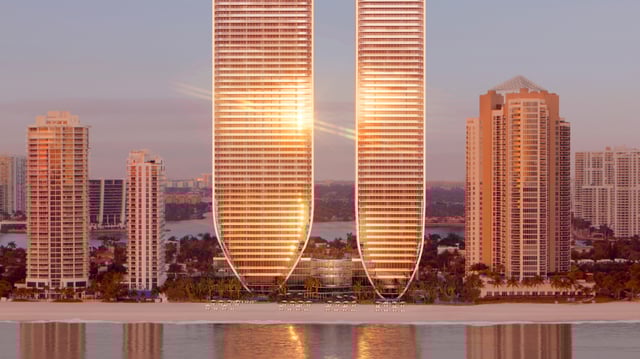
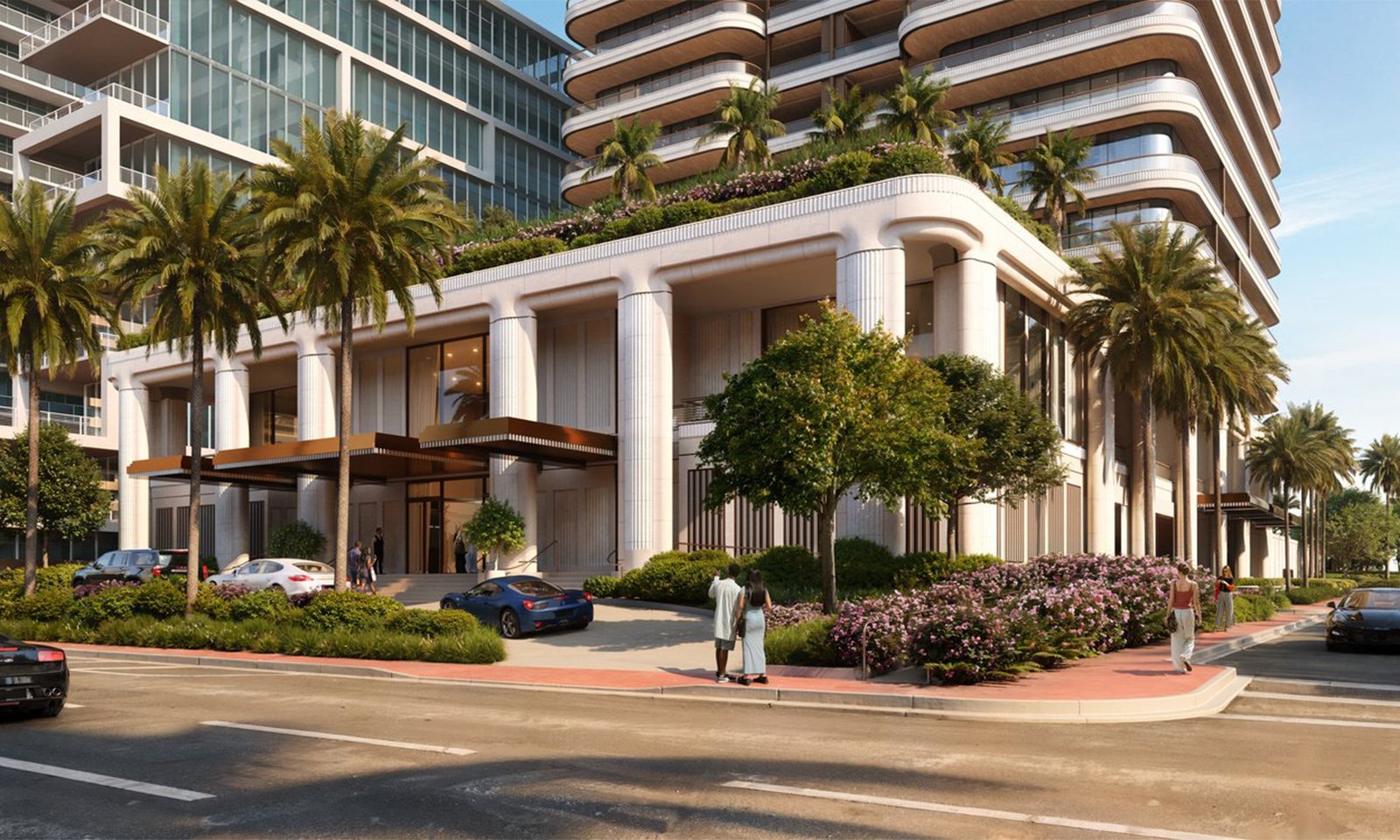
Two projects capture this shift from opposite ends of the spectrum: Miami Tropic Residences in Midtown Miami, envisioned as a 49-story residential tower with roughly 329 residences, and Casa Cipriani Miami Beach in the Faena District at 3611 Collins Avenue, planned as a 17-story boutique development with 23 residences alongside a hotel and private members’ club.
Both are branded, both are designed for a global audience, and both promise an elevated lifestyle. The most instructive point is how differently they pursue the same outcome: a home that feels protected.
Two models of discretion: buffer versus scarcity
At a high level, these buildings are solving the same question: how do you preserve quiet, space, and control while living within a shared vertical community?
Miami Tropic’s strategy is best understood as buffer-based privacy. When a tower houses hundreds of homes, privacy is rarely complete separation. It’s encounter management-layered thresholds, semi-private zones, and curated circulation that makes daily movement feel composed rather than crowded.
Casa Cipriani’s strategy is scarcity-and-separation-based privacy. With 23 residences, the building can turn low resident count into an immediate advantage. The aim isn’t only fewer interactions, but better-controlled ones-through dedicated entrances, concierge-led services, and selective private elevator entry for certain residences.
For buyers, the takeaway is straightforward: privacy can be engineered at scale, but boutique scarcity tends to feel effortless because it’s structural.
Arrival: where privacy begins (or breaks)
The most consequential privacy test isn’t the penthouse rendering. It’s the first 90 seconds after you pull up.
At Miami Tropic, the arrival concept centers on a private, second-level porte-cochère with resident drop-off and valet. The intent is clear: separate residential arrival from the street’s energy and shorten the “public” part of coming home. In a dense Midtown environment, elevating the entry sequence can be a quiet luxury-moving the most intimate ritual of the day off the most exposed plane.
At Casa Cipriani, the promise is a separate, private residential entrance with concierge-driven services designed for discretion within a mixed-use ecosystem. That matters because hotel and club components can be socially vibrant by nature. The sophisticated move isn’t to eliminate activity, but to keep residential circulation legible, controlled, and distinct.
If you’re comparing projects, ask one simple question: where do residents cross paths with visitors? The best buildings make that intersection rare-and intentional.
Elevator logic and the art of the threshold
In vertical living, the elevator is the front yard. The real privacy differentiator is what happens when the doors open.
Miami Tropic markets “private and semi-private” elevator vestibules. This is a consequential detail. A vestibule creates a buffer between elevator arrival and the front door, giving residents a beat to orient, step out of view, and avoid the feeling that the hallway is an extension of the elevator cab.
Casa Cipriani marketing describes private elevator entry for select residences. “Select” is the operative word. In boutique projects, the most coveted layouts often earn the most controlled arrival. Buyers should clarify exactly which residences receive private entry-and how guest access is handled.
The sophistication here isn’t only privacy from neighbors. It’s privacy from service activity. In well-run luxury buildings, guest movement, resident movement, and operational movement are separated by design-starting at the core.
Amenities: the paradox of privacy and community
Amenities can either protect privacy or compromise it. The issue isn’t whether a building has 41,000 square feet of amenities or a curated set of club-like rooms. The issue is circulation: how often you must traverse shared spaces to live your life.
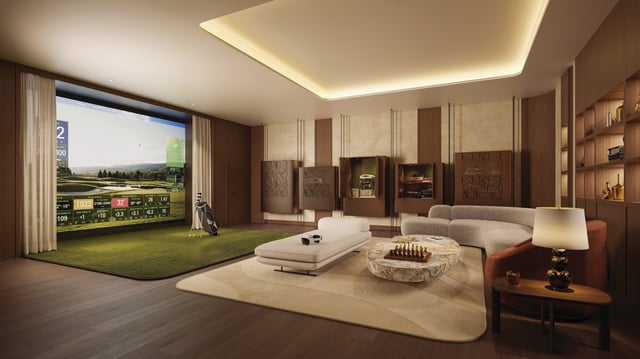
Miami Tropic advertises approximately 41,000 square feet of amenities distributed across multiple levels, including coworking and business lounge areas, fitness and wellness programming, a pool deck level, and rooftop experiences. In a high-density tower, stacking amenities across dedicated floors can reduce congestion by dispersing demand. It also creates multiple “micro-escapes” that feel private because they aren’t all concentrated into a single loud, high-traffic deck.
Casa Cipriani, by contrast, pairs a small residential population with hospitality-grade programming. The opportunity is obvious: service standards can be exceptionally high. The risk is equally clear: mixed-use energy must be managed with precision so the residential experience stays calm.
Buyers deciding between the two should define privacy for themselves. Do you want privacy as invisibility-or privacy as privileged access to social spaces that still feel controlled?
For a different expression of amenity-driven discretion, some buyers also look at residential concepts that emphasize a calmer daily rhythm, such as 2200 Brickell, where the neighborhood context itself can shape how “public” your lifestyle feels.
Branded living: when food and service become part of the design
Brand partnerships are often discussed as cachet, but their real impact is operational. A strong hospitality partner can elevate discretion through staffing, training, and the ability to execute service without friction.
Miami Tropic is branded around Jean-Georges Vongerichten, with in-building food-and-beverage programming that includes an abc kitchens location. That kind of programming can be a lifestyle multiplier for residents, but it also raises the bar for separation: deliveries, visitors, and restaurant foot traffic must be orchestrated so residential corridors remain resident-first.
Casa Cipriani’s identity is inherently hospitality-forward, anchored by a boutique hotel component and a private members’ club. For residents, the question is how the building protects the home experience within that ecosystem. The separate residential entrance and concierge-led discretion aren’t minor features-they’re the spine.
In Miami Beach, buyers weighing brand ecosystems often compare how “club life” is integrated into the building’s quiet hours, similar to the way Five Park Miami Beach is evaluated for its relationship to the neighborhood’s pace and public realm.
Inside the residence: ceiling heights, glass, and the quiet you cannot photograph
Both projects emphasize volume and light, and both use that language as part of the luxury proposition.
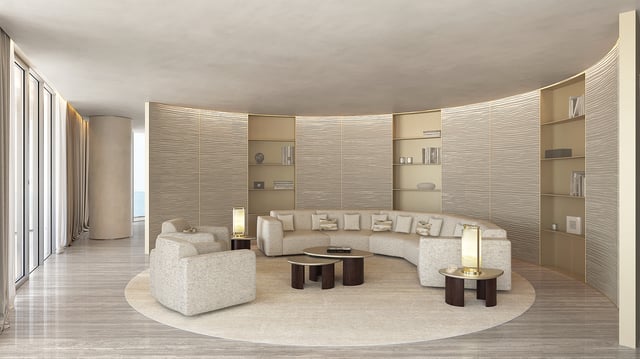
Miami Tropic residences are marketed with 10 to 11 foot ceilings and floor-to-ceiling glass, with select residences and penthouses described as having double-height 20 foot spaces. Volume can register as privacy because it creates psychological distance from the building around you.
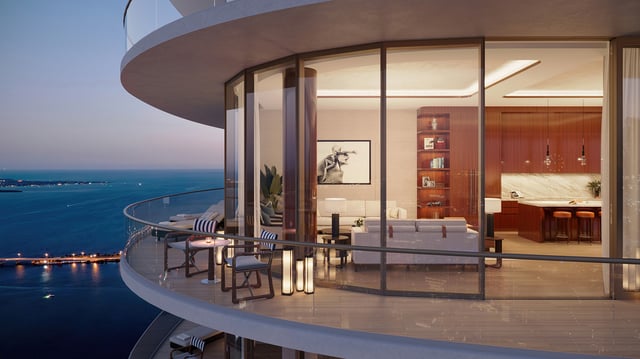
Casa Cipriani residences are marketed with floor-to-ceiling glass and ceiling heights of 10-plus feet, with terrace access for every residence. In an oceanfront setting, terraces aren’t only outdoor rooms-they’re privacy valves: a way to step outside without stepping into the building.
What buyers often forget to ask about is acoustic comfort. Publicly available materials rarely include explicit unit-to-unit acoustic targets. As general guidance, building acoustics discussions often cite STC ratings around 60 as a meaningful threshold for reducing audibility of normal speech between residential spaces, and IIC ratings around 50 as a benchmark to mitigate impact noise such as footfall from units above. These aren’t promises from any specific project, but they’re useful reference points when you ask for details on assemblies, seals, and testing.
If you are shopping comparable ultra-luxury coastal product, 57 Ocean Miami Beach is often discussed in the same breath for buyers who prioritize a quieter, more residential feel within Miami Beach.
What to ask on a private tour
Privacy is easiest to evaluate with buyer-level questions that force clarity without demanding confidential information.
Ask to walk the arrival path twice: once as a resident, once as a guest. Ask where deliveries are staged. Ask how valet, security, and concierge coordinate after hours. Ask where amenity elevators land-and whether you can reach amenities without crossing lobby traffic.
Inside the unit, ask about door construction, undercut seals, window systems, and the location of mechanical equipment relative to bedrooms. If the building offers vestibules or private elevator entry, ask how those spaces are finished and maintained. A vestibule treated as “leftover” space will never read as private.
Finally, ask about the building’s operational posture. Privacy isn’t only geometry. It’s behavior, staffing, and culture.
The decision lens: which privacy profile matches your life?
Miami Tropic and Casa Cipriani offer a useful framework.
Choose a buffer-based tower when you want energy nearby, a larger amenity ecosystem, and privacy delivered through layered thresholds: semi-private vestibules, elevated arrival, and distributed amenity floors.
Choose scarcity-and-separation when you want the building itself to feel like a private address-where the resident count is low enough that quiet becomes the default, and where concierge-driven discretion is central to the brand.
Either can be the right answer. The most expensive mistake is buying the wrong privacy type for your lifestyle.
FAQs
-
What is the core privacy difference between Miami Tropic and Casa Cipriani? Miami Tropic focuses on buffers and layered circulation at scale, while Casa Cipriani leans on scarcity and separation with only 23 residences.
-
Where is Miami Tropic located and what is planned? It is planned in Midtown Miami at or near 3501 NE 1st Ave as a 49-story residential tower.
-
Who is developing and designing Miami Tropic? The development team is Terra and Lion Development Group, with architecture by Arquitectonica and interiors by Yabu Pushelberg.
-
How many residences are marketed at Miami Tropic? It is marketed at roughly 329 residences, with unit count varying by marketing source.
-
What privacy feature does Miami Tropic highlight at the elevator? Residences are marketed with private and semi-private elevator vestibules that act as a buffer before the front door.
-
What is Casa Cipriani Miami’s scale and address? It is planned as a 17-story boutique development with 23 residences at 3611 Collins Avenue in Miami Beach.
-
Does Casa Cipriani offer private elevator entry? Private elevator entry is described for select residences, so buyers should confirm which layouts receive it.
-
Do both projects emphasize indoor-outdoor living? Yes, both market floor-to-ceiling glass, and Casa Cipriani emphasizes terrace access for every residence.
-
Are acoustic performance ratings publicly disclosed for these projects? Explicit unit-to-unit acoustic targets are not typically published in publicly available materials.
-
What STC and IIC numbers should buyers recognize when asking about sound control? As general guidance, STC around 60 and IIC around 50 are commonly cited discussion thresholds for quieter residential separations.
To compare the best-fit options with clarity, connect with MILLION Luxury.

Million Luxury
Million Luxury
Welcome to MILLION, an exclusive luxury real estate boutique nestled in the heart of South Florida’s most desirable locations. Specializing in high-end properties, we provide a sanctuary for discerning clients including top Fortune 500 executives, affluent families, celebrities, and professional athletes from across the globe. At MILLION, we understand the unique demands of our elite clientele and offer a seamless blend of confidentiality and personalized attention. Our commitment to privacy is unwavering; we ensure that every transaction and interaction is handled with the utmost discretion and according to stringent confidentiality protocols. Our concierge service embodies the pinnacle of white-glove care, offering tailored assistance that transcends traditional real estate support.