FIFA World Cup 2026 may influence how luxury buyers evaluate Midtown Miami, placing renewed emphasis on privacy, flexible hosting, mobility, wellness, terraces, and long-term neighborhood utility.
FIFA World Cup 2026 is more than a sporting milestone for luxury real estate. For Midtown Miami, it offers a timely lens through which buyers can reconsider how a residence performs when the city feels more international, more social, and more closely observed. The question is not only whether a home is beautiful. It is whether it supports arrival, privacy, hosting, restoration, and daily movement with grace.
Midtown Miami already occupies a distinctive position on the luxury map. It is neither a traditional oceanfront enclave nor a purely financial-district address. Its appeal is urban, design-conscious, and closely tied to the cultural energy of surrounding neighborhoods. That makes it especially relevant for buyers who want proximity without constant exposure. A residence near dining, galleries, shopping, and major corridors can feel more useful during an event-driven season than a home chosen solely for postcard views.
This does not mean every buyer will suddenly become event-focused. In the ultra-premium segment, the more durable shift is subtler. FIFA World Cup 2026 can remind buyers that the best homes are not merely retreats from the city. They are operating bases within it.
In Midtown Miami, access may become as important as architecture. Buyers often begin with views, finishes, and amenities, but major global events can raise the value of circulation. How easily can residents move between Midtown, Wynwood, Edgewater, Brickell, Miami Beach, and the airport corridor? How well does the building manage arrivals, guest drop-offs, valet flow, and private transportation?
For buyers considering Miami Design Residences Midtown Miami, the larger point is not simply location. It is the idea of living in a district where design, culture, and convenience intersect. A World Cup cycle may make that intersection feel more valuable, especially for owners who expect visiting friends, clients, or family members to use the residence as a refined urban base.
The most discerning buyers will look beyond distance on a map. They will want a calmer lobby sequence, secure parking, intuitive service, and the ability to come and go without turning every outing into a production. In a city where lifestyle often depends on timing, the premium shifts toward homes that reduce friction.
A global sporting event brings a particular kind of energy: celebratory, international, and highly visible. Luxury buyers may enjoy that energy, but they rarely want it at their front door without filtration. Midtown Miami residences that offer discretion, controlled access, private elevator experiences, and thoughtful amenity separation may feel especially compelling.
Privacy in this context is not isolation. It is choice. A buyer may want to host a dinner before an evening out, then return to a calm residence that feels insulated from the city’s tempo. The best buildings understand that luxury is often the ability to participate selectively.
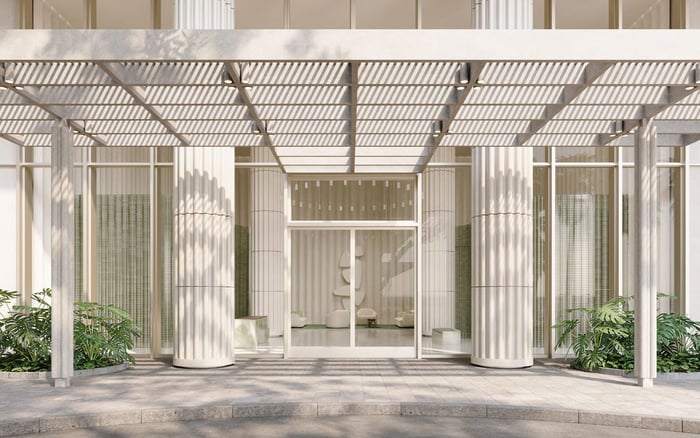
This is where boutique scale and service culture can become meaningful. A home does not need to be removed from the action to feel private. It needs intelligent thresholds: arrival, reception, elevator, corridor, residence, terrace. Each layer should help residents feel that the city is available, not intrusive.
FIFA World Cup 2026 can also change how buyers think about interior planning. A beautiful primary suite is expected. What becomes more interesting is how the rest of the residence accommodates guests without compromising the owner’s routine.
Buyers may look more closely at split-bedroom layouts, dens that can serve multiple functions, powder rooms positioned for entertaining, and kitchens designed for both catered evenings and quiet mornings. The ideal event-season home supports hospitality while preserving retreat. That balance is particularly relevant in Midtown Miami, where social plans can unfold across several nearby districts in a single evening.
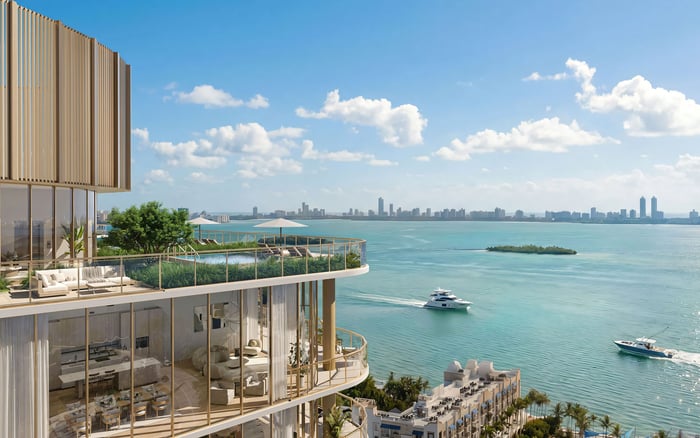
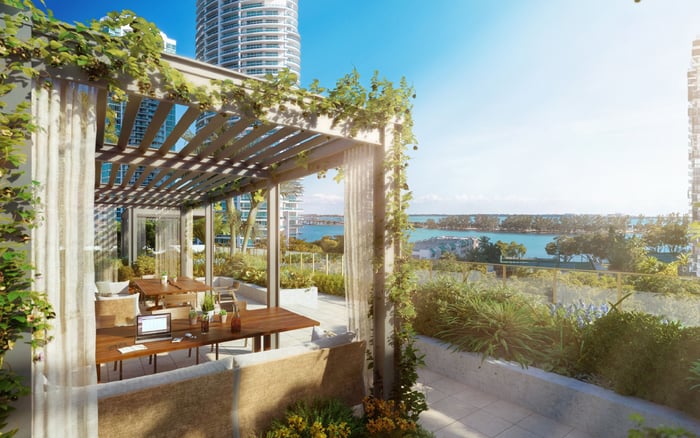
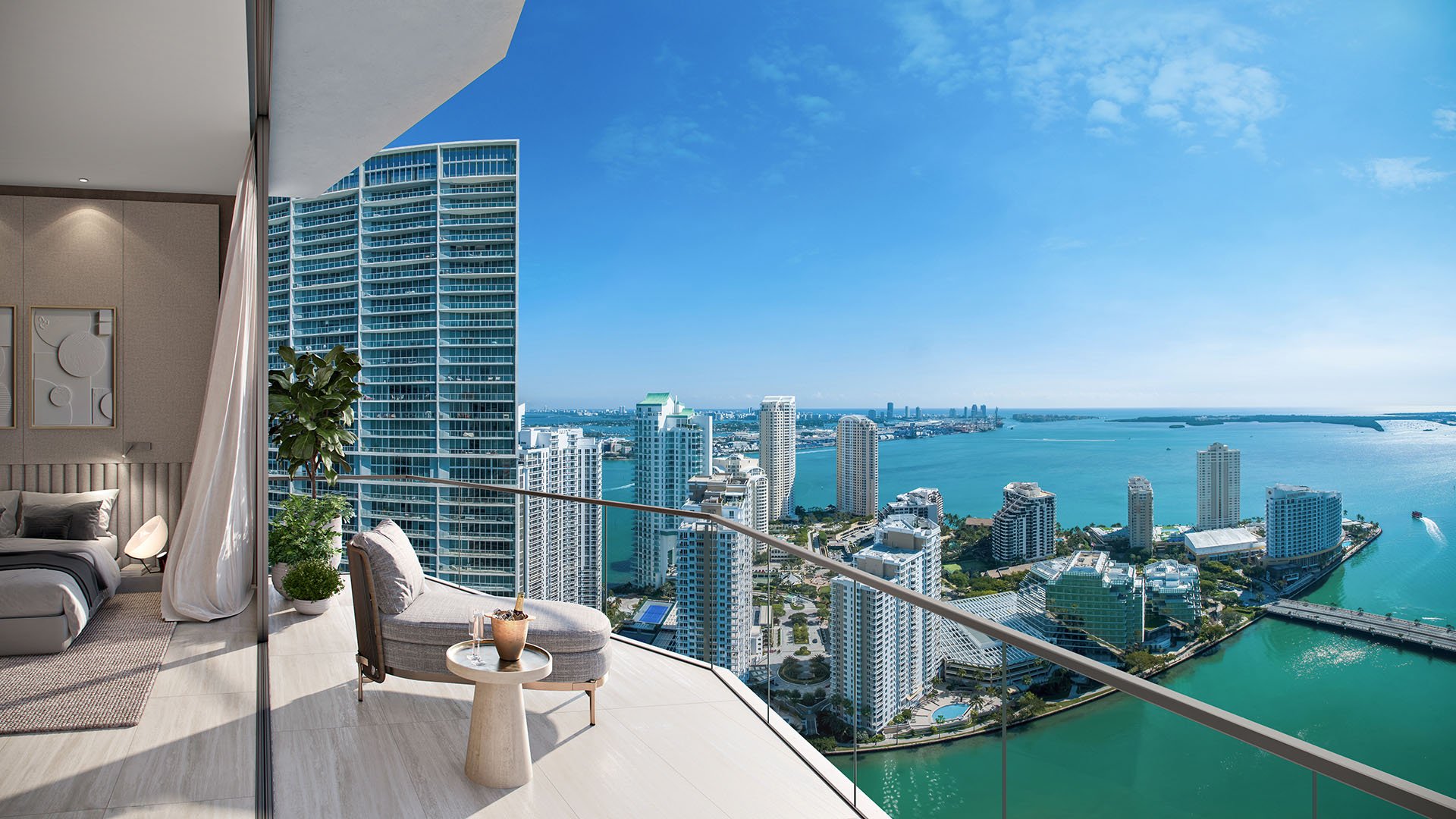
A terrace becomes more than an architectural amenity. It can function as a private viewing room for the city itself, a place for cocktails before dinner, or a decompression zone after a full day. Outdoor space with comfortable proportions, shade potential, and privacy from neighboring towers may carry more emotional weight than a larger but less usable interior.
Midtown Miami’s strength is partly relational. Buyers are not only purchasing within a neighborhood. They are buying into a network of nearby experiences. Edgewater brings bayfront high-rise living into the conversation, while Wynwood contributes cultural texture and a creative edge. Brickell adds the polish of business, dining, and branded residential energy.
For a buyer who wants water views near Midtown without moving fully into a resort mindset, EDITION Edgewater and Aria Reserve Miami represent the broader appeal of the Biscayne Bay corridor. The draw is not only the view. It is the ability to maintain an urban Miami rhythm with a more residential waterfront atmosphere.
Wynwood has a different kind of magnetism. It appeals to buyers who prefer visual energy, dining variety, and a sense of cultural immediacy. A project such as Frida Kahlo Wynwood Residences speaks to the way collectors, entrepreneurs, and design-minded residents may evaluate proximity to creative districts as part of a home’s lifestyle value.
Brickell, by contrast, remains a reference point for polished vertical living. 888 Brickell by Dolce & Gabbana underscores how hospitality, fashion, and residential branding can influence buyer expectations across the urban core. Midtown does not need to imitate Brickell to benefit from this. It can offer a more design-district sensibility while remaining connected to that world.
During an event-heavy season, wellness is not decorative. It is functional. Buyers may prioritize buildings with fitness, spa, pool, lounge, and quiet work areas that allow the residence to perform throughout the day. The home becomes a place to recover from travel, entertain without overextending, and maintain routines while the city is busier than usual.
For Midtown Miami buyers, this can shift attention from sheer amenity count to amenity quality. A gym that is genuinely pleasant to use, a pool deck that feels composed, a lounge suited to private conversation, and a residence with acoustic comfort may matter more than a long roster of underused spaces.
The same thinking applies inside the home. Natural light, storage, flexible rooms, and serene primary suites support a lifestyle that is both social and disciplined. The most valuable residences will not simply look impressive in photographs. They will feel good at 7 a.m., after a late dinner, and during a week when guests are moving in and out.
Investment is often discussed in terms of timing, scarcity, and future demand, but event visibility can also sharpen lifestyle conviction. Buyers may ask whether Midtown Miami feels useful in more than one scenario: a primary residence, a seasonal base, a pied-à-terre, or a host-ready home for family and guests.
New construction may receive added attention because buyers often associate newer buildings with modern systems, contemporary layouts, and amenity programs that align with current expectations. Still, the most refined decisions will remain selective. A trophy address only matters if the building’s daily experience supports the way the owner actually lives.
FIFA World Cup 2026 can therefore act as a stress test for priorities. The right Midtown Miami residence should offer proximity without chaos, energy without exposure, and flexibility without sacrificing elegance. For luxury buyers, that combination may prove more important than any single finish or view.
Will FIFA World Cup 2026 directly change Midtown Miami luxury prices? It may influence buyer attention and short-term lifestyle priorities, but pricing depends on many broader market factors.
Why is Midtown Miami relevant for event-minded luxury buyers? Midtown Miami offers an urban position near design, dining, culture, and several surrounding lifestyle districts.
Should buyers prioritize proximity over waterfront views? Not always. The stronger choice is the home that best balances access, privacy, views, and daily comfort.
What residence features become more important during major events? Secure arrival, guest-friendly layouts, private outdoor space, wellness amenities, and acoustic comfort can become more valuable.
Is Edgewater a natural alternative to Midtown Miami? Edgewater can appeal to buyers who want bayfront living while staying close to Midtown and the urban core.
How does Wynwood influence the Midtown buyer profile? Wynwood adds cultural energy, dining, and design appeal for buyers who want a more creative neighborhood rhythm.
Does Brickell compete with Midtown Miami? Brickell offers a more financial-district and branded-residence profile, while Midtown Miami often feels more design-oriented.
Are terraces especially important for luxury buyers? Yes. A well-scaled terrace can extend entertaining space and provide a private connection to the city.
Is new construction always the best choice? Not always. Buyers should compare service, layout, privacy, location, and building execution rather than age alone.
What should international buyers evaluate first? They should begin with lifestyle fit, ease of arrival, privacy, building services, and access to preferred neighborhoods.
To compare the best-fit options with clarity, connect with MILLION.
If branded residences are on your mind — as a home or as an allocation — we would be glad to share what we are seeing, privately.
Begin a quiet conversation