A buyer-focused guide to reviewing security screening, access control, privacy, staffing, and contract protections before committing to a Midtown Miami luxury residence.

For a buyer considering Miami Design Residences Midtown Miami, security screening should be evaluated before contract with the same discipline applied to floor plans, finishes, views, reserves, and closing timelines. In an urban luxury setting, the question is not simply whether a building feels secure during a polished presentation. The more valuable question is how access is controlled on an ordinary Tuesday evening, during a private dinner, when a vendor arrives, when an unexpected guest appears, or when a delivery must be held without disturbing the resident.
Security in a refined condominium environment is a choreography of people, technology, policy, and discretion. It should support privacy without creating friction, reassure residents without feeling theatrical, and protect the building without compromising the ease that drew buyers to Midtown Miami in the first place. Before contract, the buyer’s objective is to turn broad assurances into reviewable obligations, written procedures, and practical expectations.
A sales presentation may describe lobby control, access credentials, guest registration, cameras, or staffed reception. Those details matter, but they are not enough. A serious buyer should ask for the written security narrative that explains how the building expects to manage residents, guests, deliveries, service providers, amenity users, parking areas, and after-hours arrivals.
The most useful review begins with sequence. How does a resident enter? How does a guest enter? What happens if the resident is not reachable? Who approves vendors? Are credentials limited by floor, amenity, elevator bank, parking level, or time of day? The answers should be concrete enough for counsel and the buyer’s advisor to compare against the purchase documents, condominium rules, management agreement language, and any operational exhibits made available before signing.
For new-construction buyers, the distinction between design intent and operating reality is especially important. A building may be planned with sophisticated systems, yet the final resident experience depends on staffing, training, association budgets, vendor contracts, and how rules are enforced once the property is occupied.
Technology is only one part of security screening. The human layer often determines whether a building feels calm, responsive, and private. Buyers should understand whether front-of-house personnel are expected to screen, announce, escort, document, redirect, or deny access. Each function carries a different tone and a different operational implication.
A polished luxury lobby should not feel like a checkpoint, yet it should not be purely ceremonial either. Ask how residents will identify themselves, how repeat guests are recognized, how unfamiliar guests are handled, and how sensitive situations are escalated. Screening should be firm enough to prevent casual access but discreet enough to respect high-profile residents, family members, household staff, drivers, designers, chefs, trainers, and medical or wellness professionals.
This is where lifestyle enters the analysis. A buyer who entertains often may prioritize fast, elegant guest processing. A seasonal owner may want stricter vendor controls. An investment-minded buyer may care about rule clarity, insurance alignment, and how screening affects leasing, resale, and resident satisfaction over time.
Luxury buyers often focus on the main arrival experience, yet residential security is tested at secondary access points. Parking garages, service elevators, loading areas, package rooms, amenity doors, bicycle storage, pet areas, terraces, and back-of-house corridors can all shape the true screening environment.
Before contract, ask how each access point is controlled and whether the system is integrated or fragmented. A beautifully managed lobby does little if service access is informal or if garage credentials create unnecessary exposure. Elevator permissions also deserve close attention. Floor-restricted access, amenity restrictions, guest permissions, and emergency override procedures should be understood before a buyer assumes the building will operate in a particular way.
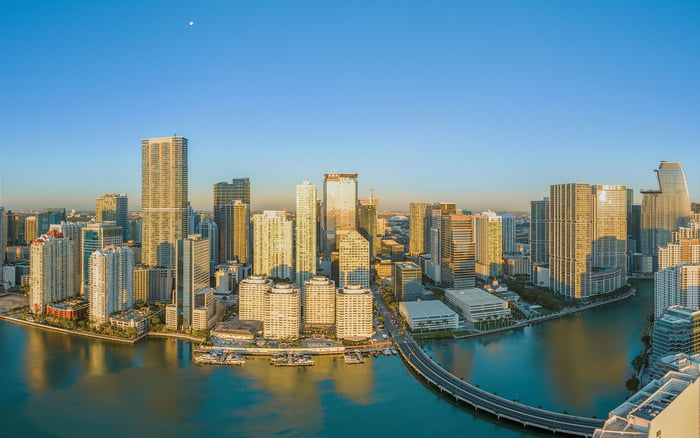
In Midtown Miami, many buyers compare lifestyle patterns with Brickell, Wynwood, and Downtown, where movement, guests, dining, work, and nightlife can shape daily residential rhythms. The right screening model should fit the neighborhood energy while still preserving the serenity expected in a premium private residence.
Visitor policy is one of the clearest indicators of a building’s security culture. A refined condominium should have a rational process for expected guests, unexpected guests, service providers, family offices, household employees, and recurring vendors. Buyers should ask whether residents can pre-authorize visitors, whether identification is required, how long approvals remain active, and how records are maintained.
Deliveries deserve equal attention. In a luxury residence, package volume can be substantial, and privacy expectations are high. Ask where deliveries are received, who can release them, whether cold storage or oversized-item protocols exist, and how third-party couriers are handled. If food delivery, florists, art handlers, staging teams, or design vendors are frequent, the rules should be practical rather than improvised.
The best systems are not necessarily the most restrictive. They are the most predictable. Residents should know what will happen before a guest arrives, and staff should have a written protocol that allows courtesy and control to coexist.
Modern security screening often involves personal data. Names, phone numbers, license plates, guest logs, camera footage, access credentials, delivery records, vendor information, and leasing documents may all be part of a building’s operating environment. Before contract, buyers should ask who controls that data, who can access it, how long it is retained, and whether residents can limit unnecessary exposure.
Privacy is especially relevant for buyers who value discretion. A building can be physically secure and still feel intrusive if resident information is loosely handled. Ask whether procedures are standardized, whether management has discretion to share information internally, and how requests from guests, vendors, or third parties are handled.
Pre-construction purchasers should pay close attention to whether privacy practices are already defined or will be created later by management or the association. If a policy is not yet final, buyers can still identify the decision makers, the expected framework, and whether documents give the association flexibility to modify procedures over time.
Security screening should not be treated as a loose conversation that disappears after signing. If a buyer’s decision depends on a particular operating feature, counsel should review where that feature appears in the documents and whether it is binding, aspirational, subject to change, or outside the seller’s obligations.
Questions to raise include whether security staffing levels are guaranteed, whether technology specifications may change, who pays for upgrades, whether association budgets support the promised service level, and how rules can be amended after turnover. The goal is not to burden the purchase with unrealistic demands. It is to avoid relying on assumptions that the documents do not support.
A measured buyer also considers resale. Future purchasers may ask the same questions, particularly if the residence is positioned as a private, design-forward home in a dynamic urban location. Clear security procedures can contribute to confidence, while ambiguity can become a negotiation point later.
Before signing, request the available written materials that describe access control, staffing, visitor management, vendor rules, parking access, delivery procedures, camera coverage, emergency protocols, data handling, amenity access, and association authority. Then test those materials against real life: late arrivals, traveling owners, visiting relatives, household employees, designers, private chefs, child caregivers, dog walkers, drivers, and maintenance personnel.
Walk the path of a resident from curb to residence, and then walk the path of a guest, a vendor, and a delivery. Ask who has authority at each decision point. Ask what happens when the answer is no. Ask how disputes are resolved. In luxury real estate, good security is rarely loud. It is prepared, consistent, well staffed, and quietly understood.
Why evaluate security screening before contract? Because the contract stage is when a buyer can still compare promises with documents and clarify assumptions before becoming committed.
Is lobby staffing enough to confirm strong security? No. Buyers should also review garage access, elevators, service areas, package handling, guest approvals, and vendor procedures.
Should a buyer ask for written security procedures? Yes. Written procedures are easier to review, compare, and discuss with counsel than verbal descriptions.
What matters most for guest screening? The key issues are pre-authorization, identification, staff discretion, recordkeeping, and how unexpected guests are handled.
How should vendors be reviewed? Buyers should ask how recurring vendors are approved, how temporary vendors enter, and whether access can be limited by time or area.
Why is data privacy part of security due diligence? Screening may involve guest logs, license plates, access credentials, cameras, and resident contact information, all of which require careful handling.
Can security features change after purchase? They may change depending on the governing documents, association authority, budgets, management decisions, and installed systems.
What should pre-construction buyers watch closely? They should distinguish between planned systems, binding obligations, future association decisions, and operational policies not yet finalized.
Does security screening affect investment value? It can influence resident confidence, leasing practicality, resale conversations, and the overall perception of building quality.
How can buyers compare Midtown Miami with other areas? Compare daily lifestyle patterns in places such as Wynwood, Downtown, and Brickell, then decide which screening model best fits the residence.
If you'd like a private walkthrough and a curated shortlist, connect with MILLION.
If branded residences are on your mind — as a home or as an allocation — we would be glad to share what we are seeing, privately.
Begin a quiet conversation