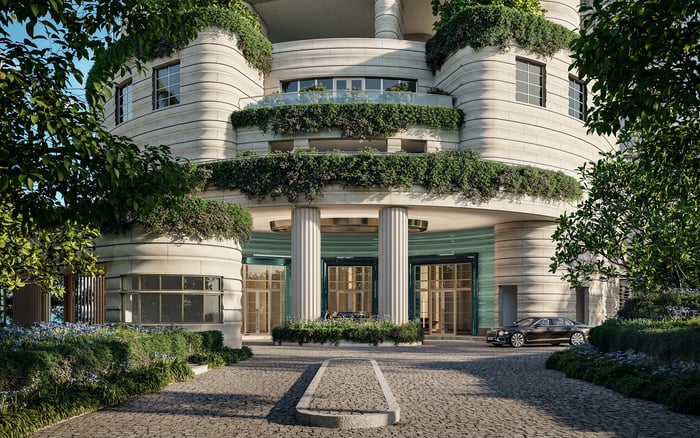
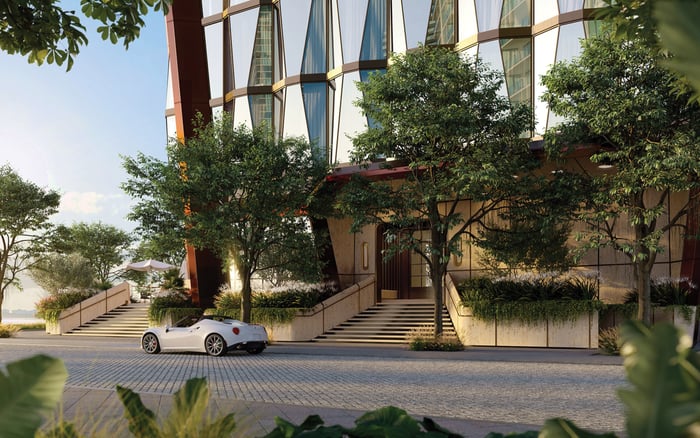
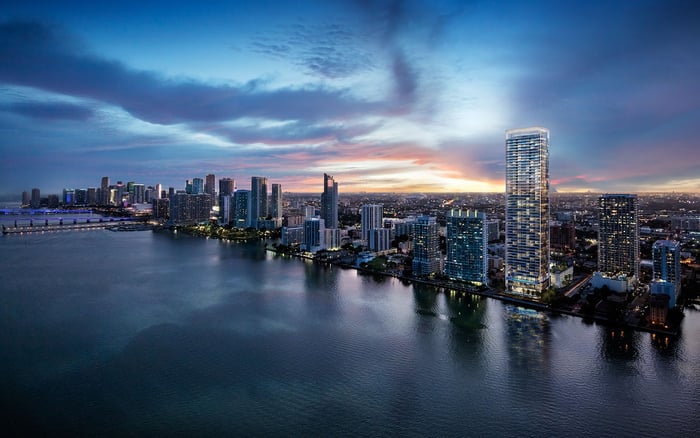
A refined guide for buyers considering Miami Design Residences Midtown Miami as a quieter, more intentional alternative to high-traffic hospitality living.
For a certain South Florida buyer, hospitality no longer means spectacle. The preference has become more controlled: a residence that feels considered, cared for, and intuitively serviced, without the churn of a hotel lobby or the social volume of a resort corridor. That is the lifestyle question behind Miami Design Residences Midtown Miami, especially for buyers who want the energy of Miami without surrendering the quiet authority of a private home.
Midtown Miami is compelling because it occupies a distinct place in the buyer’s imagination. It is not as corporate as Brickell, not as destination-driven as Miami Beach, not as gallery-forward as Wynwood, and not as vertical in tone as Downtown. Its appeal lies in the possibility of an urban life that remains edited. You can live close to restaurants, design, art, wellness, and daily conveniences while still seeking a building culture that feels residential first.
That distinction matters. Many affluent buyers are not simply comparing floor plans. They are weighing the feeling of arrival, the pace of elevators, the sound of shared spaces, the presence or absence of transient traffic, and whether the building supports routine rather than constant performance.
In the last cycle of branded and service-rich residential development, luxury often meant access: restaurants, lounges, spas, hotel programming, and a social environment that felt constantly activated. For some owners, that remains highly desirable. For others, especially primary-residence buyers and repeat Miami owners, the stronger expression of hospitality is discretion.
Discreet hospitality is felt in frictionless daily living. It is the ease of receiving guests without turning every arrival into a scene. It is knowing that shared spaces have intention, not excess. It is the subtle difference between being recognized and being watched. Buyers in this category often prefer hospitality as infrastructure: thoughtful service, well-run common areas, refined amenities, and a staff culture that supports privacy.
This is where Midtown can have an advantage. A Midtown lifestyle can be energetic without requiring the building itself to become the neighborhood’s stage. For new-construction buyers, the question is not whether a property has amenities. It is whether those amenities are proportionate to the way they actually live.
The most natural buyer for this concept is urban, design-aware, and selective about time. They may work across Miami rather than in one district. They may dine in Brickell one evening, visit Wynwood the next, and prefer a quieter morning routine at home. They likely value access, but they do not want access to come at the price of privacy.
This buyer may also be comparing Midtown with established residential alternatives. Brickell offers financial-district energy and a dense luxury condominium landscape. Downtown offers cultural and waterfront adjacency in a more metropolitan register. Edgewater gives many buyers a bay-oriented residential mood, with projects such as Aria Reserve Miami often entering the conversation for those weighing water views against more interior urban convenience.
Midtown’s promise is different. It can feel more neighborhood-scaled, more design-adjacent, and less formal than Brickell, while still being substantially more residential in tone than nightlife-driven urban pockets. For the right buyer, that balance is the point.
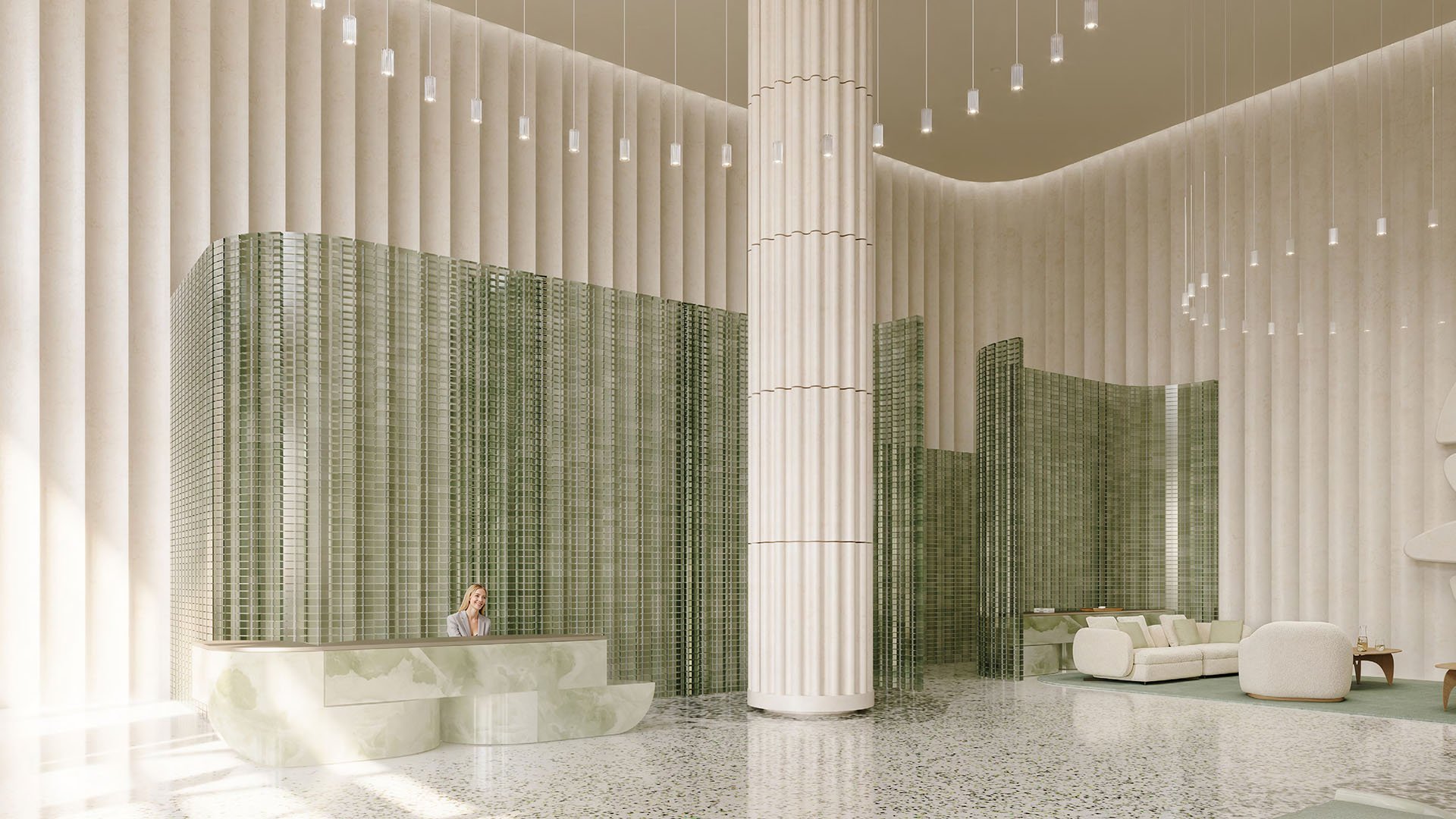
When considering Miami Design Residences Midtown Miami, buyers should look beyond standard amenity language and think operationally. Ask how the lobby is intended to function. Is it a passage, a lounge, a reception experience, or a social hub? None of these answers is inherently superior, but each creates a different daily feeling.
Then study the amenity mix through the lens of use. A pool may be beautiful, but the more important question is whether it will feel restorative at the hours you actually use it. Fitness and wellness spaces should support consistency, not merely photograph well. Coworking or lounge areas should be assessed for acoustics, privacy, and how often residents are likely to depend on them.
Boutique does not always mean small, and large does not always mean impersonal. The more useful distinction is whether the property feels governed. Buyers who want hospitality without heavy public traffic should pay close attention to guest policies, resident-only spaces, access points, parking flow, package handling, pet movement, and the separation between arrival and leisure.
A buyer drawn to Midtown will often cross-shop by lifestyle rather than by zip code. Wynwood, for example, attracts those who want art, restaurants, and a younger creative tempo. A project such as Frida Kahlo Wynwood Residences may appeal to buyers who want a more culturally expressive address and do not mind a stronger neighborhood pulse.
The Design District conversation is more polished, more retail and design oriented, and more closely associated with fashion, interiors, and collecting. Buyers considering that environment may also look at Kempinski Residences Miami Design District if they want a hospitality reference point in a design-led context. The deciding factor is often whether one prefers to live inside the gravitational field of luxury retail or adjacent to it with a more everyday Midtown cadence.
Brickell remains the benchmark for buyers who want a financial-center rhythm, high-rise polish, and a stronger sense of business density. 2200 Brickell may enter the comparison for buyers who want Brickell’s address logic but still care about residential restraint. The tradeoff is clear: Brickell delivers immediate urban intensity, while Midtown may feel less pressured and more flexible.
Miami Design Residences Midtown Miami may speak to several ownership profiles. For a primary resident, the appeal is daily livability. Midtown can support routines without requiring every outing to become a commute across town. For a pied-à-terre buyer, the attraction is efficient access to Miami’s design, dining, and cultural circuits without committing to the full resort atmosphere of the beach.
For buyers establishing a Miami base, Midtown can be particularly strategic. It does not force a single identity. It allows the owner to move among Downtown, Brickell, Wynwood, Edgewater, and the beach while keeping the home environment more composed. That flexibility is increasingly valuable for buyers whose Miami life includes work, entertaining, wellness, collecting, and seasonal family use.
The key is expectation management. If you want a residence that feels like a private club, select accordingly. If you want a hotel-like building with constant programming, Midtown may not be the only lens. But if you want the comforts of service in a setting that remains intentionally residential, this category deserves close attention.
Before walking the property or reviewing availability, define your tolerance for activity. Some buyers thrive in an animated lobby. Others want a near-silent arrival sequence. Some want an amenity deck that feels social. Others want spaces that function like extensions of the home.
Also consider your weekly routes. Where do you dine most often? Which airport patterns matter? How often do you cross the causeways? Do you want to walk for coffee, drive for privacy, or do both depending on the day? Midtown works best for buyers who value optionality and do not need their building to carry the full emotional weight of a resort.
Finally, consider resale logic through lifestyle clarity. The most durable residences tend to know what they are. A property that promises private hospitality should be evaluated on how consistently it protects that promise, from entry sequence to amenity access to long-term building culture.
Who is the ideal buyer for Miami Design Residences Midtown Miami? The best fit is a buyer who wants urban access, thoughtful service, and a more private residential rhythm than a high-traffic hotel environment.
Is Midtown Miami more discreet than Brickell? It can feel less corporate and less intensely vertical, though the right choice depends on the buyer’s daily routes, privacy expectations, and preferred neighborhood energy.
How should buyers define hospitality in a private residence? Focus on service quality, ease of arrival, amenity management, privacy, and whether the building supports daily life without feeling public.
Does a service-rich building always mean more traffic? Not necessarily. The issue is how the building separates residents, guests, amenities, and any public-facing components.
What should I look for during a tour? Study the lobby atmosphere, elevator flow, amenity access, acoustic comfort, and whether shared spaces feel residential rather than performative.
Is Midtown a good alternative to Wynwood? It may be, especially for buyers who like cultural proximity but prefer a calmer residential base with less street-level intensity.
How does Edgewater compare with Midtown? Edgewater often appeals to buyers seeking a more bay-oriented setting, while Midtown may attract those prioritizing design, dining, and central urban flexibility.
Can Midtown work as a pied-à-terre location? Yes, particularly for owners who want a Miami base that connects easily to multiple lifestyle districts without feeling resort-heavy.
Should investors prioritize amenities or building culture? Both matter, but building culture often determines whether amenities remain pleasant, private, and desirable over time.
What is the main lifestyle takeaway? The strongest Midtown fit is a buyer who wants hospitality as ease and discretion, not as constant public activation.
If you'd like a private walkthrough and a curated shortlist, connect with MILLION.
If branded residences are on your mind — as a home or as an allocation — we would be glad to share what we are seeing, privately.
Begin a quiet conversation