A discreet guide to how family-office conference season can refine Key Biscayne luxury-home priorities, from privacy and resilience to legacy planning and daily livability.
For ultra-high-net-worth families, conference season is rarely just a sequence of panels and private dinners. It is the moment when principals, advisers, tax counsel, trustees, investment committees, and next-generation family members compare priorities in the same room. In South Florida, that conversation often returns to a deceptively personal question: what should the next home actually do for the family?
In Key Biscayne, the answer is more nuanced than square footage or a postcard view. A residence can be a winter base, a multigenerational gathering place, a privacy instrument, a wellness retreat, and a long-horizon store of optionality. Conference season sharpens those roles by placing the home within a larger framework of governance, succession, risk, philanthropy, and lifestyle design.
That is why the strongest Key Biscayne search rarely begins with a tour schedule. It begins with a brief. Families often distill the file to a few labels: Key-biscayne, Second-home, Investment, Oceanfront, security, and family continuity. From there, the property conversation becomes less emotional and more exacting.
Key Biscayne has a particular appeal for families seeking Miami access without living inside Miami’s most visible social corridors. The island setting creates a psychological separation from the financial district, the art circuit, and the hotel-driven rhythm of Miami Beach. Yet the family can remain close enough to Brickell, Coconut Grove, Coral Gables, and private aviation routes to keep the week efficient.
For some buyers, that balance is the point. A Key Biscayne home can support children, grandparents, guests, and staff while preserving a calmer residential cadence. It can also give principals a place to decompress between meetings, board calls, school events, charitable commitments, and travel.
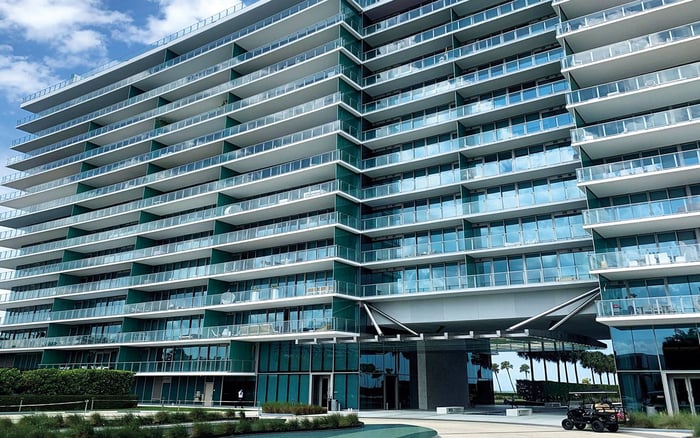
Condo buyers who want an island address often use Oceana Key Biscayne as a recognizable reference point when weighing a managed residential environment against the responsibility profile of a private estate. The comparison is not simply about amenities. It is about how much daily friction the family is willing to absorb.
The first priority is privacy, but not in the theatrical sense. Family-office buyers usually mean controlled arrival, discretion for household staff, thoughtful guest circulation, and spaces that allow different generations to coexist without constant overlap. The more public a family’s business interests become, the more important the quiet architecture of daily life becomes.
The second priority is resilience. In coastal South Florida, serious buyers increasingly examine how a residence is maintained, insured, staffed, and operated through seasonal weather, extended travel, and long periods of partial occupancy. The question is not only whether a property is beautiful on a perfect day. It is whether the home can be managed with confidence when the family is abroad.
The third priority is service. Conference season often exposes families to hospitality-driven expectations, especially as they compare Key Biscayne with newer branded or highly serviced residences across Miami. A buyer considering an island home may still benchmark service expectations against urban projects such as Una Residences Brickell or The Residences at Mandarin Oriental, Miami. Even if the final purchase is on Key Biscayne, those comparisons clarify what the household wants from staffing, arrivals, wellness, dining access, and owner services.
The family-office lens can make a home search more disciplined. A principal may love a dramatic living room, while the adviser asks how often the residence will be used, who has authority to approve renovations, whether the asset should remain flexible for future generations, and how the ownership structure fits the broader plan. Those questions can feel clinical, but they often prevent expensive misalignment.
For Key Biscayne, the most useful exercise is to map the family’s real week. Where will children study? Where will guests stay? Which rooms require true quiet? How often will advisers, chefs, trainers, security, or drivers be present? Is the property meant for holiday clustering, monthly use, or near-permanent residence?
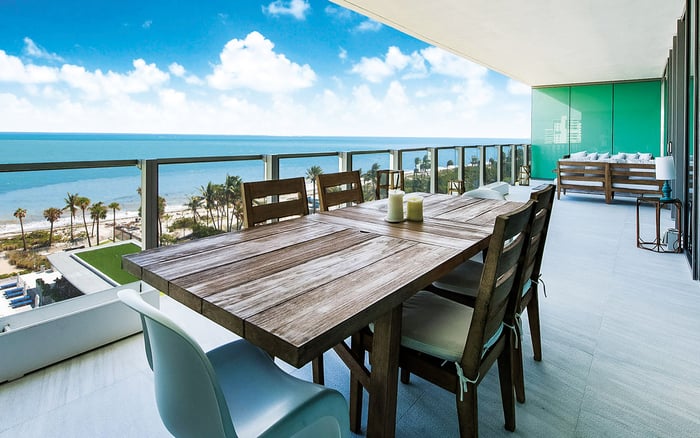
This is where Balcony, Pool, and Waterview preferences become more than brochure language. A balcony may matter because a principal takes early calls outdoors. A pool may matter because the home needs to function for grandchildren without leaving the property. A water view may matter because the family wants calm, orientation, and a sense of retreat.
A Key Biscayne buyer is often equally aware of the broader South Florida luxury map. Brickell offers proximity to capital, dining, and business infrastructure. Miami Beach offers cultural energy and oceanfront hospitality. Coconut Grove offers a softer village character. Fisher Island offers another model of privacy and separation. Comparing these submarkets is not a distraction. It is how families define what they are not buying.
For instance, a family drawn to the beach-and-service rhythm of The Ritz-Carlton Residences® Miami Beach may still conclude that Key Biscayne better fits school-day routines and quieter weekends. Another family may admire the financial-district convenience of Brickell, then choose the island because the home is meant to be restorative rather than transactional.
The strongest searches use these comparisons early. They prevent the family from chasing every beautiful property and instead create a hierarchy: privacy first, then proximity, then service, then design, or perhaps the reverse. Once that hierarchy is written down, tours become more productive and negotiations less impulsive.
Before entering the market, family-office buyers should agree on decision rights. Who has veto power? Is the purchase for one branch of the family or the entire family system? Will the residence host charitable events, private dinners, or extended family holidays? Is the goal to minimize maintenance or to create a fully customized estate environment?
They should also decide whether the residence is primarily a lifestyle asset or a strategic holding. Both can be true, but one usually leads. If lifestyle leads, the home must serve the family’s daily rhythms beautifully. If strategy leads, liquidity, scarcity, manageability, and exit flexibility may carry greater weight.
In Key Biscayne, the most elegant outcome is a property brief that feels personal but reads like governance. It respects emotion without surrendering to it. It allows the family to buy with conviction, not urgency.
Why does family-office conference season influence home decisions? It brings principals and advisers together, turning informal lifestyle goals into a more structured residential brief.
Is Key Biscayne mainly a primary-home or second-home market for these buyers? It can serve either role, though many families evaluate it through a Second-home lens because of privacy, access, and seasonal use.
What should a family-office buyer prioritize first in Key Biscayne? Privacy, resilience, and daily livability should come before decorative preferences or short-term excitement.
How should buyers compare a condo with a private home? They should compare service, staffing, maintenance responsibility, privacy, and how the residence will function when partially occupied.
Does Brickell still matter if the buyer wants Key Biscayne? Yes. Brickell helps benchmark access to finance, dining, professional services, and the pace a family may want to leave behind.
Why is Investment still part of the discussion for a lifestyle purchase? Family offices often evaluate even personal assets through liquidity, governance, risk, and long-term optionality.
Should next-generation family members be part of the search? Yes, if they will use the home. Their routines can reveal needs that do not appear in a purely adviser-led brief.
How important is wellness in a Key Biscayne search? Very important. Buyers often value quiet, outdoor space, water orientation, fitness routines, and restorative daily patterns.
Can a managed residence reduce family complexity? It can, especially for families that travel frequently or prefer a lower-maintenance ownership experience.
What is the best way to shortlist comparable options for touring? Start with location fit, delivery status, and daily lifestyle priorities, then compare stacks and elevations to validate views and privacy.
For a discreet conversation and a curated building-by-building shortlist, connect with MILLION.
If branded residences are on your mind — as a home or as an allocation — we would be glad to share what we are seeing, privately.
Begin a quiet conversation