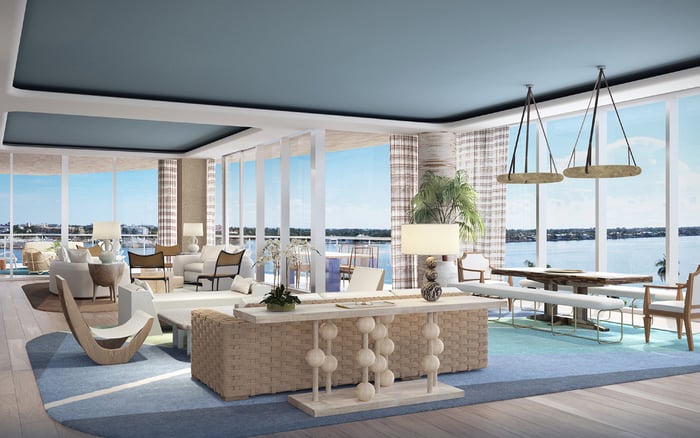
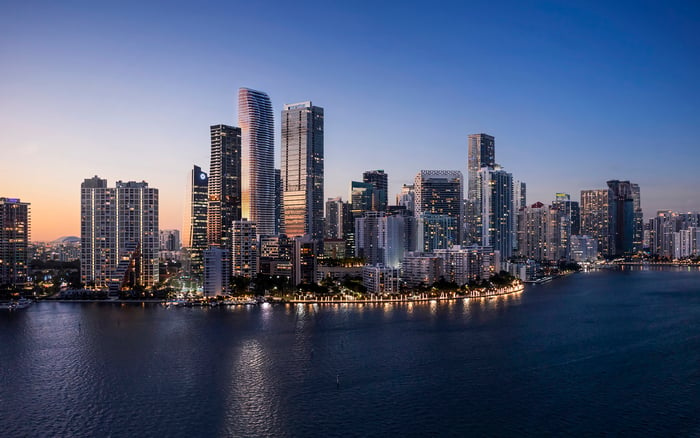
A discreet buyer’s guide to evaluating lock-and-leave living at Miami Design Resididences Midtown Miami and Viceroy Brickell, with emphasis on security, packages, and maintenance access.

For a South Florida buyer, lock-and-leave living is not merely a lifestyle phrase. It is an operating model. A residence may offer exceptional architecture, a polished arrival sequence, and a coveted location, yet the ownership experience is often defined by what happens when the owner is away: who can enter, how deliveries are received, how service providers are cleared, and whether the home feels protected through long periods of absence.
That lens is especially relevant when comparing Miami Design Residences Midtown Miami with Viceroy Brickell. Midtown Miami and Brickell serve different ownership rhythms, but both attract buyers who may divide time between cities, travel frequently, or use Miami as a second-home base. In that context, the most revealing questions are not limited to views, finishes, or amenities. They concern the building’s daily choreography.
A lock-and-leave buyer should understand how the property manages access, packages, preventive maintenance, and emergencies when the owner is away. The answers may be procedural rather than glamorous, but they can materially affect comfort, privacy, and resale confidence.
Security in a luxury condominium is often discussed through visible cues: attended lobbies, controlled elevators, cameras, garage entry points, and concierge presence. Those features matter, but due diligence should go deeper. The stronger question is whether the building’s procedures create a dependable culture of verification.
For Miami Design Residences Midtown Miami, a buyer may focus on how residential access interacts with a neighborhood that is active, design-forward, and connected to Miami’s cultural core. In a mixed urban setting, the distinction between public arrival energy and private residential calm becomes important. Ask whether guest access is logged, whether vendors require advance authorization, how elevator controls are handled, and how after-hours entries are monitored.
For Viceroy Brickell, the review may center on a more vertical, business-district lifestyle. Brickell owners often move between travel, office commitments, dining, and waterfront routines. In this setting, access control should feel efficient without becoming casual. The buyer should understand whether staff can distinguish between residents, guests, delivery personnel, contractors, and short-term visitors-and whether those distinctions remain clear during peak hours.
Comparable Brickell projects can sharpen the conversation. A buyer looking at 2200 Brickell or The Residences at 1428 Brickell may notice that the security conversation is less about a single amenity than the relationship between architecture, staffing, technology, and building rules. The same analytical framework should be brought to Viceroy Brickell.
Package handling is no longer a back-of-house detail. For a lock-and-leave owner, it is a privacy, convenience, and risk-management question. The most refined buildings do not simply receive deliveries. They control them, sort them, notify residents appropriately, and preserve chain of custody.
The due-diligence conversation should begin with volume. How does the property handle ordinary parcels, large-format deliveries, food deliveries, garment bags, refrigerated items, wine shipments, and time-sensitive materials? Are packages stored in a secured room, behind a staffed desk, in lockers, or through a hybrid system? Are residents notified through an app, phone, email, or building portal? What happens when the owner is away for two weeks?
The privacy component is equally important. Luxury buyers should ask whether package labels are visible to other residents, whether staff members sign for items, whether guests may retrieve deliveries, and what identification is required. In a building where residents may include public-facing executives, entrepreneurs, collectors, or families with complex travel schedules, discretion is part of the service standard.
Midtown Miami’s lifestyle may generate frequent deliveries tied to design, fashion, dining, and daily convenience. Brickell’s rhythm may involve professional couriers, travel-related shipments, and time-sensitive household needs. Neither setting is inherently better. The superior choice is the one whose package infrastructure matches the owner’s life.
Maintenance access is one of the most underestimated lock-and-leave issues. When an owner is present, repairs can be managed personally. When the owner is abroad, in New York, in Palm Beach, or aboard a yacht, the building’s protocol becomes the owner’s proxy.
Buyers should ask how routine maintenance requests are created, approved, documented, and closed. Can staff enter only with written authorization? Is a second staff member required for in-unit access? Are vendors escorted? Are photos or completion notes provided? Is there a distinction between emergency access and scheduled service? These are practical questions, but they are also questions of trust.
Pre-construction and new-construction buyers should pay particular attention to the transition from delivery to everyday operations. A building can open with strong design intent, yet the resident experience depends on management systems, staffing consistency, and clear rules. Before closing, request the most current owner documents, access policies, move-in protocols, and service procedures available for review.
This is also where investment thinking becomes disciplined rather than speculative. A residence that is easy to own from a distance can broaden its appeal among future buyers. Conversely, unclear access rules, inconsistent package handling, or unreliable maintenance communication may quietly reduce the pleasure of ownership.
Midtown Miami and Brickell are not substitutes. They appeal to different emotional maps of the city. Midtown Miami is connected to the Design District, Wynwood, Edgewater, and Downtown energy, with an urban pattern that can feel creative, walkable, and visually expressive. Brickell is Miami’s financial and residential vertical core, shaped by towers, restaurants, offices, waterfront access, and a polished metropolitan cadence.
For the lock-and-leave buyer, the key is to match operating needs to neighborhood rhythm. A buyer drawn to Miami Design Residences Midtown Miami may prize cultural proximity, design adjacency, and a less conventional sense of city living. That buyer should emphasize lobby control, package capacity, visitor management, and whether staff procedures can maintain a calm residential experience within an active district.
A buyer drawn to Viceroy Brickell may prioritize the convenience of a central address and the ability to arrive, reset, dine, work, and leave again with minimal friction. That buyer should scrutinize valet flow, guest registration, contractor access, delivery coordination, and the clarity of communication when the owner is away.
Nearby Brickell comparisons, including ORA by Casa Tua Brickell, can be useful not because every building should operate identically, but because the best due diligence is comparative. Ask the same questions across several properties and the differences become visible.
A polished sales presentation can tell you what a building wants to be. The due-diligence process tells you how it is likely to live. For lock-and-leave owners, the checklist should be operational.
First, clarify staffing. Understand which roles are present, what hours are covered, and how responsibilities shift overnight, on weekends, and during holidays. Second, review access authorization. A building should be able to explain how guests, vendors, housekeepers, dog walkers, drivers, and family members are approved. Third, examine package procedures in detail, including oversized items and extended storage. Fourth, ask about maintenance entry, documentation, and emergency protocols. Fifth, understand owner communication. The difference between a missed message and a resolved issue can be significant when the owner is out of state.
The most sophisticated buyers do not frame these questions as suspicion. They frame them as stewardship. A luxury residence is an asset, a private retreat, and often a family operating base. The building’s systems should protect all three.
Miami Design Residences Midtown Miami and Viceroy Brickell invite different kinds of urban Miami living, but the lock-and-leave test is similar. The right residence should feel effortless when occupied and intelligently supervised when empty. Security should be procedural, not theatrical. Package handling should be discreet and scalable. Maintenance access should be documented, permissioned, and manageable from a distance.
For buyers choosing between Midtown Miami and Brickell, the best decision may come from asking less obvious questions. Not only, “Do I love the residence?” but also, “How will this building care for my life when I am elsewhere?” In South Florida’s ultra-premium market, that is often where true luxury reveals itself.
What does lock-and-leave mean for a Miami condo buyer? It means the residence can be left unoccupied for extended periods while access, deliveries, and maintenance remain professionally managed.
Why compare Miami Design Residences Midtown Miami and Viceroy Brickell through operations? Both may appeal to mobile owners, so practical systems can be as important as architecture, location, and amenities.
What security questions should buyers ask first? Ask how guests, vendors, deliveries, and emergency personnel are verified, logged, and escorted when appropriate.
Is package handling a serious due-diligence topic? Yes. Package volume, privacy, storage, notifications, and chain of custody can affect everyday convenience and discretion.
How should owners handle maintenance access while away? They should confirm written authorization procedures, escort policies, emergency entry rules, and documentation after service.
Does Brickell require a different lens than Midtown Miami? Yes. Brickell often emphasizes vertical efficiency, while Midtown Miami may require special attention to active urban edges.
Should pre-construction buyers ask these questions early? Yes. Early review helps buyers understand how the eventual resident experience is intended to function.
Can operational quality affect resale perception? It can. Buyers often value residences that feel easy to own, especially in the luxury second-home segment.
Are amenities enough to judge a lock-and-leave building? No. Amenities matter, but daily protocols often determine whether ownership feels truly effortless.
What is the most important takeaway for buyers? Compare buildings by how they protect privacy, manage access, and communicate when the owner is away.
For a confidential assessment and a building-by-building shortlist, connect with MILLION.
If branded residences are on your mind — as a home or as an allocation — we would be glad to share what we are seeing, privately.
Begin a quiet conversation