A practical luxury buyer’s guide to evaluating private dining rooms in South Florida condominium buildings, with emphasis on operations, privacy, design, and lasting daily utility.
Private dining has become one of the most seductive phrases in South Florida luxury real estate. It suggests discretion, hospitality, social fluency, and a life in which dinner can move from residence to salon without the friction of a restaurant reservation. Yet the phrase is easy to overuse. A handsome table in a decorated room can photograph beautifully while offering residents little practical value.
For the serious buyer, the question is not whether a building has a private dining room. The question is whether the room can host real life gracefully: birthdays without acoustic chaos, investor dinners without awkward service routes, family holidays without operational confusion, and quiet weeknight dinners that do not feel like borrowing a banquet space.
In markets such as Brickell, Surfside, Coconut Grove, and the beach enclaves, amenity language can blur quickly. New-construction buyers should look beyond mood boards and ask how the room will function once the building is occupied, staffed, and booked by residents with competing expectations.
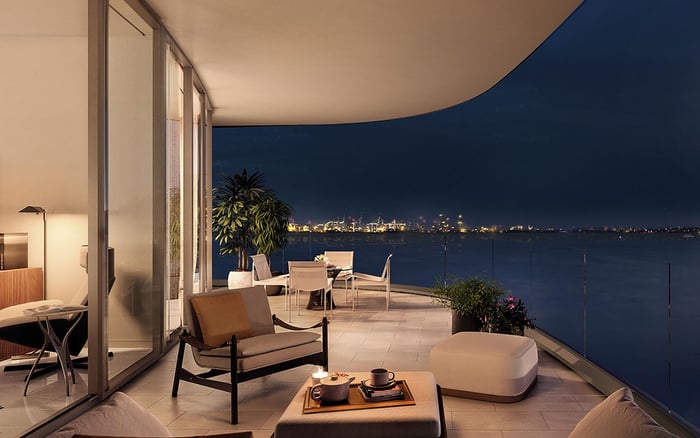
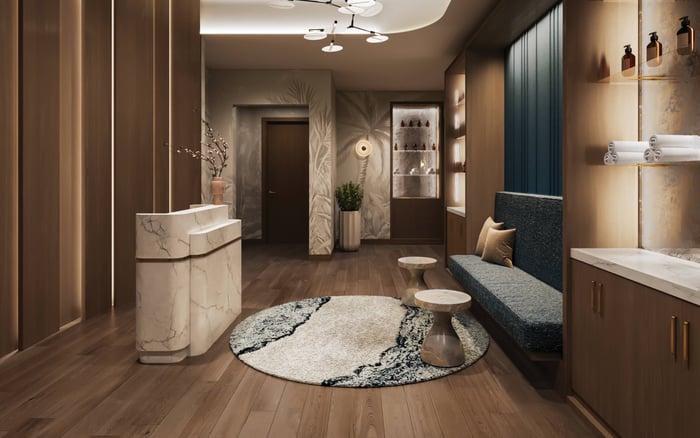
Marketing theater usually begins when the image is more complete than the operating plan. A rendering may show candlelight, marble, upholstered chairs, and a perfectly dressed table. What matters is what happens beyond the frame. Where does catering enter? Is there a service pantry? Can staff stage, plate, clear, and reset without crossing through the resident gathering? Is there a separate path for guests, or does every event spill into the lobby and elevator bank?
A credible private dining room has an invisible choreography. It should support hosting without making the host become the building’s event manager. If the sales conversation focuses only on finishes, ask about use. If the answer is vague, the amenity may be decorative rather than operational.
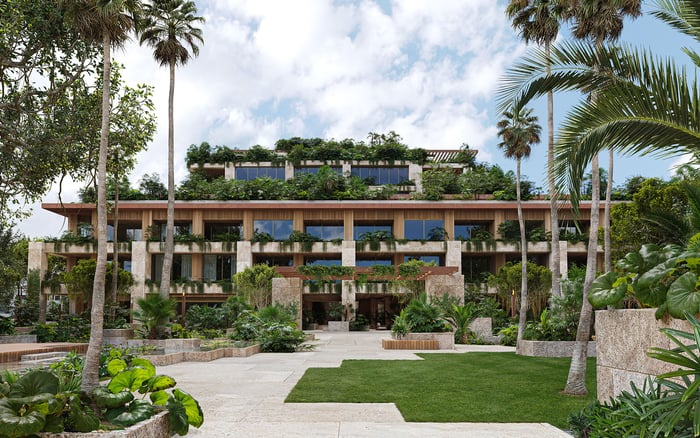
This is especially important in dense urban settings. Buyers comparing amenity-led residences such as ORA by Casa Tua Brickell should evaluate whether hospitality is embedded into the building’s daily rhythm or simply attached as a lifestyle phrase.
First, test privacy. A true private dining room should feel removed from casual circulation. If guests must pass through active lounge areas, or if the room is visible from a main corridor, the experience becomes semi-public. Discretion is not a finish selection. It is a spatial outcome.
Second, test acoustics. Hard surfaces are photogenic, but dinner is a sound event. Stone, glass, and double-height volumes can turn conversation into performance. Ask whether acoustical treatments are part of the room’s design, particularly if the space is intended for larger gatherings.
Third, test service flow. The most beautiful dining room fails if staff cannot move efficiently. Look for pantry access, storage, refrigeration strategy, discreet waste removal, and proximity to elevators or back-of-house routes. If the building expects outside caterers, the rules should be clear.
Fourth, test booking governance. Amenity scarcity creates friction. Buyers should ask how reservations are prioritized, whether recurring bookings are allowed, how deposits work, what cleaning fees apply, and whether the room can be reserved during peak holidays. A private dining room that cannot be used when residents most want it is not a meaningful amenity.
Fifth, test proportion. A space that is too grand can feel theatrical for intimate dinners. A space that is too small cannot support family milestones. The best rooms have residential scale with enough flexibility for both formal and informal use.
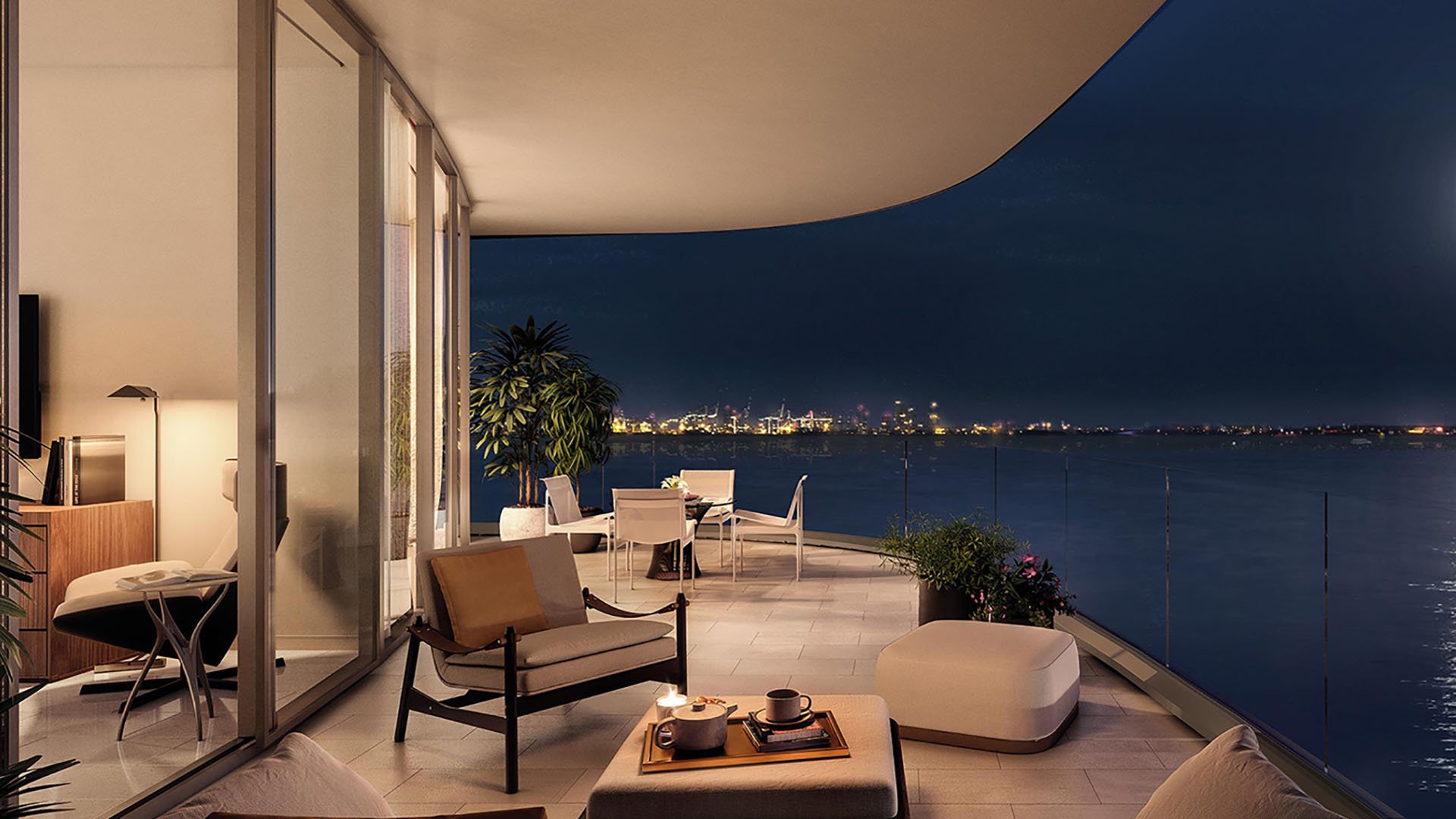
Certain design clues suggest substance. A private dining room with layered lighting, durable but warm materials, comfortable chairs, and a logical relationship to adjacent lounges is more likely to age well than a room built around a single dramatic gesture. Terrace adjacencies can be valuable when they support arrival, aperitifs, or after-dinner conversation, but only if circulation and weather exposure are considered.
In Miami Beach, buyers looking at high-design properties such as The Perigon Miami Beach or Shore Club Private Collections Miami Beach should read the amenity plan as a sequence, not a collection of isolated rooms. Does private dining connect naturally to the social life of the building, or does it sit like a staged set waiting for a brochure shoot?
The strongest private dining environments feel inevitable. They do not announce themselves too loudly. They allow the host to control the mood, the guest list, the pace of service, and the degree of formality.
A polished sales presentation can show what the room looks like. It may not explain how the room behaves. Ask who maintains the room between events. Ask whether china, glassware, linens, and service pieces are provided or whether residents must bring everything in. Ask whether the building has a preferred catering structure, whether outside chefs are permitted, and whether alcohol service has rules that could affect a private gathering.
Penthouse owners should be especially direct. If a residence already offers generous entertaining space, the building’s private dining room must offer something distinct: staff support, scale, privacy, or a change of atmosphere. Otherwise, it becomes an amenity residents admire but rarely use.
For buyers considering more intimate coastal settings such as The Delmore Surfside, the value may lie in restraint. Smaller buildings can deliver a more personal hosting culture, but only when scheduling, staffing, and access are handled with precision.
True luxury is often the absence of friction. A guest arrives easily. The room is ready. The lighting is right. Service appears without intrusion. Conversation remains private. At the end of the evening, the resident returns home rather than managing cleanup, vendor access, and building rules.
That is the promise of private dining when executed properly. It is not about replacing restaurants. It is about owning the conditions of hospitality. In South Florida, where residents may entertain family, business partners, seasonal guests, and international friends, that control can be meaningful.
In Coconut Grove, buyers comparing residential calm with elevated amenities, including Four Seasons Residences Coconut Grove, should consider whether the private dining experience supports the neighborhood’s quieter social rhythm. A room can be impressive without being loud.
A private dining room should be judged like a residence, not a marketing image. Study the plan. Ask operational questions. Imagine your actual guest list. Consider who will use the room, when they will use it, and whether the building has the discipline to keep it elegant over time.
Marketing theater sells aspiration without infrastructure. Real private dining offers hospitality with rules, service, privacy, and ease. The distinction is subtle in a rendering. It is unmistakable at dinner.
What is marketing theater in a private dining room? It is the use of impressive visuals without a convincing plan for privacy, staffing, service flow, booking, and maintenance.
Should buyers ask to see the amenity floor plan? Yes. The plan reveals circulation, privacy, back-of-house access, and whether the room is positioned for real use.
Are finishes the most important factor? No. Finishes matter, but operations, acoustics, proportions, and governance determine whether residents will actually use the room.
How can I judge privacy before the building is complete? Review the room’s location relative to elevators, lounges, corridors, terraces, and service areas, then ask how events will be managed.
What makes a private dining room feel residential? Human scale, comfortable seating, warm lighting, controlled acoustics, and an easy relationship to adjacent social spaces.
Should outside caterers be allowed? Flexibility is useful, but the building should have clear access, cleanup, insurance, and service rules to protect residents.
Can a small private dining room be better than a large one? Yes. A smaller room can feel more intimate and valuable if it is well run, private, and appropriately proportioned.
Why do booking rules matter? They determine whether the amenity is accessible during meaningful moments or only available when demand is low.
Is private dining more valuable in urban towers or boutique buildings? It can work in both. The key is whether the room matches the building’s scale, resident profile, and service culture.
What is the clearest sign of a serious private dining amenity? A detailed operating plan that addresses staffing, service routes, guest access, cleanup, scheduling, and resident expectations.
For a confidential assessment and a building-by-building shortlist, connect with MILLION.
If branded residences are on your mind — as a home or as an allocation — we would be glad to share what we are seeing, privately.
Begin a quiet conversation