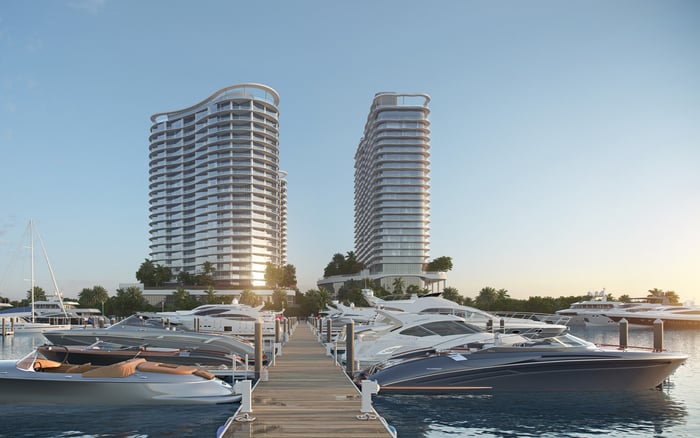
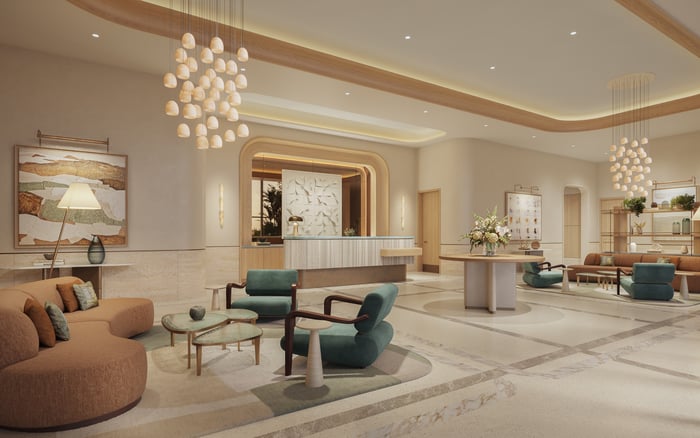
At St. Regis® Residences Bahia Mar Fort Lauderdale, amenity wait times should be read less as inconvenience and more as an operational lens: how privacy, scarcity, reservations and service culture shape daily ownership value.
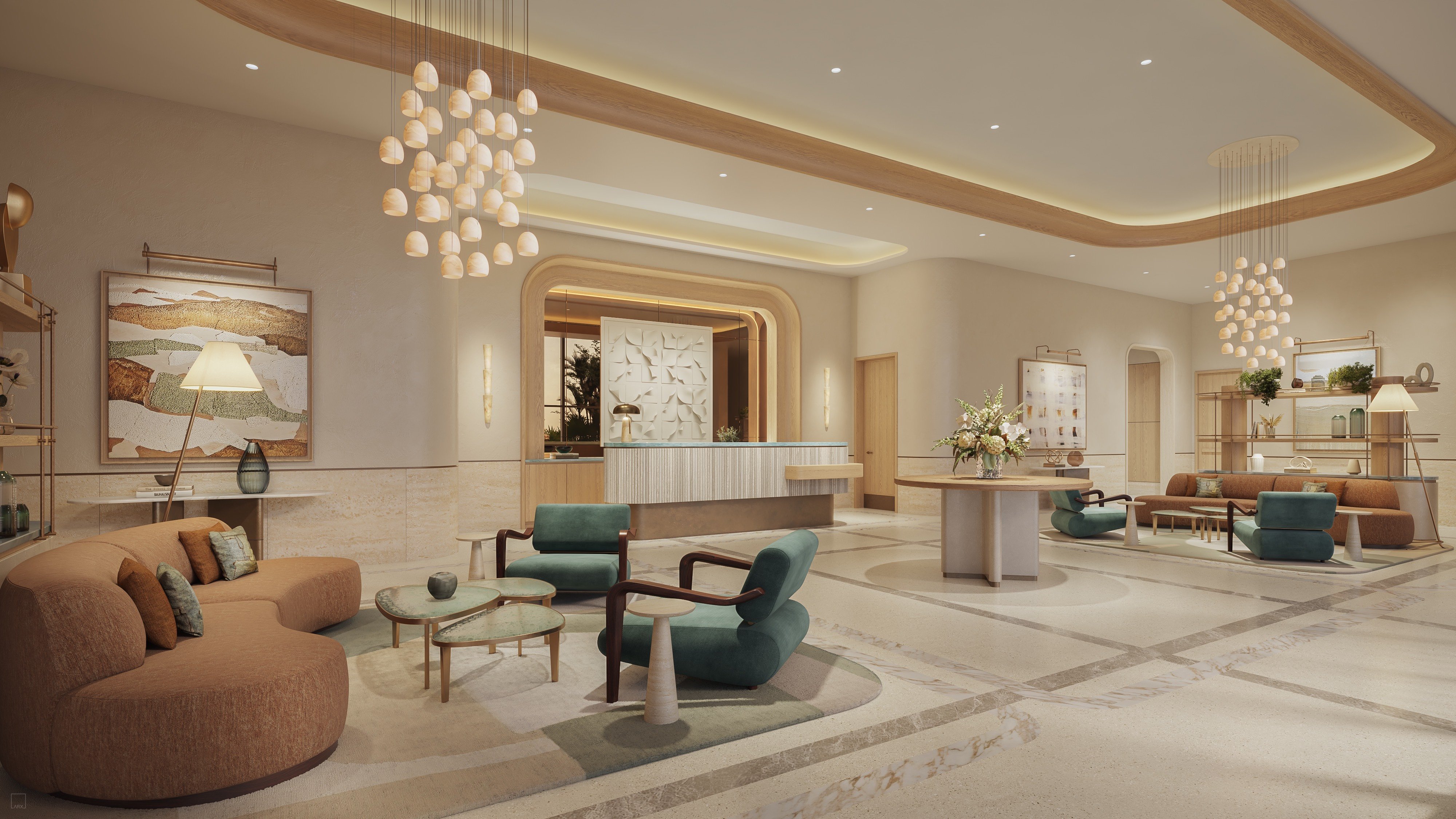
At the highest end of South Florida residential life, the most valuable amenity is often not the most visible one. It is the absence of friction: a pool that feels composed in peak season, a wellness appointment that begins on time, a marina conversation handled discreetly, a concierge desk that never seems strained by its own popularity.
That is the more nuanced way to consider St. Regis® Residences Bahia Mar Fort Lauderdale. The project belongs to Fort Lauderdale’s Bahia Mar area, a waterfront and marina-adjacent setting where daily life naturally moves between residence, water, beach, pool, wellness, dining and service. Within the search vocabulary of South Florida luxury, this is a Fort Lauderdale, marina, beach-access, pool, new-construction and branded-residence conversation at once.
The phrase “amenity wait times” can sound negative, especially to buyers accustomed to immediate access. But in a branded residential environment, controlled access can also read as discretion. The essential distinction is whether a wait reflects operational weakness or intentional capacity management. The former frustrates. The latter protects the experience.
Luxury buyers understand scarcity in architecture, views and location. They are less accustomed to evaluating scarcity in daily operations. Yet the logic is similar. A beautifully designed amenity loses value if it is crowded, noisy, poorly scheduled or impossible to use with privacy.
For St. Regis Bahia Mar, amenity wait times should be treated as a conceptual buyer-experience lens, not as a confirmed published policy. There is no reason to assume specific waiting periods, and buyers should be cautious of any unsupported number attached to access. The better question is not “How long is the wait?” It is “What system governs access, and does that system preserve the standard of living I am buying?”
That question matters across the Fort Lauderdale luxury set. Nearby branded and resort-style properties such as Four Seasons Hotel & Private Residences Fort Lauderdale and Auberge Beach Residences & Spa Fort Lauderdale show why service, beach proximity and hospitality expectations are central to the Broward waterfront buyer. The market is no longer impressed by amenity counts alone. It rewards amenities that can be lived with gracefully.
The most useful due-diligence move is to separate three different issues that are often blurred together.
First, there are construction or phased-delivery delays. In a new residential environment, not every space is necessarily delivered, opened or operated at the same moment. That is a project-delivery question, and buyers should review timelines and obligations carefully before signing.
Second, there is membership activation or onboarding. Some luxury amenities may require approvals, account setup, orientation, club documentation or guest registration before they become fully usable. That is an administrative question. It may be entirely reasonable, but it should be understood in writing.
Third, there are day-to-day reservation wait times. These are the ordinary rhythms of using high-demand spaces. Spa, wellness, dining, poolside seating, beach-related privileges, boat slips, marina access and concierge-supported services can all be affected by seasonality and peak demand. This is where quiet luxury either succeeds or fails.
A well-run building does not simply promise access. It choreographs it.
Bahia Mar gives the discussion more texture than a typical urban tower. Waterfront life introduces multiple demand curves. A resident may want a morning wellness session, afternoon pool time, guest access near the beach, a dining reservation and a marine-related request within the same weekend. If those systems collide, the residence begins to feel less private. If they are managed well, the same setting feels effortless.
This is why buyers should look beyond renderings and ask operational questions. Who receives priority? Is access affected by ownership tier, residence size, guest policy, marina membership or separate club rules? Are peak-season booking windows clearly defined? Are cancellation policies reasonable? Are guest limits practical for the way the buyer actually entertains?
The St. Regis name invites a service-culture lens, one built around discretion, cadence and refinement. Still, buyers should not assume specific operating protocols without written confirmation. The value lies in aligning brand expectation with the actual rules that will govern daily life.
There is a subtle but important shift underway in South Florida luxury: affluent buyers increasingly value predictability over abundance. A space that requires thoughtful reservation can be preferable to an open amenity that is technically available but functionally crowded.
That idea is visible across the branded-residence conversation, from Fort Lauderdale to Miami Beach and Sunny Isles. A buyer comparing St. Regis Bahia Mar with The Ritz-Carlton Residences® Fort Lauderdale and St. Regis® Residences Sunny Isles is not only comparing architecture or views. The buyer is comparing service logic: how the building handles demand when everyone wants the same few hours, tables, loungers, appointments or access points.
In this sense, a wait can be part of the luxury proposition if it produces a calmer result. It becomes a sign that the building is not overselling its common spaces. It indicates that management understands capacity. It may even make the amenity feel more residential and less public.
But the reverse is also true. A vague, inconsistent or overly restrictive system can erode trust. Quiet luxury depends on clarity.
For St. Regis Bahia Mar, the practical path is not speculation. It is documentation. Buyers should request written rules governing beach-related access, wellness and spa reservations, boat slips or marina privileges, guest limits, peak-season booking windows and cancellation policies. If separate club structures apply, those should be reviewed with the same seriousness as the purchase agreement.
The best questions are precise. How far ahead can residents reserve high-demand amenities? Are there blackout periods or priority categories? Can guests use facilities when the owner is absent? Are marina privileges tied to ownership, membership, availability or separate approval? How are conflicts handled when demand exceeds capacity?
These are not minor lifestyle details. At the ultra-premium level, they determine how a residence performs on the days that matter most: holiday weekends, winter season, family visits and moments when privacy is the real luxury.
The quiet luxury case for amenity wait times is not that buyers should tolerate inconvenience. It is that discerning buyers should recognize the difference between restriction and refinement.
If access is transparent, fairly administered and aligned with the scale of the building, it can support a more serene ownership experience. If the rules are unclear, verbally explained or subject to change without adequate notice, they deserve closer scrutiny.
For St. Regis Bahia Mar, the most sophisticated buyer posture is calm skepticism. Appreciate the waterfront setting. Understand the appeal of branded service. Then verify how the most desirable spaces will actually be used, reserved, shared and protected.
In luxury real estate, the best amenity is not always the one you can enter instantly. Sometimes it is the one that still feels private when everyone else wants it too.
Does St. Regis Bahia Mar have published amenity wait times? Amenity wait times should be treated as a buyer-experience question, not as a confirmed public policy unless written rules are provided.
Are amenity wait times always a negative sign? Not necessarily. Capacity-managed access can protect privacy, service quality and the calm expected in an ultra-premium residence.
What is the difference between phased delivery and daily reservations? Phased delivery concerns when spaces open. Daily reservations concern how residents access amenities once they are operating.
Why does the Bahia Mar setting make access rules important? Waterfront living can concentrate demand around beach, marina, pool, wellness, dining and concierge services during peak periods.
Should buyers rely on verbal explanations of amenity access? No. Buyers should request written rules, especially for high-demand amenities and any privileges involving guests or marina use.
Can ownership tier or residence size affect access? It may, depending on the governing documents. Buyers should ask whether priority, guest limits or booking windows vary by category.
What should buyers ask about marina privileges? They should ask whether privileges are tied to ownership, separate membership, availability, approval or additional rules.
How should buyers evaluate wellness or spa reservations? They should review booking windows, cancellation policies, guest access and peak-season capacity before assuming availability.
Is quiet luxury about having fewer amenities? No. It is about amenities that feel private, well managed and consistent rather than crowded or performative.
What is the main due-diligence takeaway? Buyers should verify how the most desirable amenities are reserved, prioritized and protected before judging the lifestyle promise.
For a tailored shortlist and next-step guidance, connect with MILLION.
If branded residences are on your mind — as a home or as an allocation — we would be glad to share what we are seeing, privately.
Begin a quiet conversation