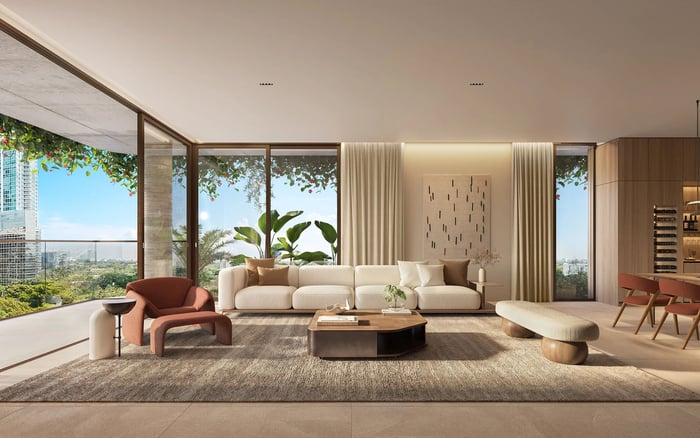
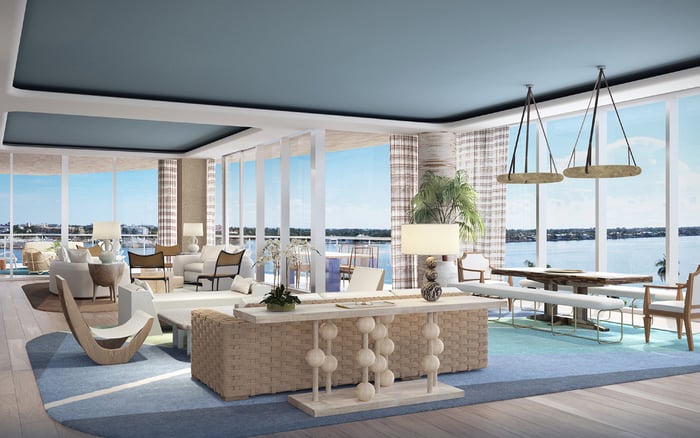
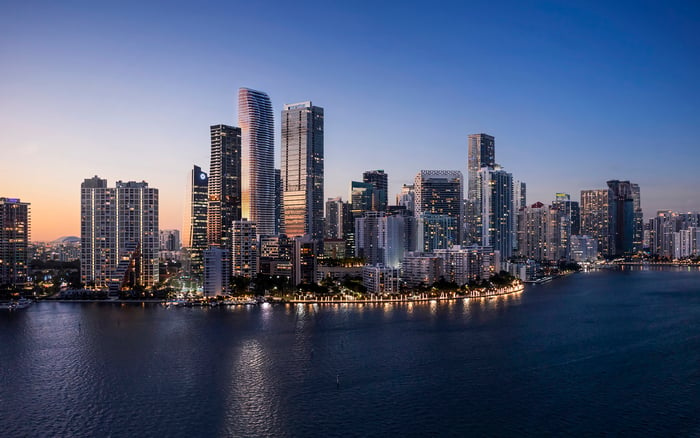
A buyer-focused comparison of Kempinski Residences Miami Design District and Mr. C Residences West Palm Beach, framed around lifestyle fit, reserve exposure, insurance diligence and the practical meaning of completed-building certainty.

At the top of South Florida’s branded-residence market, sophisticated buyers are no longer comparing projects on name recognition alone. They are weighing the lifestyle promise against the operating realities that define ownership after closing. That is the more useful lens for Kempinski Residences Miami Design District vs Mr. C Residences West Palm Beach: not a binary winner, but a disciplined reading of how place, brand, association structure, insurance, and certainty shape the ownership experience.
For buyers evaluating Kempinski Residences Miami Design District, the appeal begins with a Miami-facing lifestyle proposition. For those studying Mr. C Residences West Palm Beach, the conversation sits within the West Palm Beach branded-residence market. Both names invite an emotional response. A better purchase process asks what that emotion costs to operate, insure, maintain, and eventually resell.
The lifestyle distinction is intuitive. One buyer may be drawn to the energy associated with Miami’s design and cultural corridors. Another may prefer the cadence of West Palm Beach, where Palm Beach adjacency, dining, finance, art, and a quieter residential rhythm often shape the decision. The contrast is not merely geographic. It is behavioral.
A Miami-oriented buyer may prioritize access, movement, social density, and the feeling of living within a design-forward urban environment. A West Palm Beach buyer may think more in terms of seasonal use, privacy, daily convenience, and a polished but less frenetic setting. For a second-home purchaser, that distinction can be decisive. The right answer depends on how the residence will actually be used: three long weekends a month, a winter base, a primary home, or a hold for future family use.
This is where branded residences require restraint. The brand may set expectations, but the condominium documents define obligations. Service standards, amenity access, maintenance responsibilities, and shared-cost mechanics deserve the same attention as views, finishes, and arrival sequence.
Reserve exposure is not a vague technicality. It is the part of ownership that asks whether today’s monthly cost is aligned with tomorrow’s capital needs. In Florida luxury condominiums, buyers increasingly want to understand how reserves are funded, which components are included, when major systems may require attention, and whether early budgets reflect stabilized operations or transitional assumptions.
The key is to avoid treating a polished sales presentation as a substitute for association-level review. Buyers should request the proposed or current budget, any reserve schedule, anticipated capital categories, the developer-turnover framework, and the extent to which early assessments are contemplated or limited. If a building is still moving toward stabilization, the buyer should ask how staffing, insurance, amenities, and maintenance contracts are expected to evolve.
This is especially important for investment-minded purchasers. Carrying cost is part of yield, even when the asset is acquired primarily for lifestyle. The most elegant residence can become less liquid if future buyers perceive its monthly obligations as uncertain or underfunded.
Insurance has become one of the defining due-diligence subjects in South Florida condominium ownership. The question is not simply whether a building carries insurance. The more precise questions involve the master policy, named-storm deductibles, flood considerations, exclusions, required owner coverage, limits for common areas, and the treatment of any shared or branded-service components.
A buyer should understand what the association insures, what the owner must insure, and how deductibles could be allocated after a covered event. The answer can vary from one condominium structure to another, and the difference matters more at the ultra-premium level because finishes, specialty build-outs, and personal contents may exceed standard assumptions.
This is also where counsel and insurance advisors should coordinate before contract deadlines pass. A beautiful project may still require a conservative insurance read. The goal is not fear. The goal is precision: to know whether the carrying-cost profile fits the buyer’s tolerance for risk.
Completed-building certainty is often misunderstood. Buyers may hear the phrase and think only of whether a building is physically finished. In practice, certainty is broader. It includes whether the residence can be inspected, whether the association budget reflects real operating history, whether staffing has normalized, whether warranties are clear, and whether any construction, turnover, or punch-list matters remain relevant.
For pre-construction and new-construction buyers, this distinction is central. Early access to design customization and launch pricing can be attractive, but it carries a different certainty profile than purchasing in a building with lived-in operating patterns. Neither category is automatically superior. The important question is whether the buyer is being compensated, through price, selection, or lifestyle fit, for the uncertainty accepted.
A buyer comparing these two residences should therefore build a side-by-side diligence grid. Include delivery status, inspection rights, deposit structure, rescission terms, association turnover timing, warranty language, insurance assumptions, and reserve policy. If the answers are not yet final, the buyer should treat that as a negotiation variable rather than an afterthought.
West Palm Beach has become a serious luxury-condominium market in its own right, not merely a Palm Beach alternative. A buyer studying Mr. C Residences West Palm Beach may also examine Alba West Palm Beach or Shorecrest Flagler Drive West Palm Beach to understand how different ownership formats frame the same core questions: lifestyle, carrying cost, association governance, and long-term liquidity.
That wider lens is valuable. When several projects appeal emotionally, the differentiator becomes the quality of the documents and the credibility of the operating model. Buyers who compare only renderings, amenities, and brand language may miss the quieter signals that sophisticated owners study closely.
The same logic applies in Miami. A buyer weighing Kempinski Residences Miami Design District may also look toward Brickell, where a project such as The Residences at 1428 Brickell sits in a different urban context but raises similar diligence themes. How will the building be governed? What do the budgets assume? How are insurance and reserves handled? What level of certainty exists at the point of contract?
The best luxury buyers separate taste from underwriting. They can love a lobby, a brand, and a location while still requiring hard answers on ownership economics. That duality is the mark of a mature South Florida purchase.
Kempinski Residences Miami Design District will likely appeal to buyers who want a Miami-oriented lifestyle narrative and are comfortable underwriting the due-diligence questions that accompany any high-profile residential decision. Mr. C Residences West Palm Beach will likely attract buyers who want a West Palm Beach branded-residence proposition and are focused on how that lifestyle interacts with association cost, insurance, and future resale confidence.
The better choice is personal, but the evaluation should be professional. For family offices, relocating executives, and seasoned condominium owners, the decisive question is rarely which name sounds more compelling. It is which ownership structure feels more legible after counsel, insurance advisors, and real estate representation have reviewed the details.
Is this a simple winner-take-all comparison? No. The stronger approach is to compare lifestyle fit, documents, insurance, reserves, and certainty before choosing a direction.
Can buyers assume either building has a specific reserve position? No. Reserve funding should be reviewed through the condominium budget, reserve schedule, and association materials.
Why does insurance structure matter so much in South Florida? Insurance can affect monthly costs, owner coverage needs, and exposure to deductibles after a storm or other covered event.
What does completed-building certainty mean for a buyer? It means understanding inspection access, operating history, turnover status, warranties, and any remaining construction-related obligations.
Is Mr. C Residences West Palm Beach a West Palm Beach branded-residence option? Yes. It can be evaluated within the West Palm Beach branded-residence conversation.
Should a second-home buyer review documents differently than a primary-home buyer? Yes. Seasonal use makes carrying costs, access, staffing, insurance, and maintenance procedures especially important.
Do pre-construction buyers need different protections? Yes. Deposit terms, delivery timing, rescission rights, and budget assumptions deserve careful review before contract commitment.
How should investment buyers approach these projects? They should analyze carrying costs, liquidity, resale depth, and association obligations alongside lifestyle appeal.
Are brand names enough to determine long-term value? No. Brand can support desirability, but governance, insurance, reserves, and execution shape ownership quality.
What is the best next step before choosing between them? Build a diligence matrix and review it with experienced real estate, legal, and insurance advisors.
When you're ready to tour or underwrite the options, connect with MILLION.
If branded residences are on your mind — as a home or as an allocation — we would be glad to share what we are seeing, privately.
Begin a quiet conversation