A buyer-focused guide to comparing Miami Design District and Wynwood residences through terrace usability, shade quality, and long-term salt-air maintenance discipline.
Choosing between Miami Design District and Wynwood is less about selecting a name on a map than understanding how a residence performs at 10 a.m., 3 p.m., and after a week of humid weather. For luxury buyers, indoor-outdoor living is not a balcony photograph or a floor plan notation. It is a daily ritual shaped by shade, breeze, privacy, materials, building operations, and the ease with which a home opens to the city.
Both neighborhoods appeal to an urban buyer who wants design, culture, dining, and walkable energy close at hand. The distinction lies in how each address, building face, and outdoor space manages exposure. A beautiful terrace can feel like a private salon in the right orientation, or like a heat shelf when shade and ventilation are afterthoughts. A dramatic glass line can frame the city beautifully, but it should be matched by practical decisions around glare, coatings, seals, hardware, and exterior upkeep.
For buyers studying Kempinski Residences Miami Design District or nearby urban residences, the evaluation should begin with the outdoor room itself. For buyers drawn to Frida Kahlo Wynwood Residences, the same question applies in a different context: does the residence offer usable outdoor living, or merely outdoor square footage?
A terrace can be generous on paper and still underperform if it lacks depth, shade, or a logical furniture plan. The most valuable outdoor spaces allow for a real table, lounge seating, planting, and circulation without making the interior feel compromised. Buyers should stand in the primary living area and ask how the doors open, where the sun lands, whether the view remains comfortable, and how easily guests can move between the kitchen, salon, and exterior space.
A balcony has a different role. It may be better suited to morning coffee, a pair of chairs, or a private evening pause than to full entertaining. That can still be highly desirable when the outlook, privacy, and orientation are strong. The key is honesty. A compact, shaded balcony that feels calm may be more valuable in daily life than a larger exposed terrace that is rarely used.
In and around the Design District, buyers often prioritize a more composed residential experience, with outdoor spaces that feel connected to architecture and interiors. In Wynwood, the draw may be a more creative, urban energy, which makes privacy, acoustics, and view corridors especially important. At Miami Design Residences Midtown Miami, the surrounding Midtown and Design District context makes it natural to consider how the residence transitions from urban activity to private retreat.
Shade is one of Miami’s most underestimated amenities. It affects how often an outdoor space is used, how comfortable interiors feel, and how furnishings age. Buyers should look beyond a single showing and consider the sun’s movement throughout the day. West-facing outdoor spaces can be dramatic, but they require thoughtful shading, resilient finishes, and an acceptance of stronger afternoon heat.
Architectural overhangs, recessed terraces, neighboring structures, landscape, screens, and operable shading all change the experience. The best solution is not always full shade. Filtered light can be more elegant, especially when it allows a terrace to feel open without becoming harsh. A residence that offers partial protection, cross-breeze, and an easy connection to the interior often lives larger than its dimensions suggest.
For Wynwood buyers, shade can also shape the threshold between public and private life. A residence near active streets may benefit from a terrace that is set back, buffered, or screened. For Design District buyers, the same principle applies with a different emphasis: the outdoor space should feel refined enough for quiet entertaining, not simply appended to the floor plan.
Salt-air maintenance is not only an oceanfront issue. In South Florida, humidity, airborne salinity, sun, and storm-season preparation influence how exterior elements perform over time. Buyers should ask what materials are used for railings, door systems, exterior hardware, outdoor kitchens, planters, drains, and mechanical components exposed to the elements.
The inspection should be tactile. Open the sliding doors. Check how smoothly tracks operate. Look at corners, fasteners, thresholds, and drainage points. Ask how often exterior glass, railings, and terrace surfaces are cleaned. Review whether the association has clear maintenance protocols for common exterior elements and whether owners are responsible for particular items within their terrace or balcony area.
Outdoor furniture and finishes also deserve scrutiny. Upholstery, metal frames, stone, wood, and plan types all respond differently to Miami’s climate. The most sophisticated residences make maintenance feel invisible because the correct materials were selected from the beginning. New-construction and pre-construction buyers should press for specifications early, not after finishes are selected.
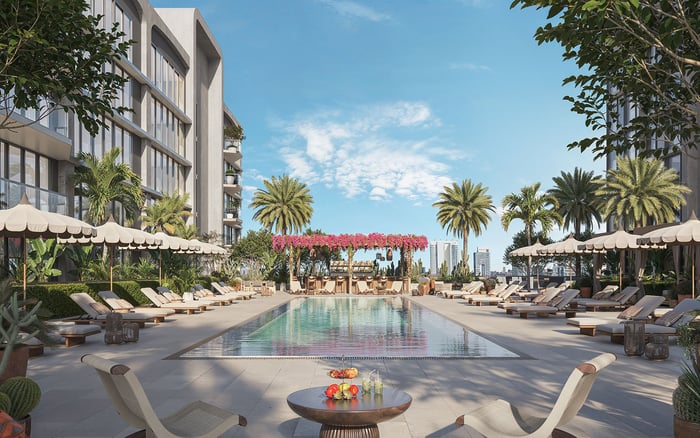
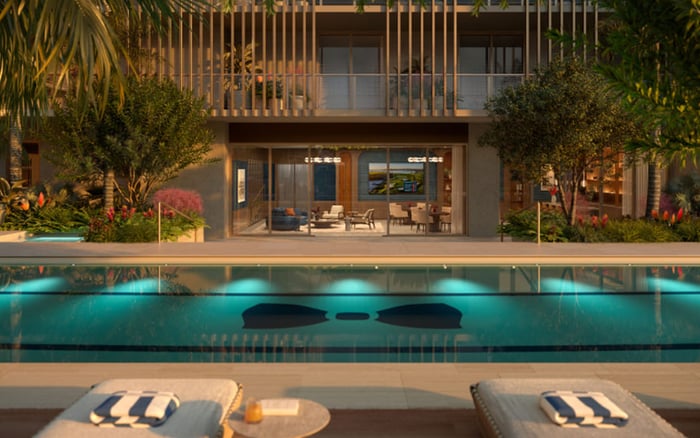
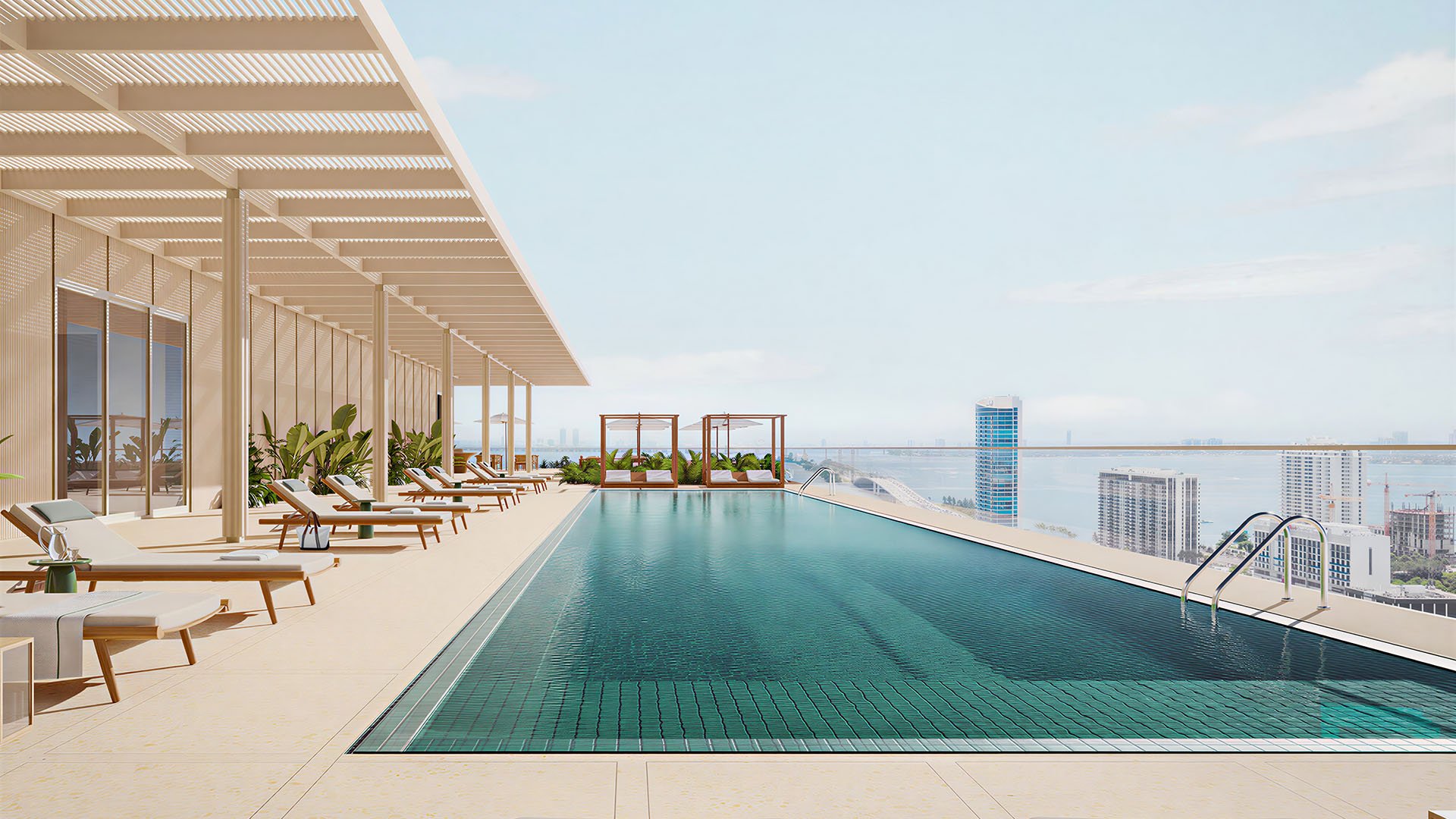
A private terrace is only one part of the indoor-outdoor equation. A pool deck, garden, lounge terrace, or roof-level amenity can meaningfully supplement a residence with limited private exterior space. The question is not whether a building has amenities, but whether those amenities are comfortable, shaded, well managed, and aligned with the way the owner actually lives.
For a buyer who entertains privately, the residence’s own outdoor room may matter more than a shared deck. For a buyer who spends part of the year in Miami, a well-serviced amenity environment can make daily life easier. At Miami Tropic Residences, buyers should evaluate not only the residence itself, but also how shared outdoor spaces support the broader lifestyle.
This is where the comparison between Design District and Wynwood becomes personal. One buyer may want a calm, shaded terrace for dinners at home. Another may prefer proximity to creative energy and use private outdoor space as a short daily reset. Neither is inherently superior. The better choice is the one whose outdoor spaces you will actually use.
Begin with orientation. Morning light, afternoon heat, and evening glare change the mood of a residence. Then study privacy. A terrace that looks directly into another building may feel less luxurious than a smaller, better-screened space. Next, evaluate acoustics. Urban energy can be appealing, but the residence should still offer a sense of retreat when the doors are closed.
Then review maintenance. Salt-air exposure, drainage, seals, exterior metals, and cleaning access are part of ownership quality. Ask whether terrace drains are easy to inspect, whether planters are integrated or owner-supplied, and whether exterior kitchens or water features require special care. In Miami, beauty lasts longest when design and maintenance are aligned.
Finally, walk the neighborhood at different times. A morning visit, late-afternoon visit, and evening visit can reveal how the residence feels in real life. The most elegant choice is not always the most dramatic one. It is the address where shade, air, privacy, and maintenance discipline come together quietly.
Is Miami Design District better than Wynwood for indoor-outdoor living? It depends on the specific residence, orientation, and privacy. The best choice is the one with outdoor space you will use consistently.
What should I examine first on a terrace? Start with depth, shade, drainage, and furniture layout. A terrace should function as a true outdoor room, not just extra square footage.
Does a balcony add meaningful value? Yes, if it is usable, private, and comfortable. A smaller shaded balcony can outperform a larger exposed one in daily life.
How important is shade in Miami? Shade is central to comfort and long-term usability. It also helps protect furnishings and reduces the harshness of direct sun.
Should Wynwood buyers worry about privacy? Yes, privacy should be tested carefully in any active urban setting. Look for setbacks, screening, and thoughtful window placement.
Does salt air matter if the residence is not oceanfront? Yes, Miami’s humid, salt-influenced climate can affect exterior materials. Hardware, railings, tracks, and finishes should be reviewed closely.
What maintenance questions should I ask before buying? Ask about exterior cleaning, terrace drainage, door systems, railing care, and owner responsibilities. Clear protocols are a sign of good stewardship.
Are amenity decks a substitute for private outdoor space? They can be, depending on lifestyle. Private terraces suit intimate entertaining, while shared amenities can add convenience and scale.
What matters most in pre-construction purchases? Ask for finish specifications, shading plans, and exterior material details early. These choices shape comfort and maintenance for years.
How should I compare two similar residences? Visit at different times of day and test light, heat, sound, and privacy. The stronger residence will feel composed in more conditions.
If you'd like a private walkthrough and a curated shortlist, connect with MILLION.
If branded residences are on your mind — as a home or as an allocation — we would be glad to share what we are seeing, privately.
Begin a quiet conversation