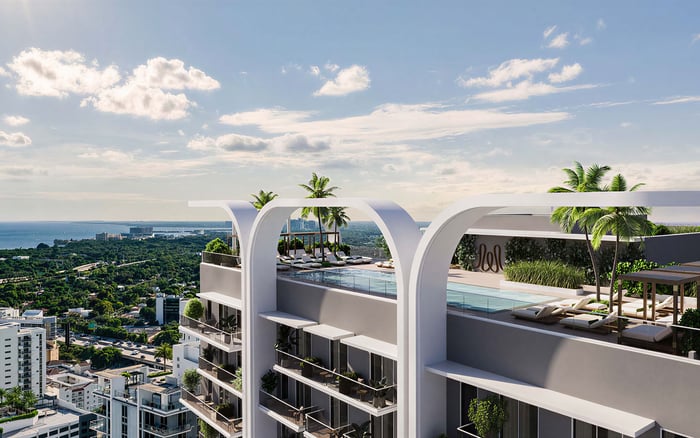
In Miami’s luxury condo market, a spectacular view can define desire, but title exceptions often define risk. This editorial explains why sophisticated buyers review title matters before treating a skyline, bay, or ocean exposure as the deciding factor.
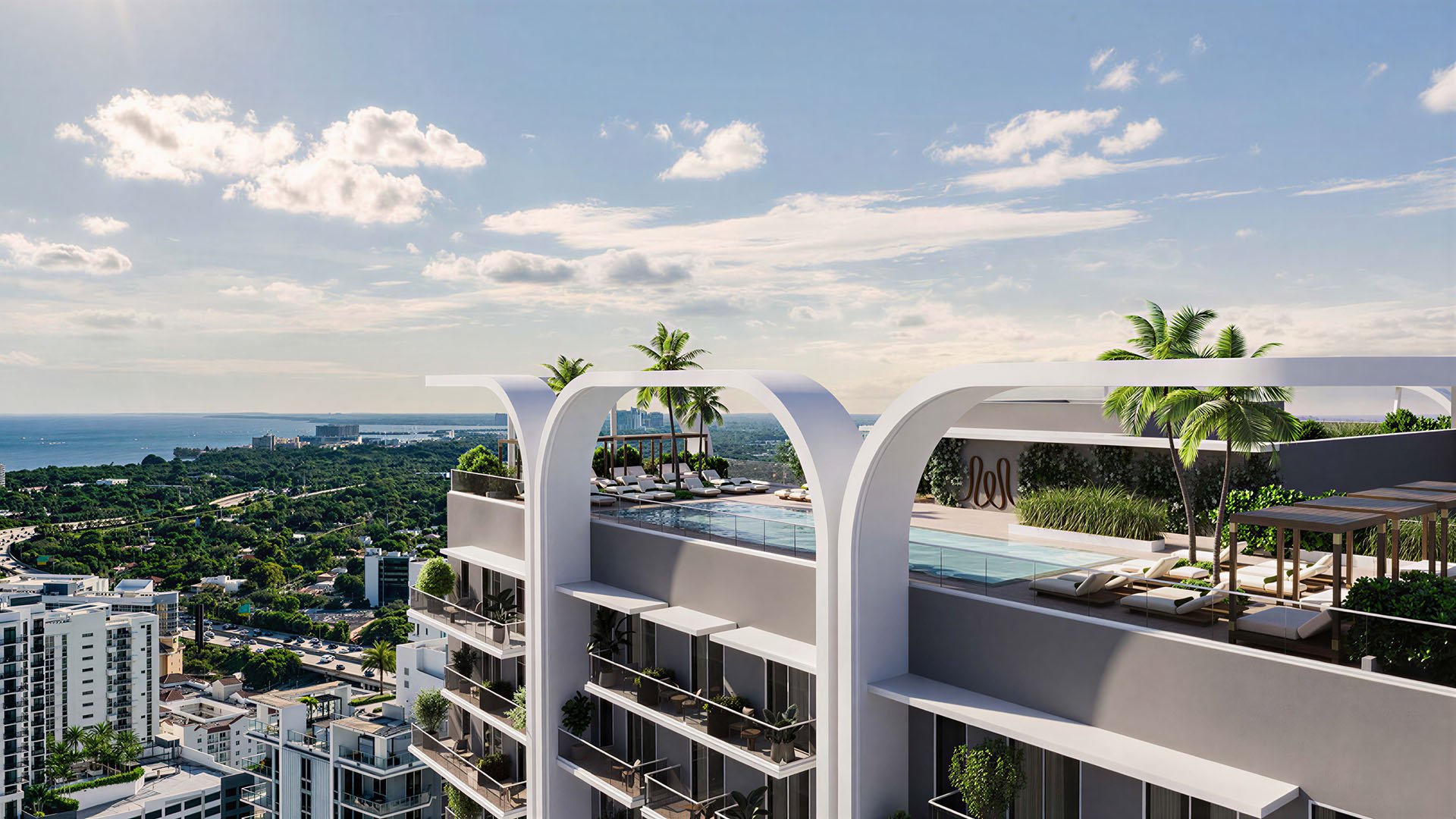
In Miami, the first showing often belongs to the horizon. A buyer steps into a residence, the doors open, and the conversation turns to Biscayne Bay, the Atlantic, the skyline, or the sweep of sunset over the city. For luxury buyers, that moment matters. A view can shape daily rhythm, entertaining value, resale narrative, and the intangible confidence that a home simply feels right.
Yet the most sophisticated Miami condo buyers understand that a view is only one layer of value. Title exceptions can affect what is actually being acquired, what is insured, what may be limited, and what could complicate future ownership. A direct water view may seduce the eye, but exceptions in a title commitment can speak to rights, restrictions, easements, covenants, and other matters that deserve attention before emotion becomes obligation.
This does not mean buyers should ignore exposure. It means the view should not outrank the legal architecture of ownership. In a market where residences can be deeply personal assets and major capital allocations, title diligence is not a technical afterthought. It is part of the luxury standard.
A title exception is generally a matter excluded from coverage under a title insurance policy. In plain terms, it is something the policy may not protect against. Some exceptions are routine and expected. Others require closer review because they can affect use, access, obligations, or future transferability.
In a condominium context, buyers may encounter exceptions tied to declarations, bylaws, recorded covenants, utility easements, association rights, parking arrangements, storage rights, assessments, leasing restrictions, or other recorded matters. The presence of an exception does not automatically signal a problem. It does mean the buyer should understand the matter before closing.
For a luxury buyer comparing St. Regis® Residences Brickell with another tower or considering a boutique waterfront building, the legal review should sit beside the lifestyle review. The building’s service culture, architecture, and outlook may be exceptional, but the title file helps define the buyer’s actual bundle of rights.
A spectacular view is visible immediately. A title exception requires reading, interpretation, and often professional explanation. That asymmetry is exactly why it deserves priority. What is hidden in the documents can matter more than what is obvious through the glass.
A buyer might prefer a higher floor with a stronger water angle. But if another residence offers cleaner documentation, clearer appurtenant rights, or fewer practical uncertainties, the second option may be more compelling. This is especially relevant for buyers who think beyond personal use. Future saleability, financing comfort, estate planning, and family-office governance may all be influenced by the clarity of ownership.
The calculus is not simply risk avoidance. It is value preservation. A residence with a slightly less cinematic view may still be the better asset if the rights attached to it are easier to understand, easier to insure, and easier to explain to a future purchaser.
Condo ownership is layered. The unit is one component; the association regime is another. Buyers should review the declaration, amendments, rules, budgets, insurance framework, assessments, leasing provisions, and any rights attached to parking, storage, cabanas, docks, terraces, or limited common elements. These details may shape both how the residence is lived in and how it is valued.
In a waterfront search, the temptation is to reduce the decision to line, floor, and orientation. That can be useful, but it is incomplete. A buyer considering The Perigon Miami Beach may be drawn to architecture and coastal presence, while another may evaluate privacy, service, and long-term ownership structure in parallel. The prudent question is not only, “What do I see?” It is also, “What rights, limits, and obligations come with what I am buying?”
This is where terminology becomes practical. Internally, many buyers sort options by simple search labels: Brickell for finance-facing convenience, Miami Beach for resort rhythm, Sunny Isles for a tower-and-ocean profile, waterview for emotional pull, resale for immediate certainty, and new construction for a cleaner starting point. Those labels are useful, but they are not substitutes for diligence.
New construction can feel cleaner because a buyer is entering a newly organized ownership environment. Resale can feel clearer because the building has operating history. Neither category eliminates the need to review exceptions.
In a new condominium, buyers should understand how the documents allocate rights, control shared spaces, define amenities, and describe ongoing obligations. In a resale purchase, buyers should look for amendments, recorded changes, association matters, and any practical history that could affect the unit. A finished building does not automatically mean a simple title picture, and a new tower does not automatically mean every future issue is visible at contract signing.
For example, buyers comparing a bayfront option such as Vita at Grove Isle with a more urban residence may be evaluating privacy, water access, and neighborhood character. Those are legitimate lifestyle priorities. Still, the refined buyer asks the same baseline questions: What is included, what is excluded, what is shared, what is restricted, and what is insured?
In the luxury segment, value often lives in details that are not fully captured by the view. Parking spaces, storage rooms, private elevator entries, terraces, boat-related rights, and limited common elements can materially affect convenience and desirability. If these rights are not clearly documented, the buyer should pause.
A panoramic residence without the expected parking configuration may disappoint. A terrace that feels private but is governed by restrictive rules may not support the intended lifestyle. A storage space described casually in conversation should still be confirmed through the appropriate documents. The goal is to align marketing, contract language, association records, and title review.
This is particularly important in buildings where amenities and service are central to the offering. At Bentley Residences Sunny Isles, for instance, buyers may naturally focus on the branded residential experience and vertical living concept. Even then, the ownership file remains essential. Luxury is not only design and service; it is certainty.
A disciplined Miami condo search can still begin with lifestyle. Buyers should identify preferred neighborhoods, exposure, floor height, service level, privacy, amenity profile, and architectural taste. But once a candidate residence becomes serious, the next step should be document intelligence, not another sunset showing.
The practical sequence is simple. First, determine whether the residence satisfies the lifestyle brief. Second, review the contract structure and condo documents. Third, examine the title commitment and exceptions with qualified counsel or title professionals. Fourth, reconcile any concerns before deadlines pass. Fifth, decide whether the view remains worth the full ownership picture.
This approach does not make the process less luxurious. It makes it more controlled. The best buyers do not remove emotion from the purchase; they protect it with discipline.
The ideal Miami condo offers both: a view that elevates daily life and a title profile that supports quiet confidence. When those two qualities align, the result can be exceptional. When they conflict, serious buyers should resist the instinct to let the view win automatically.
A title exception may be ordinary, negotiable, or irrelevant to the buyer’s intended use. It may also reveal a limitation that changes the entire value thesis. The distinction requires review, not assumption. In the ultra-premium market, discretion includes knowing when to slow down.
The most compelling residence is not always the one with the most dramatic horizon. It is the one where beauty, rights, obligations, and exit strategy are in balance. In Miami, that is where taste becomes judgment.
What is a title exception in a Miami condo purchase? It is generally a matter excluded from title insurance coverage, which means the buyer should understand its practical effect before closing.
Does every title exception signal a problem? No. Many are routine, but each should be reviewed so the buyer knows what is being accepted.
Can a title exception affect resale value? It can, especially if it creates uncertainty around rights, use, access, or obligations that a future buyer may question.
Should the view still matter in a luxury condo search? Yes. The view remains important, but it should be weighed alongside the legal and ownership framework.
Who should review title exceptions for a buyer? Buyers should consult qualified real estate counsel and appropriate title professionals before making final decisions.
Are condo documents separate from the title commitment? They are distinct, but they often work together in defining ownership rights, restrictions, and association obligations.
Why are parking and storage rights important? They can materially affect daily convenience and long-term desirability, so they should be clearly documented.
Is new construction simpler from a title perspective? Not automatically. New buildings still require careful review of declarations, rights, obligations, and exceptions.
Can a buyer negotiate over title concerns? Depending on the contract and timing, some concerns may be clarified, resolved, insured over, or factored into the decision.
What is the best mindset for evaluating a Miami condo? Let the view inspire interest, then let diligence determine whether the ownership picture is strong enough.
To compare the best-fit options with clarity, connect with MILLION.
If branded residences are on your mind — as a home or as an allocation — we would be glad to share what we are seeing, privately.
Begin a quiet conversation