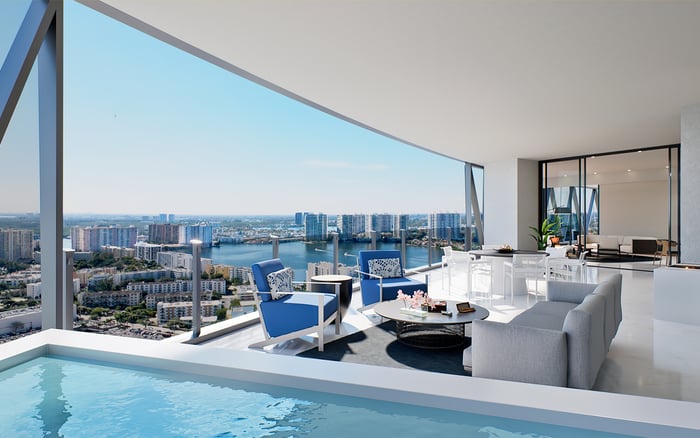
Miami has evolved into a fully fledged global luxury hub where the cost of living now rivals other world-class capitals. For high-income relocators, the city pairs seven- and eight-figure property prices with meaningful tax advantages, sophisticated branded residences and a year-round resort lifestyle. This article unpacks the real numbers behind owning or renting at the top end of the market, from waterfront estates and Brickell penthouses to insurance, HOA fees and everyday lifestyle spending, so you can calibrate precisely what it costs to call Miami home.

Miami has completed its evolution from sunny escape to fully fledged global capital. Cost-of-living indices now place the city among the priciest urban centers in the United States, while global relocation rankings regularly slot it near the very top of desirable places to move. For high-income relocators, Miami is no longer a bargain alternative to New York or Los Angeles; it is a peer market, where trophy real estate, an international business ecosystem and resort-grade amenities meet at a coastal crossroads.
At the top of the market, the dynamic is simple: demand from wealthy buyers, limited waterfront land and a surge in branded residences have reset what it costs to live well. Entry into a truly prime neighborhood often starts in seven figures, and eight-figure transactions are now a standard part of the weekly sales tape. Yet when you zoom out and factor in Florida's tax structure, Miami's cost of living can still represent a compelling value proposition for those arriving from high-tax, high-regulation states.
For affluent newcomers, housing will be the defining line item in the Miami budget. Across the broader metro, average home values hover in the mid-$500,000s to low-$600,000s, but that number blends everything from inland starter condos to waterfront estates. In the neighborhoods that matter most to luxury buyers – think Brickell, coastal stretches of Miami Beach, Coconut Grove and the barrier islands – the practical entry point for a comfortable residence is far higher.
In family-friendly areas such as Coral Gables or the leafy streets around Coconut Grove, renovated single-family homes in desirable school zones frequently start above $1 million, and modern new-builds near the water or top private schools often command $2 million to $4 million and up. Waterfront estates with substantial docks, mature landscaping and privacy walls can easily exceed eight figures, especially if they offer wide-bay views or ocean access without fixed bridges.
The sharpest illustration of Miami's new pricing power sits in its branded towers. Oceanfront projects such as Bentley Residences Sunny Isles bring an automotive-luxury sensibility to vertical living, with private sky garages, grand-scale floor plans and amenities engineered for owners who expect everything on-site. In Brickell, trophy towers like St. Regis® Residences Brickell and Aston Martin Residences Downtown Miami anchor the upper tier of the market, with prices routinely crossing $2,000 per square foot for prime lines and penthouses.
For buyers moving from Manhattan or central London, the sticker shock is tempered by what you receive for the money. A two- or three-bedroom residence in a best-in-class Miami tower is often 1,800–3,000 square feet with deep terraces, panoramic water views and a full amenity program that might include multiple pools, spa, concierge, on-site dining, marina access and curated wellness offerings. In many northern gateway cities, an equivalent budget delivers less space, fewer amenities and a more constrained indoor lifestyle.
Renters face a similarly tiered landscape. Citywide, a two-bedroom apartment averages in the high $2,000s per month, but that figure rises quickly in luxury corridors. Brickell rentals in well-positioned high-rises often fall in the $4,000–$5,000 range for a two-bedroom, with premium lines, new construction and unobstructed bay views commanding more. Along the beach, high-floor furnished condos in sought-after buildings can easily push beyond $8,000 per month, especially in winter high season. These rents frequently include access to pools, fitness, valet and in-building security that would be separate line items elsewhere.
Search trends for "Miami-beach condos" and "Coconut-grove homes" underscore how global buyers now weigh both sand-side excitement and quieter, leafy enclaves. For the high-income relocator, the most important early decision is not just whether to buy or rent, but which neighborhood aligns with how you truly plan to use the city – as a primary residence, a seasonal pied-à-terre or a hybrid base that supports work in multiple markets.
Florida's tax environment is the single most powerful counterweight to Miami's higher living costs. The headline is well known: there is no state income tax. For a New York resident paying roughly 10.9% state tax plus nearly 4% in city tax at the top brackets, establishing Florida domicile can feel like granting yourself an instant, recurring raise. On seven-figure annual incomes, the savings often reach well into six figures every year.
Property taxation is comparatively moderate. Florida's average effective property tax rate typically sits below that of most Northeastern states, and Miami-Dade's millage rates, while variable by municipality, are competitive relative to other global luxury capitals. Crucially, primary residents can take advantage of the Homestead Exemption and the "Save Our Homes" cap, which limits annual assessment increases on a homesteaded property. Over time, this can create a meaningful gap between market value and taxable value, especially in fast-appreciating neighborhoods.
The other side of the ledger is carrying costs, particularly insurance and ongoing building or estate expenses. In a coastal, hurricane-exposed state, property insurance is both essential and expensive. Recent analyses place the average Florida homeowners premium several times higher than the U.S. norm, and the numbers climb quickly for high-value, waterfront homes. A $3–$5 million bayfront residence can easily generate five-figure annual premiums once replacement costs, windstorm riders and flood coverage are factored in, and the most exceptional estates or penthouses can sit comfortably in the $20,000-plus per year category.
Condominium ownership concentrates many of these expenses into a single monthly association payment. In new, service-forward towers, maintenance fees of $1.00–$1.75 per square foot per month are common. On a 3,000-square-foot residence, that implies $36,000–$63,000 in annual dues before you account for property taxes or supplemental insurance. What do you receive in return? Staffed lobbies, 24-hour valet, building-wide insurance, on-site management, amenity programming and capital reserves that can dramatically reduce the complexity of daily life. For many high-income buyers, especially those running businesses elsewhere, this turnkey convenience is precisely the point.
Single-family homeowners trade predictable association dues for a more bespoke cost structure. Lush tropical landscaping requires weekly attention; pools, docks, seawalls and exterior paint cycles all carry their own timetable and budget. Add in housekeeping, perhaps a part-time estate manager, and storm-prep services, and it is easy to see six-figure annual running costs for a major waterfront property. The advantage is control: you manage service levels directly and can tailor the estate precisely to your family's habits and security preferences.
Once the housing and ownership framework is in place, the rest of the Miami lifestyle feels relatively rational for a global city. Transportation is heavily car-centric; most affluent residents maintain one or more vehicles, and many also rely on car services. Fuel and parking are generally gentler than in northeastern metros, and there is no need to factor in a $700-per-month garage slot simply to store a car. Insurance, however, is a meaningful cost: Florida sits near the top of national rankings for auto premiums, and insuring an exotic or luxury marque accordingly demands attention.
Utilities reflect the subtropical climate. You will run air conditioning for much of the year, but you will never pay for snow removal, heating oil or winterization. Newer construction in Brickell and along the bay tends to incorporate strong energy-efficiency measures, which helps moderate bills even in the warmest months. Groceries are roughly in line with national averages, and the absence of state tax on essential food items and medications softens the impact of a weekly gourmet shop.
Dining and entertainment offer an unusually wide spectrum. Miami hosts Michelin-starred tasting counters where dinner for two can rival any major city, but it also offers a deep roster of neighborhood bistros, Latin cafés and waterfront spots where the bill is refreshingly reasonable. Cocktails at a rooftop bar or hotel lounge are priced on par with New York, yet long, luxurious days at the beach remain free. For many new residents, the most pleasant surprise is how much of the city can be enjoyed without spending aggressively: sunrise runs along Biscayne Bay, art walks, open-air concerts and boat days with friends all deliver the city’s essence at low marginal cost.
For families, private education is a major budget component. Top-tier day schools in Miami, particularly in Coconut Grove, Coral Gables and the southern reaches of the county, command tuitions similar to elite Northeastern institutions. It is prudent for relocating parents to assume $40,000–$55,000 per child per year at the upper grade levels, plus extras such as uniforms, travel and enrichment. Many high-income households pair this with club memberships – golf, yacht or beach clubs – whose initiation and annual dues sit in the low to mid six figures across a family’s full membership portfolio.
For the high-income relocator, the key is to view Miami not as a splurge but as an integrated lifestyle and tax strategy. Start by modeling your pre- and post-move income, including the impact of eliminating state income tax and, where applicable, optimizing residency for equity events or liquidity moments. Against that, layer realistic estimates of property taxes, insurance, HOA or estate expenses, tuition and club dues. Many buyers are surprised to find that, even after materially upgrading their home and daily environment, their net after-tax position improves.
Next, be deliberate about product type and neighborhood. A frequently traveling executive who values hotel-like service might favor a branded tower in Brickell or Downtown, where proximity to offices, restaurants and airports is paramount. A family planning to settle for decades may prioritize a single-family home with yard space and proximity to top schools, accepting more hands-on maintenance in exchange for privacy and long-term value creation.
Finally, work with advisors who understand both the emotional and numerical sides of the decision. The best outcomes typically involve a phased approach: renting initially while exploring neighborhoods, then committing capital to a purchase once school rhythms, commute patterns and social life come into focus. MILLION Luxury specializes in precisely this kind of high-touch, data-informed guidance, helping clients read through the headline numbers and identify the properties where lifestyle, risk and return intersect most effectively.
In a world where time is the ultimate luxury, Miami offers the rare ability to align climate, culture, connectivity and capital in a single address. With clear-eyed budgeting and the right partners, the city’s elevated cost of living becomes less a hurdle and more a gateway to a lifestyle that justifies the investment many times over. For bespoke modeling of your own Miami move – and curated access to the city’s finest opportunities – connect with the MILLION Luxury advisory team.
What income level is comfortable for a luxury lifestyle in Miami? For a household seeking a prime condo or single-family home, private school options and frequent travel, a combined annual income in the mid-six figures is generally a sensible floor, with seven-figure income providing greater flexibility for premium locations, club memberships and staffing.
Is it better to rent or buy first when relocating to Miami? Many high-income newcomers choose to rent for 6–12 months while they learn the nuances of each neighborhood. This approach allows you to experience traffic patterns, school commutes and seasonal rhythms before committing capital to a purchase that may run into the millions.
What should I budget for HOA fees in a luxury Miami building? In newer, full-service towers, it is wise to assume $1.00–$1.75 per square foot per month in association dues. On a 2,500-square-foot residence, that translates to roughly $30,000–$52,500 per year, which typically covers building insurance, common-area maintenance, staff and amenity operations.
How do Florida’s tax savings compare to costs like insurance and HOA fees? For high earners moving from states with double-digit income tax rates, the annual savings can easily surpass five or six figures. In many cases, the reduction in state and city income tax more than offsets elevated insurance premiums and HOA or estate expenses, leaving a higher net disposable income.
Which Miami neighborhoods offer the best long-term value for luxury buyers? Historic, supply-constrained areas such as Brickell, established pockets of Coral Gables and the most coveted stretches of the beach and bayfront tend to show the strongest long-term demand. That said, emerging districts with new infrastructure can offer compelling value when evaluated with a long-term, fundamentals-driven perspective.
If branded residences are on your mind — as a home or as an allocation — we would be glad to share what we are seeing, privately.
Begin a quiet conversation