A discreet, practical guide for family buyers evaluating Miami Beach luxury condos through the lens of private school access, daily rhythm, privacy, layouts, amenities, and long-term flexibility.

For family buyers, choosing a Miami Beach luxury condo becomes far more nuanced when private school access enters the conversation. A building can be close on a map yet inconvenient in daily use. A residence can deliver a dazzling view yet fall short against morning routines, after-school activities, privacy, storage, and the realities of moving children through a vertical home.
The sharpest comparison is not simply which condominium sits nearest to a preferred campus. It is which home makes the school week feel composed. That requires studying the daily route, the arrival sequence, the building’s service culture, and how well the residence absorbs family life without compromising the refinement that drew buyers to Miami Beach in the first place.
For MILLION clients, this is often the distinction between an impressive purchase and an enduring home. The right answer may be a beachfront address, a quieter residential pocket, or a nearby enclave that widens the private-school radius while keeping the family close to the water.
Private-school buyers should begin with the commute, but not in a simplistic way. The relevant question is not the shortest theoretical drive. It is the most reliable school-day rhythm. Consider how the route behaves at drop-off, during afternoon pickup, on rainy mornings, and when a child has a late practice, tutoring session, or weekend event.
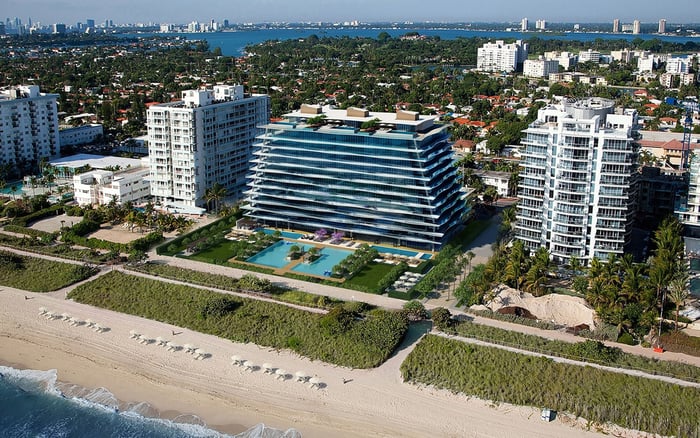
A family choosing 57 Ocean Miami Beach, for example, should weigh the daily elegance of an oceanfront setting against the route patterns required by each child’s schedule. The point is not to reduce a luxury home to logistics. It is to ensure the logistics protect the luxury.
Families should also study whether a building’s valet flow and porte cochere experience remain calm under pressure. A beautiful lobby matters. A thoughtful arrival sequence matters more at 7:35 on a weekday morning.
In family-oriented searches, raw square footage can mislead. A larger residence may feel less usable than a smaller one if bedroom placement, storage, acoustic separation, and circulation are wrong. Compare how the home lives at the beginning and end of the school day.
Look for a logical path from entry to kitchen, bedrooms, laundry, and storage. Consider whether children can study without occupying the formal entertaining area. Ask whether an additional den can function as a homework room, tutor space, or quiet media room. In a luxury condo, flexibility is a premium feature, even when it is not described that way.
Bedroom separation deserves particular attention. Younger children may need proximity. Older children may need privacy. Visiting grandparents or a nanny may require a suite that feels independent without feeling detached. A family residence should support changing stages of life, not just the current school year.
Families often focus on pools, spas, fitness rooms, and beach service. Those amenities are important, but privacy may be the more valuable amenity for buyers with children. Study elevator configuration, corridor density, staff discretion, guest registration, and how the building manages visitors.
At The Perigon Miami Beach, a family buyer should ask practical questions about how daily arrivals, guests, tutors, drivers, and deliveries are handled. The best buildings make family life feel protected without making it feel managed.
Privacy also extends to sound. Residences with thoughtful bedroom placement, substantial doors, and separation between entertaining and sleeping zones can make the difference between a home that photographs well and one that lives beautifully.
Many buyers begin with Miami Beach because they want water, architecture, restaurants, culture, and a true sense of place. Within that search, different pockets serve different family temperaments. Some buyers prioritize immediate beach access. Others prefer quieter streets, larger terraces, or a more residential cadence.
South of Fifth has a distinct appeal for buyers who want a composed neighborhood feeling near the southern tip of the island. The broader family search may touch Miami Beach, private-school access, oceanfront living, South of Fifth, Surfside, and Bay Harbor, but the real decision is never a tag. It is the lived relationship between home, school, and family rhythm.
A buyer considering The Ritz-Carlton Residences® Miami Beach should compare the serenity of a residential environment with the school routes and after-school patterns that define the week. The residence should feel like a retreat, not a detour.
For some families, the best Miami Beach school strategy includes looking just beyond Miami Beach. Surfside and Bay Harbor Islands can broaden the search while preserving a coastal lifestyle and a close connection to the northern beaches. These areas may appeal to buyers who want a quieter neighborhood scale while remaining within the broader luxury corridor.
That is why a family drawn to The Delmore Surfside might compare it not only against other ocean-oriented residences, but also against the school-day experience it enables. Similarly, buyers reviewing The Well Bay Harbor Islands may be thinking less about a single commute and more about a balanced weekly geography.
The most sophisticated buyers do not treat municipal lines as rigid boundaries. They compare lifestyle zones. They ask where children will go to school, where parents will work, where the family will dine, where sports and arts will happen, and whether the home sits gracefully at the center of that map.
The most useful amenities for family buyers are not always the most theatrical. A glamorous pool matters, but so do shaded outdoor space, a calm lobby, reliable package handling, secure bicycle or beach storage, and areas where children can transition from school to home without turning the residence into a staging area.
Study the building’s rules and culture. Some luxury condominiums feel naturally suited to year-round family life. Others feel more oriented toward seasonal owners, investors, or adult entertaining. Neither is inherently better, but the fit matters.
Families should also look carefully at pet policies, guest policies, service access, and how the building handles private instructors, domestic staff, and extended family. A high-service building should simplify life without drawing attention to the machinery behind it.
A family buying near private schools should still think like a future seller. The most resilient residence usually appeals to more than one buyer profile. A well-planned three-bedroom or larger residence, flexible den, generous outdoor space, strong privacy, and desirable view corridor can speak to families, seasonal owners, and downsizing buyers alike.
Avoid over-personalizing the purchase around one school or one child’s current age. A residence that only works for a narrow life stage may become less compelling later. The better target is a home that supports today’s private-school needs while remaining elegant, adaptable, and broadly desirable over time.
This is where advisory discipline matters. The emotional pull of a view or brand can be powerful, but family buyers should test every candidate against daily use. The right condo should make Monday morning feel as considered as Saturday evening.
Before choosing, compare each residence across five quiet but decisive categories: commute rhythm, floor-plan utility, privacy, building culture, and resale flexibility. Walk through the morning routine in your mind. Where do backpacks go? Where does a driver wait? How does a tutor enter? Can one child sleep while another practices piano or takes a call?
Then consider the parents’ life. Does the home support entertaining without disrupting bedrooms? Is there a dignified work-from-home setting? Can extended family visit comfortably? Does the building feel secure, gracious, and effortless when the household is busy?
The finest family condo is not necessarily the largest, newest, or closest. It is the one that makes the week feel more elegant because the practical details have been resolved in advance.
Should private-school buyers choose the closest condo to campus? Not automatically. The better choice is the residence with the most reliable daily rhythm, including drop-off, pickup, activities, and household logistics.
Is oceanfront living practical for families with school-age children? It can be, provided the commute, storage, elevator flow, and building culture support everyday family routines.
What floor plan works best for families? Look for bedroom separation, flexible den space, generous storage, and a natural path between entry, kitchen, laundry, and sleeping areas.
How important is a building’s arrival sequence? Very important. Valet flow, lobby privacy, and guest handling shape the school-day experience more than many buyers expect.
Should families consider Surfside or Bay Harbor Islands? Yes, if those locations improve the balance between school access, privacy, neighborhood scale, and coastal lifestyle.
Are branded residences always better for family buyers? Not always. Service quality matters, but the residence must still fit the family’s schedule, layout needs, and privacy expectations.
What amenities matter most for school-year living? Practical amenities such as secure storage, calm common areas, reliable service, outdoor space, and family-friendly rules can be decisive.
How should buyers evaluate resale potential? Favor adaptable layouts, broad buyer appeal, privacy, and a location that works for more than one lifestyle profile.
Is a den worth prioritizing? Often, yes. A den can become a homework room, tutor space, office, media room, or overflow guest area as needs change.
When should a family begin comparing buildings? Begin once school preferences and household routines are clear, then test each residence against the family’s real weekly calendar.
When you're ready to tour or underwrite the options, connect with MILLION.
If branded residences are on your mind — as a home or as an allocation — we would be glad to share what we are seeing, privately.
Begin a quiet conversation