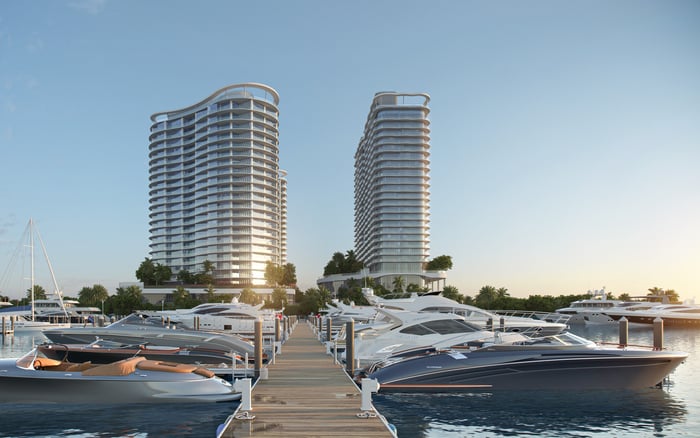
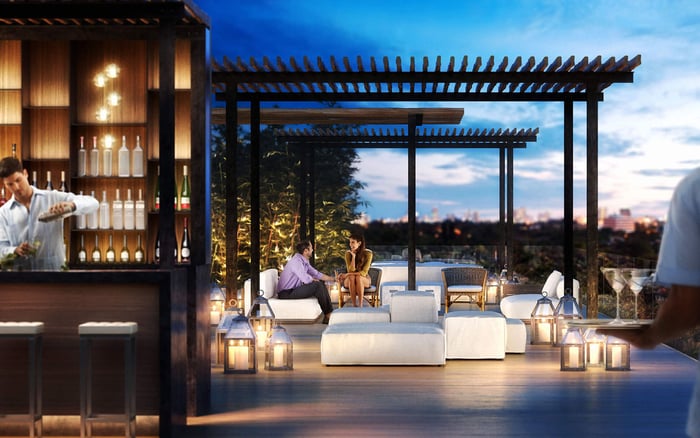
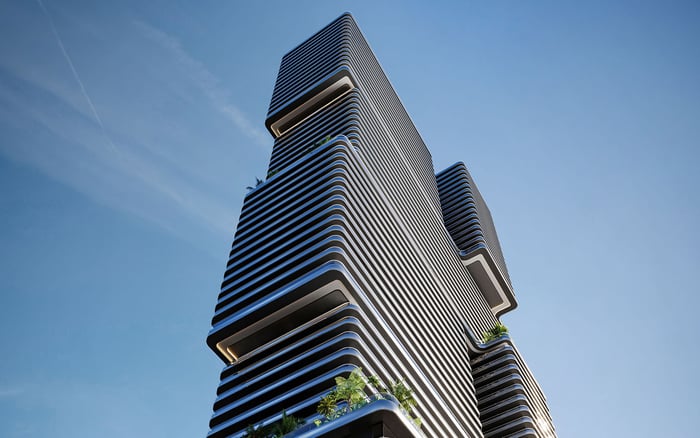
In South Florida’s prime corridor, the next chapter of luxury is less about square footage and more about what happens between the curb and your front door. Two pre-construction projects in Brickell are shaping that conversation from opposite directions: Mercedes-Benz Places Miami, a mixed-use tower pairing residences with a hotel and an automotive-rooted lifestyle platform, and St. Regis’ residential-only approach, anchored in a long-standing butler tradition. For buyers and advisors, the right question is not which brand is louder, but which operating model aligns with privacy expectations, daily rhythms, and resale positioning once the buildings are delivered.
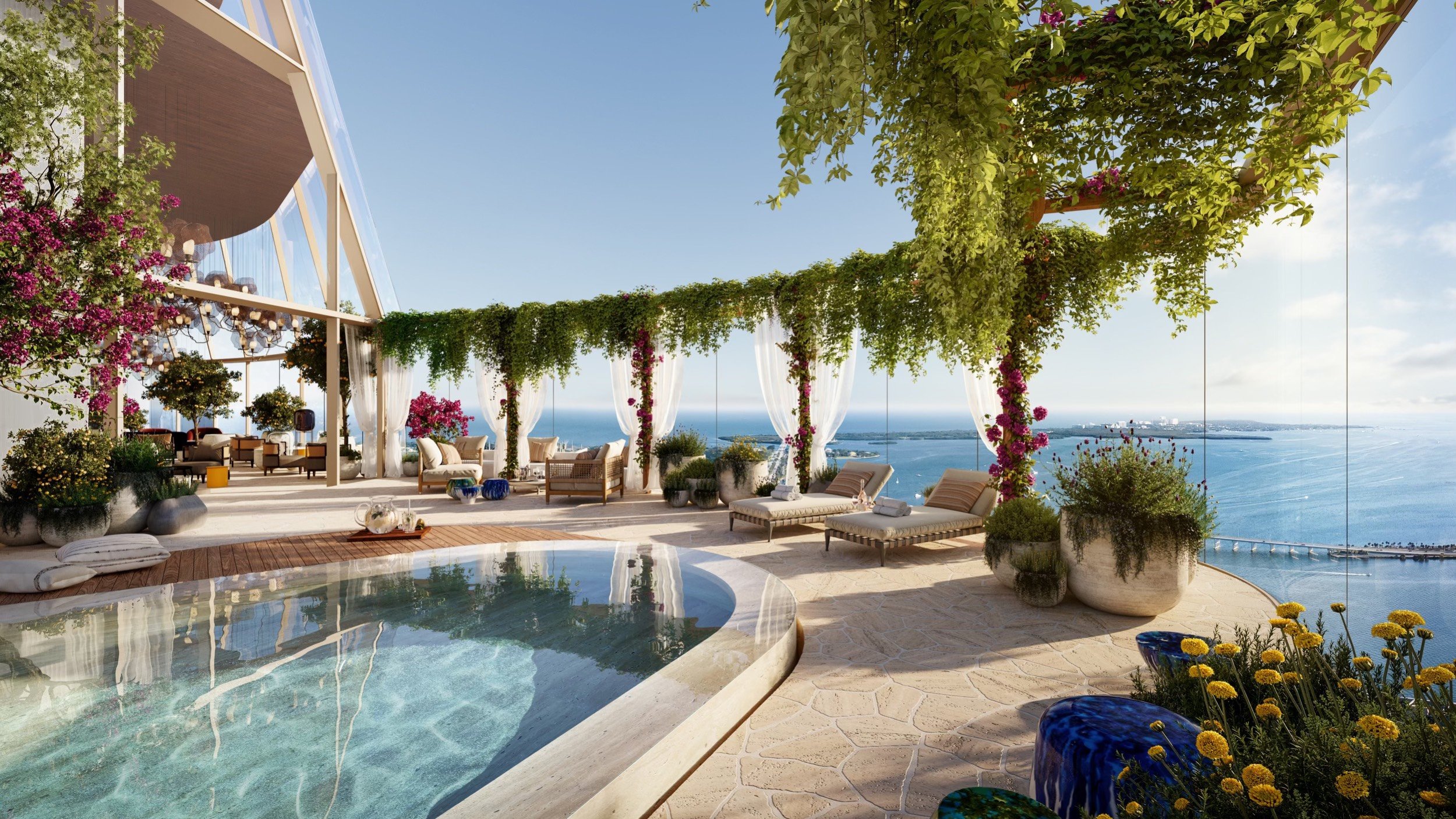
Brickell’s top tier has moved beyond the period when view corridors and stone selections alone could command the highest premiums. Today, experienced buyers increasingly underwrite operations: staffing, access control, resident communications, and the quiet mechanics that make a building feel composed at all hours. The logic is straightforward. When daily life feels effortless, it is usually because the service stack has been designed with the same rigor as the finishes.
Two forthcoming projects show how branded living can diverge even within the same neighborhood. Mercedes-Benz Places Miami is publicly presented as a branded, mixed-use high-rise planned for 1133 SW 2nd Ave, with 791 condominium residences and a 174-key hotel component. St. Regis® Residences Brickell is planned for 1809 Brickell Ave as a 152-residence, residential-only tower that markets a classic St. Regis service tradition.
Both are publicly listed as pre-construction, and that matters. Staffing levels, policies, and the final program should be treated as planned and subject to refinement before delivery.
The differentiator is not simply brand recognition. It is the operational premise each building is selling.
Mercedes-Benz Places Miami is positioned as an extension of a broader “Mercedes-Benz Places” concept that carries the brand beyond automotive. In practice, current marketing emphasizes a 24/7 service model with concierge-style resident support, valet as a central part of arrival, and “house cars” within the lifestyle offering. The overall tone is contemporary and platform-driven, designed to serve a large resident population alongside hotel operations.
St. Regis presents a more restrained thesis: fewer residences, residential-only programming, and a service narrative rooted in hospitality tradition. Public marketing highlights a 24-hour concierge, and the brand’s signature Butler Service is presented as a defining layer beyond typical condo concierge. For buyers, the implication is less about availability and more about cadence: anticipatory service, personalization, and discretion as a standard.
In a market where similarly priced residences can blur together, the operating model becomes identity. One approach is built to scale. The other is built to curate.
Privacy is often discussed as if it were a material upgrade. In practice, privacy is an operational outcome shaped by circulation, staffing, and policy.
At St. Regis, publicly disclosed materials describe private elevator access and an entry sequence intended to support controlled access. Combined with a lower unit count and residential-only positioning, that design intent can translate into fewer variables in the lobby on a daily basis.
At Mercedes-Benz Places Miami, arrival is also a headline, but with different inputs: valet as a core touchpoint, concierge-style services, and a broader ecosystem that includes hotel activity. This is not inherently a negative. Many buyers prefer the energy and convenience of mixed-use hospitality, particularly if resident separation is handled with clarity and consistency.
The underwriting question is practical: how will flow be managed? In any mixed-use environment, privacy is earned through separation, staffing depth, and protocols that are enforced. In residential-only environments, privacy is often reinforced by operational simplicity.
In luxury real estate, the same service terms can describe very different realities. “Concierge” can mean a polished front desk, or it can mean an empowered team with established vendor relationships, procurement capability, and lifestyle planning. Buyers benefit from decoding the vocabulary before treating it as value.
Mercedes-Benz Places Miami advertises a 24/7 service model, concierge-style services, valet, and house cars. It is a modern toolkit designed around mobility and convenience, aligned with an automotive-rooted brand expression. For households that treat their residence as a primary base and value logistics support, the appeal is easy to understand.
St. Regis frames service through the butler tradition, a cultural signature of the brand. Public materials emphasize concierge plus Signature St. Regis Butler Service, signaling a service layer intended to feel intimate and tailored. If you care about the soft details, such as how preferences are remembered, how requests are triaged, and how discretion is trained, this model can justify a premium independent of architecture.
The nuance is important: these are not competing versions of the same product. They are different interpretations of what “daily luxury” is supposed to feel like.
Service becomes tangible when it is supported by systems. St. Regis marketing references an owners and residents app, which signals an operational commitment to structured communications and service requests. In modern buildings, the app is often the quiet backbone: package notifications, amenity reservations, housekeeping coordination, and direct messaging that reduces friction.
Mercedes-Benz Places Miami, based on the materials at hand, focuses its published narrative more on 24/7 service, concierge-style support, valet, and house-car access than on a specific resident-facing technology product. That does not mean a digital layer will not exist. It means the public story is currently anchored in lifestyle touchpoints.
For buyers, the right question is rarely “Does it have an app?” It is “Does the service model feel responsive, documented, and consistent?” Excellent staff with weak systems can feel unpredictable. Strong systems with thin staffing can feel transactional.
Mercedes-Benz Places Miami is planned to include a 174-key hotel in the same development. That single program element carries multiple implications, and sophisticated buyers weigh them differently.
Potential advantages can include hospitality energy, on-site programming, and a service standard that is trained against hotel expectations. Mixed-use can also support a broader amenity ecosystem and staffing depth, particularly when operations are thoughtfully coordinated.
The trade-offs are equally real: higher overall foot traffic, a greater need for separation between resident and hotel operations, and more complex security and access protocols. Buyers who prioritize predictable quiet, controlled circulation, and a smaller community often gravitate to residential-only towers for these reasons.
St. Regis positions itself as residential-only, which can simplify the daily experience. With 152 planned residences, the tone is inherently more intimate, and the service culture is marketed as the feature, not the byproduct.
Brickell is optimized for proximity. For many households, its luxury is the ability to compress the day: work, dining, waterfront drives, and departures in a tight radius. In that context, the building’s service model becomes a time-saving instrument, not just a comfort.
Miami Beach, by contrast, often delivers luxury through cadence: resort rhythms, slower mornings, and the feeling that the address is part of a lifestyle district rather than a central business one. Buyers comparing Brickell to the beach frequently seek the same sophistication, but expressed through a more leisure-forward lens.
For those also weighing Miami Beach branded living, projects like Shore Club Private Collections Miami Beach, Faena House Miami Beach, and Setai Residences Miami Beach often come up because they sit at the intersection of privacy expectations, hospitality DNA, and globally mobile ownership.
The actionable takeaway is simple: choose the neighborhood for your daily rhythm, then choose the building for your tolerance for activity, access, and operational complexity.
Because both Brickell projects are publicly listed as pre-construction, a disciplined approach separates what is disclosed today from what will be finalized later.
Start with these decision points.
First, define your preferred operational environment. Do you want the vibrancy and potential amenity depth of a mixed-use tower, or the simplicity and community feel of residential-only living?
Second, prioritize privacy engineering. Look for disclosed elements such as private elevator access and controlled entry sequences, then ask how those elements are supported by staffing and policy.
Third, interrogate the service vocabulary. “Concierge,” “butler,” “valet,” and “house cars” matter only when you understand the protocols: hours, scope, and how requests are executed.
Finally, consider resale narratives. In South Florida, buyers often buy the story as much as the floor plan. A residential-only St. Regis butler narrative reads differently than an automotive-branded, mixed-use lifestyle platform. Neither is inherently superior, but each can attract a different future buyer once the buildings are delivered.
What is Mercedes-Benz Places Miami planned to include? It is publicly presented as a branded, mixed-use high-rise planned to include 791 condominium residences and a 174-key hotel component.
Where is Mercedes-Benz Places Miami planned to be located? Public materials place it at 1133 SW 2nd Ave in Brickell, Miami.
Who is identified as the architecture collaboration for Mercedes-Benz Places Miami? Public materials identify SHoP Architects, collaborating with ODP.
What services are marketed at Mercedes-Benz Places Miami? Marketing highlights a 24/7 service model with concierge-style services, valet, and house cars.
What is St. Regis® Residences Brickell planned to be? It is marketed as a branded, luxury, residential-only condominium tower planned for Brickell.
How many residences are planned at St. Regis® Residences Brickell? Public fact materials describe 152 planned residences.
What is the signature service associated with St. Regis? St. Regis is known for its Butler Service tradition, and marketing for the residences highlights Signature St. Regis Butler Service.
Does St. Regis® Residences Brickell mention private access features? Public materials describe private elevator access and entry sequence elements intended to support privacy and controlled access.
Are these buildings already operating today? They are publicly listed as pre-construction projects, so final operational details may evolve before opening.
How should buyers compare mixed-use vs residential-only branded towers? Compare your tolerance for foot traffic and operational complexity, then align service expectations with each building’s disclosed operating model.
For tailored guidance on South Florida’s service-led residences, connect with MILLION Luxury.
If branded residences are on your mind — as a home or as an allocation — we would be glad to share what we are seeing, privately.
Begin a quiet conversation