In South Florida, architectural style is not just taste; it is a pricing signal, a maintenance profile, and a proxy for how today’s luxury buyers actually live. New national style data shows Mediterranean homes command the highest median listing prices, yet recent appreciation has been flat, while modern and contemporary product has posted stronger multi-year gains. For Miami Beach and adjacent coastal submarkets, the most resale-resilient choice tends to be the one that aligns with indoor-outdoor living, feels authentic to place, and minimizes renovation friction in a low-growth market.
In South Florida luxury, architecture is rarely just aesthetic. Style determines how a home photographs, how it lives in heat and humidity, and how quickly a future buyer can commit without budgeting for a major rework. It also shapes price expectations because style clusters by neighborhood, and in coastal markets, neighborhood dynamics often drive the outcome.
National style data supports the idea that “expensive” and “appreciating” do not always move together. Recent analysis of U.S. listings found Mediterranean homes carrying the highest median listing prices at roughly $725,000, while showing essentially flat year-over-year appreciation in the most recent period analyzed. Modern and contemporary homes, meanwhile, posted strong multi-year appreciation since 2019 and skew newer overall, with a median year built around 2004.
In a low single digit growth environment, resale protection comes less from betting on the market and more from owning the product that meets today’s lifestyle expectations with the least friction.
Mediterranean’s price leadership is not an accident. This style is concentrated in higher-cost coastal and Sun Belt metros, which lifts its median. Miami also shows a meaningful Mediterranean share in listings, so the look reads as regionally relevant rather than imported.
That same dataset highlights a tension that matters for resale: Mediterranean can be a high ticket category without being a high momentum category in the short term.
Modern and contemporary product has benefited from a longer runway of demand. Contemporary design remains highly requested among architect clients, and luxury specialists frequently cite indoor-outdoor “merging” as a leading priority. In South Florida, where terraces, pools, and breeze exposure can function like primary rooms, that preference is practical, not theoretical.
For resale-minded buyers, the point is not that one style wins everywhere. It is that today’s buyer pays premiums for lifestyle alignment, simplicity of ownership, and authenticity that feels correct for the address.
Mediterranean and Mediterranean Revival can feel inevitable in Miami Beach and nearby coastal pockets because the language suits both climate and history. Arches, overhangs, courtyards, and textured materials can read grounded and “of place,” aligning with a broader luxury shift toward homes that feel anchored in local cultural and natural context.
Resale strength is typically highest when the Mediterranean expression is coherent, not cosmetic. Proportion, material integrity, and a plan that lives well today matter more than decorative cues. Nationally, Mediterranean homes are often larger, with a median size around 2,500 square feet versus a national median around 2,048 square feet. Size can support value, but only when the square footage is usable rather than ceremonial.
The vulnerability is equally clear. Many older Mediterranean-leaning homes carry decision debt. Buyers may love the romance, yet still want modern glazing, simplified detailing, and a more effortless indoor-outdoor connection than legacy layouts provide. When the gap is wide, resale becomes less about “style” and more about how much work the next buyer feels forced to take on.
Modern and contemporary design has been supported by both performance and preference. Nationally, these homes have posted strong appreciation since 2019, and the product is generally newer, which often reduces immediate system upgrades.
In South Florida, the modern value proposition can be summarized as light, flow, and function. Clean lines, open planning, and glass-forward living areas map directly to the indoor-outdoor priority that luxury specialists regularly highlight. This is no longer niche, particularly as Millennial and Gen Z clients represent a substantial share of luxury demand.
Resale resilience often comes from reduced ambiguity. In a crisp contemporary home, a buyer can more quickly underwrite the lifestyle: where entertaining happens, how work-from-home fits, how outdoor space connects, and what, if anything, must change.
The caveat is execution. Minimalism is unforgiving, and maintenance standards can be high. The strongest resale candidates are modern homes that feel warm and livable, not sterile, with durable finishes appropriate for coastal conditions.
Even at the luxury level, renovations are rarely pure value creation at resale. Industry guidance has long noted that a complete kitchen renovation typically recoups only about 60% of its cost at resale. In a slower-growth market, that statistic is a practical limiter.
For Mediterranean-leaning purchases, renovation risk often concentrates in kitchens, baths, windows and doors, and circulation changes needed to improve indoor-outdoor flow. For modern purchases, “renovation” is more often customization: smart home upgrades, millwork, or lighting refinement.
A resale-friendly approach is to avoid buying a home that requires you to invent the next buyer. Favor properties where expensive fundamentals already align with current taste: ceiling heights, glazing, kitchen placement, and outdoor integration. When those are right, style becomes an advantage rather than a project plan.
Miami Beach is image-driven, but resale resilience still tends to reward certainty: recognized addresses, a frictionless lifestyle, and a home that reads current without chasing trends.
For buyers who want contemporary coastal sensibility paired with hospitality-caliber living, branded and service-oriented residences can reduce ambiguity for the next purchaser. Properties such as The Ritz-Carlton Residences® Miami Beach and Setai Residences Miami Beach are often evaluated not only for design, but for the reassurance of managed living, which can matter when a resale buyer is comparing “easy ownership” options.
At the boutique end, Casa Cipriani Miami Beach appeals to those who value a discreet, club-like proposition where lifestyle is part of the asset. Mentioning Casa Cipriani Miami Beach matters in resale conversations because service, privacy, and a coherent brand narrative can act as a proxy for long-term demand.
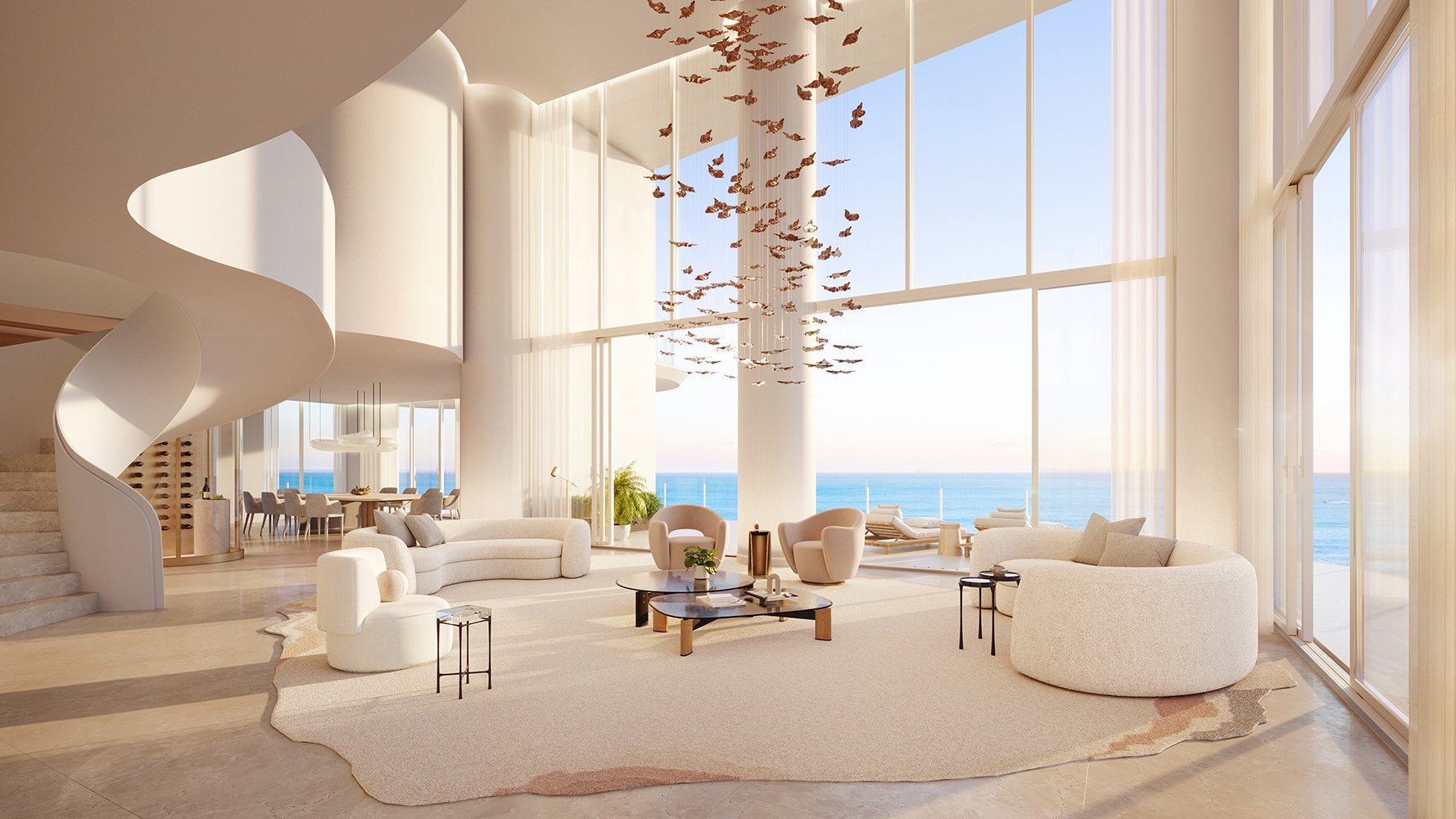
For buyers who want pure oceanfront with a quieter, design-forward stance, 57 Ocean Miami Beach speaks to a modern coastal preference aligned with the indoor-outdoor mandate. Here, ultra-modern does not have to mean cold. It can mean simplified ownership, daylight, and a cleaner interface between home and horizon.
A resale-focused decision does not require you to abandon personal taste. It requires you to pressure-test the property against the buyer pool that will replace you.
First, clarify what you are protecting. If resale optionality is the priority, lean toward homes that satisfy the broadest set of luxury expectations in your tier: abundant natural light, intuitive flow, and outdoor living that feels like a primary room.
Second, separate authentic Mediterranean from themed Mediterranean. Authenticity tends to hold value because it aligns with place. Themed execution can date quickly, especially when interiors still require a heavy lift to deliver the way buyers live now.
Third, price renovation risk with discipline. If you are buying an older romantic home because you love it, that can be a strong lifestyle decision. If liquidity is the goal, remember the kitchen-renovation payback reality and treat major overhauls primarily as consumption.
Fourth, recognize that trophy properties can trade at extraordinary levels regardless of trend. Miami Beach has seen widely covered ultra-high sales that show how location and rarity can overwhelm style narratives. Architecture still matters, but at the top, the “asset” is often the site, privacy, and scarcity.
Finally, remember that new construction is not automatically safer, but it often reduces immediate capex surprises. When baseline growth is muted, the friction you remove today can become the premium you preserve tomorrow.
Do Mediterranean homes always cost more? National listing data shows Mediterranean homes have had the highest median listing prices, but local pricing still depends on location, condition, and land value.
Is modern design appreciating faster than Mediterranean? Recent national analysis reported stronger multi-year appreciation for modern and contemporary homes since 2019, while Mediterranean was flat year-over-year in the most recent period analyzed.
Why does Mediterranean price high if appreciation is flat? Mediterranean listings concentrate in high-cost coastal and Sun Belt metros, which can elevate price levels even when short-term growth is muted.
Does size help resale? It can. Mediterranean homes are often larger than average nationally, but buyers still reward usable layouts and indoor-outdoor flow over sheer square footage.
What features are luxury buyers prioritizing most? Indoor-outdoor “merging” is frequently cited by luxury specialists as a top popular feature, supporting glass-forward, flow-oriented designs.
Are younger luxury buyers changing the market? Many luxury specialists report Millennial and Gen Z clients as a significant share of their clientele, which can influence preferences toward turnkey and contemporary living.
Is renovation worth it for resale? A complete kitchen renovation typically recoups about 60% of cost at resale, so major projects should be evaluated conservatively.
What does “authentic to place” mean in South Florida? It means the home’s architecture feels consistent with the region’s cultural and natural context, rather than reading as a pasted-on theme.
Do trophy homes follow the same rules? Not always. Widely covered trophy sales show extreme prices can be driven by rarity and location even when style trends fluctuate.
If I want the safest resale posture, what should I buy? Choose the least complicated path to today’s lifestyle: strong light, seamless indoor-outdoor living, and a condition level that minimizes immediate renovation decisions.
Explore South Florida’s most compelling residences with MILLION Luxury.
If branded residences are on your mind — as a home or as an allocation — we would be glad to share what we are seeing, privately.
Begin a quiet conversation