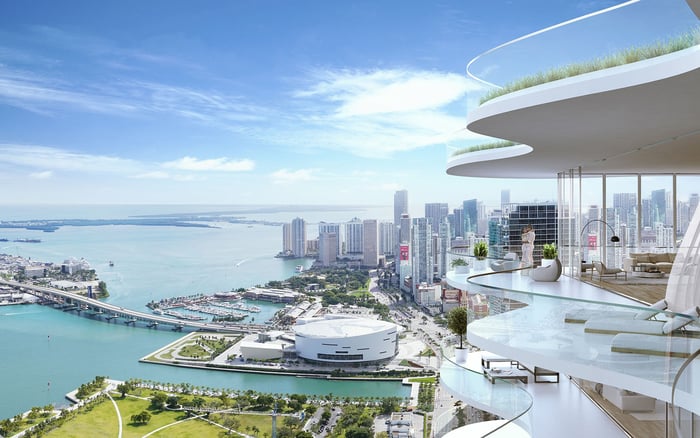
A discreet, buyer-oriented guide to purchasing a penthouse delivered as a shell in Miami Beach, including what “shell” really means, where costs and timelines tend to concentrate, and the diligence steps that protect resale.
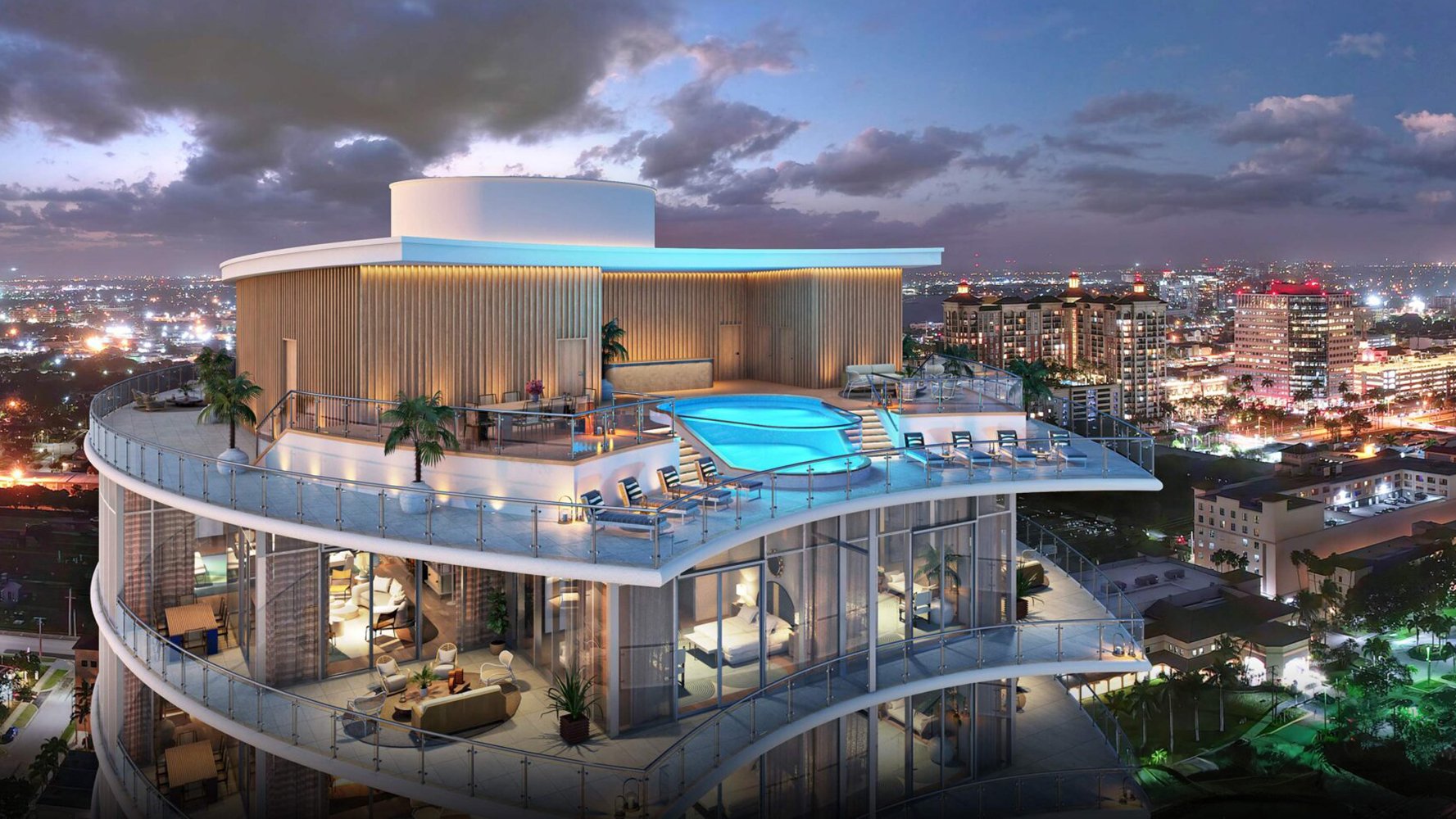
In Miami Beach, the penthouse has long signaled altitude and discretion. But for a certain kind of buyer, the true luxury isn’t what’s already finished. It’s what can be created.
A penthouse “shell” is typically delivered as a structural envelope - exterior walls, glazing, roofline elements, and the slab - with little to no interior buildout. In practical terms, you’re buying the volume and the view, then commissioning the residence that lives inside it. Buyers pursue shells for one clear reason: maximum customization is easier when you start from zero than when you spend months undoing someone else’s finished penthouse.
That advantage comes with a trade-off. The project-management responsibility shifts from the developer to the owner. A shell can be a beautiful blank canvas, but it is also a construction project you will carry, fund, and steer through condo approvals and municipal inspections.
For buyers who want a turnkey horizon line, a finished penthouse can feel like the safer choice. For buyers who want their own proportions, their own lighting plan, and integrated systems that disappear into architecture, a shell can be the cleanest path.
Not all shells are equivalent, and the differences are rarely cosmetic. The quickest way to misread your budget is to assume “shell” means the same thing in every building.
A “cold shell” generally means minimal interior readiness: you may have utility stubs, but no finished HVAC distribution within the unit, and very limited base-building finishes. A “warm shell” typically arrives with more foundational systems or finishes already in place, which can reduce scope and shorten the road to final interiors.
For a luxury buyer, the priority isn’t the label - it’s the delta between what is delivered and what you want to live with. Before you finalize a number, map the buildout gap: mechanical distribution, electrical scope, plumbing locations, wet wall constraints, sound attenuation requirements, and any limitations on slab penetrations or exterior modifications.
This is where Miami Beach’s best residences start to separate. Buildings with strong design standards and predictable approval processes tend to make custom outcomes more achievable. In a neighborhood where lifestyle services matter as much as architecture, options such as Setai Residences Miami Beach and The Ritz-Carlton Residences® Miami Beach often appeal to buyers who want hospitality-grade operations while still maintaining a deeply personal interior vision.
Even before the first finish sample arrives, penthouses often trade at a measurable premium versus nearby units. Pricing dynamics have shown buyers paying about 11% more per square foot than the apartment directly below a penthouse. In Miami Beach, that premium is often justified by privacy, sightlines, and the psychological rarity of “top of stack” living.
A shell can intensify that premium in two ways. First, the buyer is paying for potential: height, setbacks, and perimeter glazing become the raw material for a signature residence. Second, the buyer is effectively taking over the developer’s role for the interior, which can either create value or destroy it depending on execution.
The investment question isn’t whether a shell can become spectacular - it can. The question is whether the path from slab to sanctuary is priced rationally, timed realistically, and constrained by rules you can actually comply with.
Luxury build and finish costs in Florida can be substantial. For high-end construction, ranges around $400 to $800+ per square foot are often cited, with ultra-luxury executions capable of exceeding $1,000 per square foot depending on specification and complexity. Renovation costs also vary widely, with scope, finish level, and structural changes driving major swings.
For a shell penthouse, the budget conversation should start with three truths:
First, the costliest decisions are often invisible: mechanical systems, sound control, lighting infrastructure, and the labor required to execute clean details in difficult conditions.
Second, vertical logistics are a line item. Deliveries, staging, elevator reservations, and after-hours rules add friction that doesn’t exist in single-family construction.
Third, the most expensive mistake is rework. When a custom residence is designed without a clear coordination plan between architecture, interiors, and trades, the site becomes an arbitration process.
Buyers who love oceanfront minimalism often gravitate to buildings that already prioritize clean exterior lines and a refined amenity set. In that context, 57 Ocean Miami Beach tends to enter the conversation for its Miami Beach positioning and the kind of lifestyle profile that pairs well with a disciplined, contemporary buildout.
A shell buildout isn’t one project. It’s a sequence of dependent phases: design, approvals, rough-ins, inspections, and finishes. Multifamily renovations add complexity because you’re working inside an operating building with shared systems - and neighbors who have legitimate concerns.
Schedule risk typically concentrates in predictable choke points:
The buyer advantage is control. The buyer risk is control. If you want to be in residence by a specific season, treat the schedule as a portfolio of contingencies - not a single date.
In a luxury condominium, you don’t renovate alone. Condo renovations require strict compliance with association rules, legal obligations, and permit requirements. Poor compliance can lead to fines, stop-work issues, or forced remediation - all uniquely painful when your home is mid-construction.
Before you close, diligence should include a clear read on:
It is also wise to examine permitting history with a resale mindset. Open, expired, or inactive permits can create transaction and ownership risks, including delays, penalties, and complications at resale. A shell buyer should be especially alert here because your future buyer will be evaluating the paper trail you create.
For buyers who want a club-like environment where service culture is part of the value proposition, Casa Cipriani Miami Beach can be a relevant reference point in the Miami-beach landscape, particularly when pairing a custom interior vision with a high-touch operational backdrop.
Shells can be harder to finance than conventional purchases, especially when the unit is nonstandard or partially constructed. Many buyers ultimately treat the project as a liquidity exercise and structure it accordingly.
Construction and major renovation financing often relies on construction loans that disburse funds in stages tied to progress. That staged funding model can be elegant, but it also adds reporting and timing requirements.
Meanwhile, carrying costs don’t pause just because the home isn’t complete. HOA and condo fees can be significant ongoing expenses even when you are not fully moved in. In Miami Beach, where the best buildings operate like private resorts, those fees often support staffing, amenities, maintenance, and reserves. The practical implication is simple: budget for the residence you’re building and the residence you’re carrying simultaneously.
The shell’s promise isn’t merely aesthetic. It’s performance. When you aren’t constrained by a prior layout, you can design a plan that is quiet, legible, and tailored to how you live.
That typically means:
Privacy and views are often cited as signature benefits of penthouse living. In Miami Beach, those benefits can feel amplified when the interior is built to frame the horizon rather than compete with it.
A clean execution can also age well. In a market where tastes shift, the most resilient residences tend to be the ones with strong proportions and timeless restraint.
For buyers who are drawn to design-led condo living in Miami-beach, Faena House Miami Beach can serve as a reminder that the neighborhood rewards strong architecture and a clear aesthetic identity, especially at the uppermost levels.
Miami’s luxury condo environment can swing between momentum and selectivity. Inventory conditions and price gains are not uniform across buildings, and that matters for shells. When supply is elevated, buyers can sometimes negotiate more confidently on price, concessions, or timelines. When scarcity is acute in a specific building tier, shells can still command a premium because they are rare.
Your leverage improves when you are prepared. A seller is more likely to engage seriously when you demonstrate that you understand the buildout scope, have a realistic path to approvals, and are financially structured to carry the project.
In practical terms, the strongest shell buyers arrive with a team: an architect or interior architect experienced in multifamily work, an owner’s representative or project manager, and a contractor who understands Miami Beach logistics.
A shell purchase isn’t just a real estate transaction. It’s a pre-construction decision. Before signing, focus diligence on the items that are expensive to change later:
When these elements are addressed upfront, the shell becomes what it should be: a luxury asset with a controlled path to personalization.
What is a penthouse shell? It is typically the structural envelope with minimal interior buildout, allowing a fully custom plan.
What’s the difference between a cold shell and a warm shell? A cold shell usually lacks finished HVAC distribution and interior readiness, while a warm shell includes more base-building systems and finishes.
Why do buyers choose a shell instead of a finished penthouse? Shells maximize customization and can be more efficient than undoing an existing layout and finishes.
Are penthouses priced higher than other units? Often, yes; penthouses can sell at a measurable premium versus nearby apartments.
How expensive is a luxury shell buildout in Florida? High-end construction can run roughly $400 - $800+ per square foot, with ultra-luxury potentially exceeding $1,000 per square foot.
How long does a shell buildout typically take? Timelines vary, but multifamily work usually moves through design, approvals, rough-ins, finishes, and required inspections that can extend schedules.
Do I need permits and inspections for interior work? Yes for permitted scopes; inspections are part of the compliance and completion process.
What role does the condo association play? Associations set renovation rules and approvals, and noncompliance can trigger fines, stop-work issues, or required remediation.
Can open or expired permits affect me later? Yes; problematic permits can create delays, penalties, and resale complications if not resolved.
Is financing different for a shell project? It can be; nonstandard situations may be harder to finance, and construction loans often fund work in staged disbursements.
For a confidential assessment and a building-by-building shortlist, connect with MILLION Luxury.
If branded residences are on your mind — as a home or as an allocation — we would be glad to share what we are seeing, privately.
Begin a quiet conversation
.jpg&width=700&height=438&fit=cover)